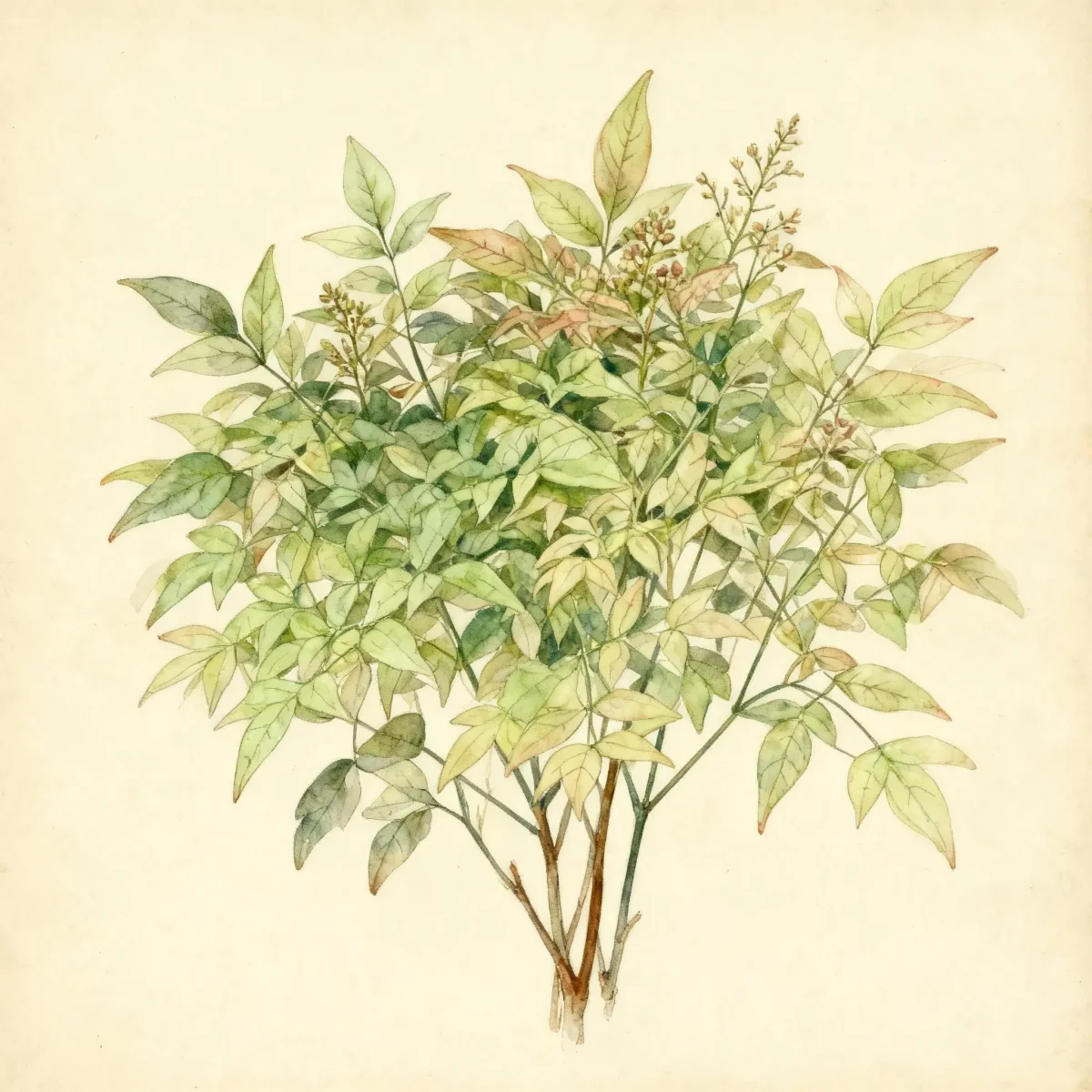
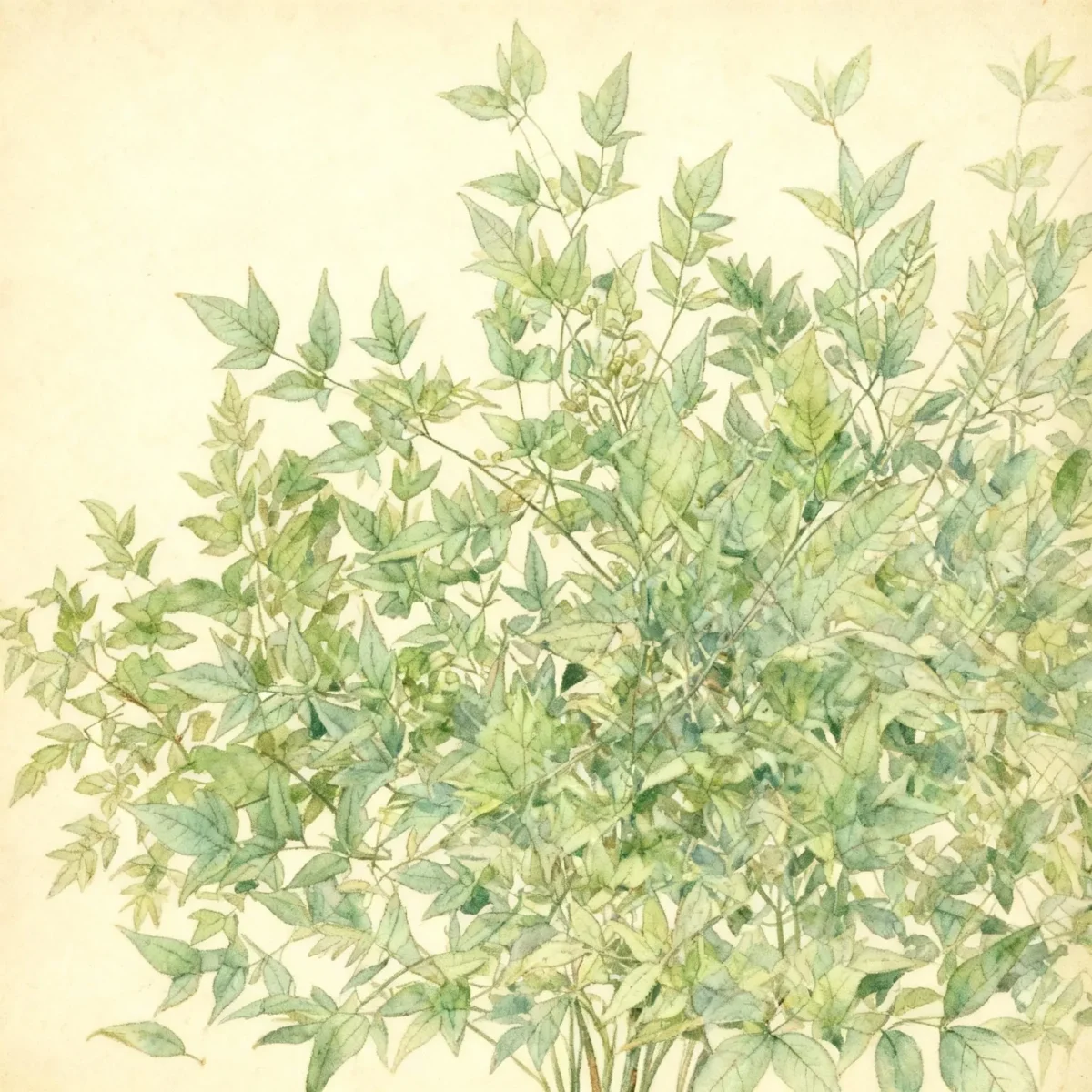
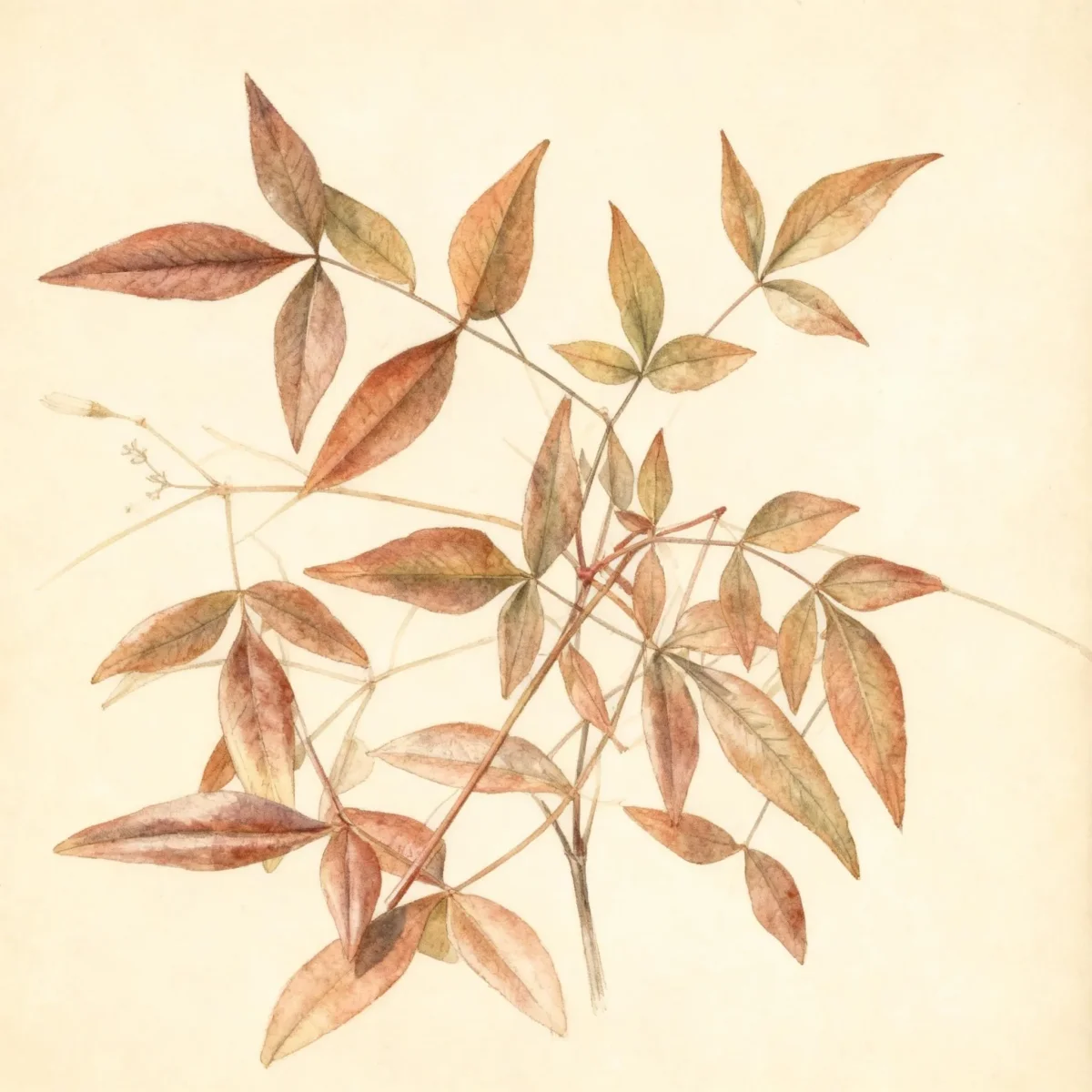
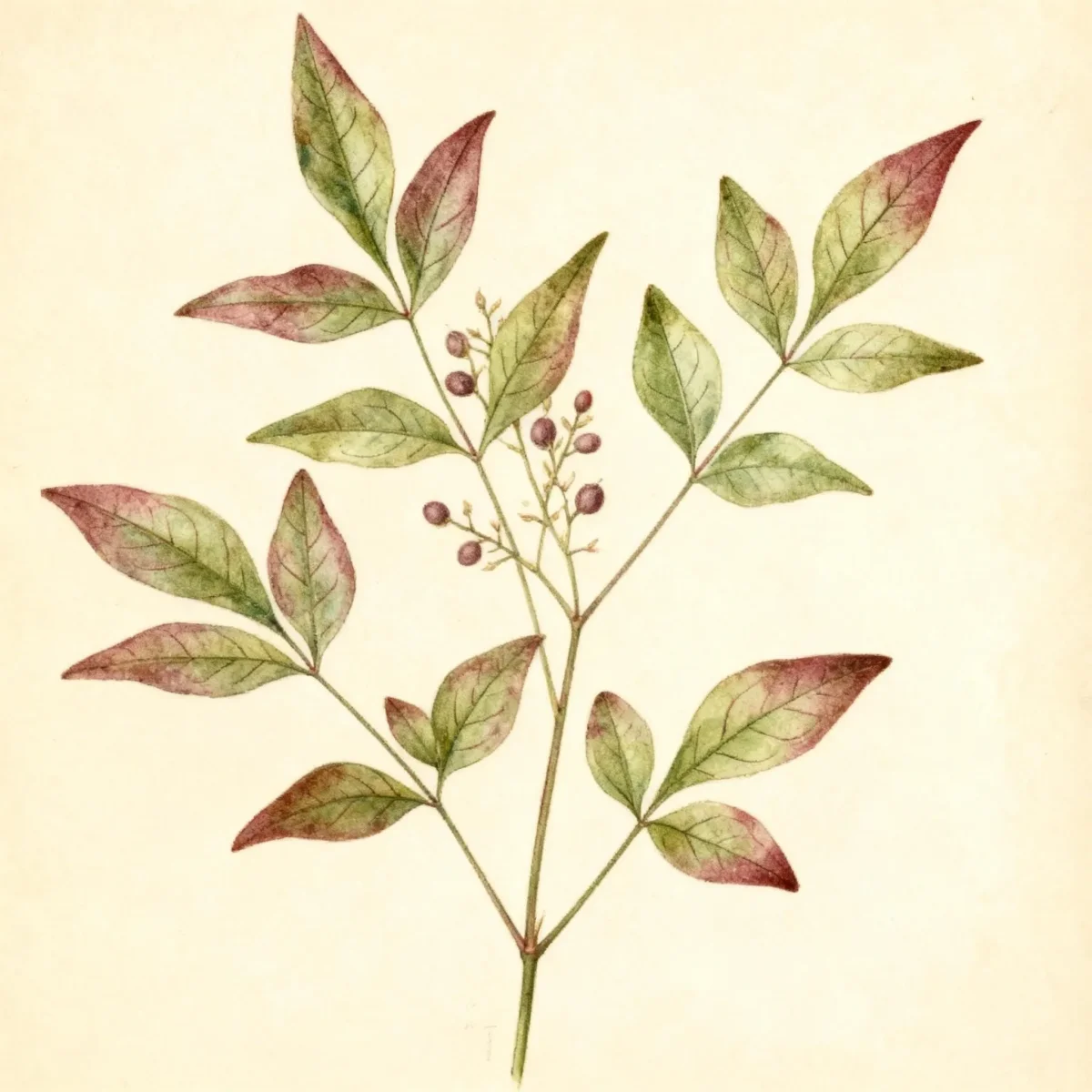
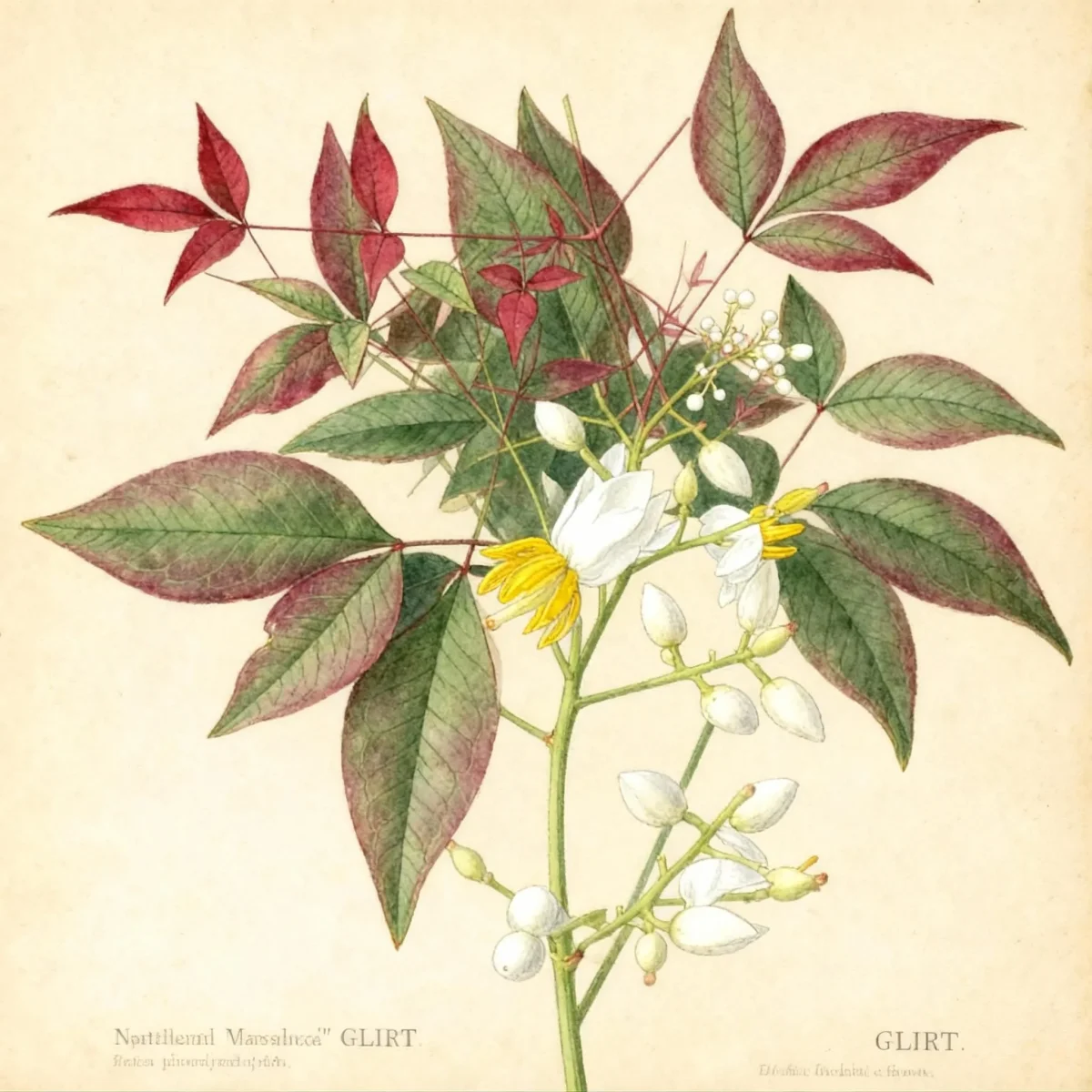
Nandina (Nandina domestica)
Nandina domestica is a highly ornamental broadleaf evergreen prized for its foliage and red berries. Hardy in Zones 6-9.
Scroll down to discover growing tips, care requirements, companion plants, and more
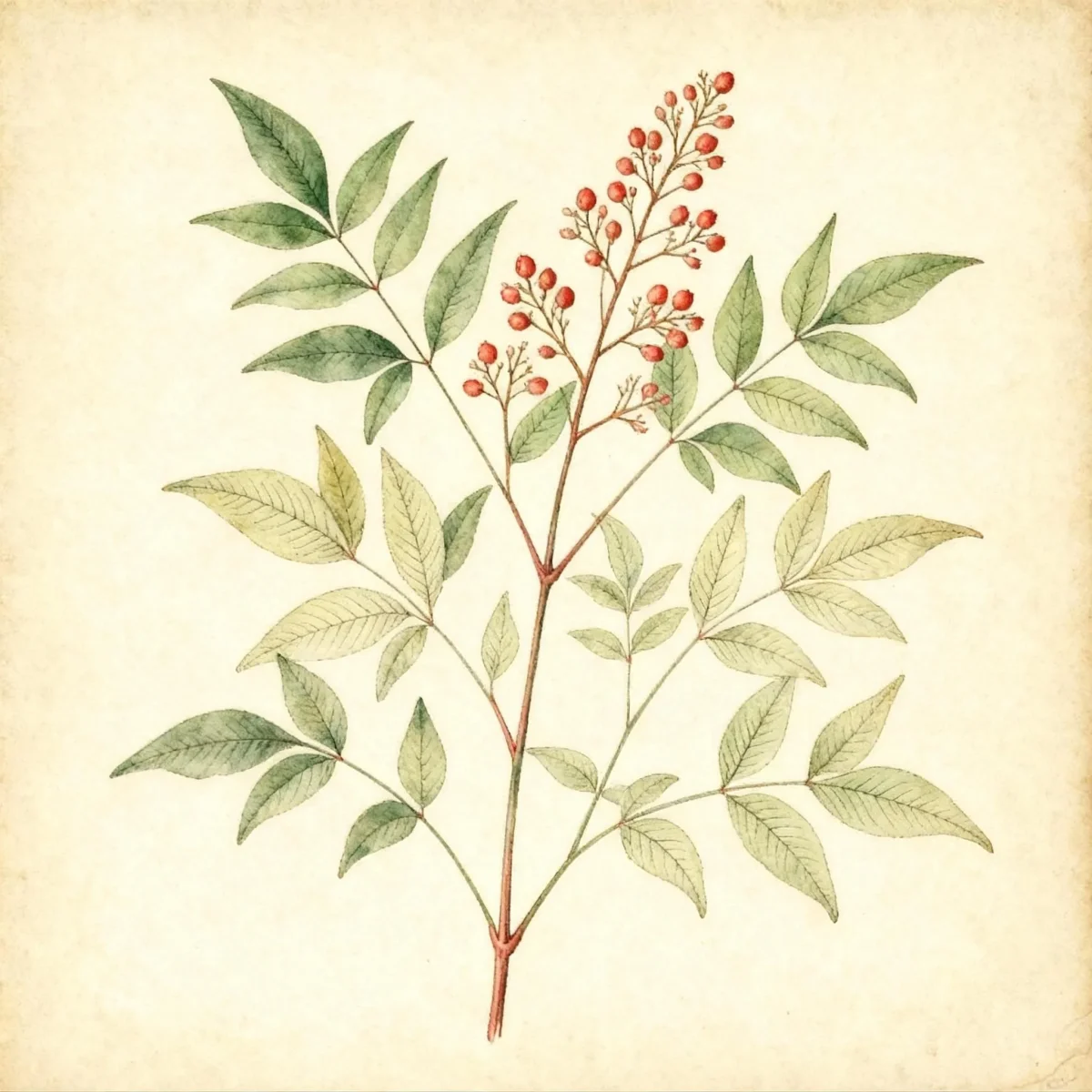
Complete Plant Information
Overview
Nandina domestica, frequently known as Heavenly Bamboo, is a highly valued broadleaf evergreen shrub cherished for its architectural form and dramatic seasonal color. It offers year-round interest, especially due to its persistent sprays of bright red berries that stand out against the delicate, compound foliage well into winter. This plant is native to East Asia, ranging from India to Japan, and provides excellent vertical structure in landscape designs.
This upright, rhizomatous shrub mimics the appearance of bamboo with its cane-like stems, though it is unrelated to true bamboo. While evergreen in warmer climates (Zones 8-10), the Nandina domestica may become semi-evergreen or even deciduous in colder regions like Zone 6, where stems can die back during hard freezes. Gardeners use Nandina for its aesthetic appeal, which includes interesting fall color transitions leading into the berry display.
The cultural requirements for Nandina are adaptable, thriving in average, well-drained soils. It offers flexibility in site selection, tolerating conditions from full sun to partial shade. Its reliable performance and striking looks ensure that Nandina domestica remains a staple in mixed shrub borders and foundation plantings across temperate regions.
Fast Facts
- Plant Family: Berberidaceae
- Plant Type: Broadleaf evergreen
- Native Range: India to Japan
- Hardiness Zones: USDA Zones 6-9
- Size at Maturity:
- Height: 3-8 ft
- Spread: 2-4 ft
- Bloom Time: June
- Bloom Description: White with yellow anthers
- Sun Exposure: Full sun to part shade
- Water Needs: Medium
- Maintenance Level: Medium
How to Grow
Plant Nandina during the cooler seasons, either spring or fall, to minimize transplant shock. Choose a location that provides average, well-drained soil, as this shrub tolerates a wide range of soil types but dislikes consistently wet feet. While it grows best in sun with some afternoon shade, this plant demonstrates functional tolerance for heavy shade, although flowering and fruiting might be reduced in deeper shade.
Watering should be consistent, especially when establishing new plants, as they prefer medium moisture. Though established Nandina exhibits some drought tolerance, providing steady moisture supports the best growth and fruit production. Fertilizing is generally not critical, but use of rich, moist, humusy soil mixtures will yield superior results.
In colder zones (like the lower end of its range in Zone 6), be prepared for potential stem dieback when temperatures dip below 10°F. In these areas, apply heavy organic winter mulches and site plants in protected locations to encourage evergreen retention. Pruning is minimal; remove dead or damaged canes as needed, focusing on shaping or height control during late winter or early spring before new growth starts.
Landscape Uses
The plant form, foliage, and reliable fall color make Nandina domestica an interesting and versatile ornamental. For the most spectacular fruit display, group or mass plantings are highly recommended, as single specimens may fruit poorly. This massing technique is ideal for creating informal hedges, especially in warmer climates where the shrub retains its evergreen status throughout winter.
Nandina works well in various settings, from informal shrub borders to open woodland gardens where its upright structure provides vertical accents. It can also be effectively utilized near foundations, providing year-round visual appeal where lower-growing perennials might thin out in winter. Its adaptation makes it suitable for naturalizing schemes where allowed by local regulations.
If mass planting for screening or hedging, ensure you account for the mature spread of 2 to 4 feet between specimens, spacing them appropriately to achieve density without overcrowding in the early years. Consider companion planting with groundcovers that appreciate similar light and moisture conditions to unify the design beneath the taller canes of the Nandina.
Standout Features
Flower Qualities
- Showy
Fruit Qualities
- Showy
Noteworthy Characteristics
Nandina domestica, commonly called heavenly bamboo, is a broadleaf evergreen shrub that is ornamentally grown for its interesting foliage and its often spectacular fruit display. It is native to Japan, China and India. This is a rhizomatous, upright, evergreen shrub that typically grows to 4-8’ tall and to 2-4’ wide. Flowers are followed by sprays of spherical, two-seeded, red berries which persist from fall to spring, providing winter interest.
Tolerances
- Drought
- Heavy Shade
Potential Problems
Nandina generally experiences few serious insect or disease challenges, making it a relatively low-fuss choice. A key cultural potential problem is foliage developing chlorosis (yellowing) if planted in highly alkaline soils. Gardeners must also be aware that the Heavenly Bamboo tends to naturalize aggressively in certain humid, southern environments and is now considered invasive in some regions; always check local ecological recommendations and regulations before planting this ornamental.
Frequently Asked Questions
What hardiness zones is Nandina suitable for?
Nandina domestica is reliably hardy in USDA Zones 6 through 9.
How large does Nandina grow?
This shrub typically reaches a mature height between 3 and 8 feet tall with a spread generally ranging from 2 to 4 feet wide.
What sun exposure does Nandina need?
Nandina performs optimally with full sun exposure, though it can tolerate part shade very well, offering more flexibility for placement in the landscape.
When does Nandina bloom?
The blooming time for Nandina is typically in June, producing small white flowers which bear yellow anthers before developing into their famous red berries.
Conclusion
The Nandina domestica remains a premier choice for gardeners seeking structure, vibrant color retention, and winter interest from a comparatively low-maintenance plant. Whether utilized as an informal screen or as an accent in a woodland setting, this adaptable shrub adds significant texture to the landscape. Before installing, confirm that the USDA hardiness zone aligns with your local climate to ensure the best performance for your Nandina.
Companion Planting Ideas
Consider pairing Nandina with plants that share its preference for well-drained soil, even if they require slightly different moisture levels over the course of the year. Hostas or Astilbes thrive in the dappled shade areas that Nandina can tolerate, offering contrasting leaf texture. In sunnier spots, companion planting with mid-sized evergreen shrubs or reliable fall bloomers like ornamental grasses can create layered seasonal interest around the base of the Heavenly Bamboo.
Seasonal Care Calendar
Spring is the ideal time for structural pruning of Nandina domestica to remove any winter-damaged wood, encouraging fresh, vibrant growth for the season. During the summer months, monitor water needs, especially during dry spells, to maximize berry production later in the year. In autumn, appreciate the foliage transformation and resist the urge to heavily prune as the persistent red berries are a major winter feature. Apply a fresh layer of mulch around the base in late fall to help insulate the root systems in cooler zones before winter sets in.