May-apple (Podophyllum peltatum)
Discover May-apple (Podophyllum peltatum), a unique rhizomatous perennial for woodlands. Known for its umbrella-like leaves and edible, golden fruit.
Scroll down to discover growing tips, care requirements, companion plants, and more
Complete Plant Information
Overview
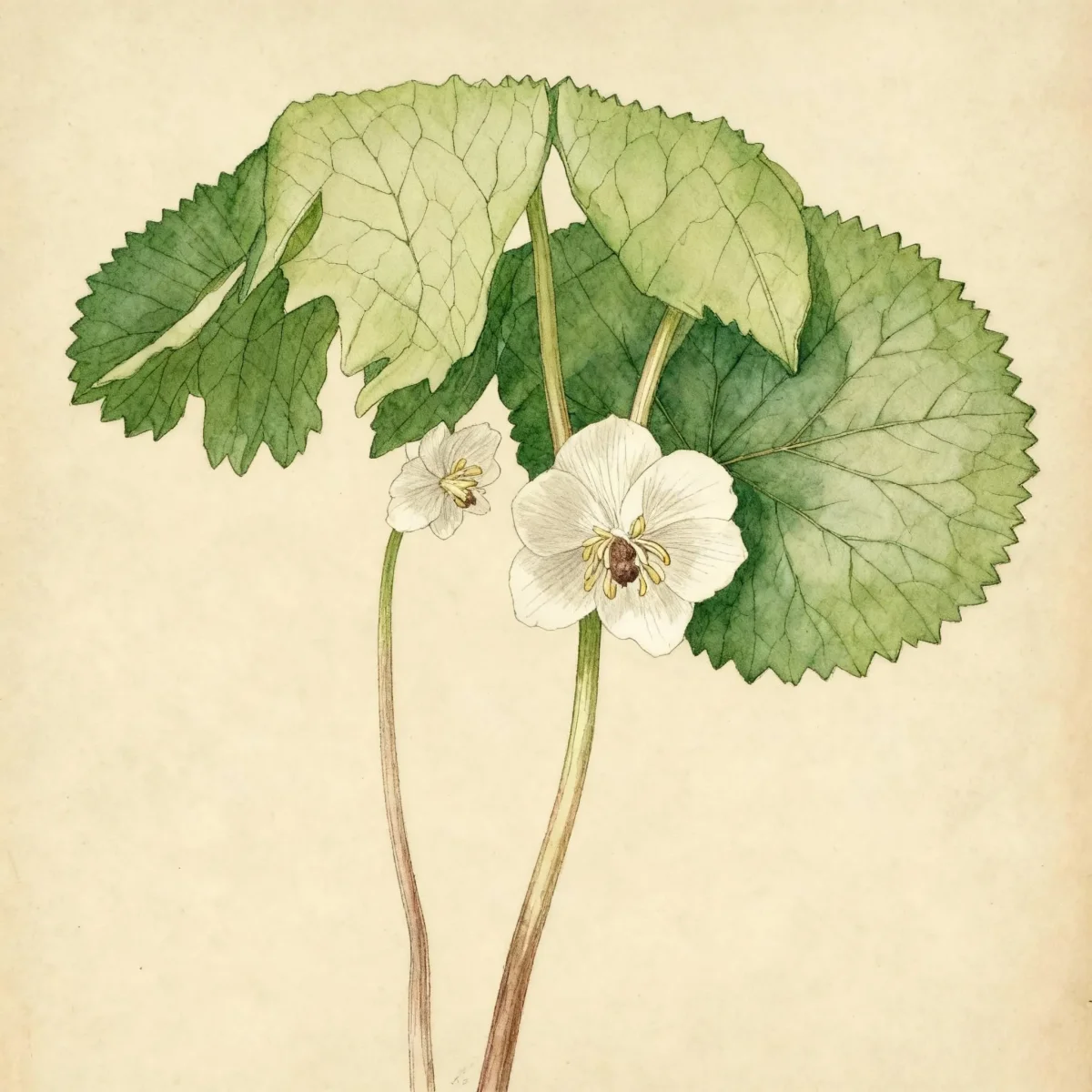
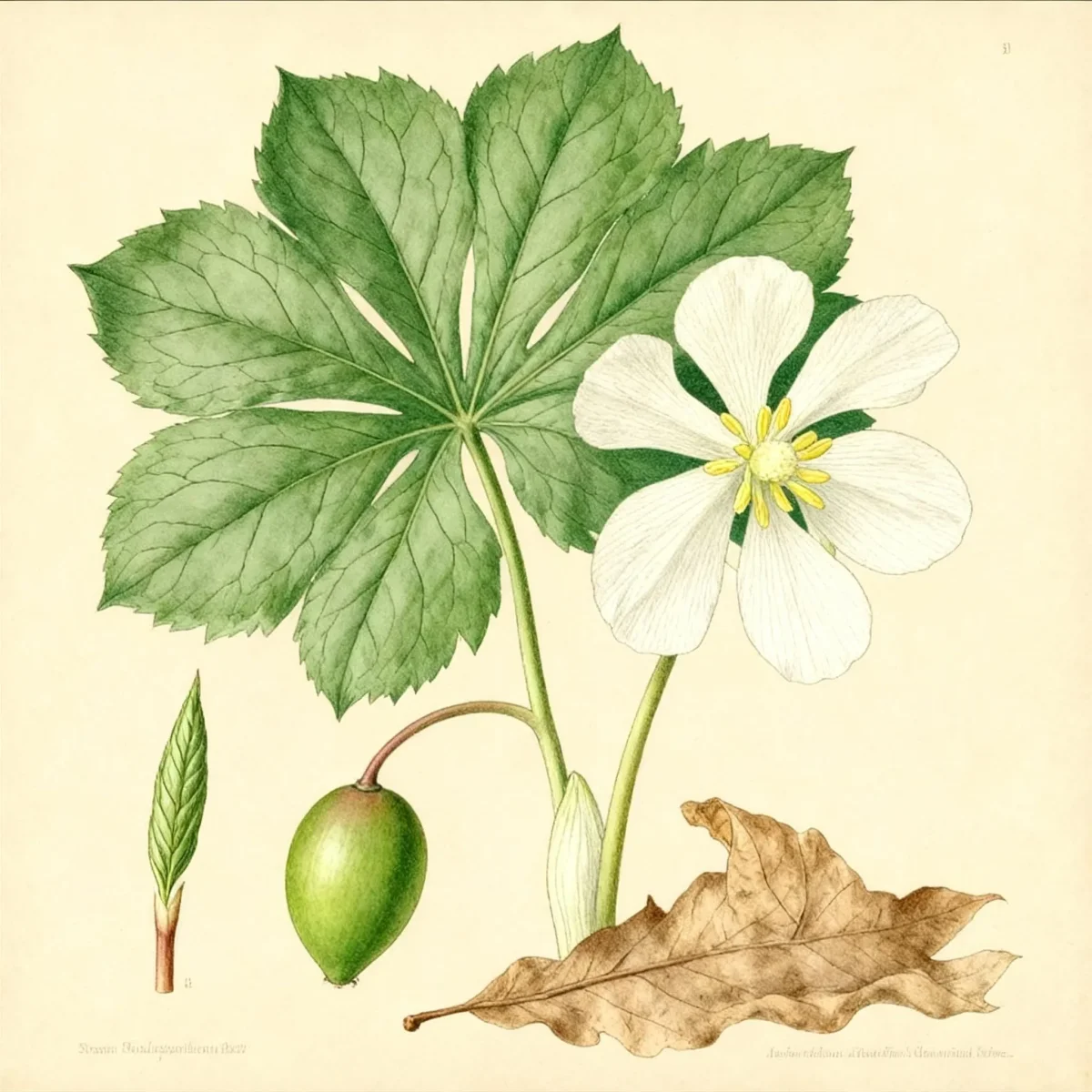
The May-apple, scientifically known as Podophyllum peltatum, is a captivating, rhizomatous native perennial celebrated for its distinctive structural foliage. Gardeners value this plant for creating an immediate, woodland aesthetic with its large, umbrella-like leaves that emerge early in the spring. While the nodding, waxy white flowers are beautiful, they are often hidden beneath the protective canopy of the leaves.
This species naturally spreads via underground rhizomes, often forming dense colonies that cover open woodland floors or shady slopes. Though the common name May-apple refers to the small, edible, golden fruit produced after flowering, gardeners must exercise caution as all other parts of Podophyllum peltatum, including the roots and foliage, are toxic if ingested.
Incorporating Podophyllum peltatum into native plant or shade gardens brings seasonal interest, as the plant provides lush green coverage until summer arrives, after which the foliage typically dies back completely. Its ability to colonize effectively makes it an excellent choice for areas where rapid ground coverage in deep shade is desired.
Fast Facts
- Plant Family: Berberidaceae
- Plant Type: Herbaceous perennial
- Native Range: Eastern North America south to Texas
- Hardiness Zones: USDA Zones 3-8
- Size at Maturity:
- Height: 1-1.5 ft
- Spread: 0.75-1 ft
- Bloom Time: April
- Bloom Description: White
- Sun Exposure: Part shade to full shade
- Water Needs: Medium
- Maintenance Level: Medium
How to Grow
The best success for Podophyllum peltatum is achieved by mimicking its native environment. Plant in average, medium moisture, well-drained soil, placing established plants in part shade to full shade. This species thrives where it receives deep shade, especially as summer heat increases. Rich, moist, humusy soils are highly favored over lean or dry ground.
Watering should remain consistent; aim for medium moisture, ensuring the soil does not completely dry out, particularly during the initial establishment phase. Fertilization is rarely necessary if the soil is rich in organic matter. Cultivate slowly around established colonies to avoid damaging the shallow rhizomes, relying instead on top-dressing with compost or leaf mold.
As an early spring wildflower, Podophyllum peltatum offers a unique seasonal cycle. Foliage emerges early and provides excellent coverage through late spring. Gardeners should note that the plant goes dormant in the summer, meaning the leaves will disappear entirely. Do not mistake this dormancy for death; avoid disturbing the area during this period.
This slow-growing perennial will self-seed under optimum growing conditions, gradually expanding its footprint. It is best to plant divisions or new purchases in the fall or early spring before active growth begins.
Landscape Uses
Podophyllum peltatum excels when used for mass planting beneath deciduous trees or in deeply shaded areas where few other plants thrive. It is excellent for naturalizing in woodland settings, creating an authentic, untamed look as it spreads via rhizomes. The resulting colonies provide excellent textural contrast to ferns and hostas in wild or native plant gardens.
Due to its tendency to form large, dense clumps and its summer dormancy, mayapple is generally not suited for formal borders or areas requiring year-round green coverage. Instead, plan surrounding plantings that will fill in the space once the May-apple foliage has retreated underground for the summer rest period. Companion plants that share shade and moisture requirements, such as spring ephemeral bulbs or shade-loving groundcovers, work well alongside it.
Standout Features
Flower Qualities
- Showy
Fruit Qualities
- Showy
- Edible
Noteworthy Characteristics
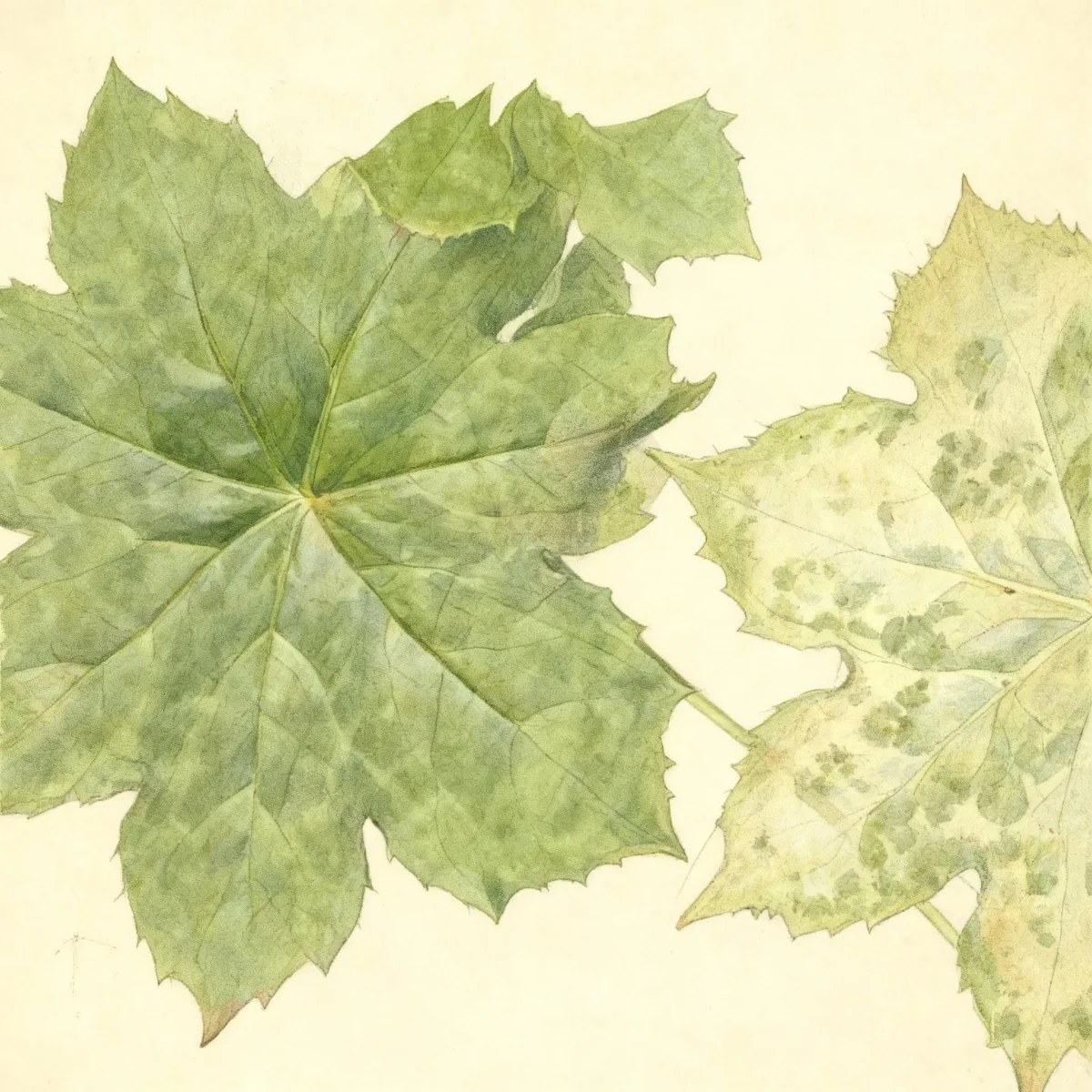
Podophyllum peltatum, commonly called mayapple, is a rhizomatous, native Missouri wildflower that occurs in both moist and dry woodland areas throughout the State. From a single stem, each plant grows 12-18” tall and features one or two, deeply-divided, palmately-lobed, umbrella-like, pale green leaves (to 12” diameter). Flowers are quite showy, but usually hidden by the umbrella-like leaves, giving way to an edible, fleshy, golden fruit when ripe.
Tolerances
- Drought
- Dry Soil
- Black Walnut
Potential Problems
Podophyllum peltatum is generally robust and suffers from no serious insect or disease problems when sited correctly. Cultural stress, such as planting in too much sun or overly dry soil, is the primary cause of decline, though it tolerates dry soil surprisingly well once established. Ensure proper drainage, as soggy winter soil can lead to rot. Remember the toxicity of the roots and leaves when handling or designing children’s gardens.
Frequently Asked Questions
What hardiness zones is May-apple suitable for?
The resilience of May-apple allows it to thrive across USDA Zones 3 through 8, making it a versatile choice for much of eastern North America.
How large does Podophyllum peltatum grow?
This plant typically reaches a height between 1 and 1.5 feet tall with a spread ranging from 0.75 to 1 foot as the rhizomes slowly expand.
When does May-apple bloom?
Podophyllum peltatum produces its characteristic white flowers quite early in the season, usually during the month of April.
What sun exposure does May-apple need?
This woodland native prefers part shade to full shade, flourishing best when protected from intense afternoon sun.
Conclusion
The May-apple is an indispensable component for establishing naturalistic beauty in shady garden areas. The bold, distinctive foliage and the promise of edible (though careful harvesting is required) summer fruit make Podophyllum peltatum a perennial favorite among native plant enthusiasts. Before planting, verify that your site offers adequate shade and moisture, then enjoy watching these umbrellas colonize your woodland floor.
Companion Planting
To maintain aesthetic appeal while Podophyllum peltatum is dormant in summer, select companions that emerge later or remain green. Good neighbors include various native ferns, such as Ostrich Fern (Matteuccia struthiopteris), which enjoy similar moist, shaded conditions. Additionally, consider woodland phlox (Phlox divaricata) or wild ginger (Asarum canadense) as they share the early spring blooming window and prefer rich, humusy soils.
Propagation Tips
Propagation of this rhizomatous perennial is straightforward, primarily accomplished through division. In early spring before major growth begins, or in the fall after dormancy sets in, carefully excavate the area surrounding a clump. Gently tease apart the underground rhizomes, ensuring each division has at least 2-3 growth nodes attached. Plant these divisions immediately at the same depth they were growing previously. While seeds are produced, germination is slow and unreliable, making division the preferred method for gardeners looking to increase their stock of Podophyllum peltatum.