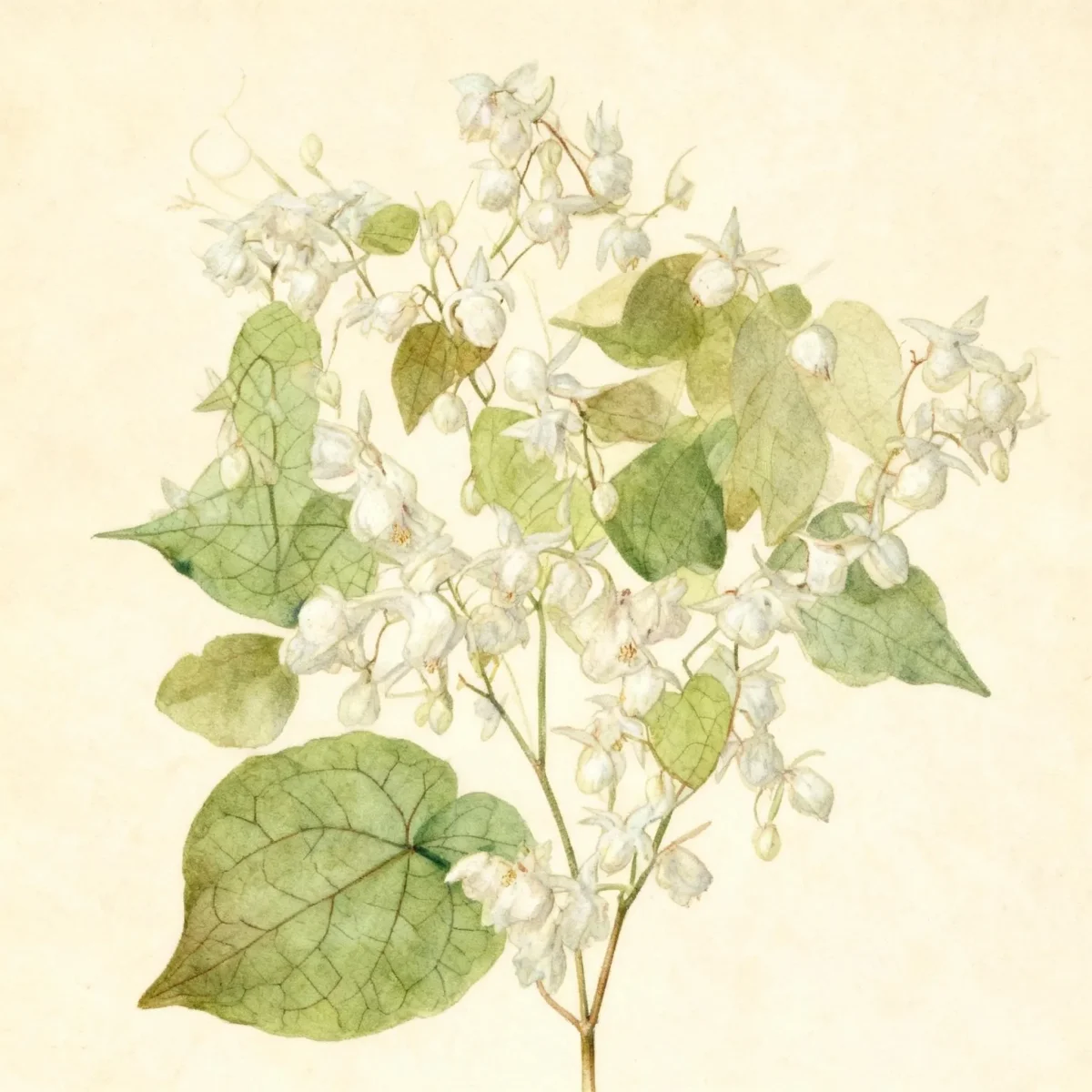
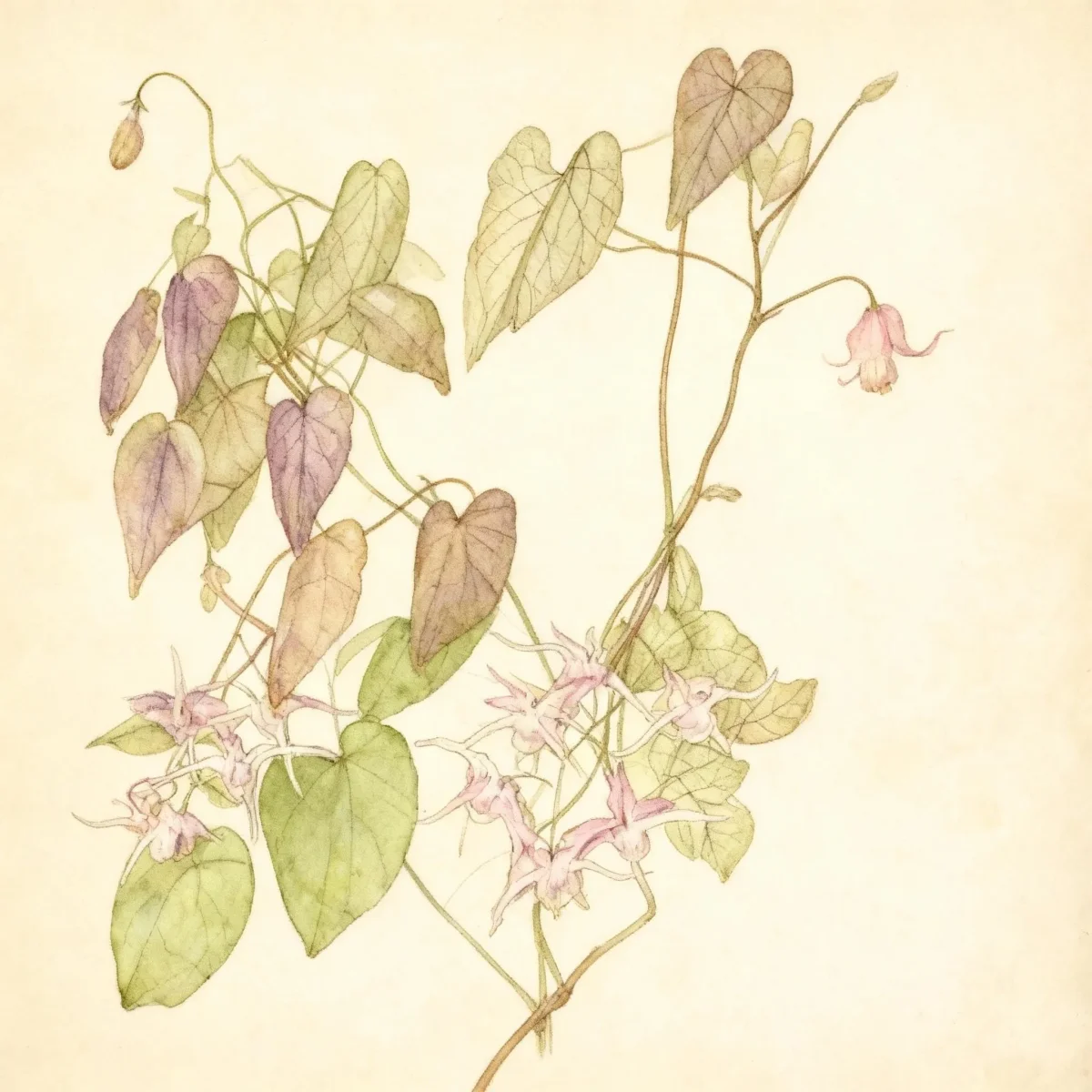
Bishop's hat (Epimedium pubescens)
Epimedium pubescens, or Bishop's hat, is a low-maintenance perennial perfect for dry shade, boasting delicate white and yellow spring flowers.
Scroll down to discover growing tips, care requirements, companion plants, and more
Complete Plant Information
Overview
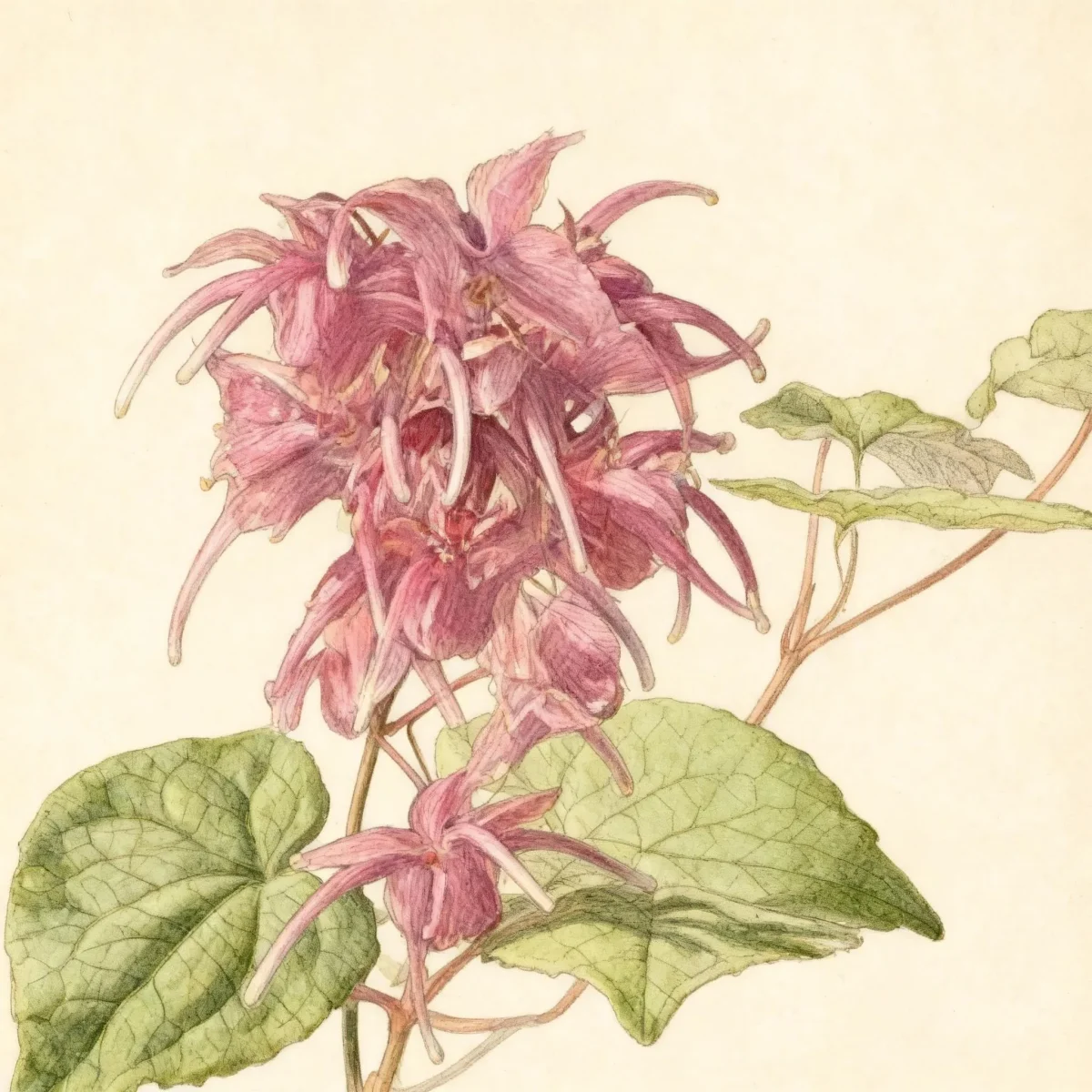
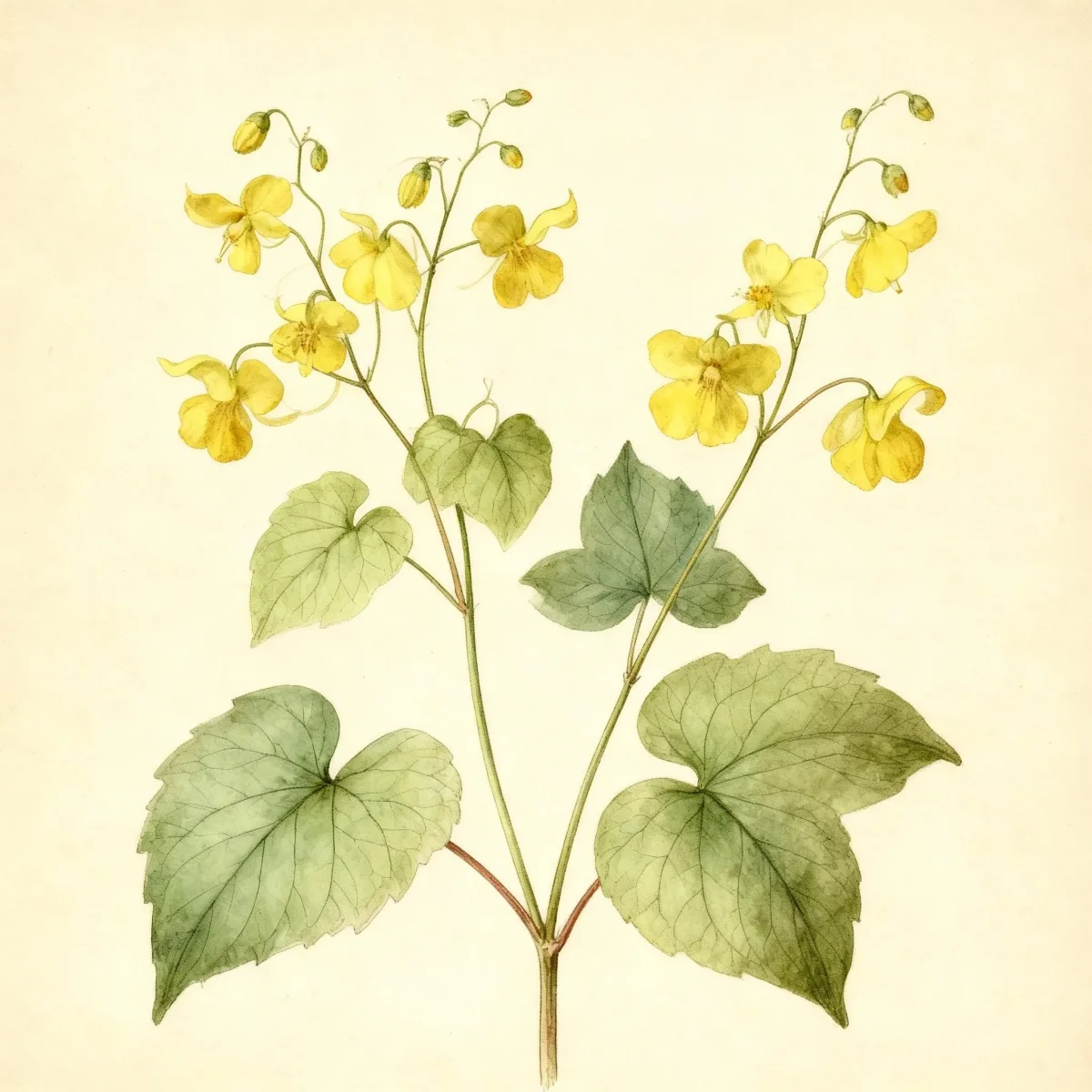
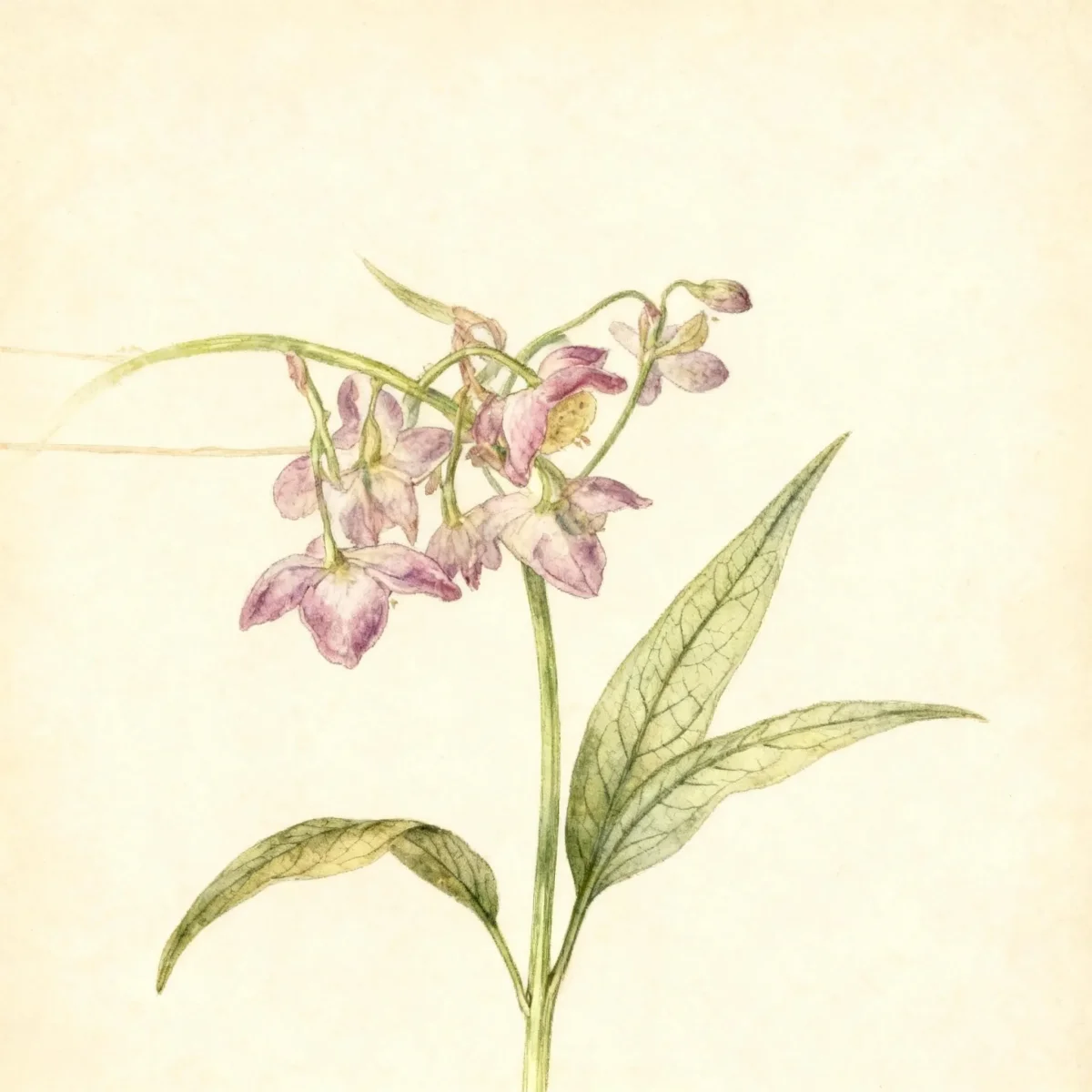
Epimedium pubescens, commonly known as Bishop’s hat, is a highly valued, rhizomatous perennial prized for its resilience in difficult, shady conditions. This plant forms dense foliage mounds on wiry stems, providing texture and reliable ground coverage throughout the growing season. Its small, intricate flowers—featuring white sepals and yellow petals—emerge beautifully above the emerging leaves in mid-to-late spring.
A key benefit of growing Epimedium pubescens is its exceptional tolerance for dry shade once established, thanks to its moisture-retaining rhizomes. Native to woodland slopes in China, this species thrives where many other ornamentals naturally fail. Its low maintenance requirements make it an excellent choice for naturalized settings or beneath mature trees.
The delicate beauty of Bishop’s hat ensures it acts as both an unoffensive ground cover and an early spring accent. Whether used to stabilize slopes or simply to provide evergreen texture in mild winters, Epimedium pubescens offers long-term performance with minimal input from the gardener.
Fast Facts
- Plant Family: Berberidaceae
- Plant Type: Herbaceous perennial
- Native Range: China
- Hardiness Zones: USDA Zones 5-9
- Size at Maturity:
- Height: 1-2 ft
- Spread: 1-2 ft
- Bloom Time: April to May
- Bloom Description: White sepals and yellow petals
- Sun Exposure: Part shade to full shade
- Water Needs: Dry to medium
- Maintenance Level: Low
How to Grow
Planting Epimedium pubescens is best achieved in the spring or fall when temperatures are mild. Locate this plant where it receives average, acidic, well-drained soil; it performs optimally when amended with organic matter, mimicking rich woodland loam, though it readily adapts. While it prefers consistent moisture in dappled sun or morning sun, be cautious of afternoon sun, which can scorch the foliage.
Once established, the care requirements for Bishop’s hat are minimal. Its rhizomes allow the plant to tolerate significant drought, making supplemental watering only strictly necessary during prolonged, intense dry spells. Avoid alkaline soil conditions, as the plant is intolerant of high pH. Fertilizing is rarely required if the soil is organically rich.
A key task for the low maintenance associated with Epimedium pubescens is seasonal cleanup. In late winter, before new growth emerges, it is best practice to cut back any remaining old foliage, especially in colder winter climates where the leaves may have dropped or become tattered. This pruning step ensures the best display of the spring flowers and fresh new leaves. Propagation is easily achieved via division of the creeping rhizomes in early spring or fall.
Landscape Uses
Epimedium pubescens is a versatile solution for gardeners struggling with challenging, shady sites. Its spreading habit makes it an outstanding ground cover, rapidly forming dense, weed-suppressing colonies without becoming aggressively invasive. It excels when massed in woodland gardens or naturalized areas, softening the edges of pathways and underplanting large, established trees where root competition is a factor.
Consider utilizing Bishop’s hat as an attractive edger along shaded borders or walkways. Its textured leaves provide year-round interest, especially in regions with mild winters where the foliage remains evergreen. As a slow-spreading perennial, it naturally fills in gaps, offering reliable visual structure between structural shrubs or taller perennials.
Standout Features
Flower Qualities
- Showy
Noteworthy Characteristics
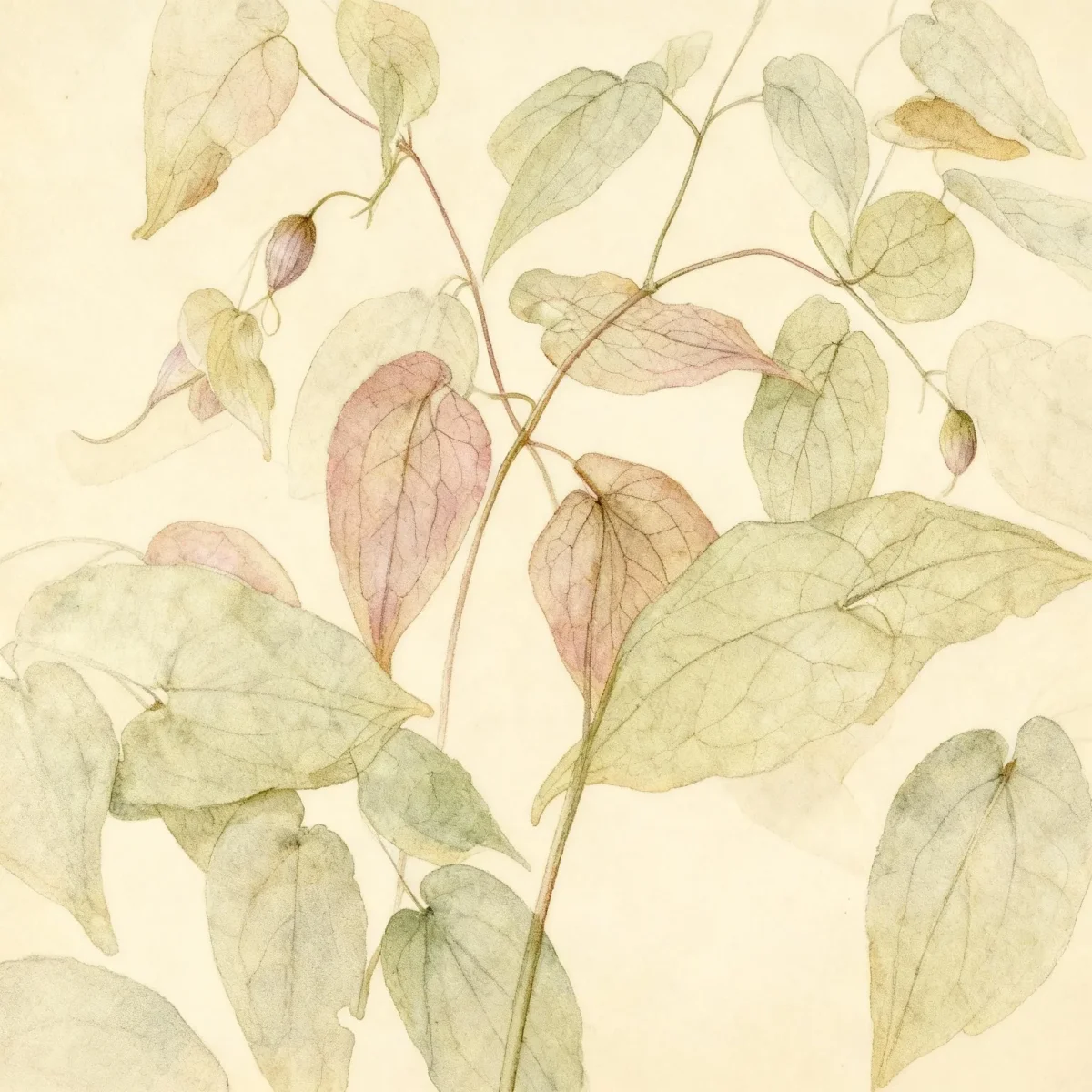
Epimedium pubescens is a rhizomatous semi-evergreen perennial noted for its foliage clump rising to about 9-12” tall, native to woodland slopes in China. Abundant small white flowers bloom in airy inflorescences atop flowering stems that rise above the foliage mound to 24” tall in spring. The basal tri-foliate leaves feature spiny margins and mature to a rich medium to dark green, often emerging mottled red in spring.
Tolerances
- Rabbit
- Deer
- Drought
- Heavy Shade
- Erosion
- Dry Soil
- Shallow-Rocky Soil
Potential Problems
Epimedium pubescens generally resists serious pest or disease issues, contributing to its low maintenance profile. The primary disease concern to monitor for is mosaic virus, which can be transmitted by aphids. Maintaining good garden hygiene, encouraging beneficial insects, and promptly removing any afflicted foliage will help manage aphid populations and prevent virus spread transmission.
Frequently Asked Questions
What hardiness zones is Bishop’s hat suitable for?
Epimedium pubescens establishes well in USDA Hardiness Zones 5 through 9.
How large does Epimedium pubescens grow?
This perennial typically reaches a height between 1 and 2 feet with a spread of 1 to 2 feet as it forms its colony.
When does Bishop’s hat bloom?
The plant flowers primarily from April through May, displaying white sepals and yellow petals.
What sun exposure does Epimedium pubescens need?
This species thrives in part shade to full shade conditions and will usually suffer foliage burn if exposed to intense afternoon sun.
Conclusion
Epimedium pubescens remains a cornerstone plant for difficult shady landscapes due to its drought tolerance and attractive foliage. Providing years of reliable ground cover and beautiful spring blooms, Bishop’s hat proves that low maintenance doesn’t mean sacrificing garden aesthetics. Before planting, confirm your site falls within USDA Zones 5-9 to ensure the best performance from this versatile perennial.
Companion Planting
When designing a border for Epimedium pubescens, select companions that share its preference for acidic, well-drained, and relatively dry conditions under high shade. Hostas, particularly those with darker green or blue foliage, offer a contrasting texture that beautifully complements the finer leaves of the Epimedium. Also consider ferns like Japanese Painted Fern (Athyrium niponicum) or Brunnera species, which appreciate similar moisture regimes once established. Planting the slow-spreading rhizomes of Epimedium pubescens near spring bulbs like Snowdrops (Galanthus niwals) allows the emerging flowers to share the stage before the Epimedium foliage fully blankets the ground.
Seasonal Care Calendar
Managing Epimedium pubescens is straightforward when following essential seasonal benchmarks. In Late Winter or Early Spring, perform the annual maintenance cutback, trimming back any dead or tattered foliage to welcome the new growth. Spring is characterized by bloom time (April to May); watch for the first signs of yellowing leaves in mid-summer, which can indicate too much sun or insufficient moisture that may require temporary supplemental watering. Fall is an ideal time for division if you wish to propagate or relocate mature clumps of Bishop’s hat. In Winter, the foliage provides structure, particularly in warmer zones, but monitor leaf health and perform clean up as necessary before the next growing season begins.