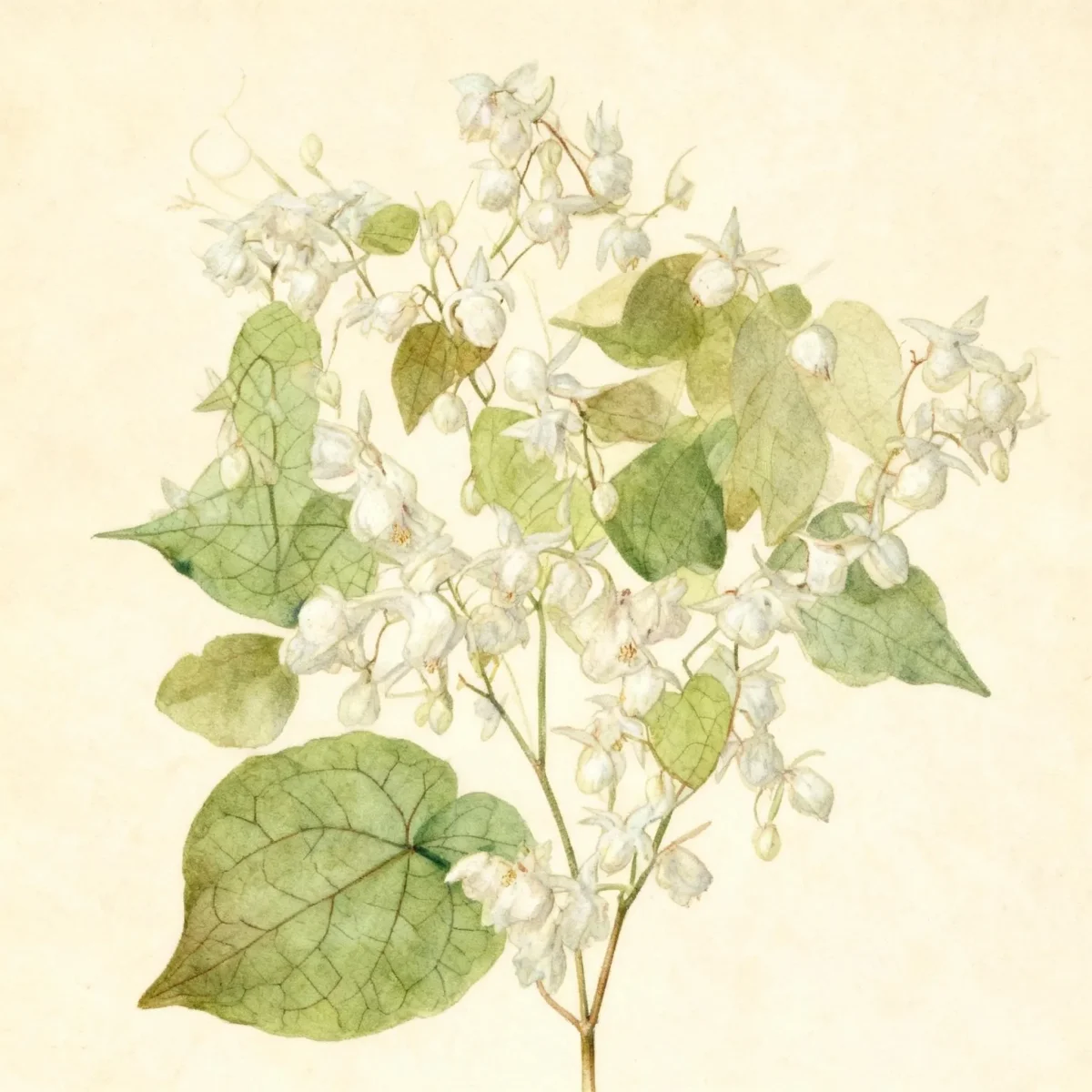
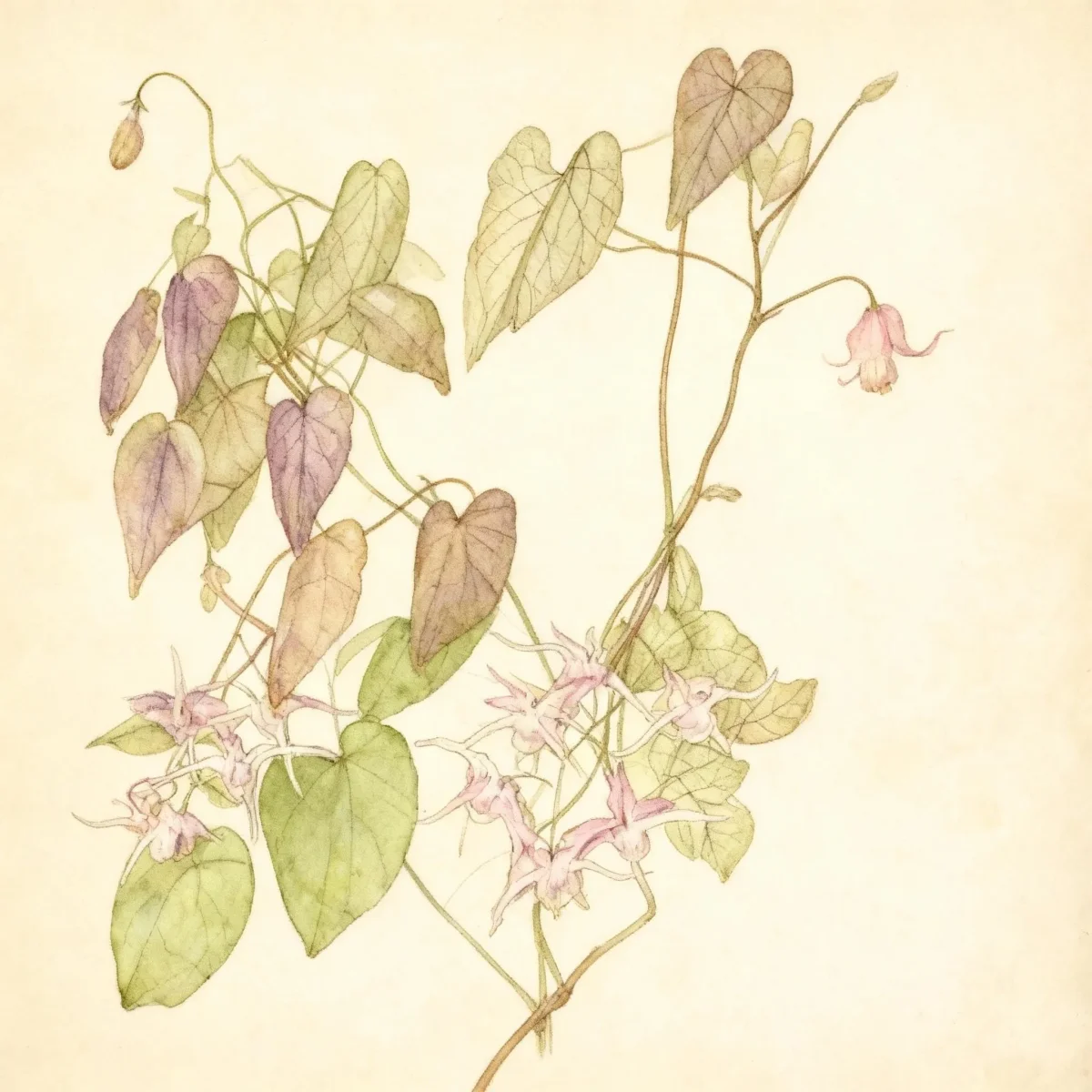
Bishop's hat (Epimedium acuminatum)
Grow the striking Epimedium acuminatum (Bishop's hat) for low-maintenance ground cover thriving in dry, heavy shade.
Scroll down to discover growing tips, care requirements, companion plants, and more
Complete Plant Information
Overview
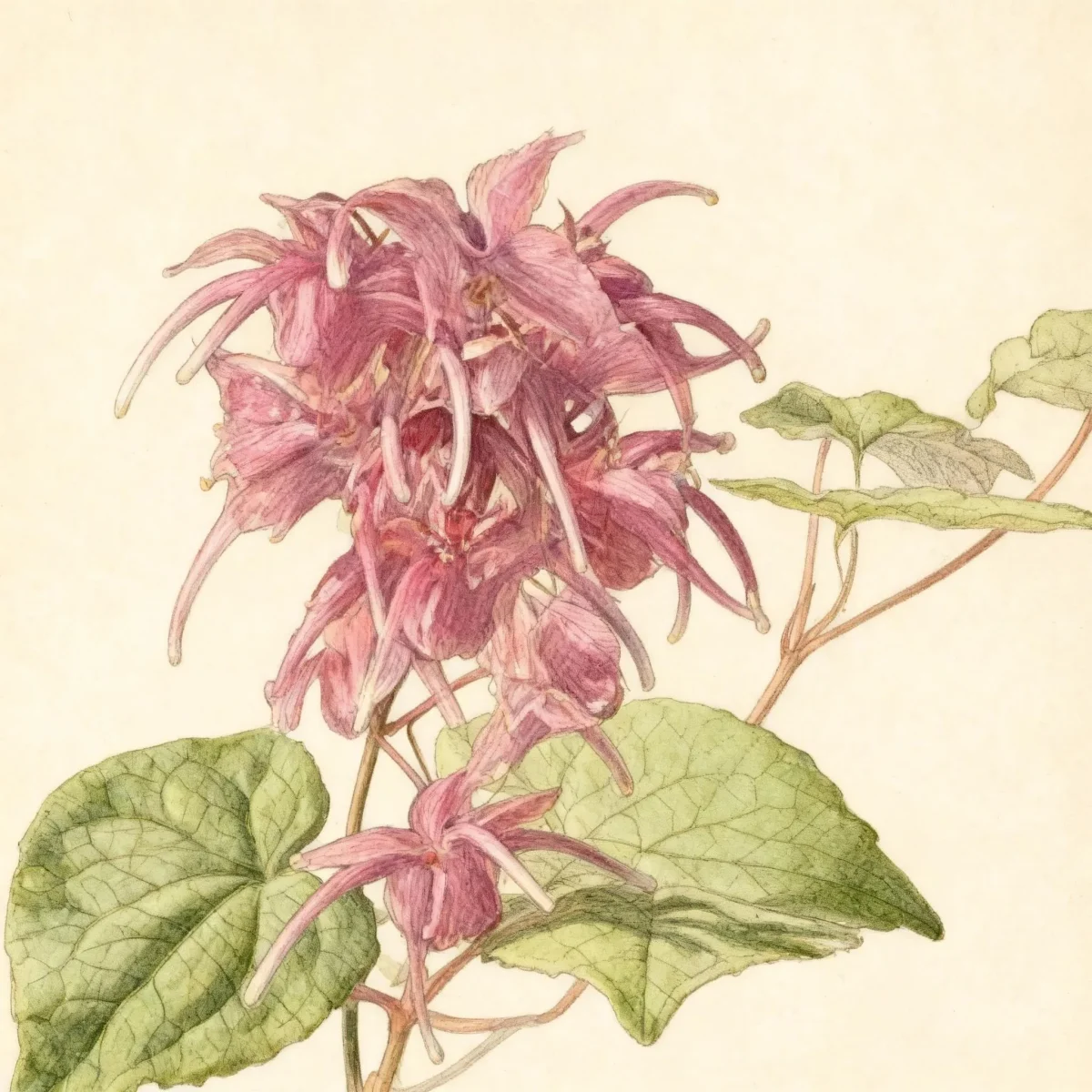
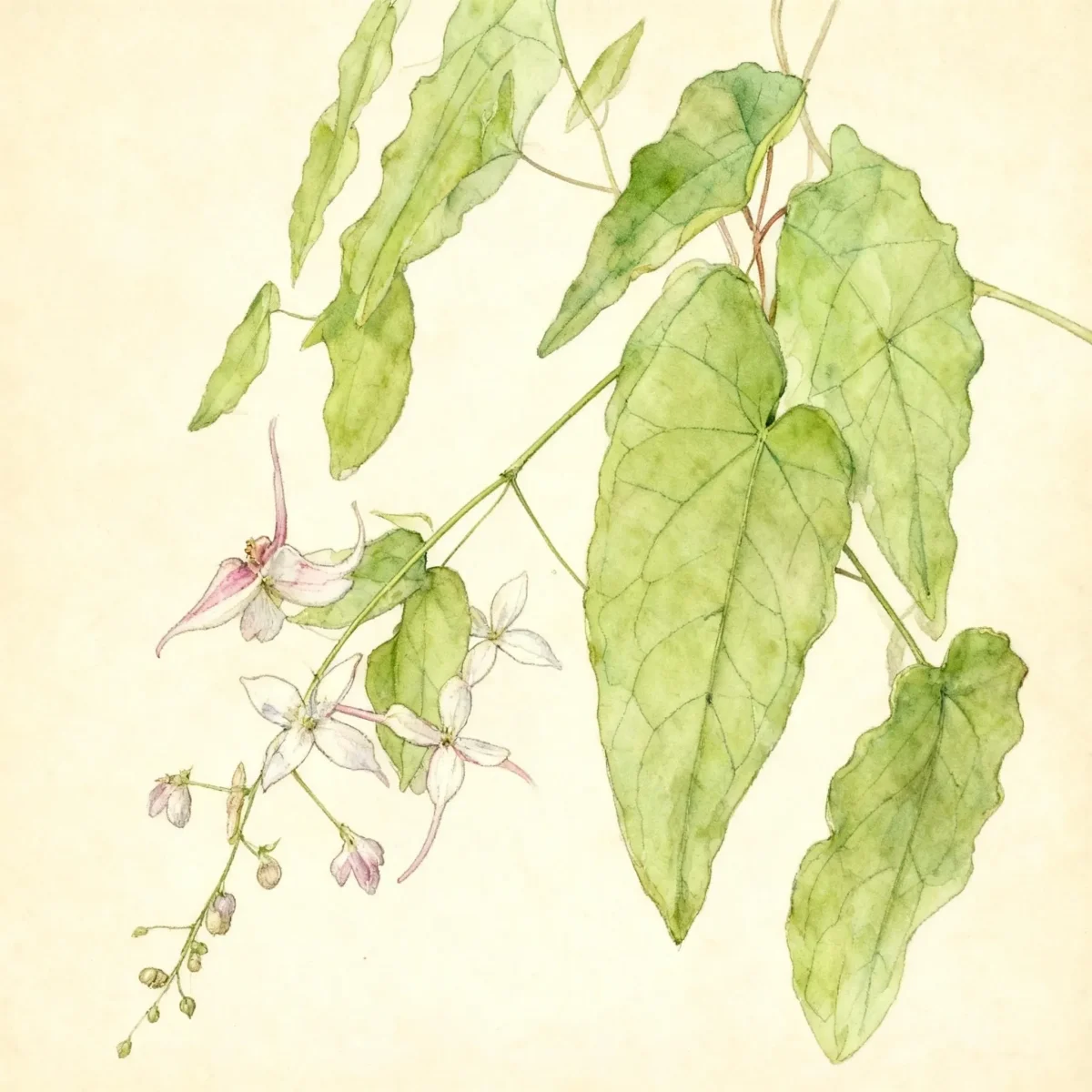
Epimedium acuminatum, commonly known as Bishop’s hat, is a highly valued herbaceous perennial, cherished for its resilience and delicate spring display. This species stands out due to its attractive, narrow green leaflets topped by large, spidery, nodding flowers in shades of purple and white. It forms tidy mounds, making it an exceptional choice for challenging shady locations where many other plants struggle.
This rhizomatous perennial offers significant practical value as a tough, long-lived ground cover. Once established, Bishop’s hat is remarkably low-maintenance and handles dry conditions well, thanks to its moisture-storing rhizomes. Its ability to thrive in significant shade and its deer resistance make Epimedium acuminatum a cornerstone plant for woodland and naturalized settings.
The defining beauty of Epimedium acuminatum appears in early to mid-spring when its showy flowers emerge above the foliage mound. The combination of evergreen or near-evergreen foliage (depending on climate) and robust shade tolerance ensures year-round visual interest, even after the last flower has faded.
Fast Facts
- Plant Family: Berberidaceae
- Plant Type: Herbaceous perennial
- Native Range: Western and central China
- Hardiness Zones: USDA Zones 5-9
- Size at Maturity:
- Height: 1-2 ft
- Spread: 1-2 ft
- Bloom Time: April to May
- Bloom Description: Purplish and white
- Sun Exposure: Part shade to full shade
- Water Needs: Dry to medium
- Maintenance Level: Low
How to Grow
Planting Epimedium acuminatum is best done in the early spring or fall, allowing the rhizomes time to settle before seasonal extremes. This plant thrives in average, acidic, well-drained soils. While it appreciates organically rich loam with consistent moisture, its unique strength lies in its tolerance for drier conditions once established. Always avoid heavy alkaline soils, which it cannot tolerate.
Water requirements are relatively low. While established colonies tolerate drought well, especially in deep shade, newly planted specimens need consistent moisture to encourage rhizome spread. Fertilization is rarely necessary; rich soil preparation during planting usually suffices. Monitor for foliage burn if the plants receive intense afternoon sun—morning sun or dappled light are ideal.
For necessary upkeep, cut back any old, tattered foliage in late winter just before the new growth emerges. This practice keeps the clump tidy and sets the stage for the spring bloom. Propagation is straightforward, achieved by dividing the slowly spreading rhizomes in either early spring or autumn.
Landscape Uses
The suggested uses for Epimedium acuminatum highlight its superior performance as a foundational plant in shaded landscapes. It excels as a ground cover, effectively suppressing weeds while creating a dense, attractive, foot-tall tapestry of foliage. Mass plantings in woodland gardens or naturalized areas beautifully showcase its sprawling habit.
Bishop’s hat also serves excellently as a durable edger for winding paths and walkways, providing tidy front-of-border definition that lasts for years. Because it grows well under the canopy of mature trees, use it in difficult dry shade spots where turf or hostas fail. The rhizomes also contribute positively to erosion control on gentle slopes.
Design-wise, pair Epimedium acuminatum with other shade-lovers like Japanese Forest Grass (Hakonechloa macra) for contrasting texture, or shade-loving ferns that share similar moisture needs in dappled light. Its structure provides a permanent foundation for more ephemeral spring bloomers.
Standout Features
Flower Qualities
- Showy
Noteworthy Characteristics
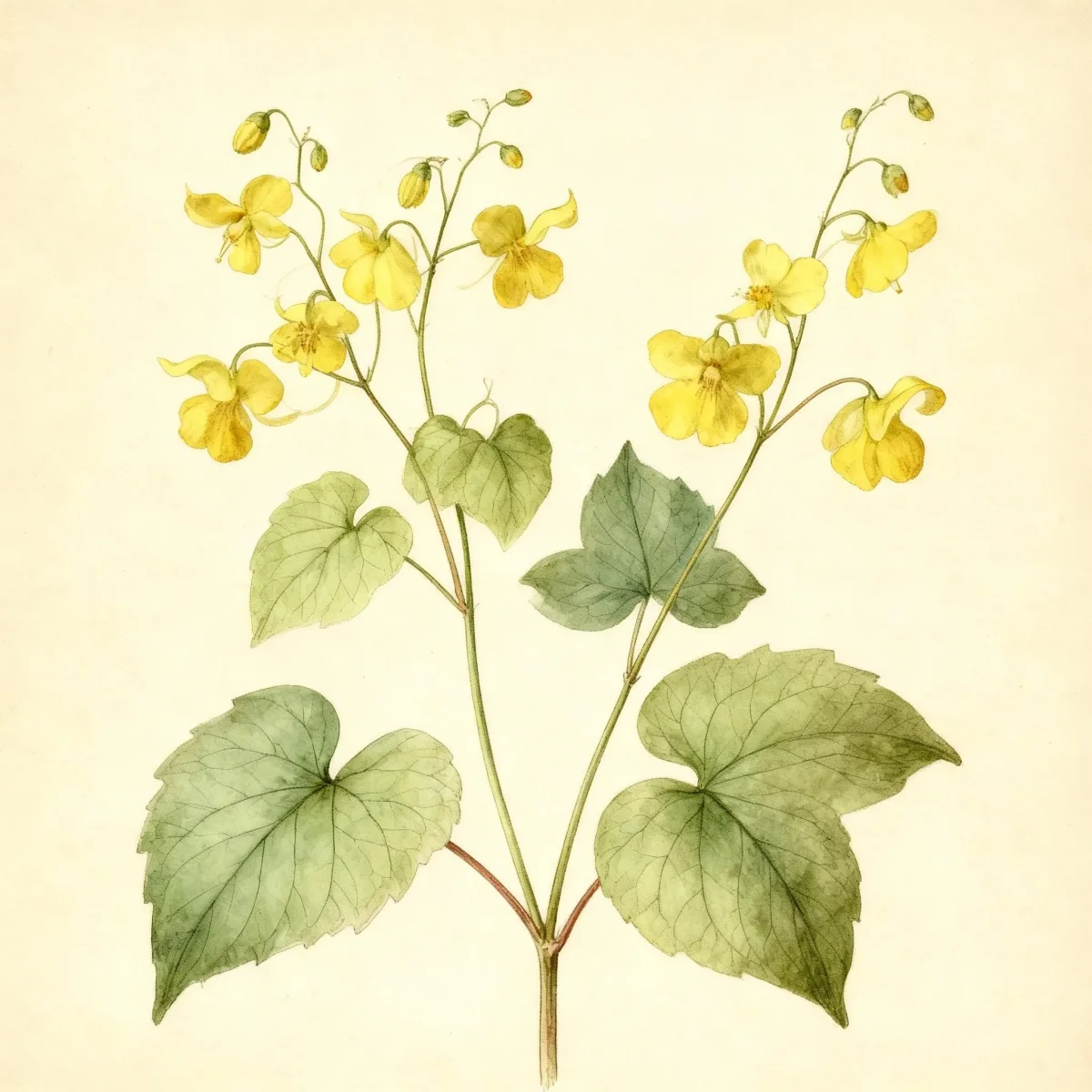
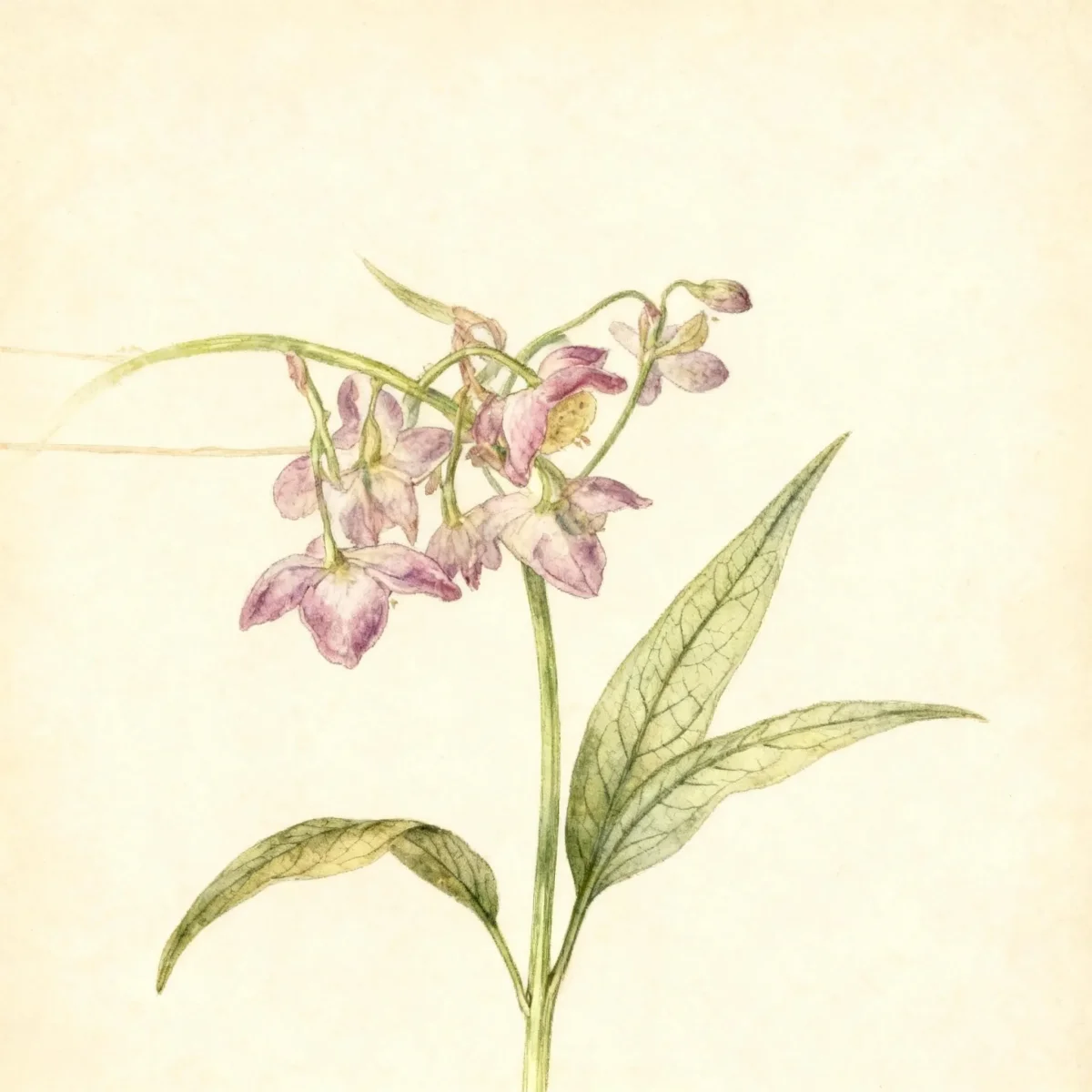
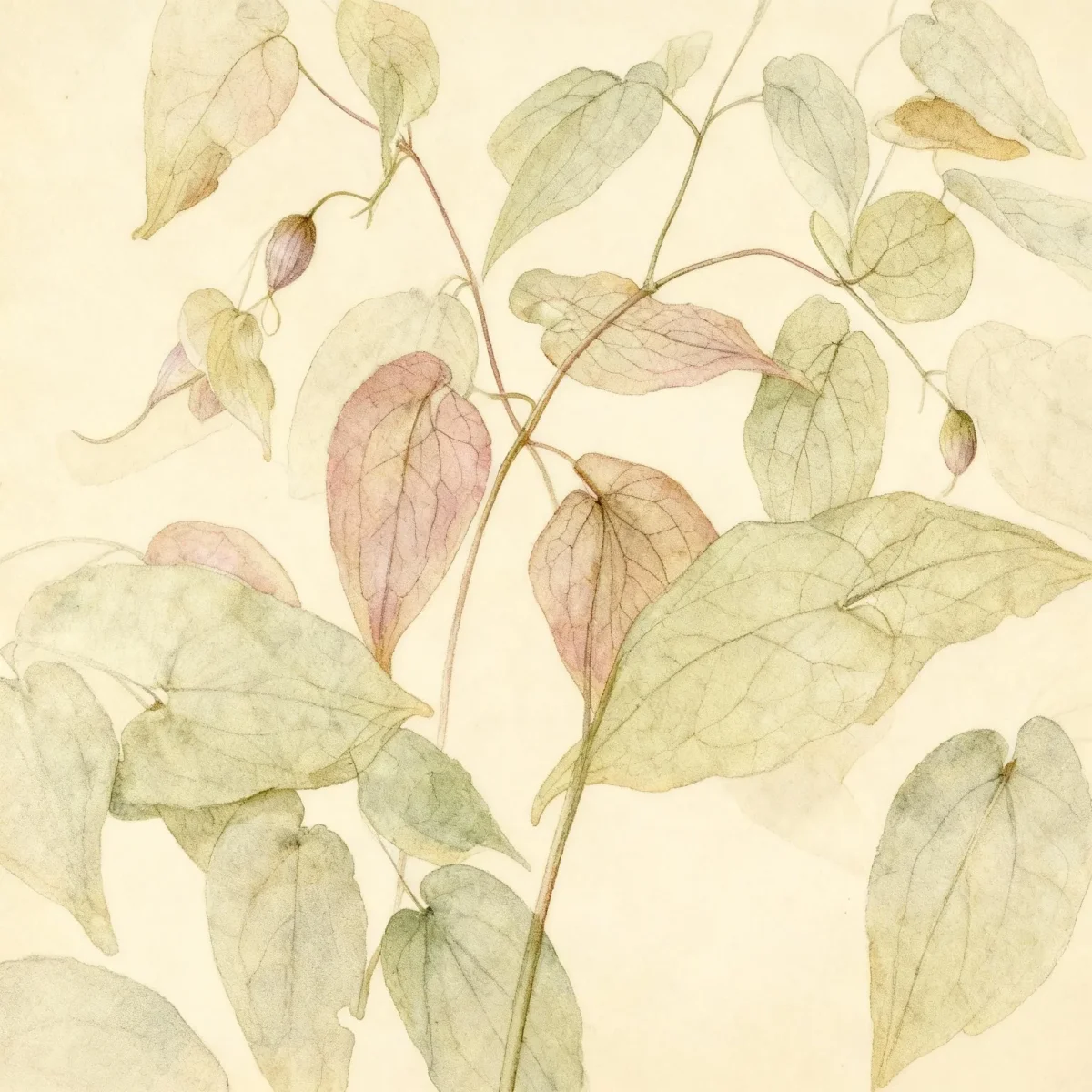
Epimedium acuminatum is noted for its attractive narrow green leaflets with acuminate tips and its large, spider-type, purple and white spring flowers. It is a rhizomatous perennial that typically grows on wiry stems forming a clump rising to 12” tall spreading to 18” wide in its native alpine woodlands of western and central China. Showy, spidery, nodding, long-spurred, columbine-like flowers bloom in spring atop flowering stems rising above the foliage. Epimediums are commonly known as bishop’s hat or bishop’s mitre due to the shape of the spurred flowers.
Tolerances
- Rabbit
- Deer
- Drought
- Heavy Shade
- Erosion
- Dry Soil
- Shallow-Rocky Soil
Potential Problems
Epimedium acuminatum generally exhibits excellent resistance to most common garden pests and diseases, contributing to its low-maintenance reputation. The primary concern noted is Mosaic Virus, which can be transmitted into the plant via feeding aphids.
To manage this, maintain vigilance for aphid populations, especially on new growth in spring, and remove infected plants immediately to prevent further spread. Avoid over-fertilizing with nitrogen, as lush, soft growth can attract more pests. If old foliage is left on over winter, it can harbor overwintering pests.
Frequently Asked Questions
What hardiness zones is Bishop’s hat suitable for?
Epimedium acuminatum is well-suited for gardeners in USDA Hardiness Zones 5 through 9.
How large does Epimedium acuminatum grow?
This perennial typically reaches a mature height between 1 and 2 feet tall and spreads to a comparable width of 1 to 2 feet.
What sun exposure does Bishop’s hat need?
This plant prefers filtered light and performs best in part shade to full shade conditions; intense afternoon sun should be avoided.
When does Epimedium acuminatum bloom?
The nodding flowers of Epimedium acuminatum generally appear between April and May, displaying a distinctive purplish and white coloration.
Conclusion
The resilience and refined beauty of Epimedium acuminatum, or Bishop’s hat, make it an indispensable plant for difficult, shaded garden spaces. Its impressive drought tolerance and resistance to common pests secure its standing as a top-tier, low-fuss perennial. Check your regional USDA hardiness zone compatibility and plan to plant your Bishop’s hat specimens during the cooler periods of spring or fall for the best establishment success.
Companion Planting
When designing a shade garden around Bishop’s hat, focus on companions that thrive under similar conditions—part shade to full shade and dry to medium moisture. Good textural partners include Heuchera (Coral Bells) for contrasting leaf shapes and colors, particularly their burgundy or lime-green cultivars. Hostas are excellent structural companions, though ensure that the soil does not become consistently wet, which Epimedium acuminatum dislikes.
For woodland aesthetics, consider pairing Epimedium acuminatum with various native woodland ferns like Japanese Painted Fern (Athyrium niponicum) or ferns preferring slightly drier sites. As both plants spread slowly, they complement each other without aggressive competition. This pairing results in a layered, textured understory that remains attractive throughout the growing season.
Propagation Tips
As a rhizomatous perennial, Epimedium acuminatum is most easily propagated through division, which also serves as a light rejuvenation method for overcrowded clumps. The ideal time for division is either early spring before major growth flushes or in the fall after the heat of summer has passed.
To divide, carefully dig up a section of the established clump. Using a clean, sharp spade or knife, gently separate the root mass into smaller divisions, ensuring each piece has several roots and a modest crown with leaves or buds attached. Replant these divisions immediately into the prepared, well-drained soil at the same depth they were previously growing.
These divisions will establish quickly if kept consistently moist for the first few weeks post-transplant, though the mature plant will quickly return to its preferred dry tolerance. Division is best performed every few years to maintain vigorous growth and flowering in your patches of Bishop’s hat.