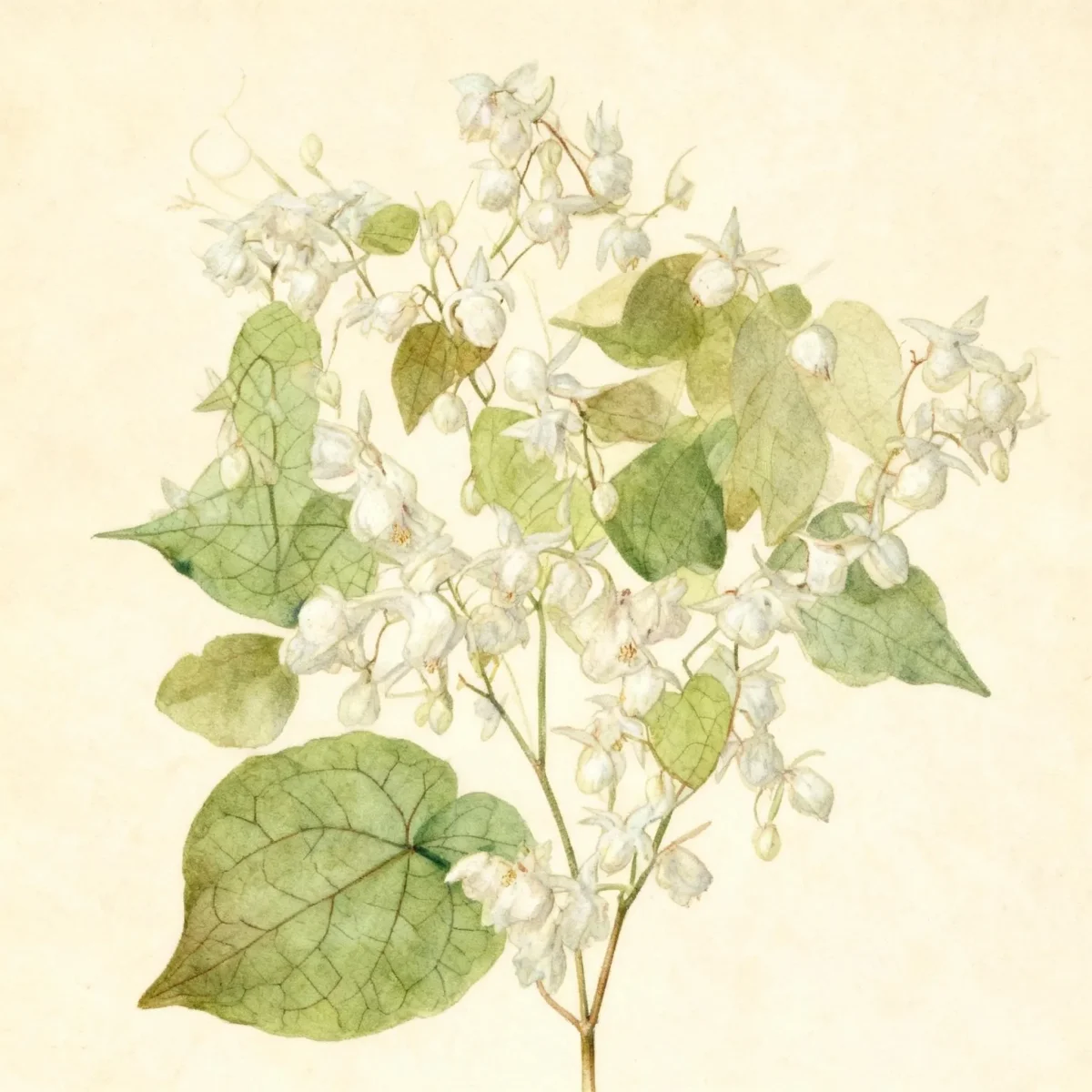
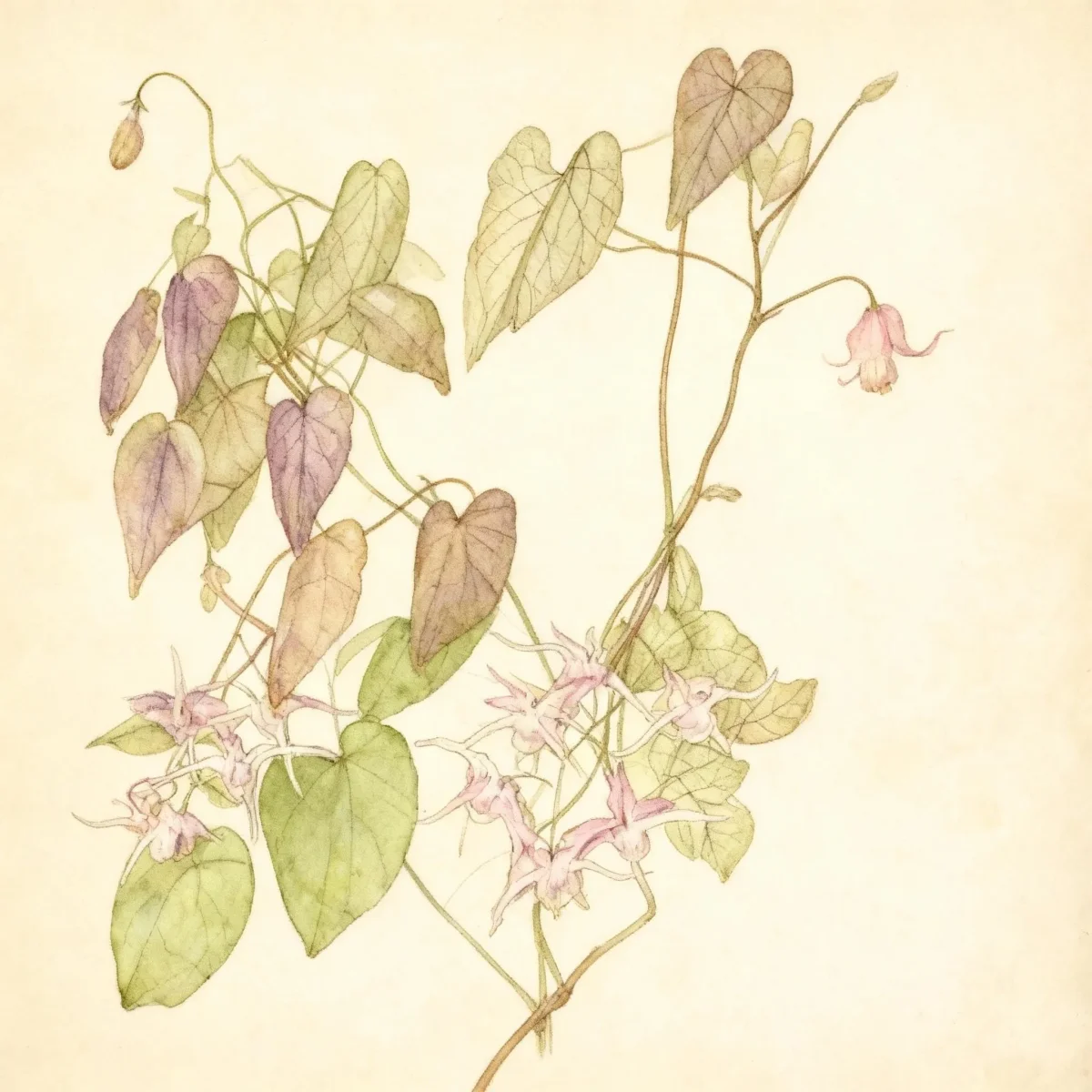
Bishop's hat (Epimedium diphyllum)
Discover Epimedium diphyllum (Bishop's hat), a tough, low-growing perennial perfect for dry, heavy shade ground cover.
Scroll down to discover growing tips, care requirements, companion plants, and more
Complete Plant Information
Overview
Epimedium diphyllum, commonly known as Bishop’s hat, offers exceptional performance in deep shade where few other ground covers succeed. This reliable herbaceous perennial forms attractive, dense mounds of foliage suitable for suppressing weeds even in difficult, dry soil conditions. Its delicate white, nodding, bell-shaped flowers appear early in the spring, providing welcome color before many other woodland plants awaken.
Valued for its tenacity and attractive, typically evergreen leaves, Bishop’s hat spreads slowly via rhizomes to create a cohesive mat, making it an ideal choice for naturalizing under mature trees. Gardeners appreciate the low maintenance requirements of Epimedium diphyllum, especially once established, as it shrugs off deer and rabbits.
Ultimately, Epimedium diphyllum is a foundational plant for the shady border or woodland garden, providing texture, reliable year-round structure, and surprisingly charming spring blooms.
Fast Facts
- Plant Family: Berberidaceae
- Plant Type: Herbaceous perennial
- Native Range: Japan
- Hardiness Zones: USDA Zones 5-8
- Size at Maturity:
- Height: 0.5-1 ft
- Spread: 0.75-1 ft
- Bloom Time: April
- Bloom Description: White
- Sun Exposure: Part shade to full shade
- Water Needs: Dry to medium
- Maintenance Level: Low
How to Grow
Plant Bishop’s hat in the early spring or fall, ensuring the location offers part shade to full shade. While Epimedium diphyllum is famous for tolerating dry soil, consistently rich, organic soils with even moisture will yield the best performance, especially when establishing new clumps. Ensure the soil is well-drained, as prolonged wet feet can be detrimental.
Maintenance is minimal for this hardy perennial. Water deeply during extended dry periods, particularly in the first year, as this plant tolerates drought primarily once fully established. Fertilization is generally unnecessary if planted in good woodland soil amended with compost.
A specific seasonal tip for colder climates: cut back the previous year’s foliage in late winter just before new growth emerges. In warmer regions, the foliage tends to remain evergreen, but trimming back old leaves can refresh the appearance. The clump-forming nature of Epimedium diphyllum means it spreads slowly but steadily via underground rhizomes.
Landscape Uses
The primary role of Bishop’s hat is effective ground coverage in challenging shady habitats. It performs beautifully as a textural element in woodland gardens or naturalized areas where turfgrass fails to thrive near tree roots. Its ability to handle dry soil makes it superb for planting beneath large, established trees that aggressively consume surface moisture.
Use this low-growing perennial to line shady borders or define the edge of a woodland path. Pair it with other shade-loving, moisture-tolerant favorites like Hosta, Ferns, or Helleborus to layer textures throughout the season. The uniform height of Epimedium diphyllum makes it an excellent choice for creating solid green “carpets” or subtle drifts.
Standout Features
Flower Qualities
- Showy
Noteworthy Characteristics
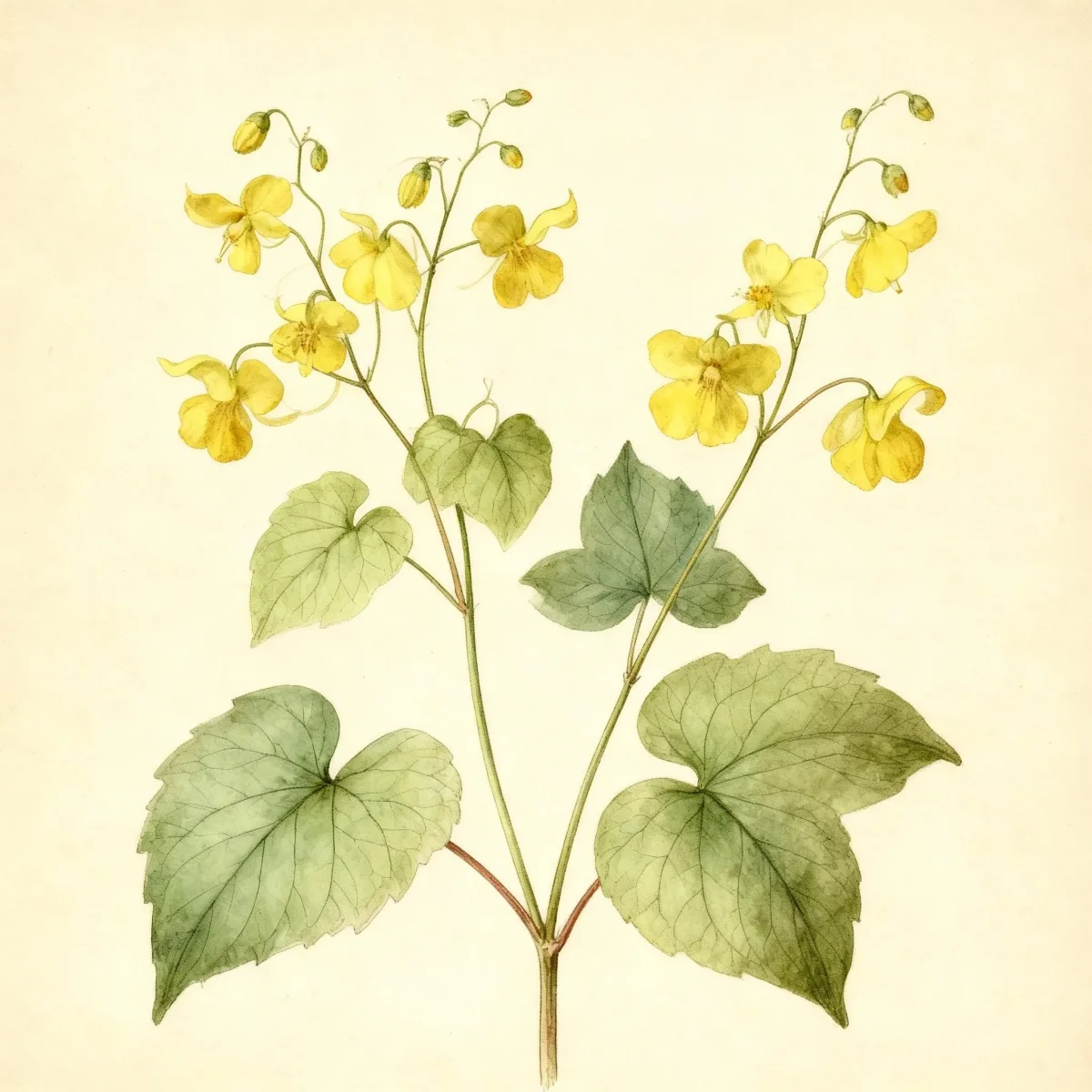
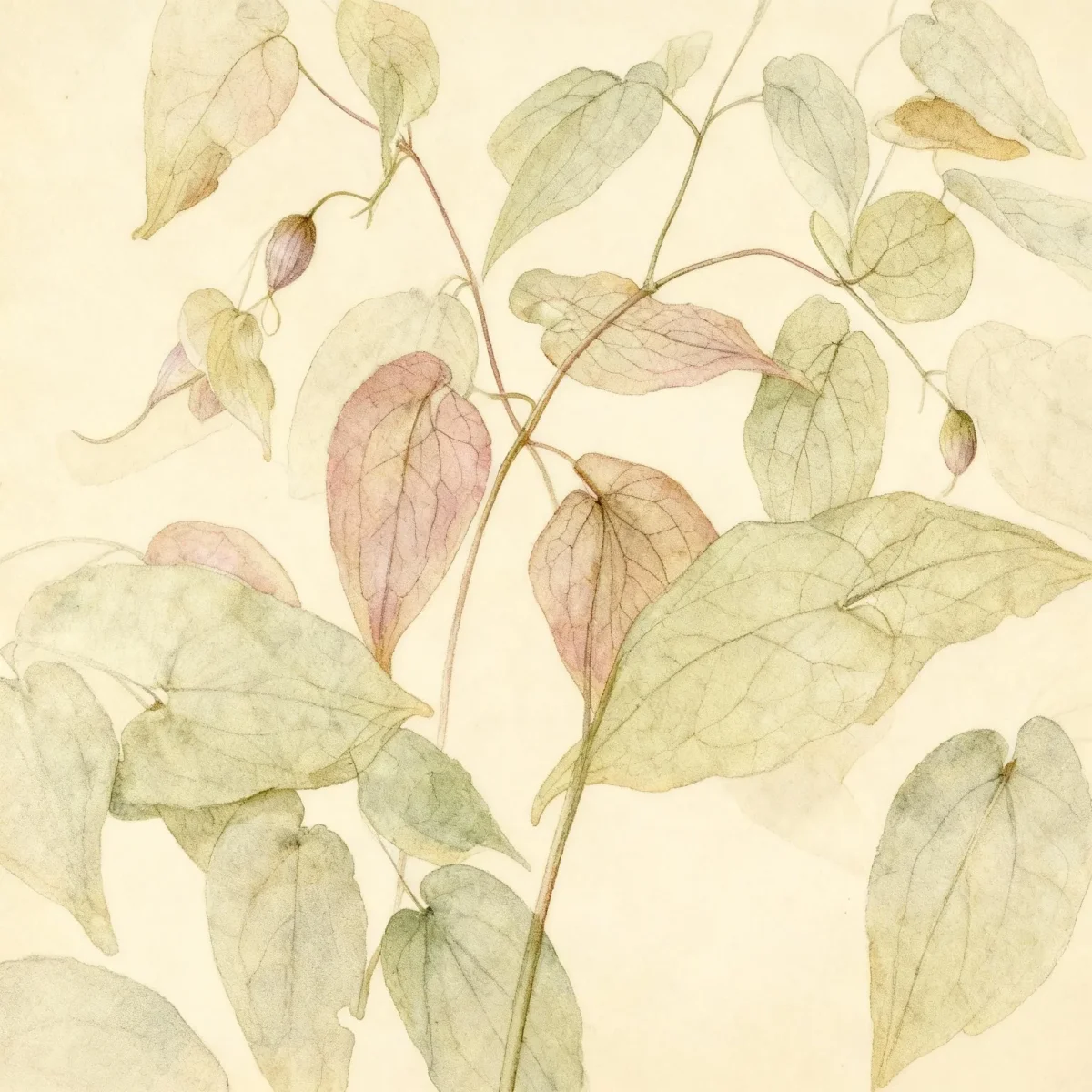
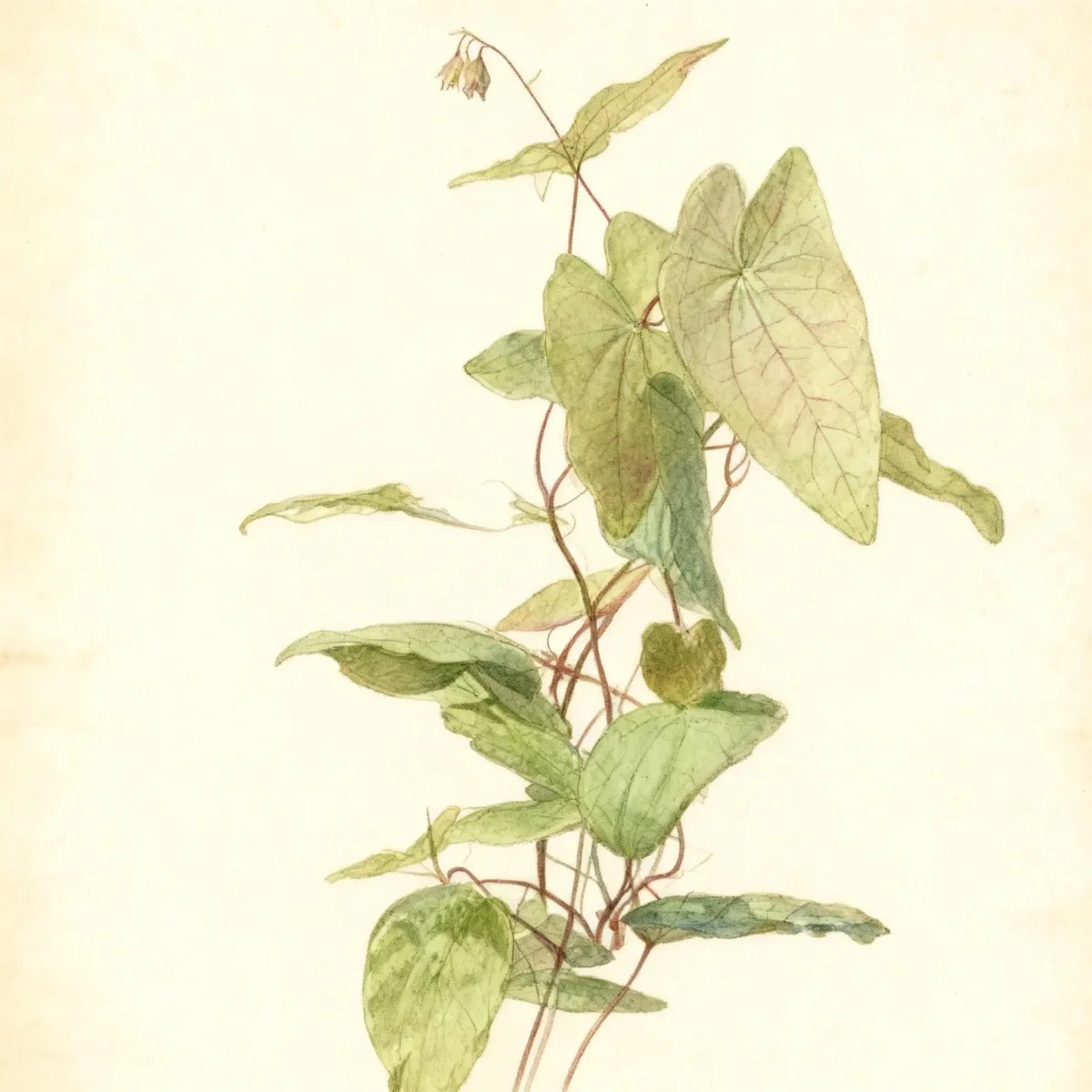
Epimedium diphyllum is a low-growing, clump-forming perennial which typically grows 8-10” tall and is primarily used as a ground cover in shady or woodland areas. Small, drooping, bell-shaped, spurless white flowers appear in spring above the foliage. Bifoliate (2 leaflets), medium green leaves with triangular to heart-shaped leaflets (to 2” long) on wiry stems form dense, compact, spreading mounds. Foliage is evergreen in warm winter climates, but typically turns bronzish in fall and depreciates throughout the winter in cold winter climates.
Tolerances
- Rabbit
- Deer
- Drought
- Heavy Shade
- Erosion
- Dry Soil
- Shallow-Rocky Soil
Potential Problems
Gardeners will be pleased to note that serious insect or disease problems rarely affect this species. Epimedium diphyllum is exceptionally resistant to most common garden pests. Management is rarely required, though ensuring excellent drainage remains the most critical cultural factor to prevent root issues in overly wet soil.
Frequently Asked Questions
What hardiness zones is Bishop’s hat suitable for?
Epimedium diphyllum is reliably hardy across USDA Zones 5 through 8.
How large does Bishop’s hat grow?
This plant typically reaches a low height of 0.5 to 1 foot tall and spreads to a similar width of 0.75 to 1 foot wide.
What sun exposure does Epimedium diphyllum need?
It thrives best in full shade conditions but adapts well to areas receiving only part shade throughout the day.
When does Epimedium diphyllum bloom?
The small white flowers of Bishop’s hat generally appear in April, providing early spring interest.
Companion Planting
Because Epimedium diphyllum excels in dry footing under established trees, selecting companions that share this tolerance is key. Consider pairing Bishop’s hat with Geraniums (cranesbill), especially woodland varieties like Geranium macrorrhizum, which also suppress weeds in dry shade. Lilyturf (Liriope) provides a contrasting upright texture against the spreading mounds of Epimedium diphyllum.
For vertical contrast, introduce taller native ferns that appreciate similar soil profiles but can handle the root competition better than sun-loving perennials. The low matt of the two-leaved barrenwort protects the soil surface while the companions add vertical dimension.
Propagation Tips
The most straightforward method for propagating Bishop’s hat, or Epimedium diphyllum, is division. This perennial spreads slowly by rhizomes, forming dense clumps over time. Division should ideally be done in early spring just before new growth surges or in early fall.
To divide, carefully lift sections of the mature clump using a sharp spade or garden fork, ensuring each division has a healthy portion of roots and emerging buds. Replant these sections immediately into prepared soil at the same depth they were previously growing. Since this plant spreads slowly, it requires patience, making division a yearly or bi-yearly task to manage patch size, rather than rapid mass propagation.
Conclusion
Epimedium diphyllum remains one of the most valuable, low-effort ground covers available for notoriously dry, shady garden spots. Its deer resistance and attractive two-leaved foliage ensure structure throughout the year, complemented by its charming white spring flowers. Before installation, confirm your garden falls within USDA Zones 5-8, and plant in the fall or early spring for the best establishment of your new Bishop’s hat carpet.