Bishop's hat (Epimedium pinnatum subsp. colchicum)
Epimedium pinnatum subsp. colchicum is a low-maintenance perennial ground cover featuring yellow spring flowers. Discover how to grow Bishop's hat in dry, shady spots.
Scroll down to discover growing tips, care requirements, companion plants, and more
Complete Plant Information
Overview
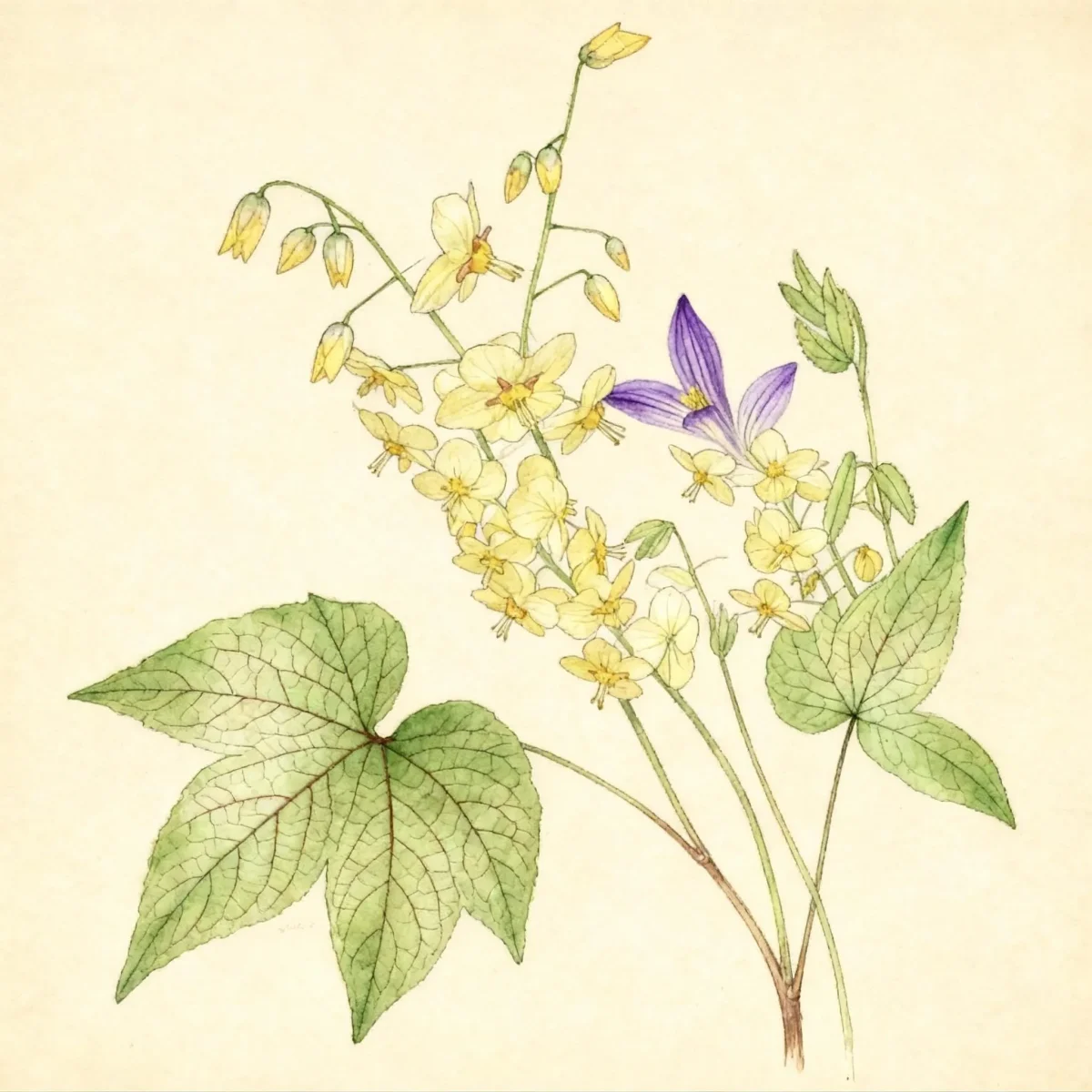
Epimedium pinnatum subsp. colchicum, widely known as Bishop’s hat, is a fantastic choice for solving challenging landscape problems, particularly those involving dry shade. This tough, rhizomatous perennial forms dense, attractive mounds of foliage, providing excellent ground cover throughout the season. Its primary ornamental appeal is the delicate yet cheerful bloom of bright yellow flowers that emerge early in spring.
Native to woodland areas across the Caucasus region, this subspecies thrives where many other plants struggle, tolerating heavy shade and dry conditions once established. Gardeners value the low maintenance required for Epimedium pinnatum subsp. colchicum, making it an indispensable plant for naturalizing large, difficult areas under mature trees.
The evergreen nature of the foliage in milder climates ensures continuous texture and interest, while the common names—Bishop’s hat or barrenwort—refer to the distinctive flower structure and historical nomenclature, respectively. Cultivating Epimedium pinnatum subsp. colchicum reliably delivers beauty without demanding constant attention.
Fast Facts
- Plant Family: Berberidaceae
- Plant Type: Herbaceous perennial
- Native Range: Armenia, Azerbaijan, Iran, Turkey
- Hardiness Zones: USDA Zones 5-8
- Size at Maturity:
- Height: 0.75-1.5 ft
- Spread: 0.75-1.5 ft
- Bloom Time: March to May
- Bloom Description: Yellow
- Sun Exposure: Part shade to full shade
- Water Needs: Dry to medium
- Maintenance Level: Low
How to Grow
Plant Bishop’s hat during the cooler, wetter periods of early spring or fall to help it establish quickly in its new location. For best results, cultivate Epimedium pinnatum subsp. Colchicum in average, well-drained soils that are amended with organic matter to create a loose loam. While it tolerates dry soil exceptionally well once mature, providing even moisture during the initial establishment phase is crucial for vigorous root development.
Care for this perennial is minimal, reinforcing its low-maintenance status. Water deeply but infrequently, allowing the soil surface to approach dryness between waterings, especially in dappled sunlight. Fertilization is rarely necessary unless soil is extremely poor; avoid excessive nitrogen, which can promote lush leaf growth at the expense of flowers.
A key seasonal maintenance task for Epimedium pinnatum subsp. colchicum involves tidying the foliage. In late winter or very early spring, before new growth begins, cut back the old foliage in colder zones to showcase the emerging spring flowers. This practice is particularly recommended in climates where the evergreen leaves might look tattered after winter weather.
Landscape Uses
This plant excels as a superb, spreading ground cover, effectively blanketing shady slopes or underpinning larger shrubs and trees where turfgrass fails. The rhizomatous nature of Epimedium pinnatum subsp. colchicum means it can naturalize beautifully, forming dense, weed-suppressing colonies over time. Use it to edge woodland paths or soften the harsh lines of concrete walkways or retaining walls.
Consider mass plantings of Bishop’s hat to create a sea of textured foliage punctuated by bright yellow blooms each spring. Because it performs so well under broad canopy trees, it is an ideal companion for ferns, hostas, and spring ephemerals that share similar requirements for partial to full shade and average moisture. Its tolerance for dry, shallow, and rocky soil also makes it suitable for difficult borders or rock gardens situated in shaded recesses.
Standout Features
Flower Qualities
- Showy
Noteworthy Characteristics
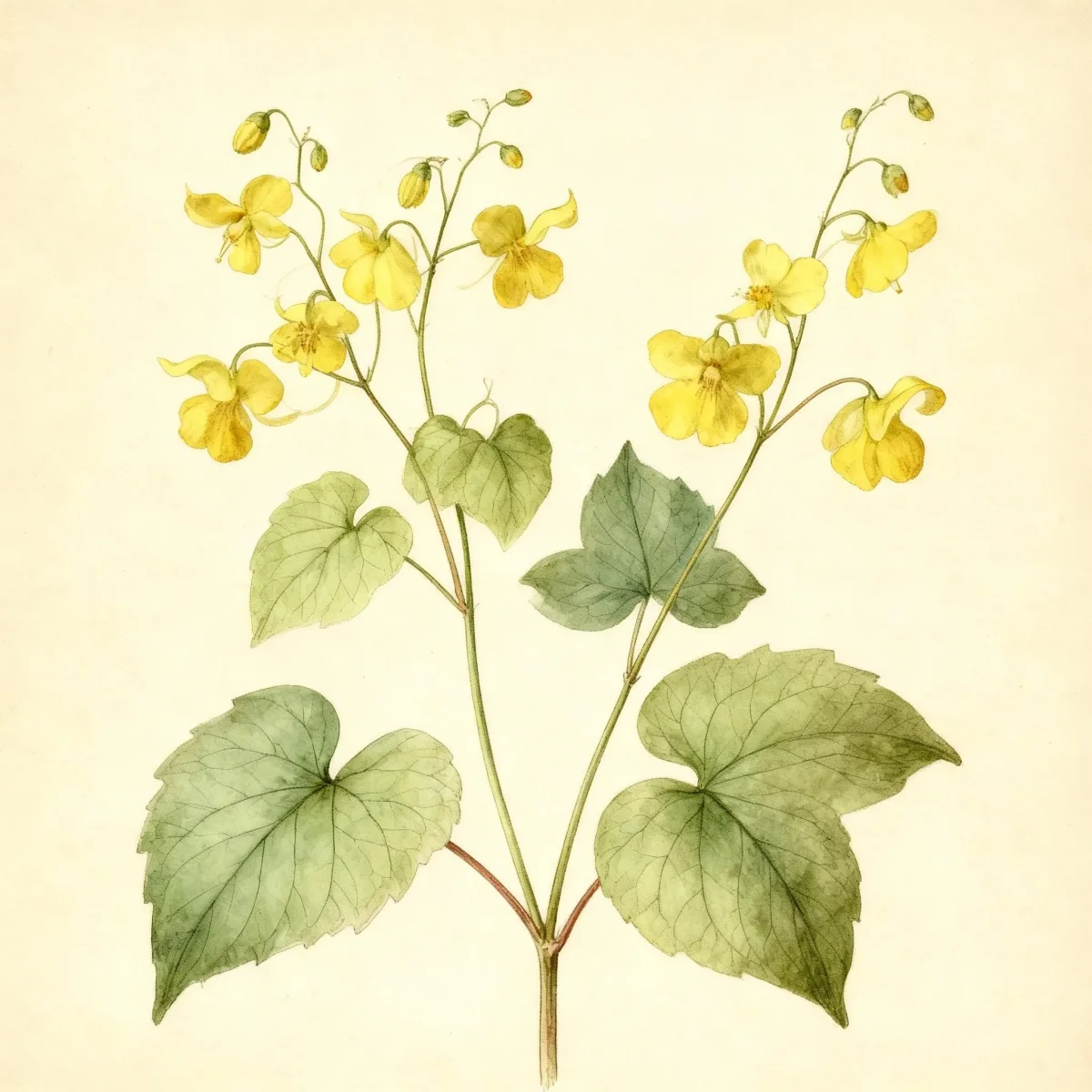
Epimedium pinnatum is a rhizomatous, clump-forming, evergreen perennial that grows to 8-12” tall. It is native to woodland areas of the Caucasus (subsp. Pinnatum from regions near the Caspian Sea and subsp. Colchicum from regions near the Black Sea). Showy flowers (to 3/4” wide) feature bright yellow petal-like inner sepals, red spurs, and minute brownish petals. Flowers bloom in spring (April-May) in terminal racemes (12-30 flowers) atop leafless flowering stems (plant leaves are all basal) rising to 12” tall. Basal leaves are biternate (9 leaflets) or pinnate (5 or 11 leaflets). Dark green leaflets (to 3” long) with red or white surface hair (maturing to hairless) have acute tips, cornate bases and serrate margins. Subsp. Colchicum grows slightly taller (to 16”), spreads more slowly, has larger flowers and often produces toothless leaflets. It is noted for dense, spreading mounds of compound foliage with ovate, sparsely toothed to entire leaflets (2-5” long) and for a spring bloom of outward-facing, bright yellow flowers with yellow or brown spurs. E. Pinnatum subsp. Colchicum is synonymous with E. Pinnatum subsp. Elegans.Genus name is of unclear origin and meaning but the Greeks used epimedion for a very different plant.Specific epithet comes from the Latin word pinnatus meaning feathered in probable reference to leaf shape.Epimediums are commonly called bishop’s hat (four-spurred flowers of some species resemble a clergyman’s biretta) or barrenwort (root extract was once believed to prevent female conception).
Tolerances
- Rabbit
- Deer
- Drought
- Heavy Shade
- Erosion
- Dry Soil
- Shallow-Rocky Soil
Potential Problems
This plant enjoys an excellent reputation regarding pests and diseases. Gardeners report no serious insect or disease problems when growing Epimedium pinnatum subsp. colchicum correctly. Consistent issues, such as poor drainage or excessive fertilizer, might cause temporary weakening, but serious infestations are rare. Ensure adequate air circulation if planting densely, although its robust nature usually prevents fungal issues common to plants in damp conditions.
Frequently Asked Questions
What hardiness zones is Bishop’s hat suitable for?
Epimedium pinnatum subsp. colchicum is adaptable across USDA Hardiness Zones 5 through 8, making it a reliable perennial choice for many temperate gardens.
How large does Epimedium pinnatum subsp. colchicum grow?
This species typically reaches a mature height between 0.75 and 1.5 feet tall, spreading to a similar width of 0.75 to 1.5 feet via slow rhizome expansion.
What sun exposure does Bishop’s hat need?
For optimal performance and flowering, provide Epimedium pinnatum subsp. colchicum with part shade to full shade conditions; it handles deep shade well but may bloom less profusely.
When does Bishop’s hat bloom?
Look forward to the cheerful yellow flowers of this barrenwort appearing reliably in early spring, generally blooming from March through May.
Conclusion
The versatility and resilience of Epimedium pinnatum subsp. colchicum make it a premier choice for carpeting difficult, shaded areas of the landscape. This Bishop’s hat provides early color and year-round evergreen structure with minimal care requirements. Prioritize planting this perennial in well-drained soil within its established hardiness zones for guaranteed success in your woodland or shade garden.
Companion Planting
Due to its preference for dry to medium, well-drained soil and shade, Epimedium pinnatum subsp. colchicum pairs wonderfully with other shade-tolerant, reliable perennials. Consider pairing it with Helleborus (Lenten Rose), which blooms concurrently or slightly earlier, providing a dense tapestry of early spring color. As the season progresses, hostas of varying sizes and colors offer contrasting foliage textures alongside the fine, compound leaves of the barrenwort.
For a naturalized woodland setting, planting this ground cover among Japanese Forest Grass (Hakonechloa macra) creates an engaging study in texture, as both plants prefer shady environments and function excellently as low border materials. Since mature Epimedium tolerates drought, it also serves as a sturdy companion for plants that can handle sporadic dry spells once established, contrasting beautifully with moisture-loving spring bulbs like species daffodils.
Propagation Tips
The primary method for increasing your stock of Epimedium pinnatum subsp. colchicum is through division, which also serves as a light rejuvenation technique. Since these plants spread slowly via rhizomes, the best time to divide is either in early spring just as new growth is appearing or in the fall before the ground freezes hard. Carefully lift the entire clump using a sharp spade, teasing apart sections that have established roots and several shoots attached.
When replanting divisions, ensure they are planted at the same soil level they occupied previously; avoid burying the crowns too deeply, which can lead to rot. These divisions should be kept consistently moist for the first growing season to help the separated rhizomes establish new anchoring roots. While Epimedium can be grown from seed, seed propagation is slow and may not reliably produce plants true to the parent subspecies.