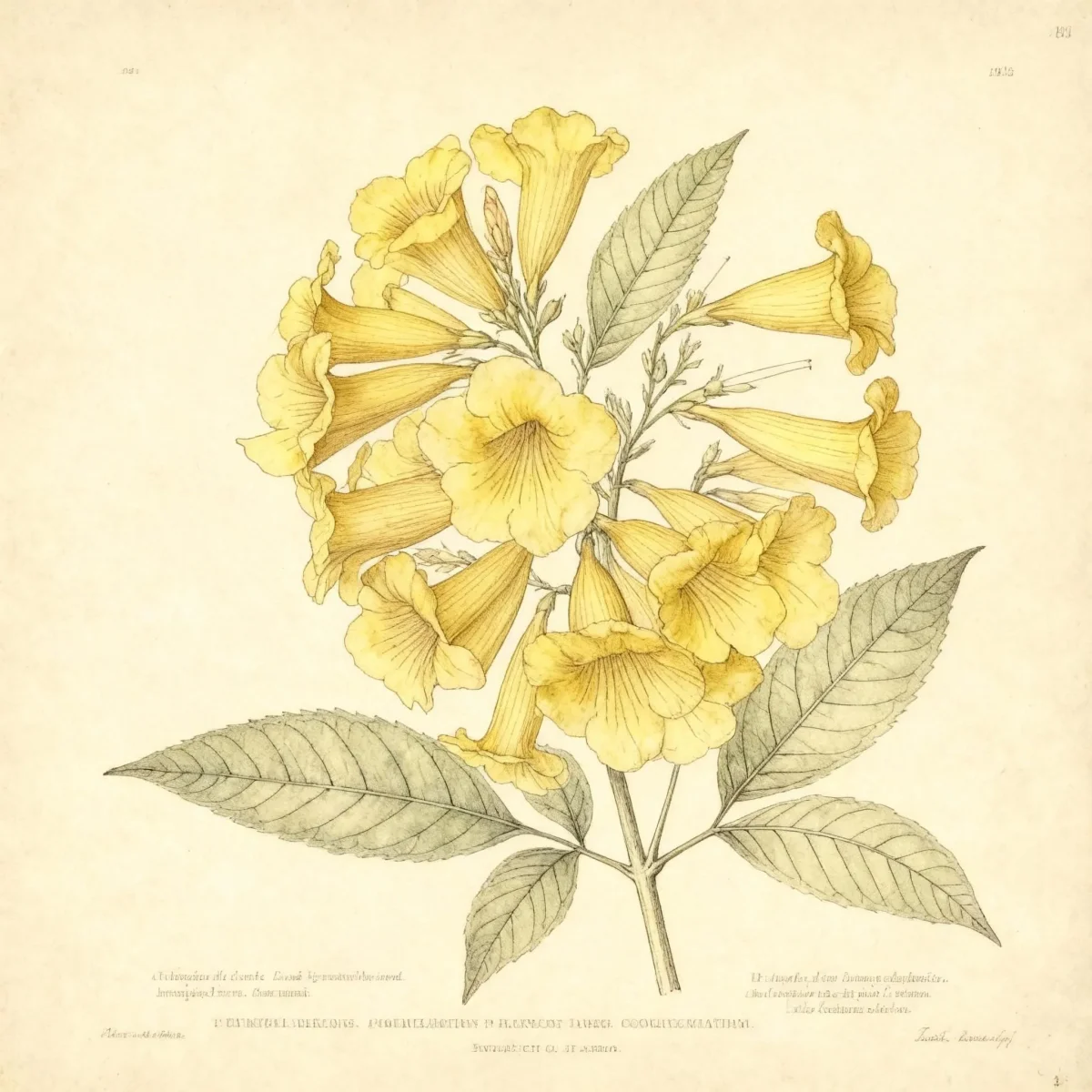
Yellow bells (Tecoma stans)
Discover Tecoma stans, the stunning Yellow bells shrub, featuring showy, fragrant yellow trumpet flowers. Ideal for sunny spots in Zones 10-11.
Scroll down to discover growing tips, care requirements, companion plants, and more
Complete Plant Information
Overview
The Tecoma stans, widely recognized as Yellow bells, is a vibrant, fast-growing specimen celebrated for its continuous spectacle of bright, sunny blooms. This broadleaf evergreen brings tropical flair to any landscape or container garden, offering color from late spring straight through to the first frost. Its trumpet-shaped flowers are highly attractive, ensuring the plant remains a focal point throughout the growing season.
Native to regions stretching from the Southern US down through Central and South America, Tecoma stans thrives in conditions mirroring its warm origins. While it can function as a sprawling shrub or small tree in tropical environments, gardeners in cooler areas utilize its container mobility to maximize its ornamental potential. Its longevity and reliably cheerful nature make Yellow bells an excellent choice for adding consistent warmth and visual interest.
Beyond its aesthetic appeal, the plant’s genus name honors indigenous Mexican terminology, adding a layer of horticultural history. For gardeners seeking reliable, low-fuss summer color that pops against green foliage, Tecoma stans provides an outstanding, resilient option when placed in full sun.
Fast Facts
- Plant Family: Bignoniaceae
- Plant Type: Broadleaf evergreen
- Native Range: Southern United States, Central and South America
- Hardiness Zones: USDA Zones 10-11
- Size at Maturity:
- Height: 2-6 ft
- Spread: 2-4 ft
- Bloom Time: Flowers freely
- Bloom Description: Yellow
- Sun Exposure: Full sun
- Water Needs: Medium
- Maintenance Level: Medium
How to Grow
Plant Tecoma stans where it receives consistently bright, full sun exposure; this is crucial for achieving the best flowering performance. It prefers organically rich, fertile soils that maintain medium moisture levels but must drain exceptionally well. In its preferred tropical and subtropical hardiness zones (USDA 10-11), it can be established directly in the garden bed.
Ongoing care involves consistent watering, especially when young or grown in containers where soil dries rapidly. While not overly demanding, feeding with a balanced fertilizer during the active growing season supports the prolific blooming habit associated with Yellow bells. Deadheading faded flowers promotes the continuous production of new blooms throughout the summer and fall.
For gardeners residing outside Zones 10-11, such as in St. Louis, the plant must be managed as a seasonal patio feature. Treat Tecoma stans as a container plant; bring it indoors before the first hard frost, placing it in a bright, sunny room where it can be maintained as a houseplant over winter. Pruning should be done as needed, primarily after the main flowering period concludes, to shape the plant or reduce overall size.
Landscape Uses
In areas where Tecoma stans can be grown year-round as an established shrub or small tree, it excels when massed in shrub borders for bold drifts of yellow color or utilized as an upright specimen plant. Its height potential allows it to serve as a temporary screen or backdrop near perennial plantings. The lively yellow of Yellow bells pairs splendidly with deep purples, blues, and contrasting silver foliage.
Where climates mandate winter protection, the primary landscape role for Tecoma stans shifts to container gardening. Use these vibrant pots on patios, decks, or near entryways where their continuous color can be easily appreciated and where moving them indoors for winter is manageable. In warmer regions like Southern Florida and California, they fit seamlessly into mixed borders alongside other sun-loving, heat-tolerant tropicals.
Standout Features
Flower Qualities
- Showy
- Fragrant
Noteworthy Characteristics
Tecoma stans, commonly called yellow bells, is native to the West Indies, Florida, and Mexico to South America. It is a broadleaf evergreen shrub or small tree that typically grows from 10’ to 25’ tall in its native range, featuring a lengthy bloom of bright yellow tubular flowers. It is often sold as a container plant for patios in a manner similar to Mandevilla. Trumpet-shaped bright yellow flowers bloom continuously from late spring to frost, followed by narrow, bean-like capsules containing papery-winged seeds.
Tolerances
Potential Problems
Fortunately, Tecoma stans generally avoids serious insect or disease issues when grown outdoors in appropriate conditions. The primary concern arises when cultivating these plants as houseplants during winter dormancy or rest periods. Indoor specimens require vigilant monitoring for common pests such as spider mites and whiteflies, which thrive in dry indoor air. Regular inspection and prompt treatment with insecticidal soap can manage minor infestations, ensuring the health of your Yellow bells until it can return outside.
Frequently Asked Questions
What hardiness zones is Yellow bells suitable for?
Tecoma stans is winter hardy to USDA Zones 10 and 11, requiring protection or overwintering indoors when temperatures drop below frost levels.
How large does Tecoma stans grow?
In its mature, uncontrolled environment, this species can reach heights of 10 to 25 feet, though container-grown specimens, like those often sold locally, are typically kept much smaller, between 2 to 6 feet tall.
What sun exposure does Yellow bells need?
This plant requires full sun exposure to produce its best display of yellow flowers. Inadequate light will result in sparse blooming.
When does Tecoma stans bloom?
Tecoma stans blooms freely, offering a continuous display of yellow, trumpet-shaped flowers from late spring until the first hard frost of autumn.
Conclusion
The Tecoma stans, or Yellow bells, is an indispensable plant for gardeners seeking long-lasting, brilliant yellow color in sunny locations. Its ease of care and showy flowers provide undeniable cheer, whether rooted firmly in subtropical soil or enjoyed seasonally on a patio container. Before planting, confirm your local hardiness zone or develop a reliable plan for overwintering this beautiful tropical shrub.
Companion Planting
When planning garden beds or container groupings for Tecoma stans, focus on companions that complement its bright yellow blooms and share its need for intense sun and well-drained soil. Consider pairing it with plants featuring dark foliage or cool-toned flowers to create maximum contrast. For example, dark purple or deep burgundy foliage plants, such as certain varieties of sweet potato vine (Ipomoea batatas) or coleus, make the yellow of the Yellow bells truly pop.
In mixed containers, integrate trailing annuals like petunias in deep blues or purples to spill over the edge, balancing the upright structure of the Tecoma stans. Since this plant requires medium water, choose other Mediterranean or tropical sun-lovers that can tolerate similar periodic drying between waterings to maintain an efficient, low-stress watering schedule for the entire display.
Wildlife Benefits
While the primary draw of Tecoma stans is its strong visual impact, its tubular flowers serve an important role in attracting nectar-seeking wildlife. The shape of the bloom is perfectly suited for hummingbirds, which are often drawn to vibrant, nectar-rich structures. Additionally, the flowers attract various species of long-tongued bees seeking pollen and nectar throughout the long bloom season.
By providing a significant source of late-season nectar, Yellow bells acts as a vital refueling station for local pollinators as other flowers begin to fade. Incorporating Tecoma stans into landscape designs supports local biodiversity by offering reliable food sources during the peak warmth months when energy needs are high for feeding young or preparing for migration.