Desert willow (Chilopsis linearis)
Discover the Chilopsis linearis, or Desert willow, a low-maintenance tree prized for long summer blooms and drought tolerance.
Scroll down to discover growing tips, care requirements, companion plants, and more
Complete Plant Information
Overview
The Desert willow (Chilopsis linearis) is an exceptional choice for arid and hot climates, providing structure and vibrant color where many other trees struggle. This small deciduous tree or large shrub captivates the eye with its relatively sparse, open branching habit and vigorous growth. Its primary appeal lies in its prolonged flowering display, often lasting through the heat of summer.
Native to desert stream banks and washes in the American Southwest and Northern Mexico, Chilopsis linearis is highly adapted to harsh conditions. Gardeners value this plant for its low input needs once established, serving as a beautiful, resilient focal point. The trumpet-shaped flowers are a significant draw for local wildlife, making the Desert willow a functional and aesthetic addition to xeriscaping or pollinator gardens.
Despite its common name, the Chilopsis linearis is not a true willow but shares a visual resemblance, particularly in its narrow, linear leaves. Successfully integrating this plant into your landscape means embracing its desert heritage, ensuring it receives copious sunlight and excellent drainage to thrive across its hardiness range of Zones 7 to 9.
Fast Facts
- Plant Family: Bignoniaceae
- Plant Type: Tree
- Native Range: Northern Mexico, southwestern United States
- Hardiness Zones: USDA Zones 7-9
- Size at Maturity:
- Height: 10-30 ft
- Spread: 15-20 ft
- Bloom Time: May to September
- Bloom Description: White to pink
- Sun Exposure: Full sun
- Water Needs: Dry to medium
- Maintenance Level: Low
How to Grow
Planting Chilopsis linearis should ideally occur when dormant, from late winter into early spring, allowing it time to establish before summer heat sets in. Locate your Desert willow in a spot receiving full sun—maximum light is essential for abundant flowering. This species thrives in well-draining soils, preferring conditions that are slightly alkaline, mirroring its native environment.
Once established, this plant displays remarkable drought tolerance, needing only occasional supplemental water during the hottest, driest parts of the summer. Avoid overwatering, as wet feet are detrimental to its long-term health. No routine fertilization is generally required; in fact, rich soil can sometimes lead to weak, overly vigorous growth inappropriate for its stature.
Pruning is minimal but important for structure. Execute necessary pruning only when the tree is dormant, typically in late winter or very early spring, before new growth commences. Focus on removing dead or crossing branches to maintain the desirable open, vase-like shape of the mature Chilopsis linearis.
Landscape Uses
The Desert willow excels in hot, dry areas of the landscape where many ornamental trees fail to perform. Its wide mature spread (up to 20 feet) makes it an excellent, yet relatively compact, specimen or accent plant capable of framing entryways or providing light shade in Southwestern-themed gardens. Utilize the Chilopsis linearis in low-water design schemes, particularly xeriscaping projects that demand tough, resilient plantings.
For a dynamic desert planting scheme, position the Desert willow near groupings of drought-tolerant succulents, cacti, or Mediterranean shrubs that share its need for sharp drainage. Its showy blooms attract hummingbirds, making it a standout feature in specialized pollinator gardens. Consider using it as a softer structural element in a rock garden setting where its delicate, linear foliage contrasts nicely with strong stone lines.
Standout Features
Flower Qualities
- Showy
- Fragrant
Fruit Qualities
- Showy
Noteworthy Characteristics
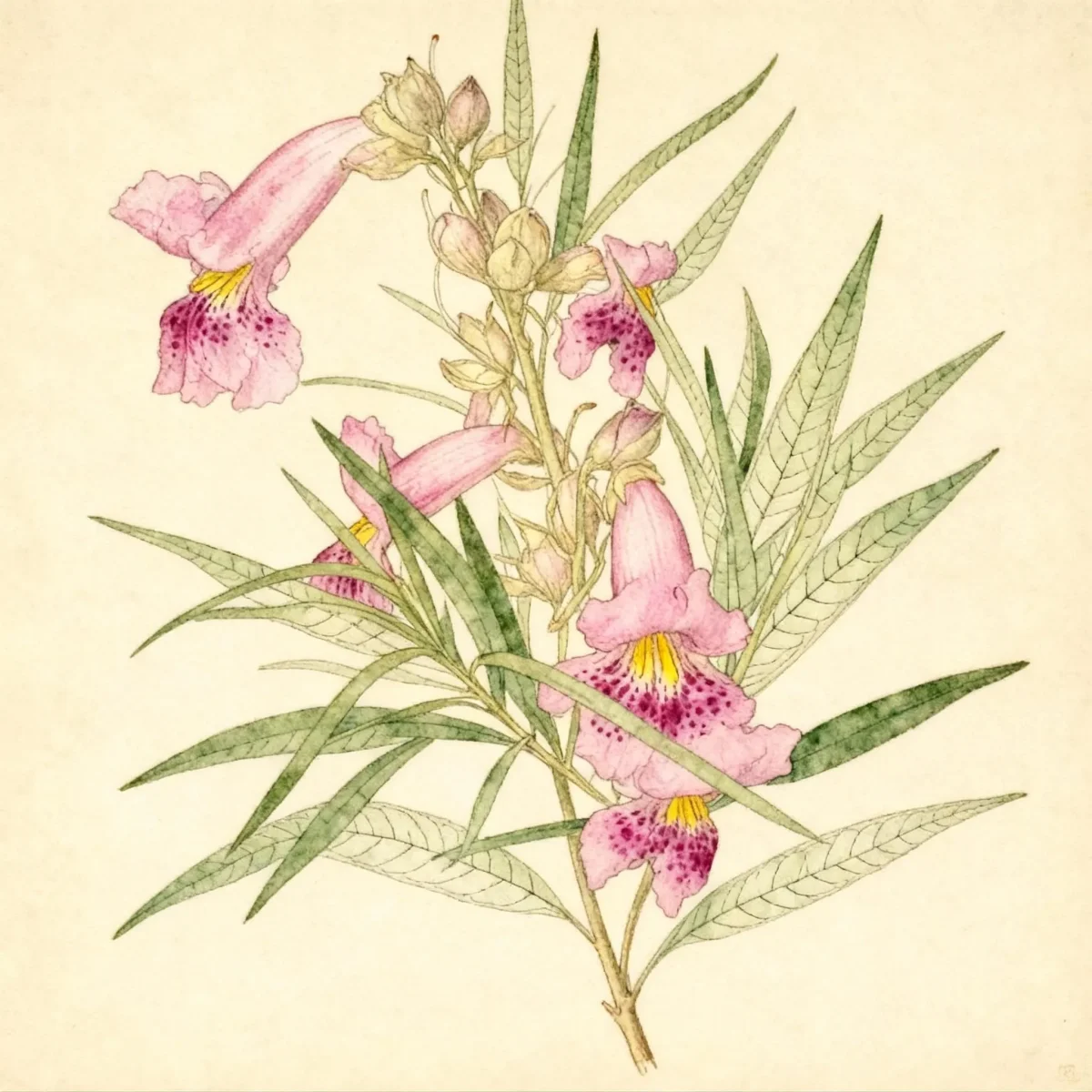
Chilopsis linearis, commonly called Desert willow, is a small deciduous tree or large shrub with a single trunk, upright, open branching structure, and vigorous growth habit. This plant is found growing in desert stream banks, washes, ditches, and depressions throughout the southwestern United States and north-central Mexico. The fragrant, trumpet-shaped flowers are highly attractive to hummingbirds, butterflies, and other insect pollinators, often recurring sporadically throughout the summer, especially after rain events.
Tolerances
- Drought
- Dry Soil
Potential Problems
Chilopsis linearis generally proves to be remarkably resistant to pests and diseases, requiring minimal chemical intervention in proper growing conditions. Gardeners rarely report significant issues with insect infestations or fungal problems when the plant is sited correctly in full sun with dry to medium moisture levels. Maintaining low maintenance relies heavily on ensuring excellent drainage, as consistently wet or soggy soil is the most common cause of stress for this desert native.
Frequently Asked Questions
What hardiness zones is Desert willow suitable for?
The Desert willow (Chilopsis linearis) is hardy and recommended for USDA Zones 7 through 9. Ensure protection if planting at the colder edge of Zone 7.
How large does Desert willow grow?
Mature specimens typically reach heights between 10 and 30 feet, with a comparable spread ranging from 15 to 20 feet, offering a graceful, open canopy.
What sun exposure does Chilopsis linearis need?
This species requires full sun exposure to achieve optimal growth and produce its signature summer flowers. Insufficient light will result in sparse blooming.
When does Desert willow bloom?
The flowering period for the Desert willow spans extensively from May, continuing through September, featuring attractive white to pink, trumpet-shaped blossoms.
Conclusion
The Chilopsis linearis, or Desert willow, offers unparalleled beauty and resilience for hot, dry landscapes, defined by its extended bloom season and low maintenance needs. This tree is a genuine champion of water-wise gardening, delivering significant visual impact with minimal effort. Before planting, confirm your location falls within USDA Zones 7-9 and ensure the site guarantees the full sun and excellent drainage this stunning species requires.
Companion Planting
Selecting appropriate neighbors for Chilopsis linearis should focus on plants that share its love for heat and dry conditions. Excellent companions include various desert-adapted shrubs and perennials that won’t compete aggressively for water once established. Consider pairing the Desert willow with Texas Sage (Leucophyllum frutescens) for contrasting silvery foliage, or perhaps Agave species for architectural interest beneath its canopy.
Since the Chilopsis linearis maintains an open branching habit, understory planting is highly encouraged to maximize visual density near the ground plane. Plants such as Penstemon varieties native to dry areas or various Eremophila species provide ground cover that complements the upright nature of the tree without requiring excess moisture. Focus on Southwest natives to ensure cultural compatibility.
Wildlife Benefits
The showy, trumpet-shaped flowers of the Desert willow are specifically adapted to attract specialized pollinators, significantly boosting garden biodiversity. Its nectar-rich blooms are a critical seasonal food source for hummingbirds patrolling the garden perimeter from late spring through summer. Butterflies are also frequent visitors seeking nectar from the fragrant, ruffled petals.
Planting Chilopsis linearis is an intentional step toward creating an ecologically functional landscape in arid regions. By providing late-season nectar, this tree supports migratory patterns and local insect populations that fuel the broader garden ecosystem. Its structure also offers light, dappled shelter during the heat of the day.