Heliotrope (Heliotropium arborescens)
Heliotrope offers intensely fragrant, showy violet flowers perfect for annual beds or containers. A low-maintenance choice.
Scroll down to discover growing tips, care requirements, companion plants, and more
Complete Plant Information
Overview
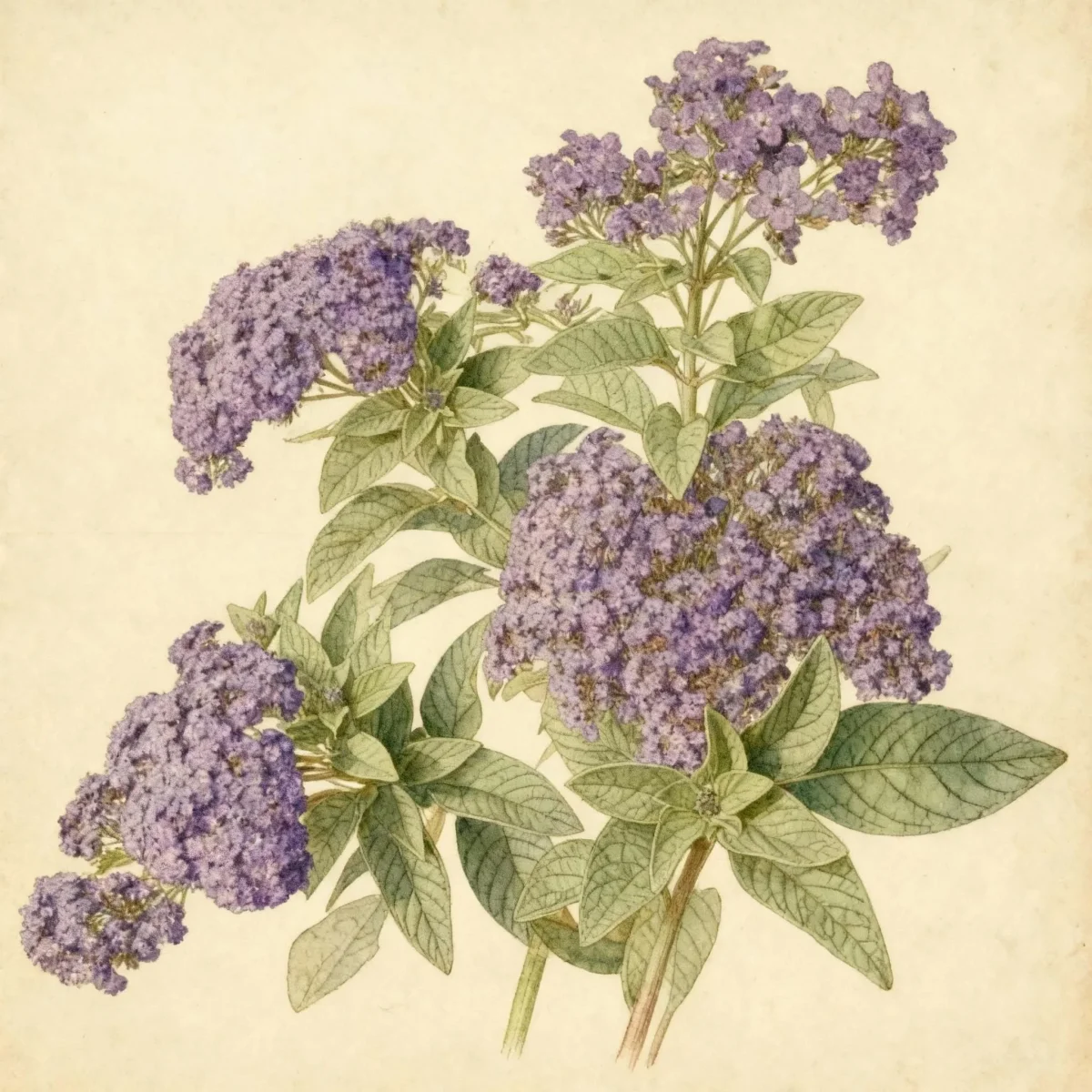
The appeal of Heliotropium arborescens, frequently known as Heliotrope, lies primarily in its intensely sweet fragrance, often likened to vanilla or cherry pie. This tender perennial creates a stunning visual display with profuse clusters of vibrant violet blossoms set against dark green, prominently veined foliage. Gardeners prize this plant for its ability to bring heady scent to summer gardens where it performs reliably.
While native to the high-altitude regions of Peru, Heliotropium arborescens is cultivated widely as a summer bedding annual or seasonal container specimen across cooler climates. It requires consistency in soil moisture and sun exposure to maintain peak performance throughout the blooming season until frost. Its dense, mounding habit makes it an excellent structural plant in mixed arrangements.
Whether used for edging borders or placed near patios to maximize the sweet perfume of Heliotrope, this plant remains an old garden favorite celebrated for its dual impact of color and intoxicating aroma until the growing season concludes.
Fast Facts
- Plant Family: Boraginaceae
- Plant Type: Broadleaf evergreen
- Native Range: Bolivia, Colombia, Peru
- Hardiness Zones: USDA Zones 10-11
- Size at Maturity:
- Height: 1-1.5 ft
- Spread: 1-1.5 ft
- Bloom Time: Seasonal bloomer
- Bloom Description: Violet
- Sun Exposure: Full sun to part shade
- Water Needs: Medium
- Maintenance Level: Low
How to Grow
For optimal growth, start Heliotropium arborescens seeds indoors 10 to 12 weeks before your area’s projected last frost date, setting the young plants out only after all danger of frost has passed. Plant in moist, organically rich, and well-drained soils. Although it prefers full sun, gardeners in very hot summer climates should ensure plants receive some afternoon shade for best results managing moisture stress.
Heliotrope requires medium water needs; the soil should not be allowed to dry out completely between irrigation cycles. Because this is a rapidly growing summer annual in most regions, ensuring consistent moisture fuels both foliage health and prolific flowering. Fertilizing lightly every few weeks with a balanced liquid feed can enhance bloom power.
Maintenance is generally low, though pinching back stems early in the season encourages a bushier, more compact habit, which improves its presentation in containers. Deadheading spent flower clusters helps maintain a neat appearance and prompts the plant to produce more of its fragrant blooms throughout summer and fall.
In Zones 10-11, this plant can be treated as a true evergreen. For overwintering container specimens, move them indoors to a bright location where temperatures remain cool, ideally in the 50s°F range. Cuttings taken in late summer are another simple method for preserving favorite plants indoors.
Landscape Uses
The versatility of Heliotropium arborescens makes it invaluable in various landscape settings where scent is a desired feature. It excels when used as a bedding plant to line walkways or frame flower beds, providing a low, fragrant border that draws attention with its deep violet blooms. Its compact size also makes it perfect for mass plantings where a uniform, ground-covering effect is needed.
In container gardening, Heliotrope shines as one of the “thrillers” or “fillers” in mixed arrangements, softening hard edges with its mounding structure and providing continuous fragrance near outdoor seating areas. It can also be trained upward to form a small standard, creating an elevated focal point in porch pots or patio arrangements. Window boxes benefit immensely from the cascading effect that taller specimens can achieve.
When selecting companions, choose plants that share similar requirements for medium moisture and sun exposure, such as calibrachoa or petunias, placed near slower-growing herbs like thyme to create a sensory garden experience.
Standout Features
Flower Qualities
- Showy
- Fragrant
Noteworthy Characteristics
Heliotropium arborescens, commonly called heliotrope, is native to Peru and exists as a tender perennial shrub in its native habitat. In cooler climates, it is typically grown as a vibrant summer annual, reaching only about 12-18 inches tall during one growing season. Its most defining feature is the sweetly fragrant, tiny violet flowers held in large, showy clusters blooming reliably from summer until fall.
Tolerances
- Deer
Potential Problems
Heliotropium arborescens generally resists serious insect and disease issues when grown outdoors in its preferred summer environment. However, when plants are kept indoors for overwintering or grown as houseplants, they become more susceptible to common indoor pests.
Be vigilant for infestations of whiteflies, spider mites, aphids, and mealybugs, particularly on the undersides of leaves or where stems meet. Treating infestations early with insecticidal soap is highly effective. Ensuring good air circulation around overwintered plants is crucial to prevent fungal issues and pest buildup.
Frequently Asked Questions
What hardiness zones is Heliotrope suitable for?
Heliotrope is winter hardy only in USDA Zones 10 and 11, requiring it to be grown as an annual or overwintered indoors in cooler regions.
How large does Heliotropium arborescens grow?
When grown as a summer annual, Heliotropium arborescens typically reaches a height and spread between 1 and 1.5 feet.
What sun exposure does Heliotrope need?
This plant performs best in full sun but appreciates some cooling afternoon shade, especially when temperatures are high.
When does Heliotrope bloom?
Heliotrope is considered a seasonal bloomer, presenting its showy clusters of violet flowers throughout the summer and continuing into the fall.
Conclusion
The unparalleled fragrance combined with the low-maintenance nature of fully blooming Heliotropium arborescens makes it an essential sensory element in any warm-season garden design. Integrating this Heliotrope into your borders or containers ensures months of delight for neighbors and family alike. Before planting, confirm your local last frost date to ensure successful establishment of this cherished bloom producer.
Companion Planting
Due to its requirement for reliably moist, rich soil, Heliotrope pairs well with other thirsty annuals that thrive in the same conditions. Consider planting it alongside Geraniums (Pelargoniums) or Coleus, both of which appreciate consistent moisture levels during the summer heat. These companions won’t often compete aggressively for vertical space, allowing the mounding structure of the Heliotrope to shine.
For design in containers, planting these sweetly scented flowers with trailing varieties of sweet potato vine (Ipomoea batatas) or contrasting white calibrachoa creates a visually stunning juxtaposition against the deep violet flowers. This grouping respects the medium-to-heavy water needs common to this plant selection.
Container Growing
Growing Heliotropium arborescens in containers offers the best control over the soil quality and allows for easy relocation indoors before frost threatens. Use a high-quality potting mix amended with aged compost to ensure the soil is both rich and free-draining. Because they are heavy feeders when blooming profusely, utilize pots large enough to accommodate root growth and plan on regular liquid fertilization.
When selecting containers, terracotta pots can dry out quickly, requiring more diligent watering than plastic or glazed ceramic pots. Place containers where you can frequently enjoy the signature fragrance of the Heliotrope, such as near an entry door or patio lounge area.