Prickly-pear (Opuntia compressa)
Opuntia compressa, or Prickly-pear, is a hardy, low-spreading native US Opuntia for dry, sunny sites. Features yellow blooms and edible fruit.
Scroll down to discover growing tips, care requirements, companion plants, and more
Complete Plant Information
Overview
The Prickly-pear, Opuntia compressa, is a distinctive herbaceous perennial offering incredible resilience for challenging garden locations. As one of the few cacti widely found across the eastern United States, this species provides reliable, low-maintenance texture and color in locales where other plants often fail. Gardeners value this Opuntia compressa for its extreme drought tolerance and unique succulent form.
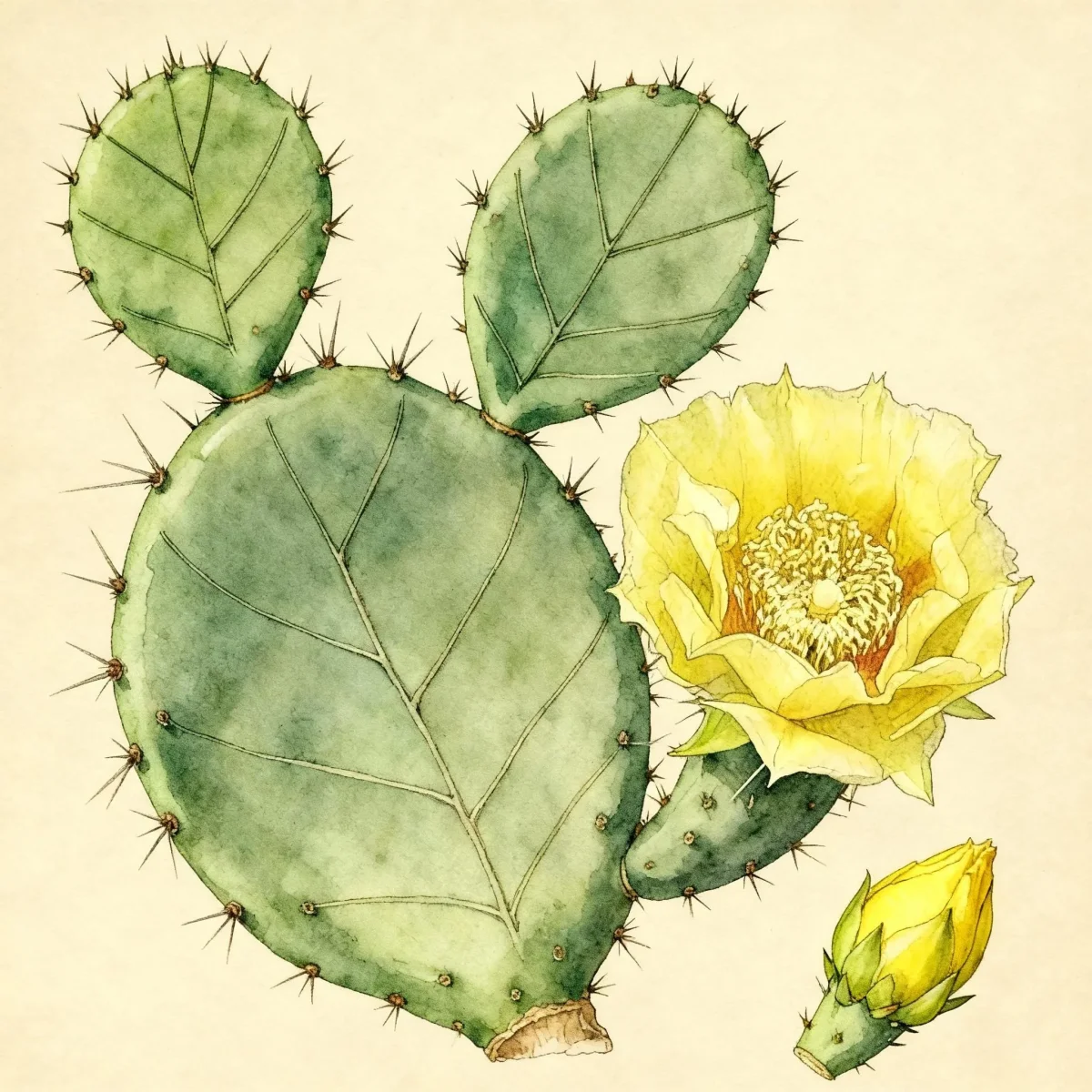
This semi-prostrate cactus forms dense colonies via its jointed, flattened pads, which often root where they touch the ground. While the pads offer winter interest, they tend to shrivel and lie flat as the plant conserves water, quickly recovering their structure in spring. The showy yellow flowers appearing in summer add significant curb appeal before developing into edible, colorful fruit.
Cultivating Prickly-pear is usually straightforward, provided its primary needs—full sun and excellent drainage—are met. Its low stature makes it an excellent textural element in xeriscaping or rock gardens. Successfully integrating Opuntia compressa allows gardeners to bring hardy, historical desert aesthetics into temperate, eastern landscapes.
Fast Facts
- Plant Family: Cactaceae
- Plant Type: Herbaceous perennial
- Native Range: Eastern and central United States
- Hardiness Zones: USDA Zones 4-9
- Size at Maturity:
- Height: 0.5-1 ft
- Spread: 1-1.5 ft
- Bloom Time: June to July
- Bloom Description: Yellow (sometimes with reddish eye)
- Sun Exposure: Full sun
- Water Needs: Dry
- Maintenance Level: Low
How to Grow
Planting Opuntia compressa should occur in the sunniest location available, ideally where soil is sandy, gravelly, or includes significant rock content. The most critical factor for this Prickly-pear is drainage; it performs best in dry, well-drained media but can handle clay only if water never pools or remains stagnant. Due to their shallow fibrous roots, they establish well when planted directly into the ground during the primary growing season.
Watering needs are minimal once established; treat this cactus like any drought-tolerant succulent, only providing supplemental moisture during prolonged, severe dry spells. Fertilization is rarely necessary, as rich soil often encourages softer growth susceptible to rot. Avoid high-nitrogen amendments entirely.
Propagation of this Prickly-pear is incredibly easy. During the active growing season, sever a pad at its joint, allow the cut end to dry (or “callous”) for about a week, and then plant it directly into suitable soil, ensuring the wound is facing down. This makes it simple to spread or replace damaged sections as the plants naturally colonize.
Landscape Uses
Opuntia compressa is perfectly suited for drier, sun-drenched areas where traditional perennials struggle. It excels when naturalized across sandy slopes or used as an architectural element in rock gardens and along stone walls, providing year-round structure. Its low, spreading habit makes it an excellent small area ground cover, effectively suppressing weeds where it establishes colonies.
Consider using this robust Prickly-pear as a textural transition between large boulders or gravel hardscapes and softer plantings. Because of its need for sharp drainage, pair it with other xeriscapic plants like sedums, various ornamental grasses adapted to dry conditions, or other tough, low-growing natives. It offers dramatic contrast against finer-textured foliage.
Standout Features
Flower Qualities
- Showy
Fruit Qualities
- Showy
- Edible
Noteworthy Characteristics
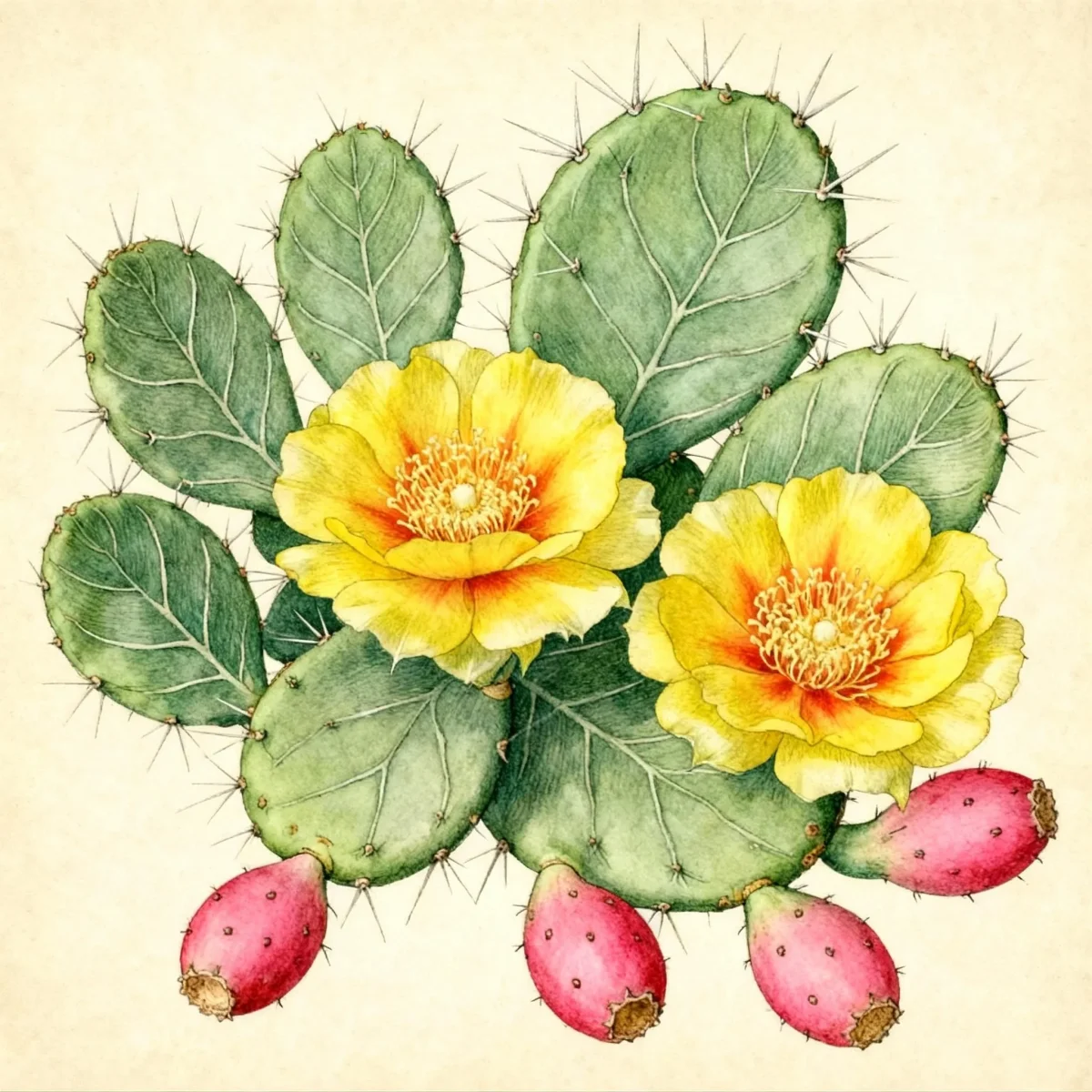
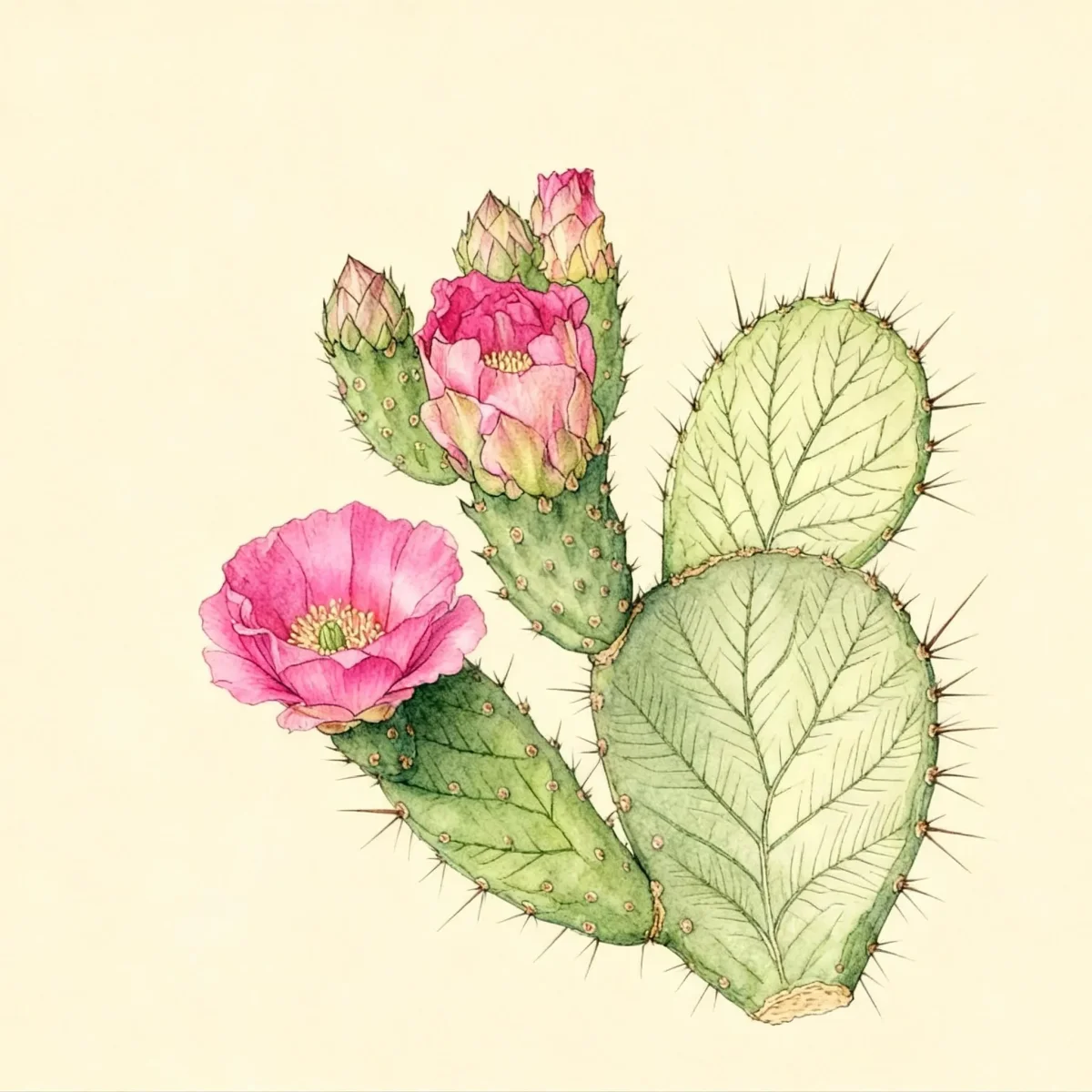
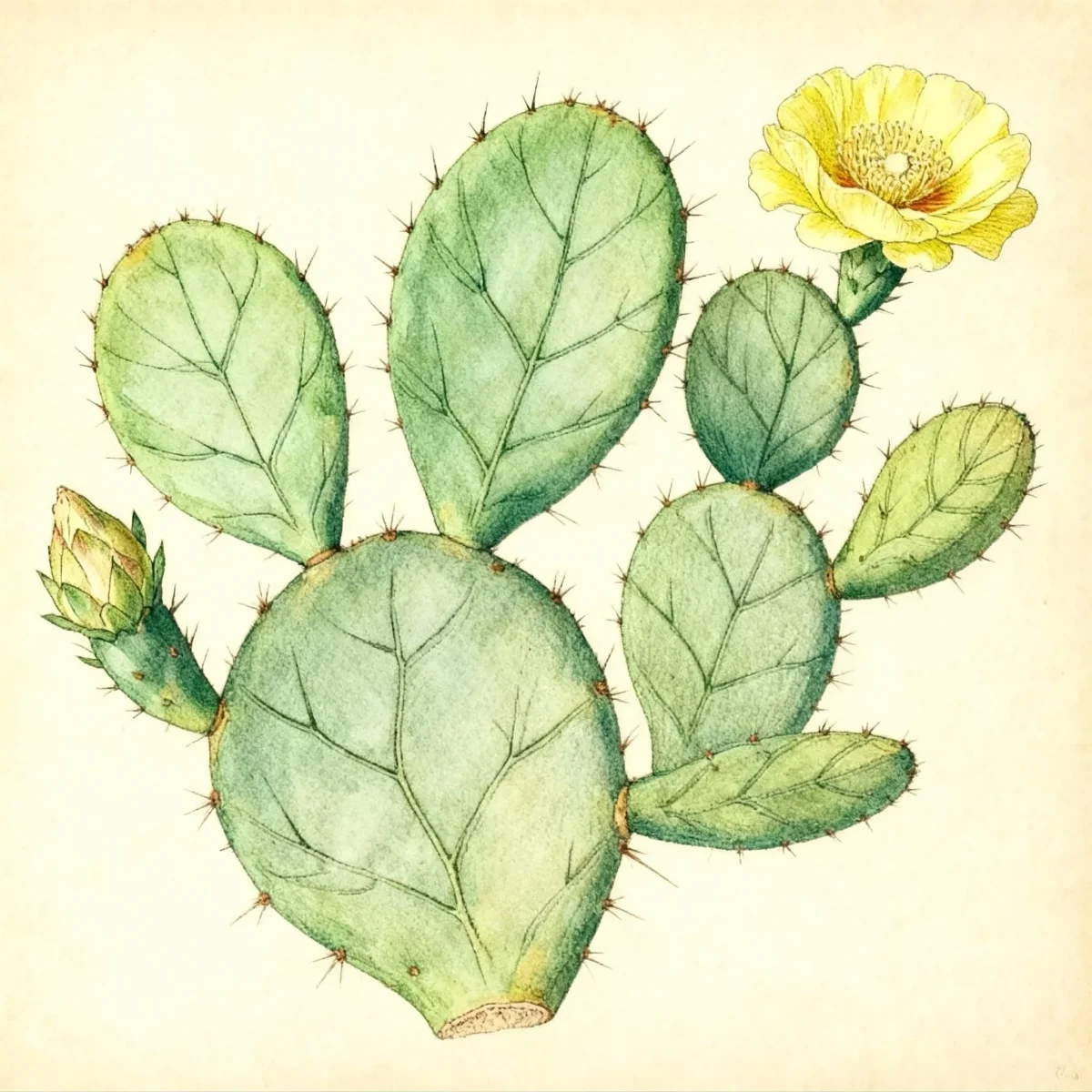
Opuntia compressa, a prickly pear cactus, is a clump-forming, semi-prostrate, Missouri native cactus which typically grows 6-14” tall. Features jointed, round-to-oval, flattened, succulent green pads (2-10” across) which are not leaves but swollen water-storing stem segments, though pads are covered in irritating glochids. Showy bright yellow 2-3” diameter flowers bloom in June-July, followed by pulpy, red, edible fruits which ripen late summer to fall.
Tolerances
- Rabbit
- Drought
- Dry Soil
- Shallow-Rocky Soil
Potential Problems
This tough Prickly-pear rarely suffers from serious insect infestations or diseases under ideal conditions. The primary threat to Opuntia compressa involves various forms of rot, which are almost always triggered by inadequate drainage or excessive moisture in the soil profile. To prevent this, ensure planting sites feature sharp drainage, and rigorously avoid overhead watering during cool seasons or precipitation events. If soil conditions are constantly heavy or wet, the pads will soften and collapse.
Frequently Asked Questions
What hardiness zones is Prickly-pear suitable for?
The Prickly-pear (Opuntia compressa) is exceptionally cold-hardy, thriving in USDA Zones 4 through 9.
How large does Opuntia compressa grow?
This species typically reaches a low height between 0.5 and 1 foot tall, spreading outward to a width of 1 to 1.5 feet, often forming dense colonies.
What sun exposure does Opuntia compressa need?
This Opuntia compressa requires full sun exposure to maintain its compact habit and ensure proper moisture evaporation from the pads.
When does Prickly-pear bloom?
Flowering usually occurs between June and July, producing showy, bright yellow flowers that sometimes feature a reddish eye at the center.
Conclusion
Opuntia compressa offers gardeners a rare combination of striking succulent aesthetics and remarkable resilience, especially thriving in lean, dry environments where other plants fail. This truly native Prickly-pear brings tough beauty and even edible fruit to the landscape with minimal input. Before planting, confirm your site offers full sun and superb drainage to ensure your Opuntia compressa performs reliably year after year.
Propagation Tips
The ease of propagating Opuntia compressa makes it ideal for quickly filling in barren, sunny spots or sharing with fellow gardeners. Since the pads naturally break off and root, manual propagation is extremely simple. Select mature pads from the previous year, ensuring they are firm; avoid overly young or excessively shriveled autumn pads.
Crucially, the wound where the pad was severed must dry out completely to prevent immediate fungal infection or rot upon planting. Allow the cut end to desiccate for several days to a week until a hard, dry callous forms over the joint. This tough, protective layer is essential for successful rooting.
Once calloused, the pad can be set directly into dry, gritty soil, with the wound end making firm contact with the medium. Keep the newly “planted” pad dry; water is detrimental until roots have visibly formed. These hardy cuttings rooted easily, often faster than seed propagation, making it the preferred method for increasing your patch of Prickly-pear.
Wildlife Benefits
Though notable for its spines and glochids, the Opuntia compressa provides significant, though specialized, ecological benefits to the native ecosystem. The bright yellow blooms produced reliably from June into July are highly attractive to native bees and various sun-loving pollinators seeking nectar in the early summer months. This makes it a valuable component in ecological restoration projects in dry prairies.
Furthermore, the fleshy, pulpy red fruits that ripen in the late summer and fall are a food source for local wildlife. Birds and small mammals that can safely navigate the prickly exterior consume the nutritious fruit, aiding in seed dispersal throughout the native range of this Prickly-pear.