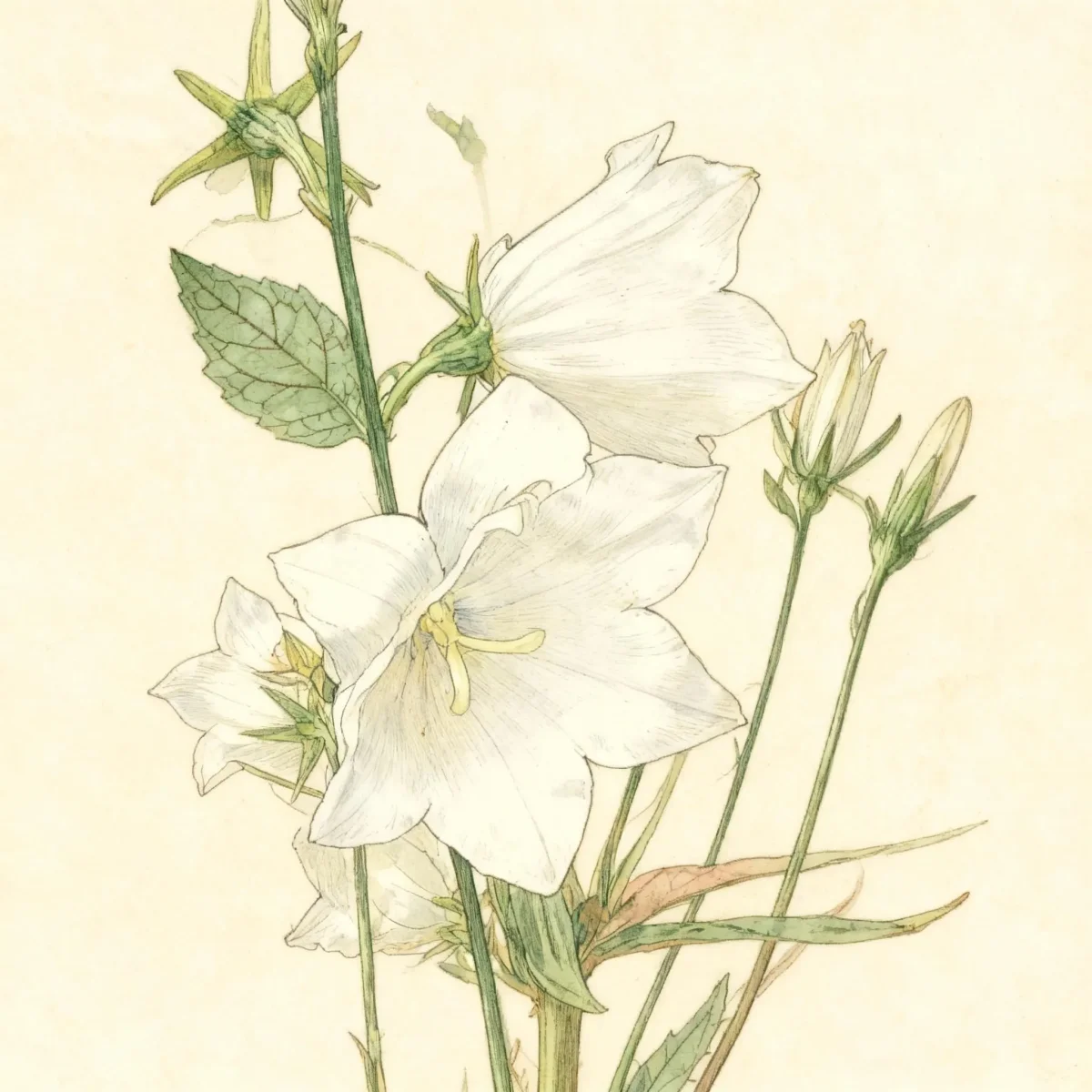
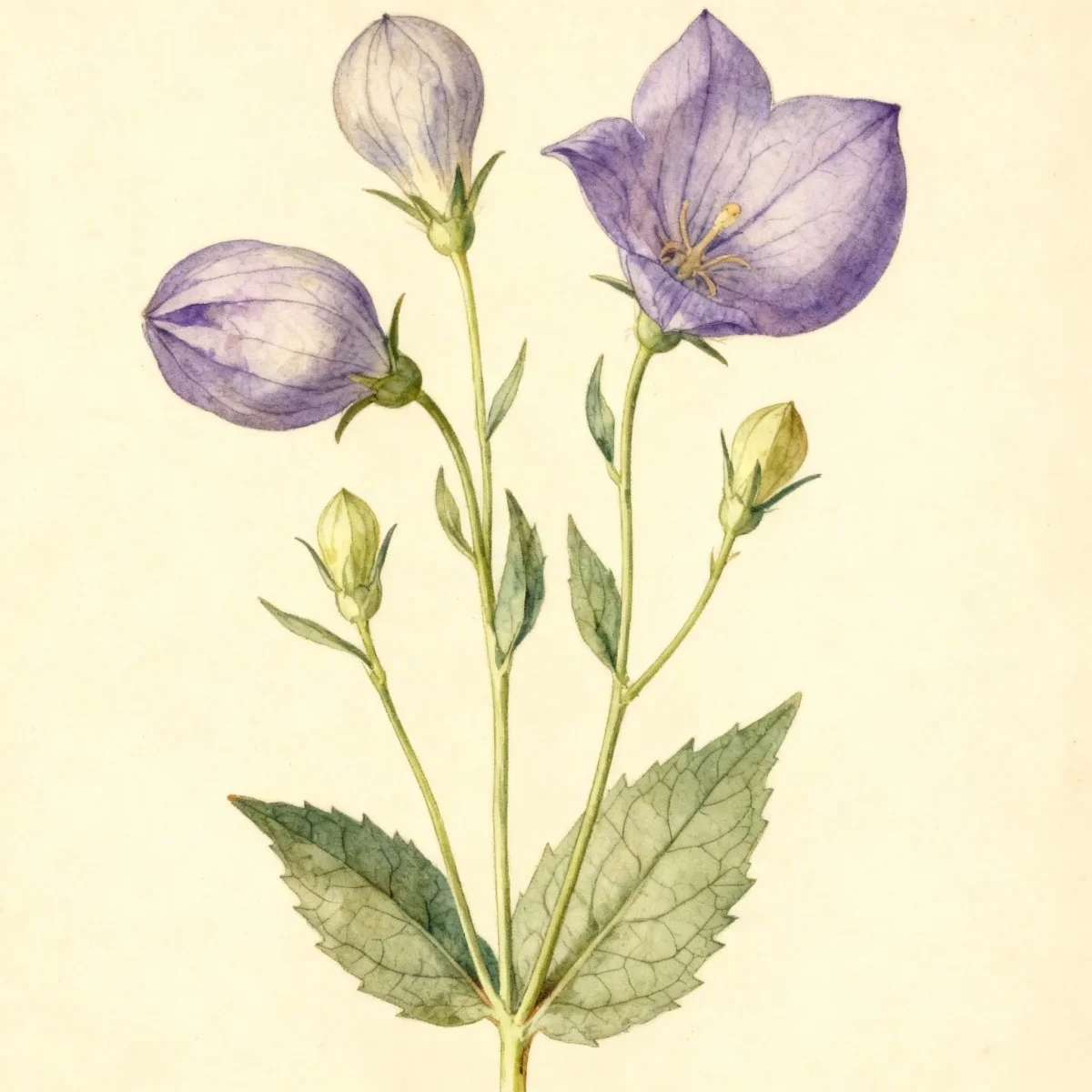
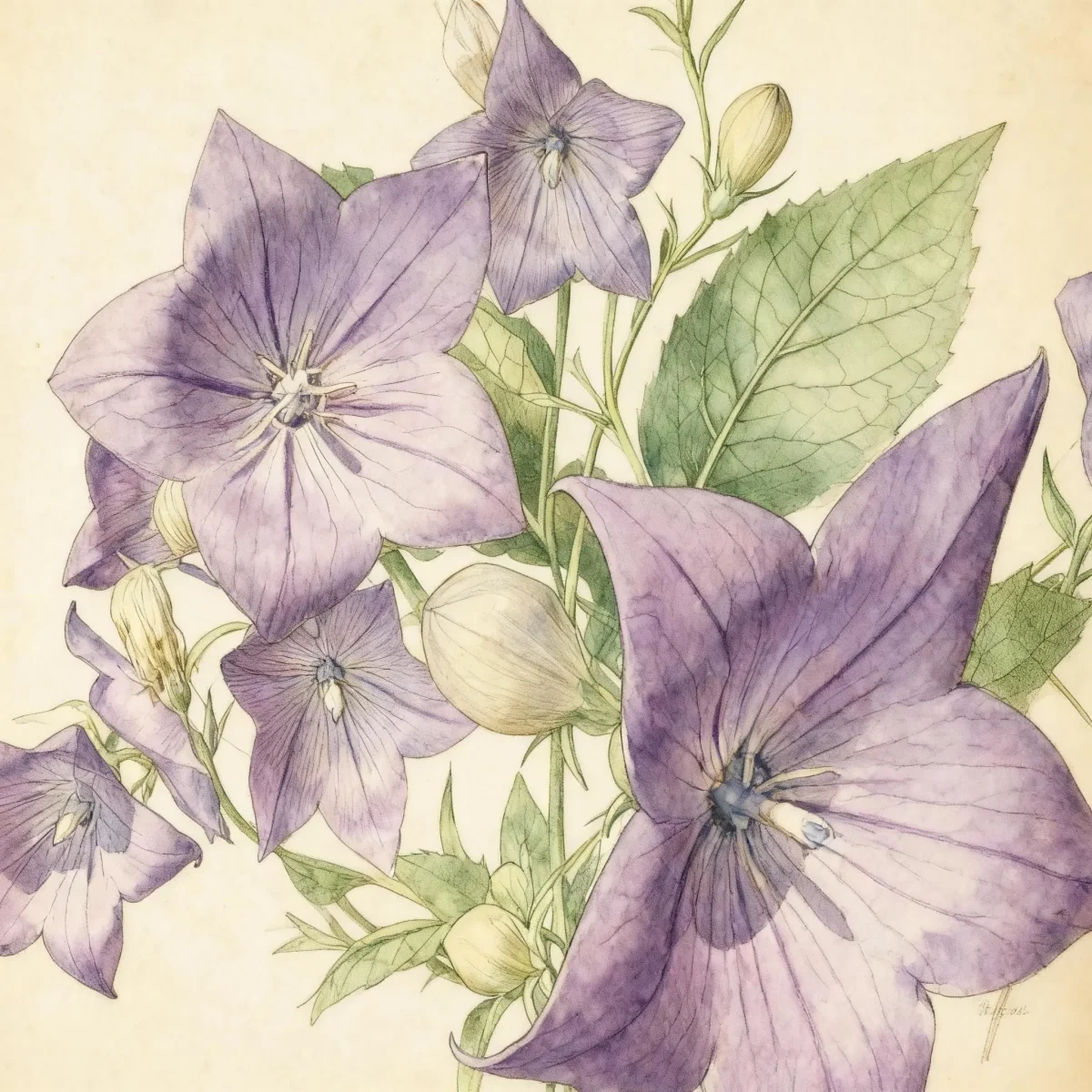
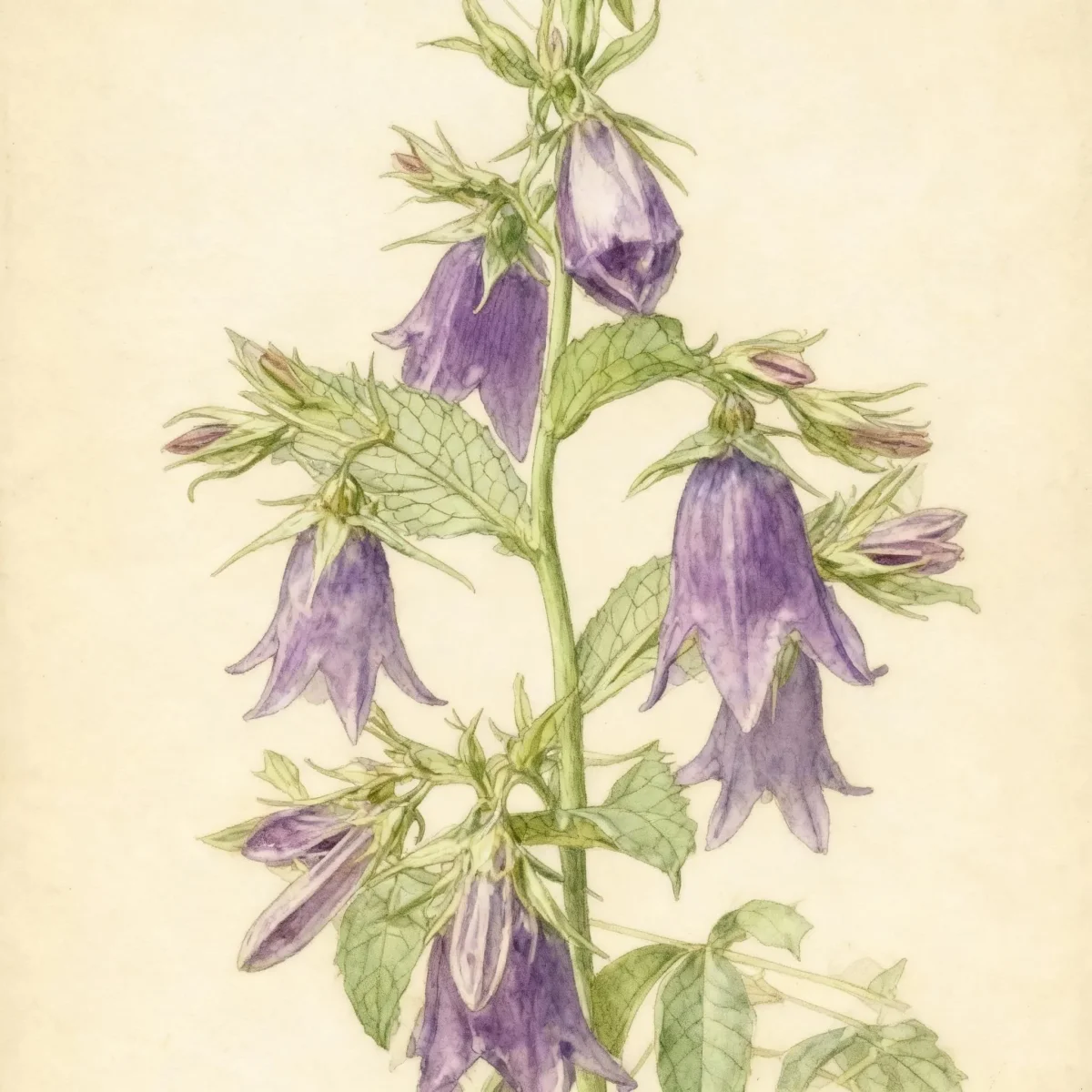
Tall bellflower (Campanula americana)
Campanula americana, the Tall bellflower, thrives in partial shade, reaching 3-6 ft tall with unique blue, star-shaped summer blooms.
Scroll down to discover growing tips, care requirements, companion plants, and more
Complete Plant Information
Overview
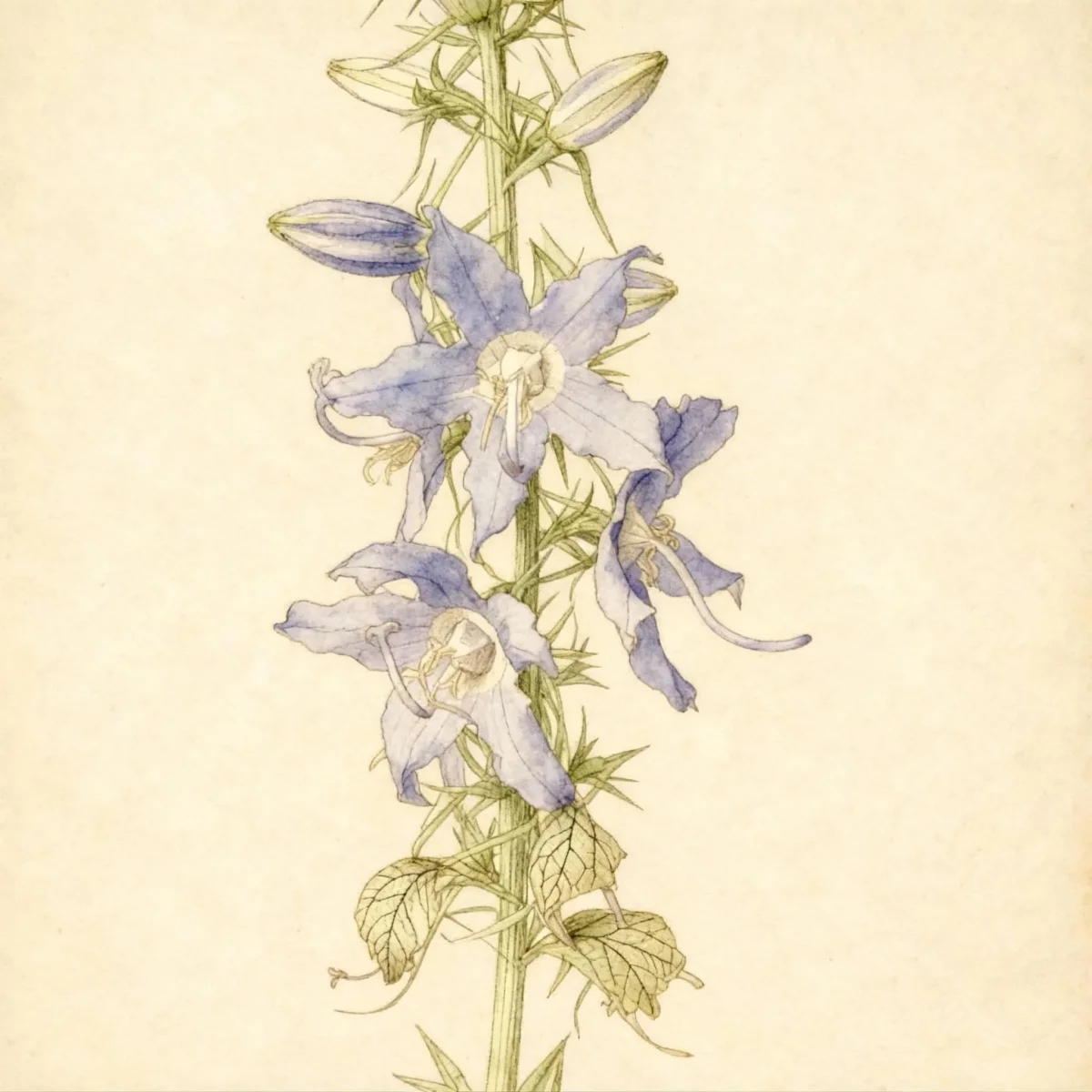
The Tall bellflower, Campanula americana, offers gardeners a distinguished vertical presence, especially valuable in woodland borders where its height commands attention. Unlike many traditional bellflowers, this species produces uniquely flat, star-shaped flowers that provide a lovely, pale blue display during the summer months. It is native to moist, shady areas across Eastern North America.
This plant is highly adaptable, functioning either as an annual or a biennial, often managing its own succession through reliable self-seeding. Its cultural requirements center on consistent moisture and preference for afternoon shade in hotter regions, making it an excellent choice for establishing naturalized drifts. Gardeners appreciate the low maintenance associated with Campanula americana.
For a naturalistic effect, allow Tall bellflower to establish itself in moist, shaded locales like streambanks or moist meadow edges. Its strong vertical habit contrasts beautifully with lower-growing, shade-loving perennials, adding necessary height without extensive effort.
Fast Facts
- Plant Family: Campanulaceae
- Plant Type: Herbaceous perennial
- Native Range: North America
- Hardiness Zones: USDA Zones 4-7
- Size at Maturity:
- Height: 3-6 ft
- Spread: 1-2 ft
- Bloom Time: June to August
- Bloom Description: Blue
- Sun Exposure: Full sun to part shade
- Water Needs: Medium
- Maintenance Level: Low
How to Grow
The best success for Campanula americana comes from planting in rich, moist, well-drained soils. While it tolerates full sun in cooler northern climates, providing part shade, especially shielding it from harsh afternoon sun, is recommended in warmer zones like Missouri. Ensure the site maintains regular, even moisture; this species does not perform well if allowed to dry out.
Maintenance for the Tall bellflower is generally straightforward. Deadheading spent flowers is recommended if you wish to prolong the bloom period or manage its spread slightly, though many gardeners allow the plant to go to seed naturally. Because Campanula americana readily self-seeds, it can often fill in areas over time, creating a naturalized appearance.
Understanding its germination timing is key to controlling its life cycle. To encourage growth as an annual, start seeds indoors about six to eight weeks before the last spring frost. For biennial growth, sowing seeds outdoors in late spring will establish a basal rosette the first year, yielding tall flowering stems the following season.
Landscape Uses
The suggested use for Campanula americana leans heavily toward creating naturalistic scenes, particularly where plants can be left undisturbed to naturalize among woodland plantings. It excels in moist shaded areas, fitting perfectly into lightly shaded woodland gardens or along the edges of flowing water features.
Mass plantings or large groups of Tall bellflower are highly effective, allowing their vertical structure to become a focal point during the summer bloom time. Avoid using it as a formal hedging plant; instead, integrate it with other moisture-loving perennials that appreciate dappled light, such as hostas or ferns, to create a lush, layered effect.
Standout Features
Flower Qualities
- Showy
Noteworthy Characteristics
Campanula americana, commonly called tall bellflower, is an upright annual or biennial that is native to moist open woods, moist meadows, streambanks and ditches in shady areas of eastern North America from New York and southern Ontario to Minnesota south to Florida, Alabama, Arkansas and Oklahoma. In biennial mode, it produces in the first year only a low-growing basal rosette of leaves, and in the second year, tall flower stems shoot up to as much as 6’ tall clad with rough, toothed, lance-shaped to ovate-elliptic green leaves. Flat, star-shaped, five-lobed, light blue flowers bloom solitary or in clusters at the leaf axils in summer. Interestingly, Tall bellflower is an exception to the genus, featuring flattened flowers rather than the usual bell shape.
Tolerances
Potential Problems
The Tall bellflower is generally free from serious insect or disease issues, making its low maintenance level accurate. Gardeners should remain vigilant for occasional soft-bodied pests, specifically slugs and snails, which enjoy tender young foliage. Aphids can sometimes congregate on tender new growth or flower stems, particularly during dry spells. Managing these pests typically involves routine checks and implementing organic controls like diatomaceous earth for slugs or insecticidal soap for aphids as needed.
Frequently Asked Questions
What hardiness zones is Tall bellflower suitable for?
The Campanula americana is reliably hardy across USDA Zones 4 through 7.
How large does Tall bellflower grow?
This plant exhibits considerable verticality, typically reaching mature heights between 3 to 6 feet tall, with a modest spread of 1 to 2 feet.
When does Tall bellflower bloom?
You can expect the unique, blue, star-shaped flowers of Campanula americana to appear throughout the summer, specifically from June to August.
What sun exposure does Tall bellflower need?
This species thrives best in locations offering full sun to part shade, though afternoon shade is highly beneficial, especially in hot summer regions.
Conclusion
The Campanula americana offers significant architectural interest and beautiful blue summer blooms while requiring minimal effort, particularly when allowed to self-sow. Its reliability in moist, shaded settings makes the Tall bellflower a wonderful addition to woodland or naturalized garden spaces. Before planting, confirm that your site conditions—especially moisture availability and light levels—match the needs of this fascinating native perennial.
Companion Planting
When planning a garden design around Campanula americana, select companions that share its preference for rich, moist soils and part shade. Hostas are excellent partners, providing broad, contrasting foliage at the base of the tall stalks. Ferns, such as the Ostrich Fern (Matteuccia struthiopteris), will echo the woodland habitat where the Tall bellflower naturally occurs, creating a deeply textured, cool green environment.
For a late-season follow-up, consider planting spring-blooming bulbs like Virginia Bluebells (Mertensia virginica) or spring ephemerals nearby. By the time these early bloomers fade, Campanula americana will be emerging vigorously to take over the vertical role in the mid-to-late summer garden.
Propagation Tips
Since Campanula americana can be grown as an annual or biennial, seed propagation is the primary method of dispersal and continuation. As noted in the cultural details, timing is crucial: whether started indoors early for an immediate annual display or sown outdoors in late spring for a biennial cycle, the seeds require patience. They generally germinate best when provided with consistent moisture and a cool environment, mimicking the damp forest floor of their native habitat.
Dividing established clumps is generally not practical or necessary due to the plant’s preferred life cycle and tendency to self-seed. Focus efforts on collecting seeds from spent flower heads once they mature, allowing them to drop naturally or sowing them directly into prepared, moist beds for the following season’s growth.