Prairie spiderwort (Tradescantia bracteata)
Discover Tradescantia bracteata, the Prairie spiderwort. A compact, colorful perennial thriving in full sun and dry conditions.
Scroll down to discover growing tips, care requirements, companion plants, and more
Complete Plant Information
Overview
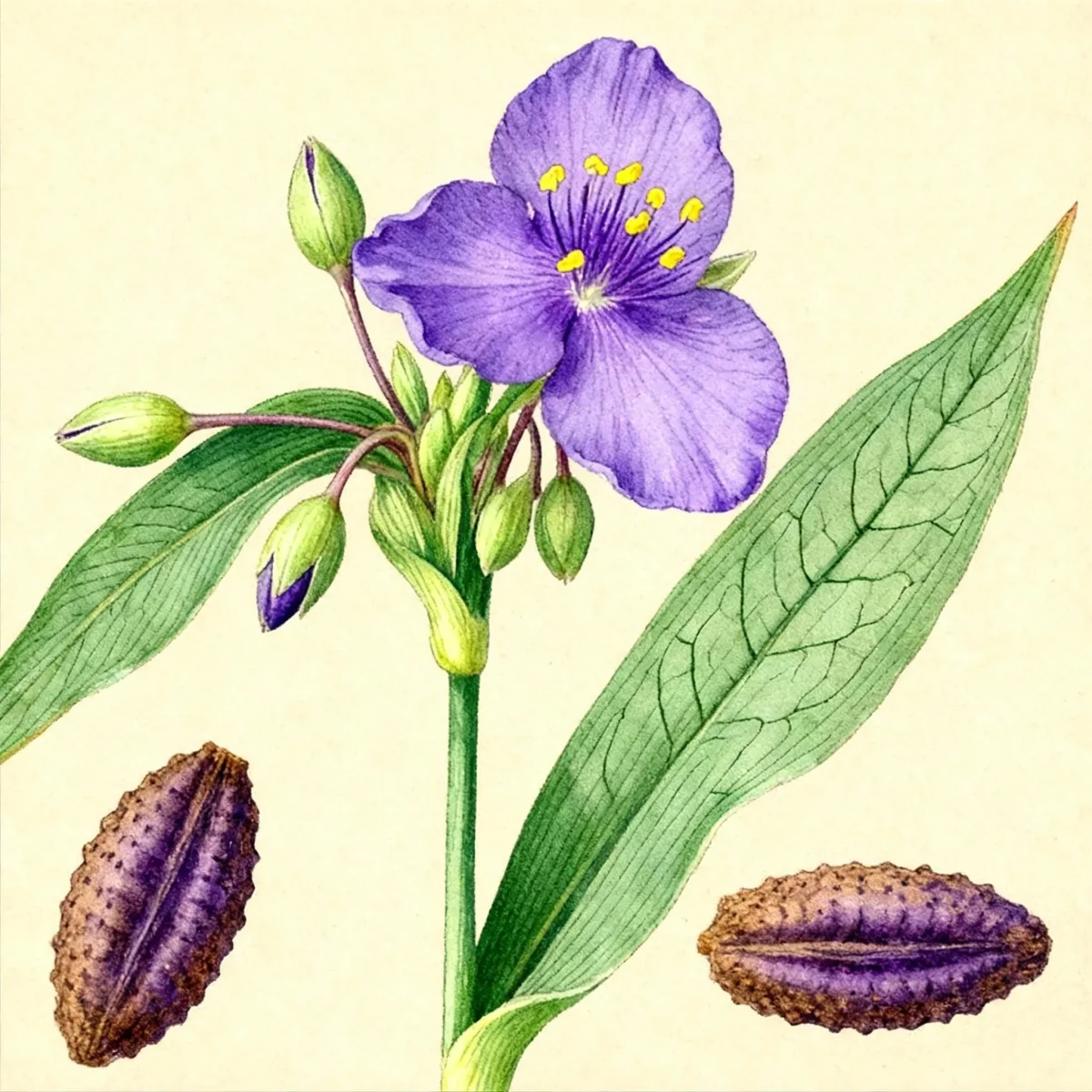
Tradescantia bracteata, widely known as Prairie spiderwort, brings vibrant color to native landscapes across the Central United States. This herbaceous perennial is valued for its resilience, managing well in drier, less-than-ideal soils where other plants might struggle. Gardeners appreciate its succession of rose to purple blossoms during late spring and early summer.
Although each delicate, three-petaled flower lasts only a single day, the cumulative bloom period extends from May into July, offering reliable seasonal interest. The compact, clump-forming nature of Tradescantia bracteata makes it an excellent textural addition to mixed beds or naturalized drifts.
This reliable native provides visual appeal while requiring moderate attention, fitting perfectly into low-input perennial borders or wildflower meadows. Its tolerance for drought and poor soil confirms its status as a hardworking, beautiful component of water-wise or native plant gardens.
Fast Facts
- Plant Family: Commelinaceae
- Plant Type: Herbaceous perennial
- Native Range: Central United States
- Hardiness Zones: USDA Zones 4-9
- Size at Maturity:
- Height: 1-1.5 ft
- Spread: 1.5-2 ft
- Bloom Time: May to July
- Bloom Description: Rose to purple
- Sun Exposure: Full sun
- Water Needs: Dry to medium
- Maintenance Level: Medium
How to Grow
Plant Tradescantia bracteata in the spring or fall after the risk of hard frost has passed. Ensure the location receives full sun, as insufficient light can lead to legginess and reduced flowering. This species thrives in average, well-drained soil, though it is notably tolerant of poor or rocky conditions. While it prefers dry to medium moisture levels, acidic soils are preferred when available.
Water regularly until the plant is established. Afterward, established Prairie spiderwort demonstrates good drought tolerance, requiring supplemental watering only during extended dry periods. Fertilization is generally unnecessary due to its adaptation to poor soils. Clumps should be divided only when they appear overcrowded.
A key element of maintenance involves post-bloom care. Foliage tends to sprawl unattractively by mid-summer. To manage this, cut the stems back almost to the ground immediately after the main flowering period concludes. This pruning step encourages fresh new vegetative growth and may prompt a secondary, smaller bloom later in the season.
Landscape Uses
The sturdy nature and attractive bloom time of Tradescantia bracteata make it highly versatile for gardeners seeking sustainable planting options. Its growth habit supports its use as an excellent ground cover or for naturalizing in larger meadow settings where it can spread gently. This plant is an interesting and long-blooming perennial perfect for native plant gardens or wild gardens.
While effective in borders and rock gardens, be mindful of the mid-summer foliage decline mentioned above, which suggests avoiding placement where this late-season appearance is critical. Instead, design groupings where adjacent, later-blooming plants can mask the foliage retreat, or utilize the cut-back strategy noted above to refresh its look. It pairs well with other sun-loving prairie natives.
Standout Features
Flower Qualities
- Showy
Noteworthy Characteristics
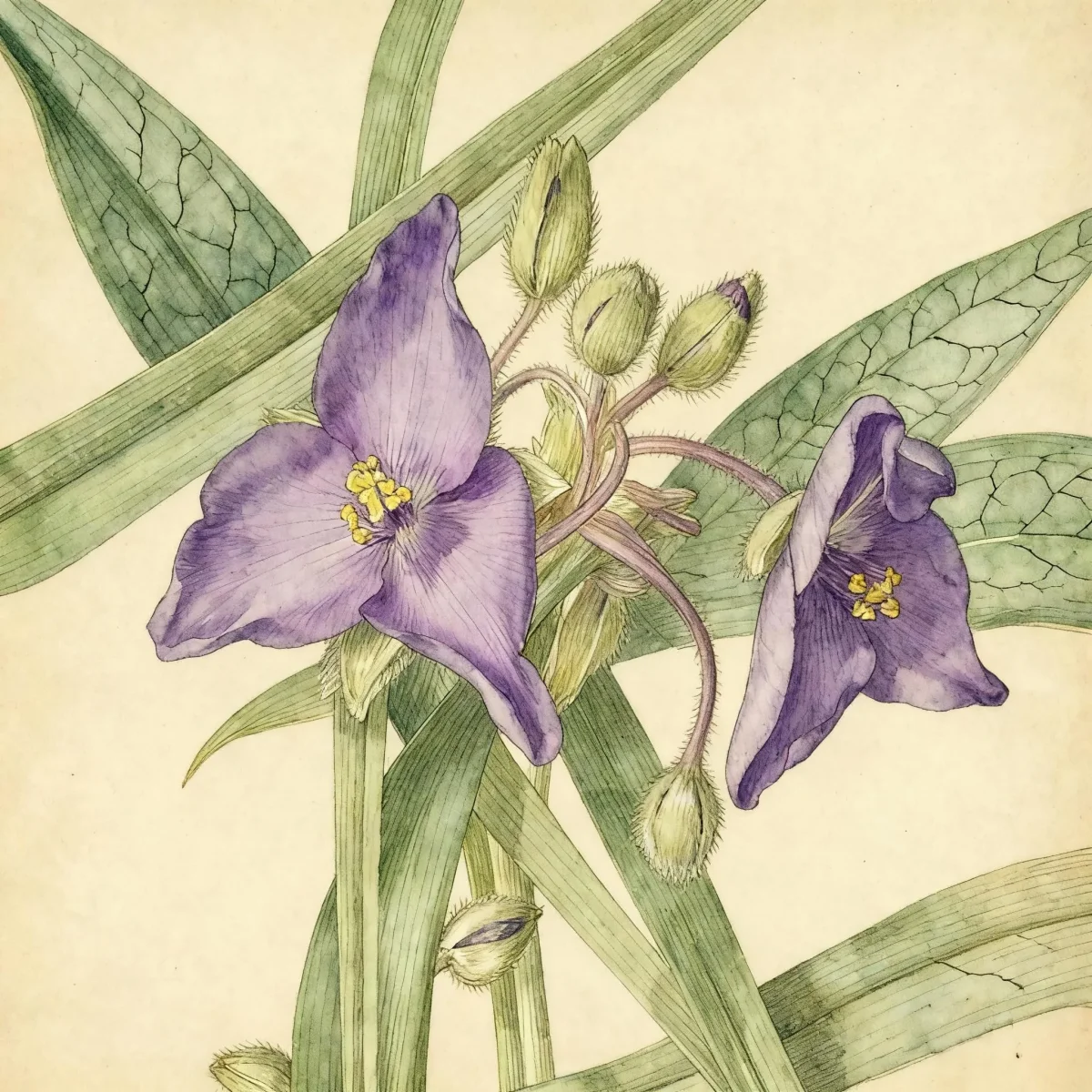
Tradescantia bracteata, commonly called small spiderwort, is a compact, clump-forming herbaceous perennial which typically grows to 1.5’ tall. Rose to purple, three-petaled flowers (.75-1.5” diameter) accented by contrasting yellow stamens open up, a few at a time, each for only one day, from terminal clusters (umbels) containing numerous flower buds. Flowers bloom in succession from late May into early July. Arching, iris-like, dark green leaves up to 1’ long and 3/4” wide are folded lengthwise forming a groove.
Tolerances
- Drought
- Dry Soil
- Shallow-Rocky Soil
Potential Problems
This plant generally exhibits few serious insect or disease challenges, making it a low-stress option. The primary issue to monitor is snail and slug activity, as young shoots are particularly susceptible to damage upon emergence in spring. Furthermore, be prepared for the mid-summer foliage decline; if left uncut, the arching leaves sprawl, leading to an untidy appearance that disfigures otherwise attractive garden beds. Managing this requires timely pruning around mid-summer.
Frequently Asked Questions
What hardiness zones is Prairie spiderwort suitable for?
Tradescantia bracteata is suitable for USDA hardiness zones 4 through 9.
How large does Prairie spiderwort grow?
This perennial typically reaches a height between 1 and 1.5 feet, with a spread ranging from 1.5 to 2 feet.
When does Tradescantia bracteata bloom?
The Prairie spiderwort blooms primarily from May to July, featuring characteristic rose to purple flowers.
What sun exposure does Tradescantia bracteata need?
This species requires full sun exposure for optimal performance and flowering.
Conclusion
Tradescantia bracteata offers dependable, vibrant color and exceptional toughness, making the Prairie spiderwort a superior choice for drought-tolerant native landscapes. Its adaptation to poor soils and full sun reduces long-term maintenance needs. Check your local USDA zone compatibility today and plan to incorporate this resilient perennial for beautiful early-season blooms.
Companion Planting
When selecting companions for Tradescantia bracteata, focus on species that share its preference for full sun and dry to medium moisture conditions, particularly those that emerge later to visually cover the spent foliage of the spiderwort. Good neighbors include Coneflowers (Echinacea species) or various native Salvias. These plants complement the texture of the iris-like leaves and bridge the gap in color interest once the Tradescantia bracteata bloom wanes. Planting them together ensures a durable, low-water perennial border.
Propagation Tips
Propagation of Tradescantia bracteata is easily achieved through division or careful management of self-seeding. Clumps can be divided in early spring before new growth is extensive, or in the fall after flowering has finished. If division is postponed until clumps become overcrowded, flowering vigor can decrease slightly. Additionally, this plant may naturally self-seed in ideal garden settings, allowing small seedlings to be transplanted to new locations once they are robust enough to handle separation.