Dogwood (Cornus amomum)
Cornus amomum, the silky Dogwood, is a native shrub perfect for wet soils, offering yellowish-white blooms and bird-attracting fruit.
Scroll down to discover growing tips, care requirements, companion plants, and more
Complete Plant Information
Overview
Cornus amomum, commonly recognized as the silky Dogwood, is a valuable native shrub prized for its adaptability, particularly in moist landscapes across Eastern North America. While lacking the showy white bracts of some other Dogwood species, this shrub provides textural interest with its satin-hairy twigs and undersides of the leaves. Its naturalized structure makes it excellent for ecological restoration projects.
This Cornus amomum thrives in damp conditions, making it an ideal component for rain gardens, stream banks, and swamp borders. It develops into a medium-sized deciduous specimen, reaching up to 12 feet tall, often spreading to form thickets when left undisturbed. Its presence supports local wildlife, especially birds attracted to its ripening fruit.
For gardeners seeking functional screening or reliable wetland planting, the Dogwood offers consistent performance with moderate maintenance. Understanding its preference for moisture is key to successfully incorporating this resilient native into your cooler, damper landscape areas.
Fast Facts
- Plant Family: Cornaceae
- Plant Type: Deciduous shrub
- Native Range: Eastern North America
- Hardiness Zones: USDA Zones 5-8
- Size at Maturity:
- Height: 6-12 ft
- Spread: 6-12 ft
- Bloom Time: May to June
- Bloom Description: Yellowish white
- Sun Exposure: Full sun to part shade
- Water Needs: Medium to wet
- Maintenance Level: Medium
How to Grow
The best time to plant Cornus amomum is typically in the spring or fall when transplant shock is reduced. Select a site receiving full sun to part shade, though it prefers the cooler conditions of partial shade, especially in hotter climates. This Dogwood must be situated in average, medium to consistently wet, well-drained soils. It thrives particularly well in moist, organically rich, slightly acidic environments.
Watering requirements are relatively high; maintain consistently moist soil, especially during establishment. While it tolerates wet soil, ensure water does drain adequately over time to prevent stagnation. Fertilization is rarely necessary for native species; focus instead on amending the soil with rich organic matter if planting in poor substrate. Pruning should focus on thinning older stems to the base every few years to encourage fresh twig growth, as the new growth often offers better winter color.
Mulching is highly beneficial for this shrub. Apply a 2-4 inch layer of organic mulch annually to help keep the shallow roots cool and retain the necessary moisture during summer drought periods. Be aware that branches of Cornus amomum that touch the ground can sometimes root at the nodes, leading to its natural tendency to spread and form dense, protective thickets.
Landscape Uses
The Cornus amomum excels in functional plantings rather than as a formal specimen, largely because it can appear somewhat unkempt when not managed. Its primary strength lies in stabilizing soils; it is an excellent choice for erosion control along streams, pond edges, or drainage ditches where consistent moisture is present. Furthermore, it serves admirably as a natural hedge, providing a dense, living screen that screens utility areas or defines informal boundaries.
Because of its tolerance for wet soil and ability to create thickets, this Dogwood is perfectly suited for establishing naturalized areas within the garden. Consider planting masses of Cornus amomum near rain gardens or in low spots where water tends to accumulate after heavy storms. This provides both environmental benefit and structure to the garden design.
When selecting companions, choose other moisture-loving natives such as wetland grasses, large ferns, or other species tolerant of wet feet. Avoid placing this shrub where strict formality is required; instead, embrace the natural, somewhat loose habit of the swamp dogwood.
Standout Features
Flower Qualities
- Showy
Fruit Qualities
- Showy
Noteworthy Characteristics
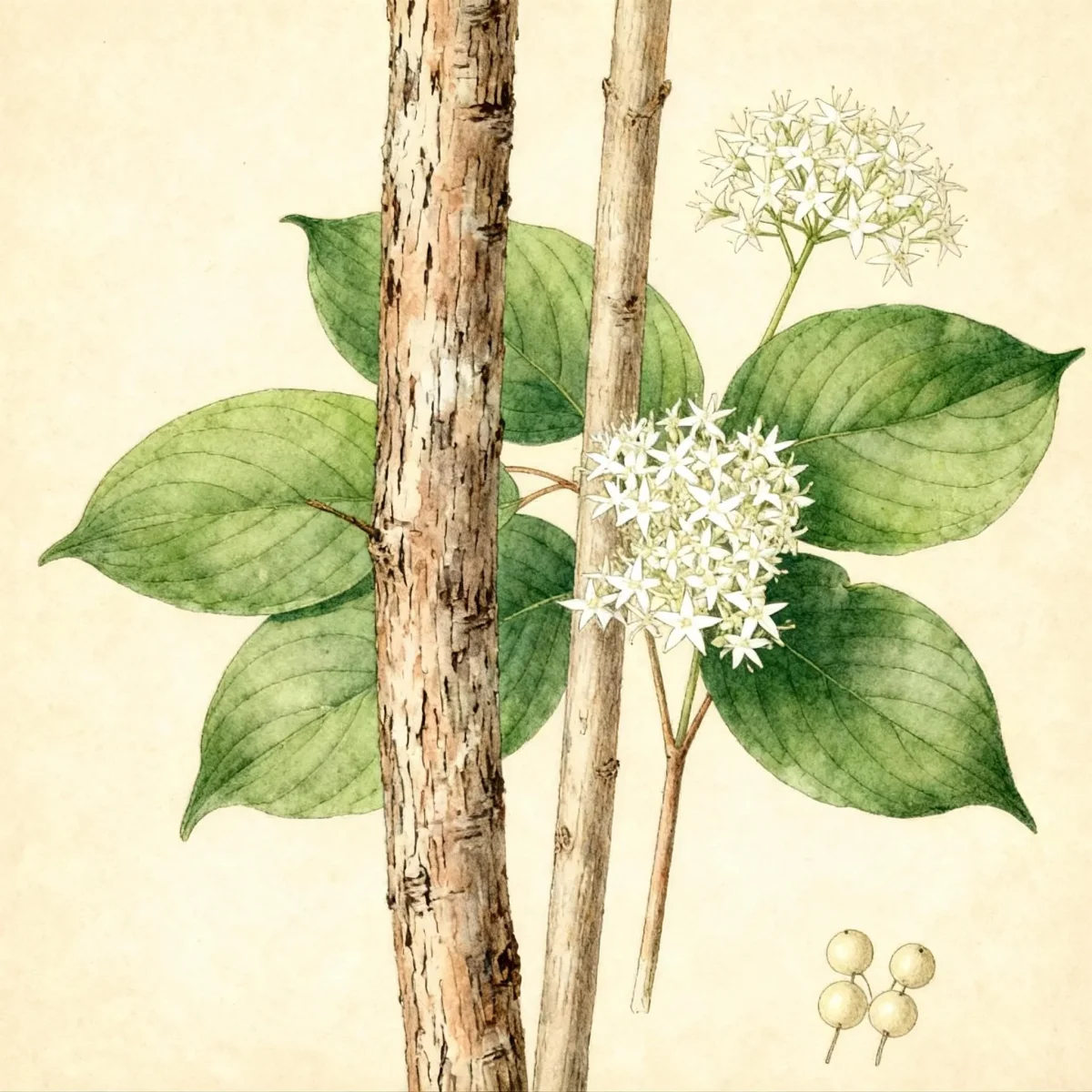
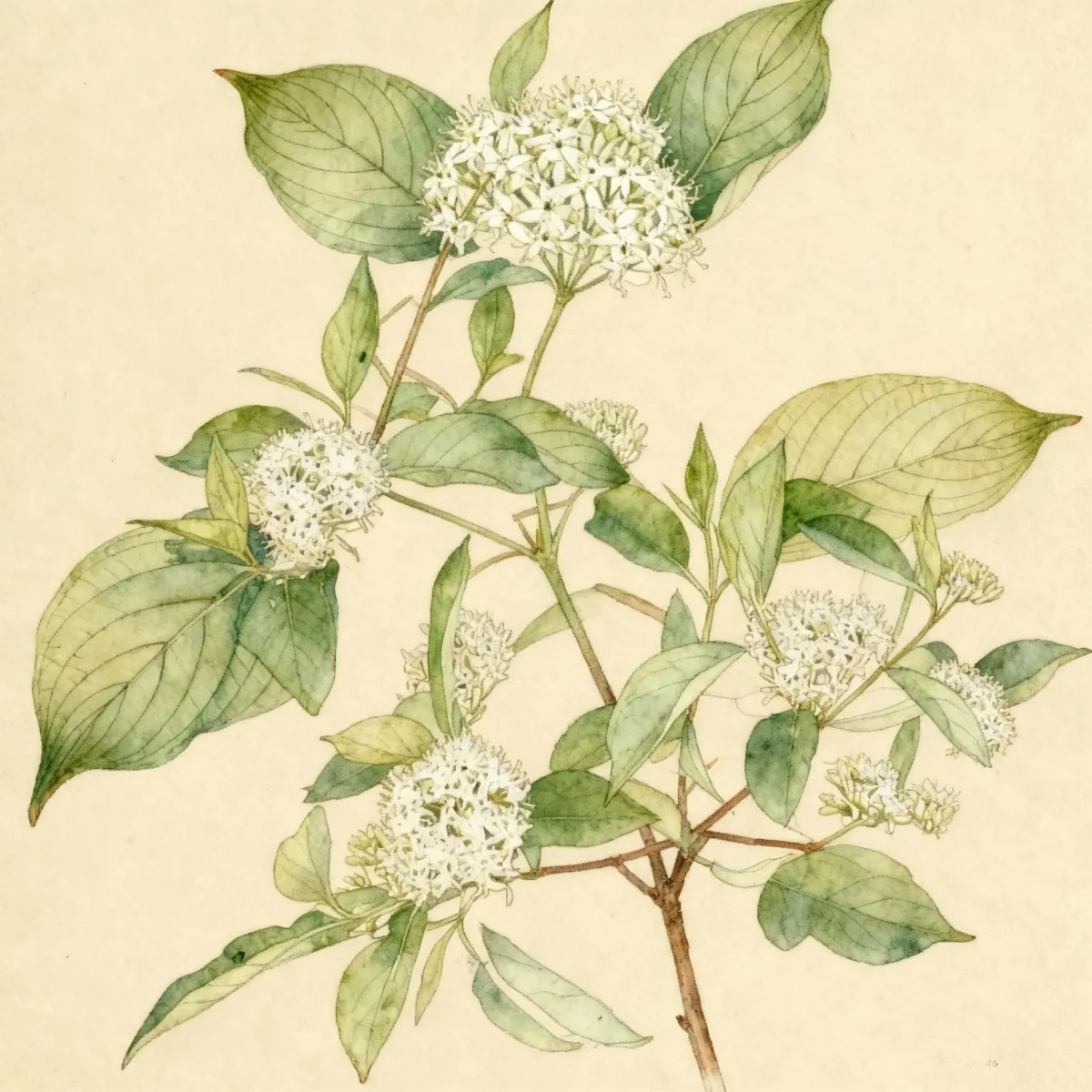
Twigs and leaf undersides of Cornus amomum possess silky hairs, giving rise to its common name, silky dogwood. Tiny yellowish-white flowers bloom in flat-topped clusters in late spring or early summer, eventually yielding attractive berry-like drupes that mature from white to a distinct blue in late summer, highly favored by birds. The wood is dense, and the twigs often display a purplish-brown hue in spring, contrasting nicely with its woodland habitat.
Tolerances
- Deer
- Erosion
- Wet Soil
- Black Walnut
Potential Problems
Cornus amomum generally avoids serious pest or disease issues, which contributes to its reliability in native landscapes. The main susceptibility noted is to scale insects, which may require targeted insecticide treatment if infestations become heavy enough to weaken the branching structure. Other minor threats include borers and leaf miner insects. Infrequently, gardeners may observe superficial fungal issues like leaf spot, powdery mildew, or, less commonly, more serious conditions like root rot or crown canker, often associated with poor long-term drainage.
Management for scale involves dormant oil application or appropriate contact insecticides before spring growth begins. Improving air circulation through occasional thinning of older wood can help mitigate fungal issues like powdery mildew.
Frequently Asked Questions
What hardiness zones is Dogwood (Cornus amomum) suitable for?
This particular Dogwood thrives across USDA Zones 5 through 8. Please ensure your local climate falls within this range for optimal growth.
How large does Dogwood (Cornus amomum) grow?
The silky Dogwood typically matures to a height between 6 and 12 feet, matching its spread, resulting in a balanced, dense shrub form.
What sun exposure does Dogwood (Cornus amomum) need?
Cornus amomum performs best when exposed to full sun to partial shade. It can tolerate significant shade but may become slightly leggier without more direct light.
When does Dogwood (Cornus amomum) bloom?
The bloom period for this shrub occurs from May into June, producing clusters of yellowish white flowers.
Conclusion
The Cornus amomum Dogwood is an exceptionally robust native shrub, offering reliable structure and vital wildlife support, especially in challenging damp environments. Its tolerance for wet soil and its ability to control erosion make it an indispensable element for sustainable gardening practices. Before planting, confirm that your site offers the medium to wet conditions this variety prefers, securing a healthy and fulfilling landscape presence for your new Dogwood.
Wildlife Benefits
The late-summer fruit production of Cornus amomum is a significant draw for numerous bird species, providing crucial late-season sustenance before migration or hibernation. The transition of the drupes from white to blue signals peak ripeness, attracting diverse local avian populations to the shrub.
Beyond fruit, the dense, often thicket-forming habit of the swamp dogwood offers excellent cover and nesting sites for smaller birds and beneficial insects throughout the year. Its early spring foliage also provides early browse for emerging insect life.
Propagation Tips
Cornus amomum is relatively easy to propagate due to its growth habit. The most straightforward method is taking hardwood cuttings in the dormant season. Select vigorous young stems, cut sections about 8 to 10 inches long, and plant them directly into well-drained, moist soil outdoors or in a cold frame.
Another natural method leverages the shrub’s tendency to layer. Because branches that touch the ground may root at the nodes, burying a section of low-hanging branch under a couple of inches of soil can encourage root development. Once rooted, the new plant can be severed from the mother shrub and transplanted.