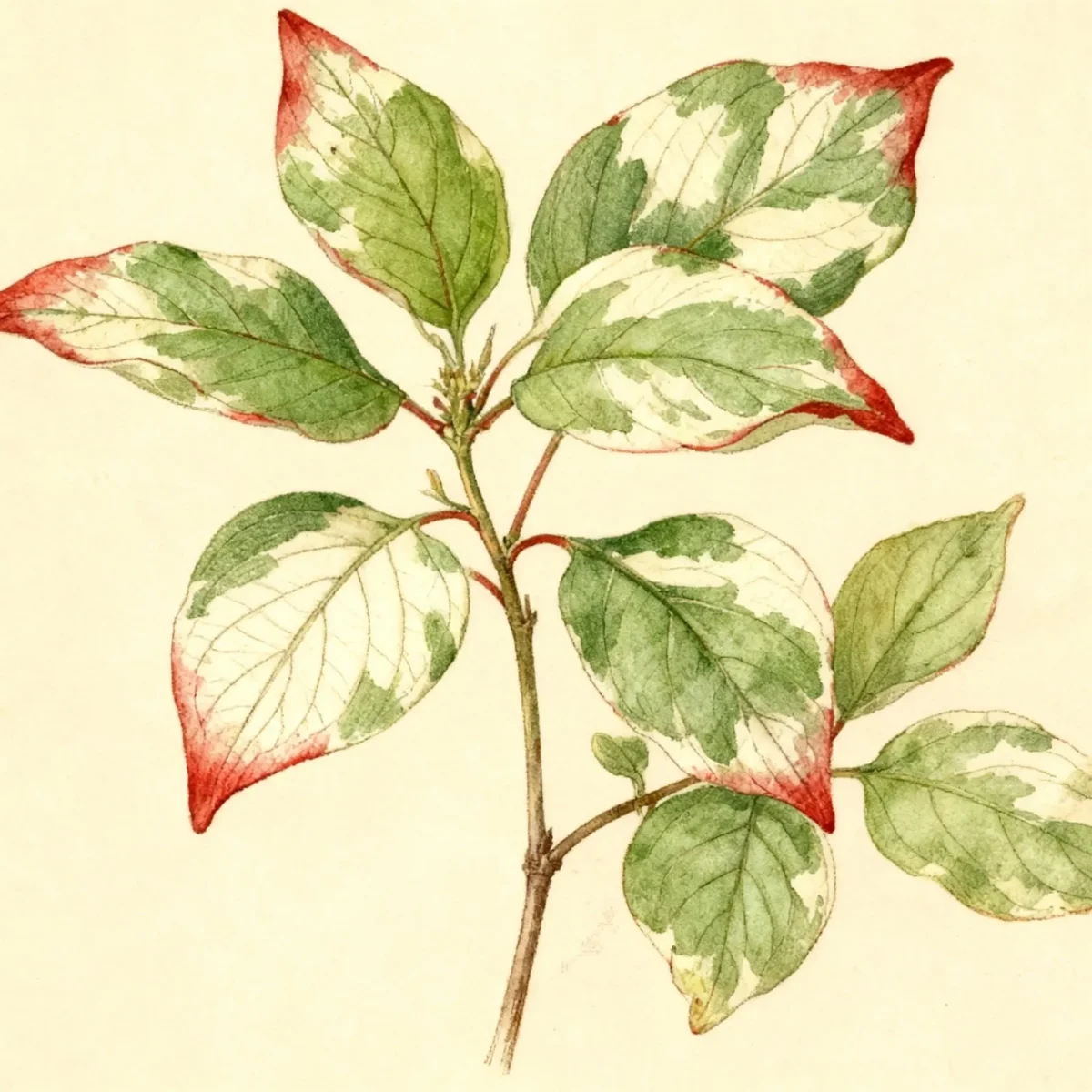
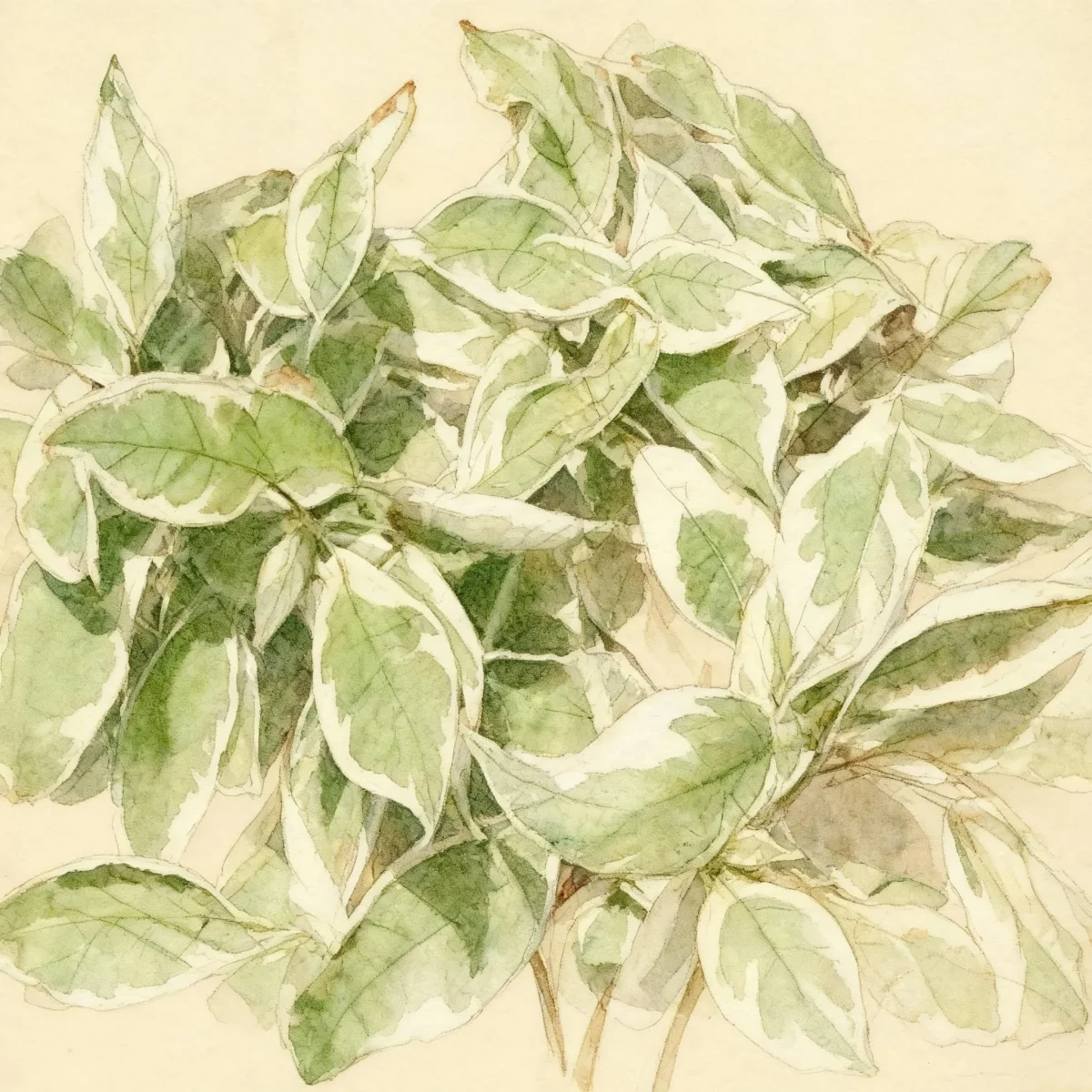
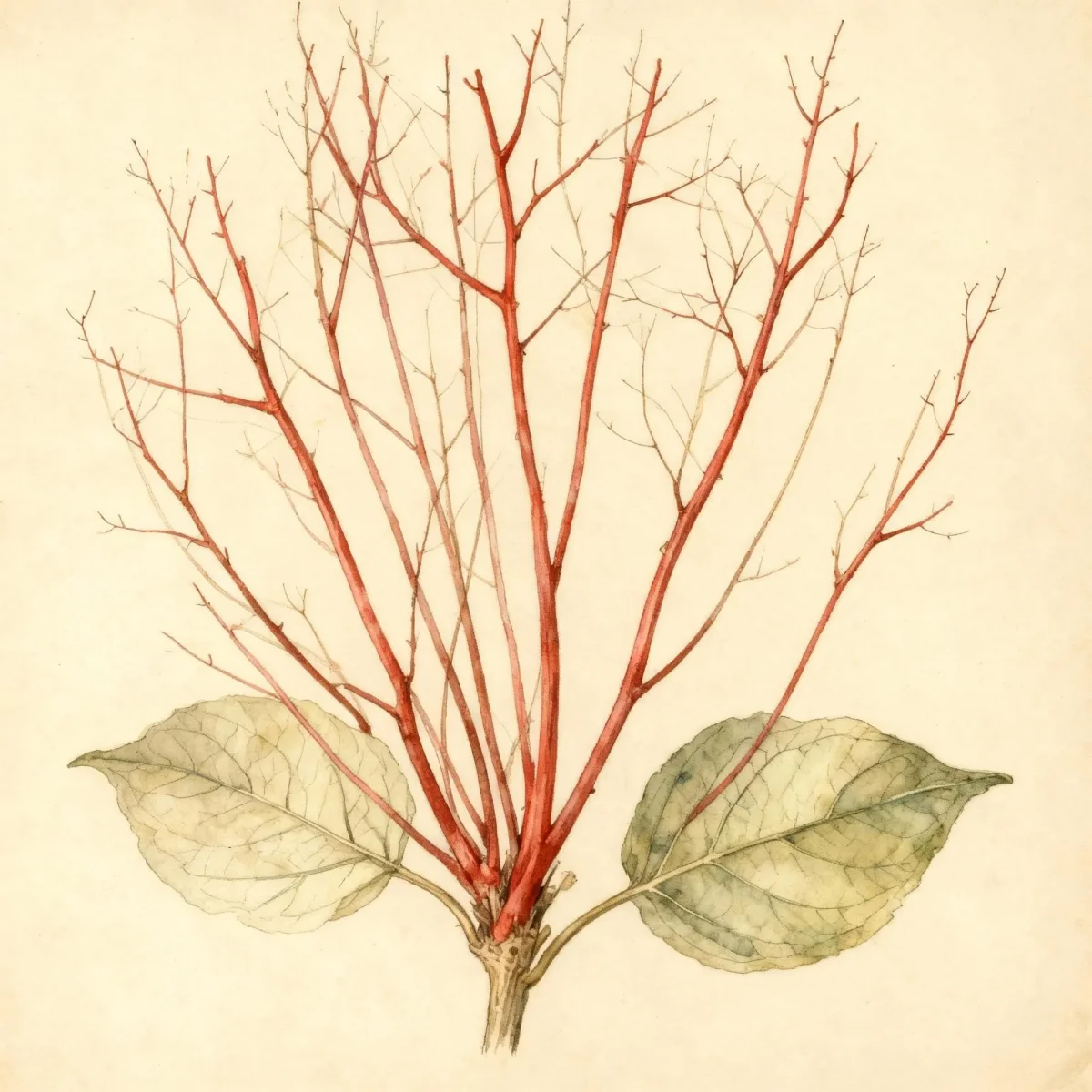
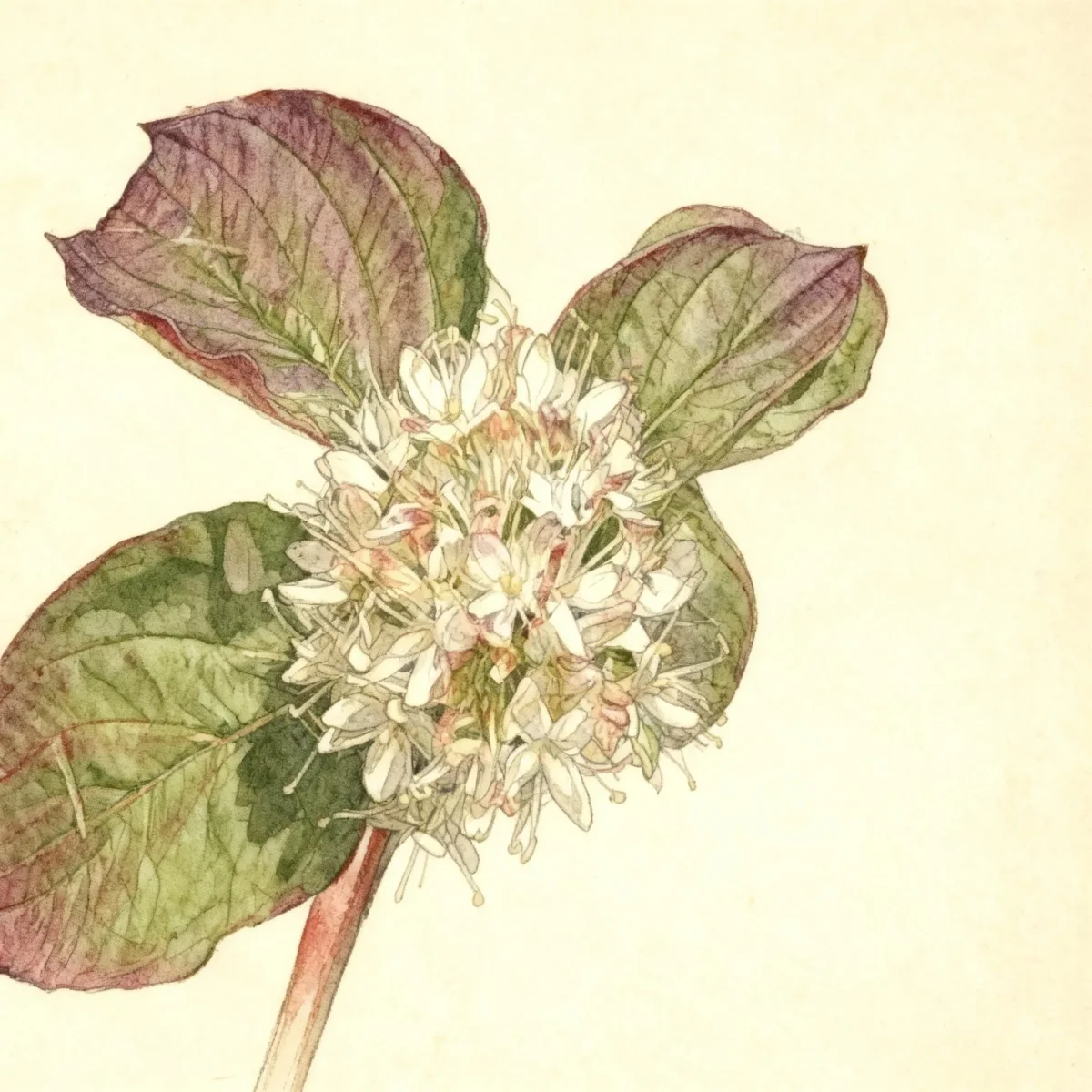
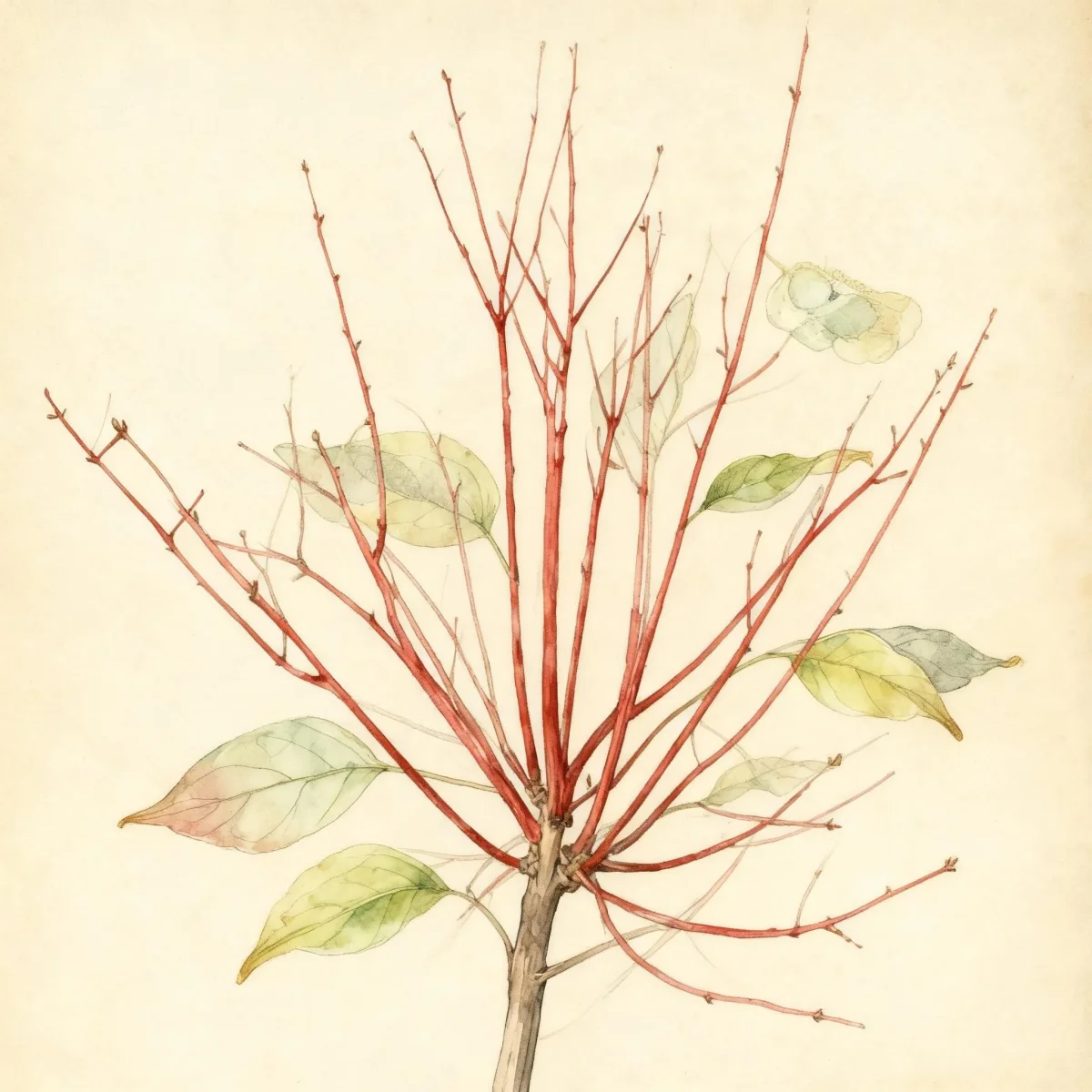
Tatarian dogwood (Cornus alba)
Tatarian dogwood (Cornus alba) is a low-maintenance shrub offering excellent winter stem color and creamy white blooms in late spring.
Scroll down to discover growing tips, care requirements, companion plants, and more
Complete Plant Information
Overview
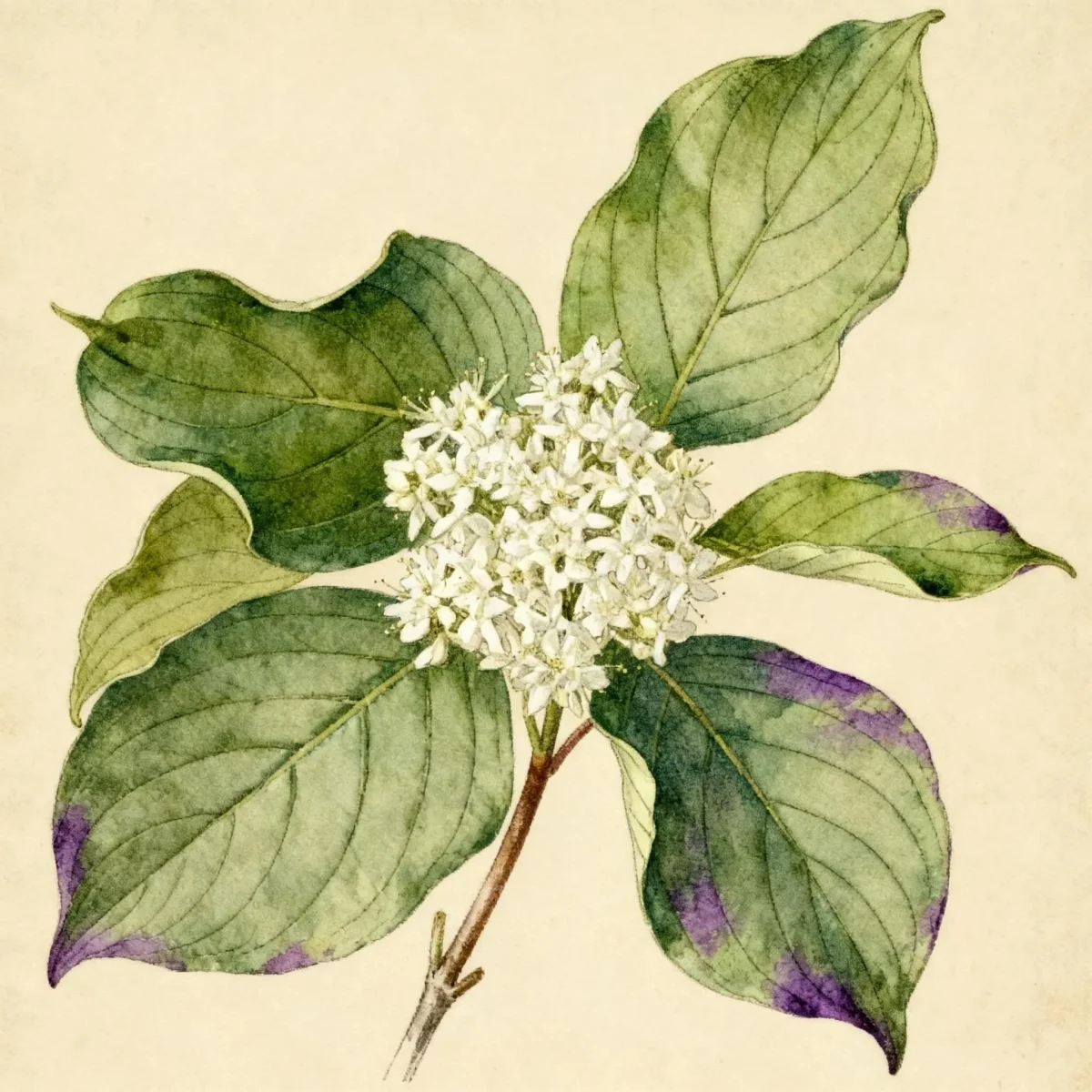
The Tatarian dogwood (Cornus alba) is a fast-growing, multi-stemmed deciduous shrub highly valued for its vibrant winter stem color, which provides essential structure and brightness to the dormant landscape. This hardy Cornus alba variety matures to 8 to 10 feet tall and wide, readily adapting to various moisture levels. Its creamy white flower clusters in late spring are followed by attractive white berries favored by local bird populations.
Native to Eastern Europe and Asia, Cornus alba establishes quickly and tolerates a wide spectrum of soil conditions, making it a robust choice for challenging spots in the garden. Its aggressive, suckering nature means it’s excellent for creating dense mass plantings or screens where spreading is desired. Gardeners seeking reliable year-round interest will find the Tatarian dogwood indispensable.
Fast Facts
- Plant Family: Cornaceae
- Plant Type: Deciduous shrub
- Native Range: Eastern Europe to eastern and northern Asia
- Hardiness Zones: USDA Zones 3-7
- Size at Maturity:
- Height: 8-10 ft
- Spread: 8-10 ft
- Bloom Time: May to June
- Bloom Description: Creamy white
- Sun Exposure: Full sun to part shade
- Water Needs: Medium
- Maintenance Level: Low
How to Grow
Plant Cornus alba during the dormant season (early spring or fall) in a location receiving full sun to partial shade. This shrub thrives in organically rich, fertile soils that are consistently moist, though it is remarkably tolerant of average conditions. While established plants handle slight dryness, ensure new plantings receive regular water until they are well-rooted.
Maintenance for the Tatarian dogwood is generally low, but to maximize stem color—its key ornamental feature—annual pruning is highly recommended. In very early spring, before new growth begins, remove 20-25% of the oldest, thickest stems to encourage vigorous new growth. These new stems possess the brightest, most intense winter color.
Alternatively, for a complete renewal, gardeners can choose to coppice all stems close to the ground (down to about 8 inches) every two to three years. Be aware that heavy spring pruning will sacrifice that year’s modest flower display. In hotter climates south of Zone 7, this shrub benefits from protection from intense summer heat to minimize stress and disease vulnerability.
Landscape Uses
The Tatarian dogwood is perfectly suited for naturalistic groupings where its tendency to sucker can be embraced to form dense, informal thickets, making it excellent for property line screens. It performs beautifully within large shrub borders or mass plantings, providing substantial texture and fall/winter contrast. These shrubs are also well-suited for rain gardens due to their tolerance for wet soil conditions.
When using Cornus alba as an accent, site it where its colorful stems can contrast sharply against snow or evergreen backgrounds during winter. Companion plantings should feature shrubs with contrasting winter color, such as yellows or oranges, to create a truly dynamic scene. Because of its tendency to spread, avoid planting Tatarian dogwood near foundation walls or in confined perennial beds unless root trimming is planned.
Standout Features
Flower Qualities
- Showy
- Good Cut
Fruit Qualities
- Showy
Noteworthy Characteristics
Cornus alba, commonly called tatarian dogwood, is a rapid-growing, multi-stemmed, suckering, deciduous shrub that is native to eastern and central Asia. It typically matures to 8-10’ tall, producing creamy white flowers in flat-topped clusters followed by white berries attractive to birds. The foliage often turns bright yellow in full sun, offering excellent seasonal transition.
Tolerances
- Rabbit
- Deer
- Erosion
- Wet Soil
Potential Problems
Cornus alba is generally sturdy, but susceptibility to certain fungal diseases exists, particularly in humid or poorly ventilated settings. Be vigilant for leaf spot, twig blights, and canker, which can weaken the plant over time. Occasional insect pests like scale, leaf miners, and borers may appear, especially on stressed plants.
To manage these issues, ensure proper air circulation through appropriate spacing and timely pruning of old wood. If canker or blight appears, prune out infected branches well into healthy wood and dispose of the debris immediately. Healthy, vigorously growing plants are the best defense against most pests and diseases affecting the Tatarian dogwood.
Frequently Asked Questions
What hardiness zones is Tatarian dogwood suitable for?
The robust Cornus alba is suitable for gardeners in USDA Zones 3 through 7.
How large does Tatarian dogwood grow?
This shrub reaches a mature height and spread between 8 and 10 feet, forming a broad, dense presence.
When does Tatarian dogwood bloom?
The creamy white flowers of the Cornus alba typically appear between May and June, sometimes lightly reblooming into early summer.
What sun exposure does Tatarian dogwood need?
For the best growth and stem color, plant Tatarian dogwood where it receives full sun to partial shade.
Conclusion
The Cornus alba, or Tatarian dogwood, remains a foundational plant for winter interest, providing unmatched stem color, bird forage, and dense screening capabilities with low maintenance effort once established. Whether used for mass plantings or property definition, this durable shrub offers multi-season value. Confirm your USDA hardiness zone compatibility (3-7) and plan for early spring pruning to ensure the most brilliant display next winter.
Companion Planting
When designing mixed shrub borders alongside Cornus alba, focus on plants that offer different textures or colors during the winter, allowing the dogwood’s stems to truly shine. Consider pairing it with evergreens like Dwarf Alberta Spruce or upright Junipers, which provide a dark, steady backdrop. Plants that exhibit yellow or orange winter stems, such as various Cornus sericea cultivars or yellow-twig dogwoods, can create striking color combinations when grouped effectively.
Because Cornus alba prefers moist, rich soil, look for other moisture-loving deciduous shrubs like Viburnums or certain types of Witch Hazel (Hamamelis). Avoid pairing the Tatarian dogwood with drought-tolerant, extreme xeriscape plants, as their cultural needs conflict significantly. Proper companion selection ensures all plants in the grouping thrive under similar watering schedules.
Propagation Tips
One of the simplest ways to increase your stock of Tatarian dogwood is through hardwood cuttings taken during the plant’s dormant phase, typically late fall or winter. Select healthy, 1-year-old stems that are pencil thickness or slightly larger. Cut sections about 6 to 10 inches long, ensuring each cutting has at least two or three nodes.
After preparation, the cuttings can be treated with rooting hormone if desired, although Cornus alba often roots readily without it. Plant these hardwood cuttings directly into a well-drained nursery bed or container, burying the bottom two-thirds of the cutting and firming the soil around it. Heeling the cuttings into a protected area over winter, either directly in the ground or in moist sand/peat, and planting them out the following spring will yield successful, genetically identical clones of your primary shrub.