Tasteless stonecrop (Sedum sexangulare)
Sedum sexangulare, Tasteless stonecrop, offers dense, low-growing evergreen foliage and bright yellow summer flowers. Highly drought tolerant.
Scroll down to discover growing tips, care requirements, companion plants, and more
Complete Plant Information
Overview
Sedum sexangulare, commonly known as Tasteless stonecrop, is a highly valued, mat-forming evergreen perennial perfect for ground cover applications. Its dense habit and succulent foliage create a robust, low-maintenance carpet throughout the growing season. This variety of stonecrop is cherished for its resilience and relatively short stature, making it an excellent choice for difficult, dry spots where other plants might fail.
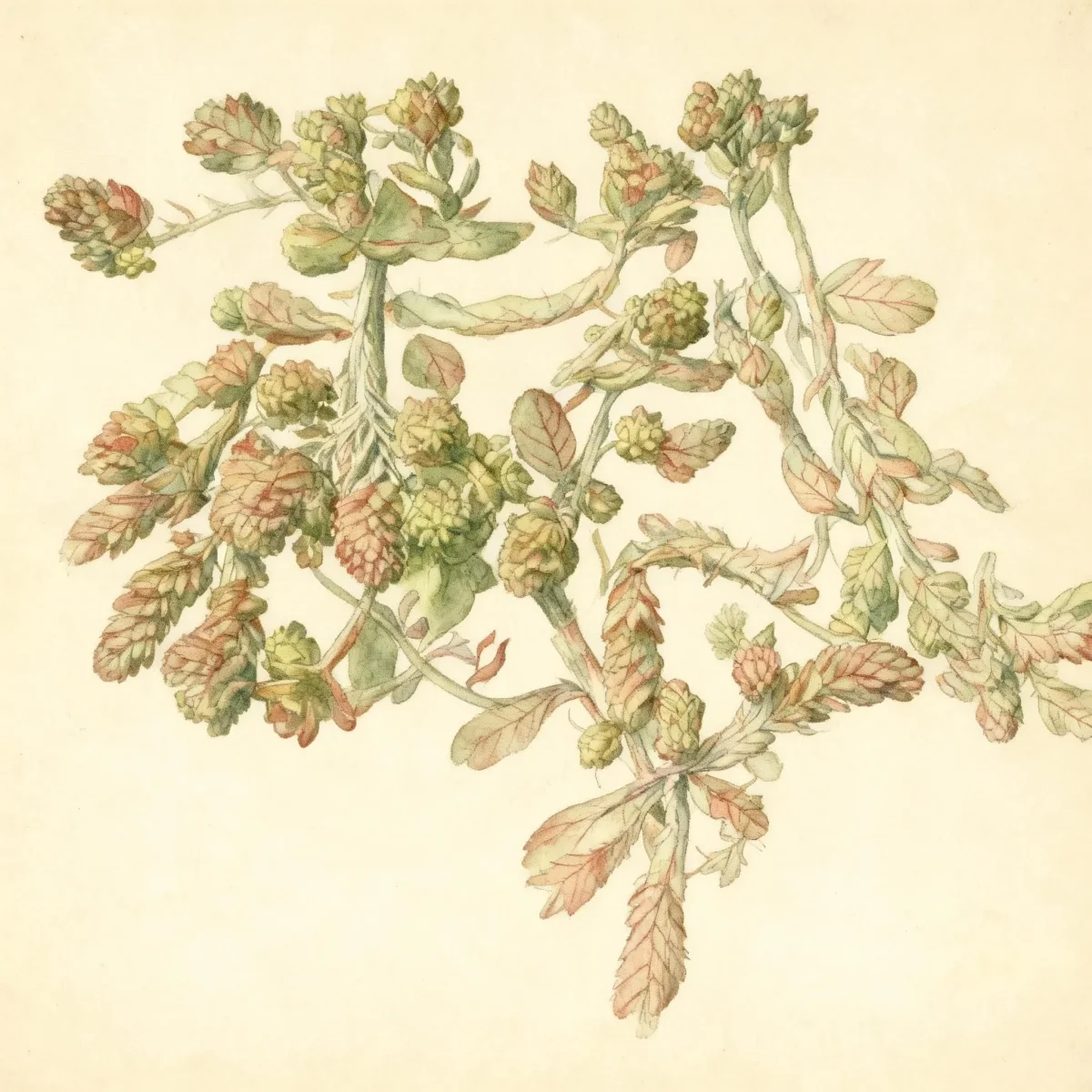
The primary aesthetic draw of Sedum sexangulare is its unique foliage structure; the bright green, cylindrical leaves arrange themselves in distinctive six-spiral rows, giving rise to its specific epithet. In early to mid-summer, low clusters of star-like, bright yellow flowers emerge, providing a cheerful display just above the foliage mass. Tasteless stonecrop spreads readily, creating a uniform texture ideal for softening hardscaping or blanketing steep slopes.
As a hardy herbaceous perennial, Tasteless stonecrop requires minimal intervention once established. It handles drought and poor soils exceptionally well, proving its worth in xeriscaping or rock gardens. Gardeners appreciate Sedum sexangulare for its vigor and its ability to naturalize densely without becoming overly aggressive in ideal conditions.
Fast Facts
- Plant Family: Crassulaceae
- Plant Type: Herbaceous perennial
- Native Range: Europe and west European Russia
- Hardiness Zones: USDA Zones 3-9
- Size at Maturity:
- Height: 0.25-0.5 ft
- Spread: 1-2 ft
- Bloom Time: June to August
- Bloom Description: Yellow
- Sun Exposure: Full sun
- Water Needs: Dry to medium
- Maintenance Level: Low
How to Grow
For optimal performance, plant Sedum sexangulare in the spring or fall after the threat of hard frost has passed. This stonecrop thrives in full sun but tolerates light shade well, provided the location still receives ample brightness. It performs best in average, dry to medium soils, favoring well-drained compositions like sandy or gravelly mixes. Excellent drainage is crucial, even though it tolerates moist conditions, it must never sit in perpetually wet soil.
Maintenance for Tasteless stonecrop is decidedly low. Water sparingly once established, allowing the soil to dry out between watering sessions, especially during drought periods. Fertility requirements are also low; rich soils can sometimes promote floppier growth. Little to no fertilization is typically needed. Pruning is generally unnecessary unless you need to control spread or clean up damaged foliage in early spring.
The foliage of Sedum sexangulare often develops attractive copper-bronze tones as temperatures cool in the autumn and winter, offering seasonal interest long after the yellow blooms fade. If the plant spreads too much, propagation is simple: divide clumps in spring or fall, or use cuttings, as this plant readily roots from both seed and division.
Landscape Uses
The primary function of Sedum sexangulare is as an outstanding ground cover, quickly carpeting areas with its dense, bright green texture. Its low profile and creeping nature make it perfect for border fronts, providing a tidy edge that won’t obscure neighboring plants. It is highly recommended for rock gardens and is one of the best selections for green roof installations due to its low water needs and shallow soil tolerance.
When massed or planted in large groups, Tasteless stonecrop creates a stunning effect, especially when its yellow flowers are in peak summer bloom. Consider using it to trail over the edges of retaining walls or cascading down large rocks, utilizing its natural sprawling habit. Because of its tolerance to dry, potentially poorer soils, it serves as an excellent filler in mixed container plantings meant for sunny, dry patios, allowing you to mix textures without worrying about consistent watering schedules.
Standout Features
Flower Qualities
- Showy
Noteworthy Characteristics
Sedum sexangulare, commonly called tasteless stonecrop, is a vigorous, dense, glabrous, mat-forming, evergreen stonecrop that it native to Europe and southwestern Asia. It typically grows to 3-4” tall (in bloom) with a spread to 12-24” wide. Cylindrical, succulent, bright green leaves (1/4” long) appear in six spiral rows (sexangulare from Latin means six-angled). The leaves of tasteless stonecrop have a very mild taste, hence the common name. Sedums are commonly called stonecrops because many plants in the genus typically grow on rocky ledges.
Tolerances
- Rabbit
- Deer
- Drought
- Dry Soil
- Shallow-Rocky Soil
- Air Pollution
Potential Problems
Serious insect or disease issues are rarely reported for Sedum sexangulare. The plant’s succulent nature helps it shrug off many common garden ailments. The main pests to monitor for are slugs and snails, particularly when the foliage is young and tender. Scale insects may occasionally be sighted, but infestations are usually minor. Management should focus on improving air circulation if humidity is high, and treating pests with targeted horticultural oil or insecticidal soap sprays if necessary.
Frequently Asked Questions
What hardiness zones is Tasteless stonecrop suitable for?
Sedum sexangulare is exceptionally hardy, thriving across USDA Zones 3 through 9.
How large does Tasteless stonecrop grow?
This stonecrop typically reaches a height between 0.25 to 0.5 feet, spreading outwards to cover an area of 1 to 2 feet wide.
What sun exposure does Sedum sexangulare need?
The ideal condition for this plant is full sun, although it can tolerate light shade without significant reduction in performance.
When does Tasteless stonecrop bloom?
Tasteless stonecrop produces its bloom display of bright yellow flowers from June through August.
Conclusion
Sedum sexangulare distinguishes itself as a stellar, no-fuss ground cover, providing evergreen structure and vibrant yellow summer flowers with minimal input. The reliable performance and beautiful, geometrically arranged foliage of Tasteless stonecrop make it a staple for dry, sunny landscapes. Always check your local USDA hardiness designation before planting to ensure this resilient Sedum thrives for years to come.
Companion Planting
When siting Sedum sexangulare, pair it with other drought-tolerant plants that share its preference for full sun and well-drained soil. Consider using ornamental grasses that appreciate sharp drainage, such as certain varieties of Fescue (Festuca), to add vertical contrast to the low mat of Tasteless stonecrop. Companion planting with other low-growing euphorbias or sun-loving Dianthus offers complementary textures while maintaining a consistent, water-wise aesthetic.
Propagation Tips
Propagation of Sedum sexangulare is extremely easy, lending itself well to dividing established colonies or creating new plants from cuttings. The most effective timing for division is early spring before new active growth begins, or in the early fall. Simply lift a section of the dense mat and replant immediately; the roots will establish quickly. Stem cuttings can also be taken from healthy stems during the summer, allowed to callous for a day or two, and then placed directly into dry, gritty soil to root easily.