Daphniphyllum (Daphniphyllum macropodum)
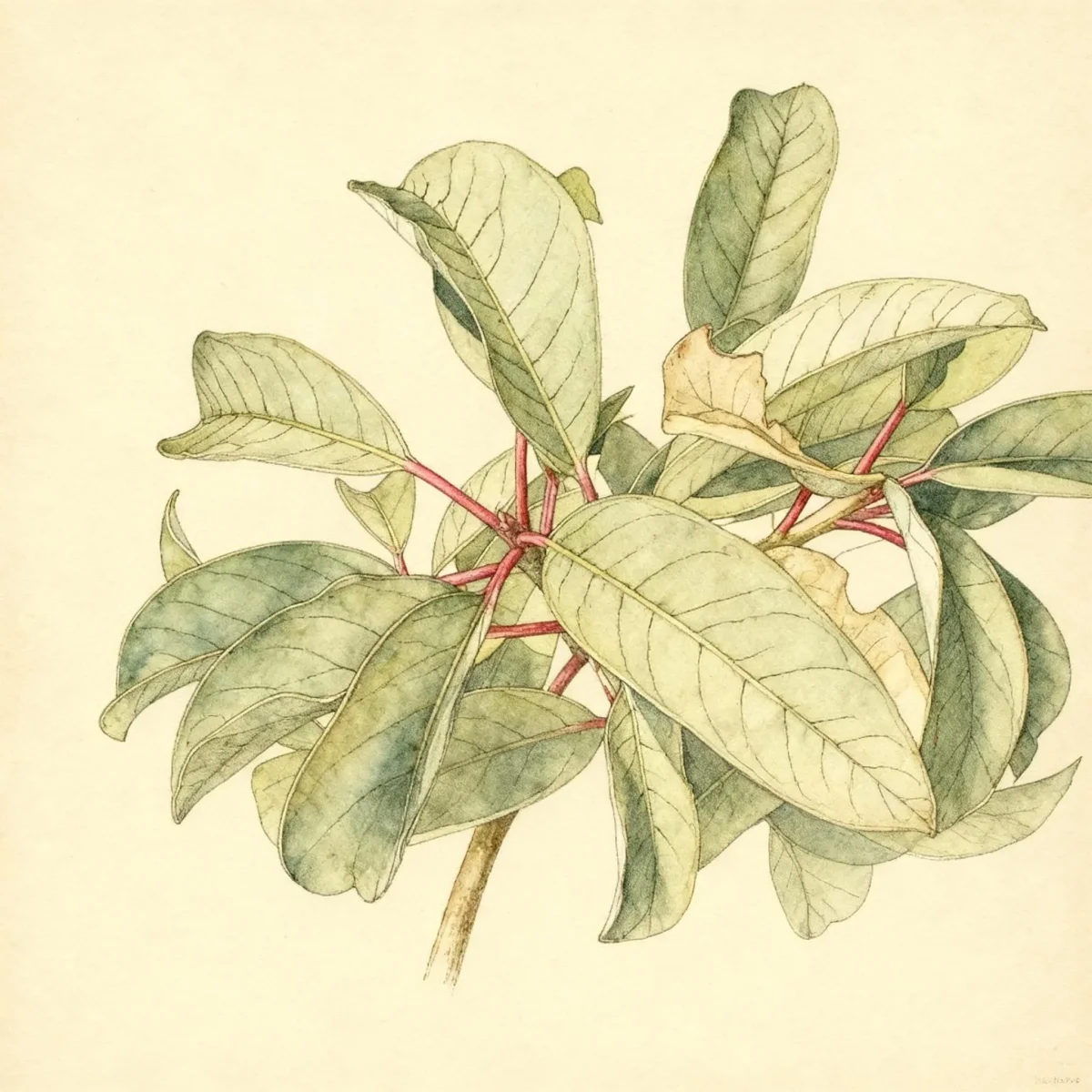
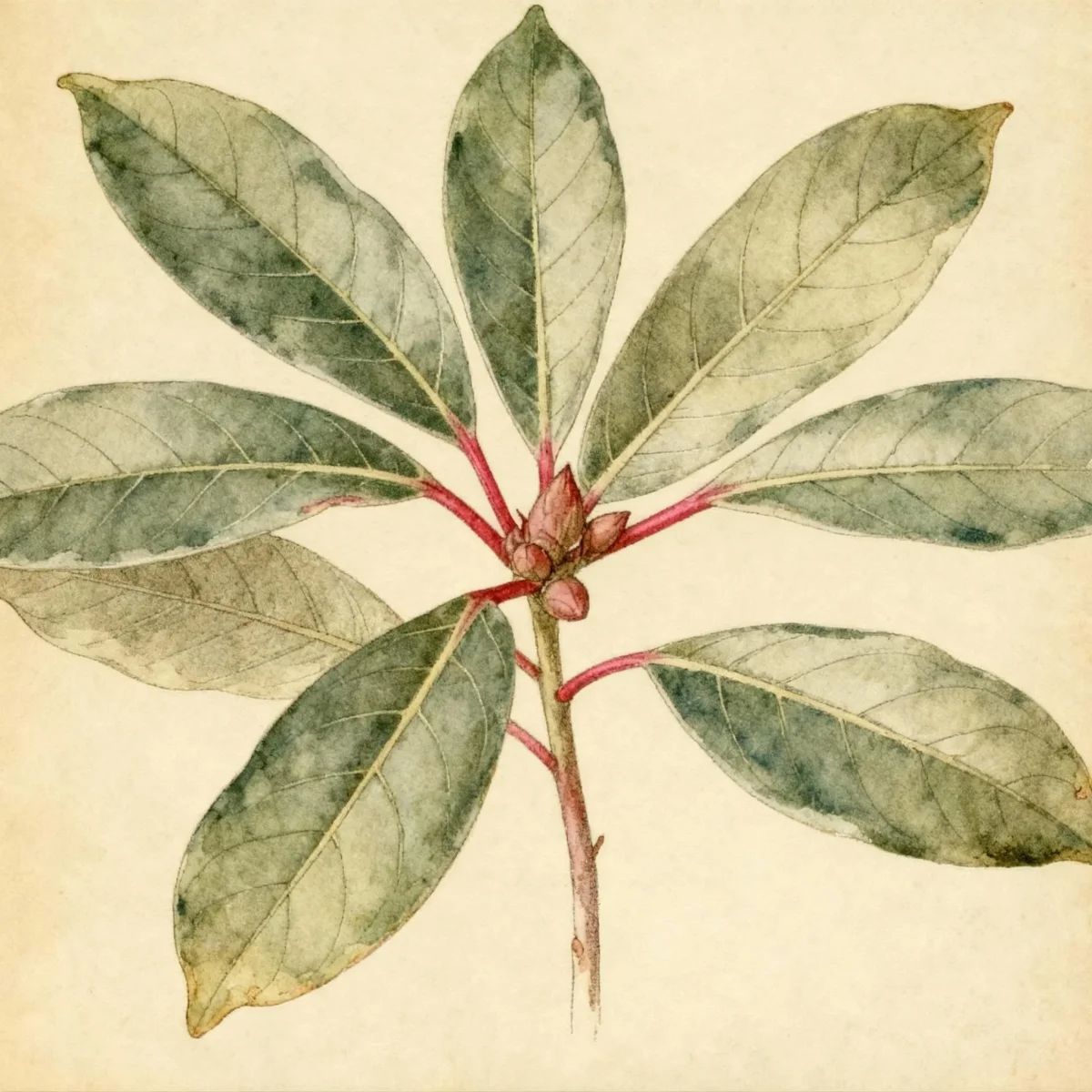
Daphniphyllum macropodum offers unique, rhododendron-like evergreen foliage and striking red petioles. A medium-sized shrub for part shade.
Scroll down to discover growing tips, care requirements, companion plants, and more
Complete Plant Information
Overview
Daphniphyllum macropodum is a highly valued broadleaf evergreen, most recognizable for its bold, leathery foliage suggestive of rhododendrons. The leaves, often long and prominently held on showy purplish-red petioles, provide year-round structure and interest, particularly as new growth emerges flushed with pink. This species is native to Eastern Asia, including forested areas in Japan, Korea, and China.
As a slow-growing shrub or small tree, this Daphniphyllum is best suited for gardeners seeking architectural interest in partial shade settings. While the flowers are unremarkable, female plants, when properly pollinated, produce attractive blue-black drupes that ripen in fall, adding seasonal color. Understanding the specific needs of Daphniphyllum macropodum is key to achieving its maximum ornamental potential.
Pragmatically, it functions well as a specimen or informal hedge, provided adequate space is given for its eventual 15 to 25-foot spread. Gardeners must ensure the site conditions mimic its native, moist, slightly acidic woodland environment to maintain the vigor of the Daphniphyllum.
Fast Facts
- Plant Family: Daphniphyllaceae
- Plant Type: Broadleaf evergreen
- Native Range: China, Korea, Japan
- Hardiness Zones: USDA Zones 7-9
- Size at Maturity:
- Height: 15-25 ft
- Spread: 15-25 ft
- Bloom Time: May to June
- Bloom Description: Purple-pink (male) and pale green (female)
- Sun Exposure: Part shade
- Water Needs: Medium
- Maintenance Level: Medium
How to Grow
For successful establishment, plant Daphniphyllum macropodum during the cooler, wetter seasons, prioritizing spring or fall planting. It requires consistently moist, rich, sandy-humusy, and slightly acidic soil with excellent drainage. The ideal location provides filtered light or part shade; intense afternoon sun should be avoided as it can easily lead to leaf scorch.
Maintain even soil moisture throughout the growing season, especially for younger specimens or those planted near full sun exposure. This plant establishes best when deeply watered regularly until fully established. While specific fertilizer requirements are not detailed, amending the soil with rich organic matter annually will help mimic the humusy forest floor environment where Daphniphyllum thrives.
A crucial note for cultivation involves its dioecious nature: male and female flowers occur on separate plants. If you desire the ellipsoidal blue-black fruit, ensure a nearby male plant is present to pollinate the female flowers blooming between May and June. Propagation is typically achieved effectively through seed, though this process often requires patience.
Landscape Uses
The structure and evergreen nature of Daphniphyllum macropodum make it an excellent choice for providing year-round visual anchor points in the landscape. It functions beautifully as a rounded evergreen shrub when sited along borders or placed near building foundations where its bold leaves can contrast against softer plantings. When planted in groups, Daphniphyllum can quickly develop into an impressive informal hedge, offering significant screening potential.
Because its cultural requirements align well with other woodland lovers, consider pairing this plant with rhododendrons, azaleas, or various shade-loving ferns. The dark green, glossy foliage of the mature shrub contrasts well against the finer textures of woodland perennials, creating depth in shaded garden rooms. Remember that planting male and female shrubs in proximity is essential if the late-season blue-black drupes are a desired feature.
Standout Features
Flower Qualities
- Insignificant
Fruit Qualities
- Showy
Noteworthy Characteristics
Daphniphyllum macropodum is a rounded understory broadleaf evergreen shrub or small tree that is most noted for its bold, attractive, rhododendron-like foliage. It has no generally accepted common name. It is native to forested areas in Japan, Korea and China. It typically grows to 15-25’ tall in cultivation, but reportedly to as much as 45’ tall in the wild in its native habitat. Long-stalked, leathery, oblong to oblanceolate leaves (5-10” long by 1-3” wide) with showy purplish red petioles are arranged in closely-spaced spirals at the stem ends in a configuration somewhat resembling the leaves found on some rhododendrons. The genus name Daphniphyllum derives from the reference to foliage similarity with some daphnes.
Tolerances
This plant has no listed specific environmental tolerances beyond its hardiness range.
Potential Problems
This species generally boasts excellent resilience, with no known serious insect or disease problems reported, which simplifies maintenance. The primary management concern for Daphniphyllum macropodum is protecting the foliage from intense solar radiation. Leaf scorch is a distinct possibility if the plant is situated in full, unmitigated sun, leading to unsightly browned leaf edges or patches. Planting according to specifications—part shade and consistently moist soil—is the most effective preventative measure.
Frequently Asked Questions
What hardiness zones is Daphniphyllum suitable for?
Daphniphyllum macropodum is reliably winter hardy in USDA Zones 7 through 9, though it may survive Zone 6 if given a protected site and winter mulching.
How large does Daphniphyllum grow?
This broadleaf evergreen typically reaches mature heights and spreads between 15 and 25 feet tall and wide in garden settings.
When does Daphniphyllum bloom?
Blooming occurs from May until June, featuring inconspicuous flowers with males displaying purple-pink coloration and females showing pale green tones.
What sun exposure does Daphniphyllum macropodum need?
The ideal sun exposure for this shrub is part shade. Too much sun increases the risk of foliage scorch.
Conclusion
The unique architectural foliage provided by Daphniphyllum macropodum, characterized by its leathery leaves and red petioles, secures its place as a standout specimen in shaded landscapes. Successful cultivation of this Daphniphyllum relies on providing the moist, slightly acidic, well-drained soils and partial shade it naturally prefers. Before planting, thoroughly assess your site’s light conditions and hardiness zone compatibility to ensure years of healthy evergreen interest.
Companion Planting
When designing a planting scheme around Daphniphyllum, focus on companions that share the need for consistently moist, slightly acidic soil and partial shade, common to woodland edges. Hydrangeas (especially Hydrangea quercifolia for contrasting leaf texture) and large evergreen shrubs like certain Hellebores create excellent understory layers that complement the bold leaves of the Daphniphyllum. Grouping it with ferns will accentuate the fine texture contrast against the large, rounded leaves.
Propagation Tips
The botanical reference material indicates propagation for Daphniphyllum macropodum is best achieved from seed. Gardeners should collect the ellipsoidal blue-black drupes from pollinated female plants after they mature. Since this plant is not commonly propagated by cuttings, starting from seed allows for the potential selection of superior seedlings or ensuring you obtain both male and female plants if the initial source was established from seed alone.