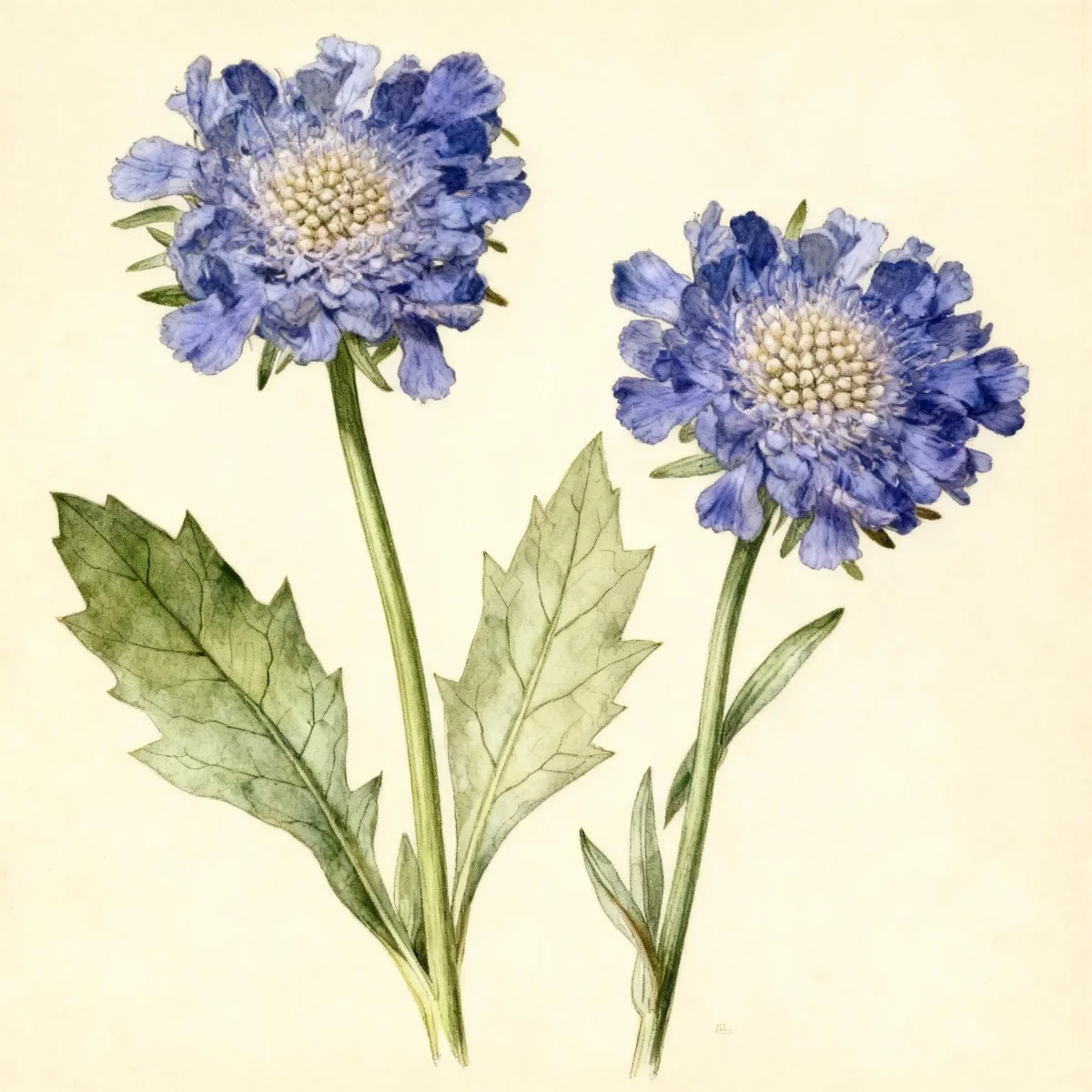
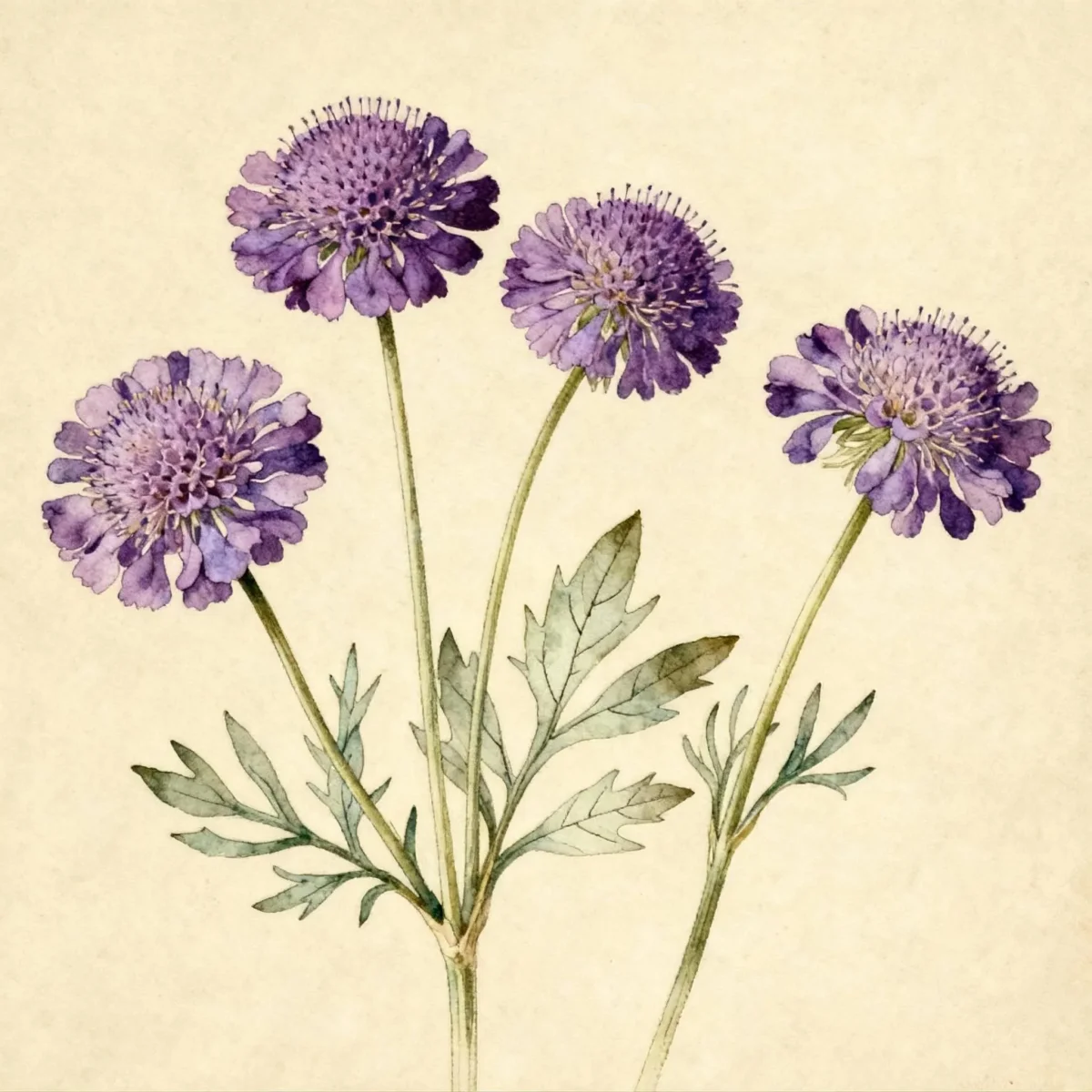
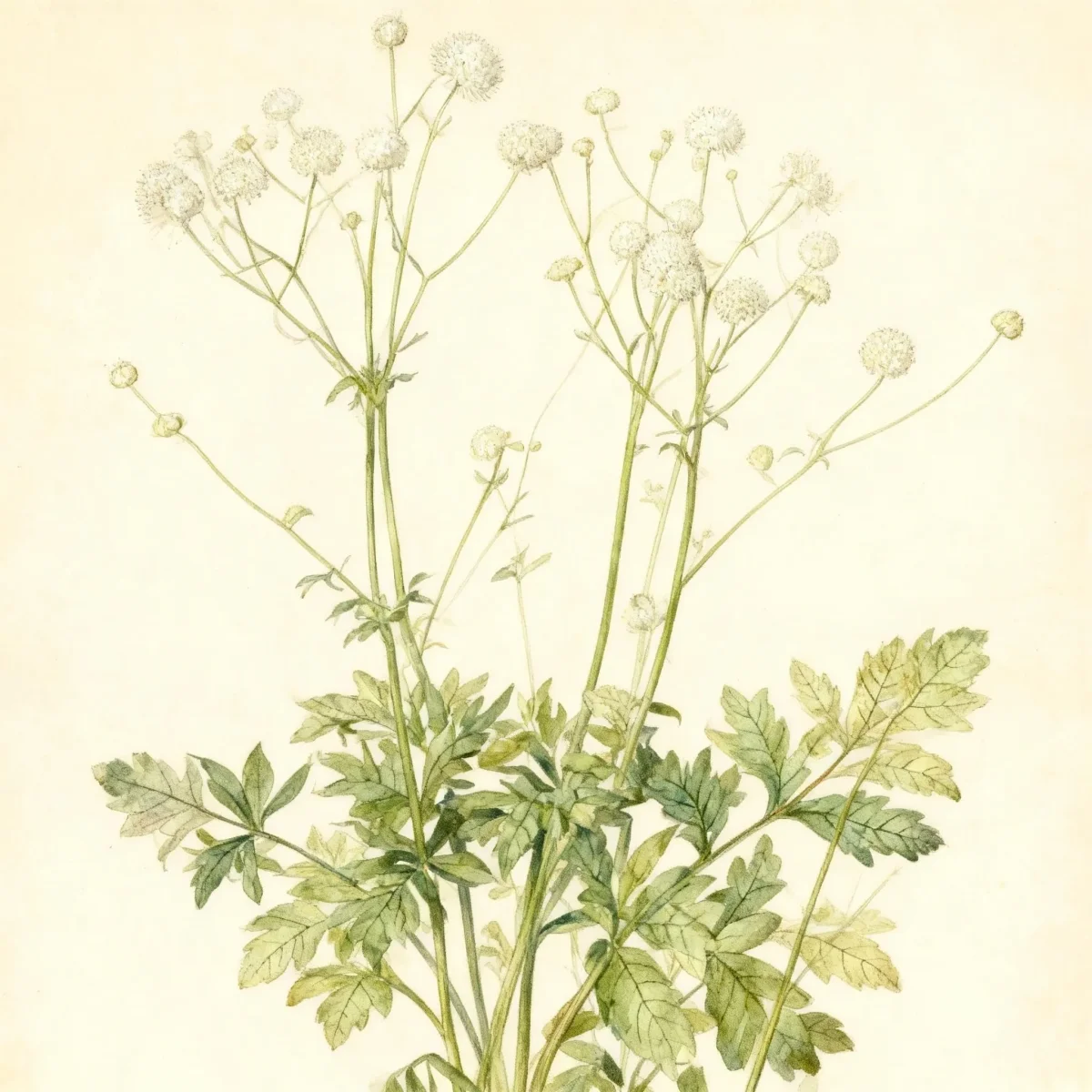
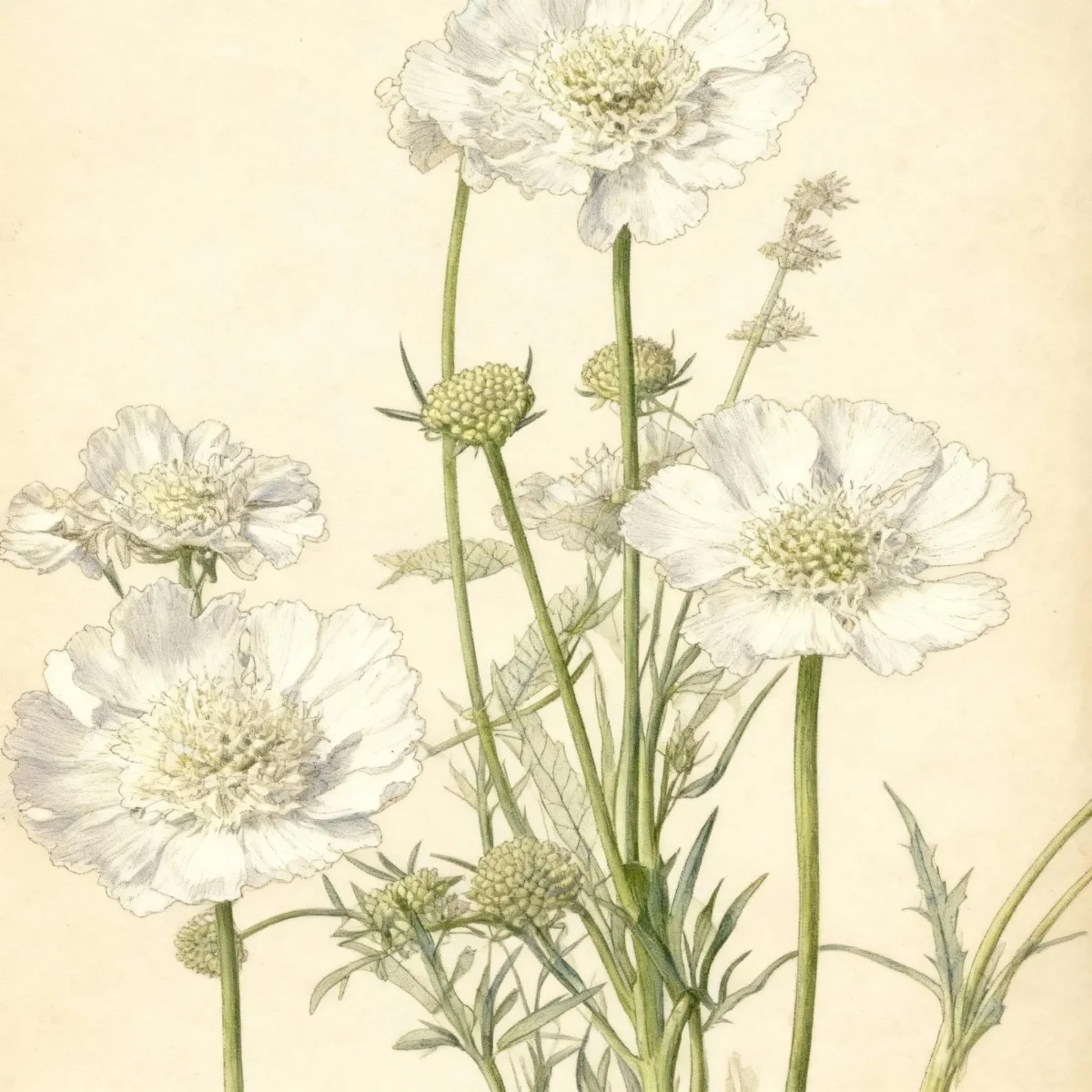
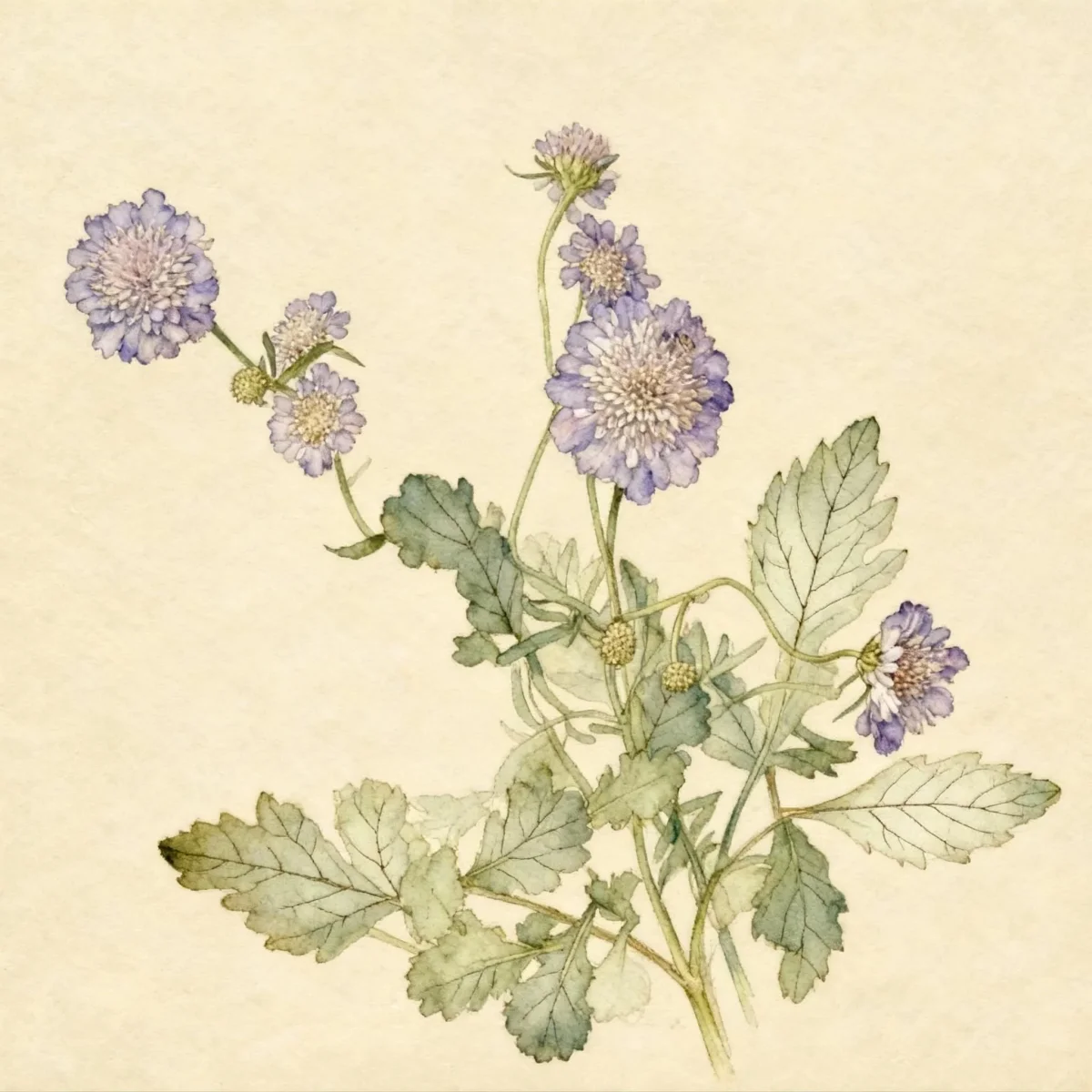
Pincushion flower (Scabiosa caucasica)
Hardy Scabiosa caucasica (Pincushion flower) offers showy lavender-blue blooms from May to July, ideal for cottage gardens.
Scroll down to discover growing tips, care requirements, companion plants, and more
Complete Plant Information
Overview
The Scabiosa caucasica, widely known as the Pincushion flower, is a highly valued herbaceous perennial prized for its distinctive, airy blooms that appear reliably from late spring into mid-summer. Its flower structure, featuring a central cushion surrounded by frilly petals, perfectly captures its common name. This plant provides excellent vertical texture in the garden, standing tall on stiff stems above attractive grayish-green foliage.
Native to the Caucusus Mountains, Scabiosa caucasica adapts well to various garden settings where it receives plenty of light. It is considered a low-maintenance addition once established, contributing significant color without demanding excessive care, though it has a distinct intolerance for wet winter conditions. These flowers are frequently sought after for adding that classic cottage garden charm.
A significant asset of the Pincushion flower is its suitability as a cut flower, bringing long-lasting, unique texture indoors. Gardeners appreciate its drought tolerance once established and its resistance to common pests. Successfully growing Scabiosa caucasica hinges primarily on providing superb soil drainage.
Fast Facts
- Plant Family: Caprifoliaceae
- Plant Type: Herbaceous perennial
- Native Range: Caucasia
- Hardiness Zones: USDA Zones 3-7
- Size at Maturity:
- Height: 1.5-2 ft
- Spread: 1-1.5 ft
- Bloom Time: May to July
- Bloom Description: Lavener to blue, occasionally white
- Sun Exposure: Full sun
- Water Needs: Medium
- Maintenance Level: Low
How to Grow
The key to thriving Scabiosa caucasica is soil preparation. Plant in light, well-drained soils, ideally maintaining a neutral pH, ensuring they are situated in full sun. Good drainage is absolutely critical; this perennial tends to rot quickly in areas where water pools or remains soggy, especially during the winter months.
Watering should be consistent, meeting medium requirements, but never allowing the soil to become waterlogged. Fertilization is rarely necessary; overly rich soil can lead to excessive foliage growth at the expense of blooms. Deadheading—removing spent flowers—is highly recommended to continually encourage the production of additional Pincushion flower blossoms throughout the season.
Due to its intolerance for persistent wetness, especially in winter, this plant benefits greatly from protection during cold, damp spells. Apply a light, dry winter mulch, such as evergreen boughs or straw, after the ground freezes. Site selection is also important, as Scabiosa caucasica struggles in areas prone to high heat and humidity.
Landscape Uses
The elegant structure and lovely color of the Pincushion flower make it perfect for traditional landscape designs. They perform exceptionally well when used in borders, providing mid-height interest between lower groundcovers and taller background specimens. Their vertical stems lend themselves perfectly to creating that soft, unstructured look central to cottage gardens.
Furthermore, gardeners focused on cutting gardens will find Scabiosa caucasica indispensable. The flowers remain attractive long after being cut, making them excellent additions to mixed bouquets. Groupings of three or five plants create stunning drifts of color that attract appreciative glances throughout the summer blooming period.
Standout Features
Flower Qualities
- Showy
Noteworthy Characteristics
Scabiosa caucasica, commonly called Pincushion flower, is, as suggested by the specific epithet, native to the Caucusus Mountains. It is a clump-forming perennial that typically grows 18-24” tall and blooms from late May to mid-summer. Flowers (2-3” diameter) are lavender to blue (occasionally white), with an outer ring of frilly petals and a center cushion with protruding stamens resembling pins in a pincushion. The genus name Scabiosa comes from the Latin scabies meaning the itch in reference to the plant’s rough leaves which could supposedly cure scurvy. This species is uncommonly sold in commerce because of the availability of several excellent cultivars, e.g., see ‘Alba’ and ‘Kompliment’.
Tolerances
- Deer
- Drought
Potential Problems
Fortunately, the Pincushion flower rarely succumbs to serious insect or disease issues. The overwhelming cultural challenge gardeners face relates entirely to soil condition. The absolute requirement for well-drained soil cannot be overstated; failure to meet this need will inevitably lead to crown and root rot, especially during wet winters. Ensure planting locations do not hold standing water.
Frequently Asked Questions
What hardiness zones is Scabiosa caucasica suitable for?
Scabiosa caucasica is reliably hardy across USDA Zones 3 through 7.
How large does Pincushion flower grow?
Mature plants generally reach a height between 1.5 and 2 feet tall, spreading from 1 to 1.5 feet wide.
When does Pincushion flower bloom?
The primary bloom time for this perennial is typically from May through July, producing lavender to blue flowers.
What sun exposure does Scabiosa caucasica need?
This plant requires full sun exposure to thrive and produce its best floral display.
Conclusion
The Scabiosa caucasica, or Pincushion flower, offers gardeners a reliable, low-maintenance source of refined summer color ideal for cottage beds and fresh arrangements. Its striking blooms and adaptability to drought make it a worthwhile addition to sunny perennial gardens. Before planting, ensure your site provides the prerequisite sharp drainage, particularly checking winter soil conditions, to guarantee success for years to come.
Companion Planting
Selecting companions that share the love for full sun and sharp drainage is crucial when integrating Scabiosa caucasica into your borders. Consider pairing it with other Mediterranean or prairie natives that prefer drier feet, such as ornamental grasses or hardy salvias. Plants like Lavender (Lavandula) or Russian Sage (Perovskia atriplicifolia) offer complementary textures and similar cultural needs, ensuring the entire planting scheme remains robust through drier spells. Avoid planting near bog or moisture-loving species, as this proximity increases the risk of the Scabiosa suffering from poor aeration around its roots.
Varieties to Consider
While the species itself is beautiful, gardeners seeking specific color palettes or slightly different habits often turn to named cultivars of Scabiosa caucasica. For gardeners desiring pure white blooms, the cultivar ‘Alba’ is frequently cited and maintains the classic form. Another highly regarded selection is ‘Kompliment,’ known for its intense blue coloration and strong, upright stems, making it particularly useful for cutting gardens. Exploring these specific varieties allows you to fine-tune the cool blues and lavenders provided by the Pincushion flower in your landscape design.