Common teasel (Dipsacus fullonum)
Common teasel (Dipsacus fullonum) is a biennial famous for prickly stems and cone-like flowerheads blooming pink to purple in summer.
Scroll down to discover growing tips, care requirements, companion plants, and more
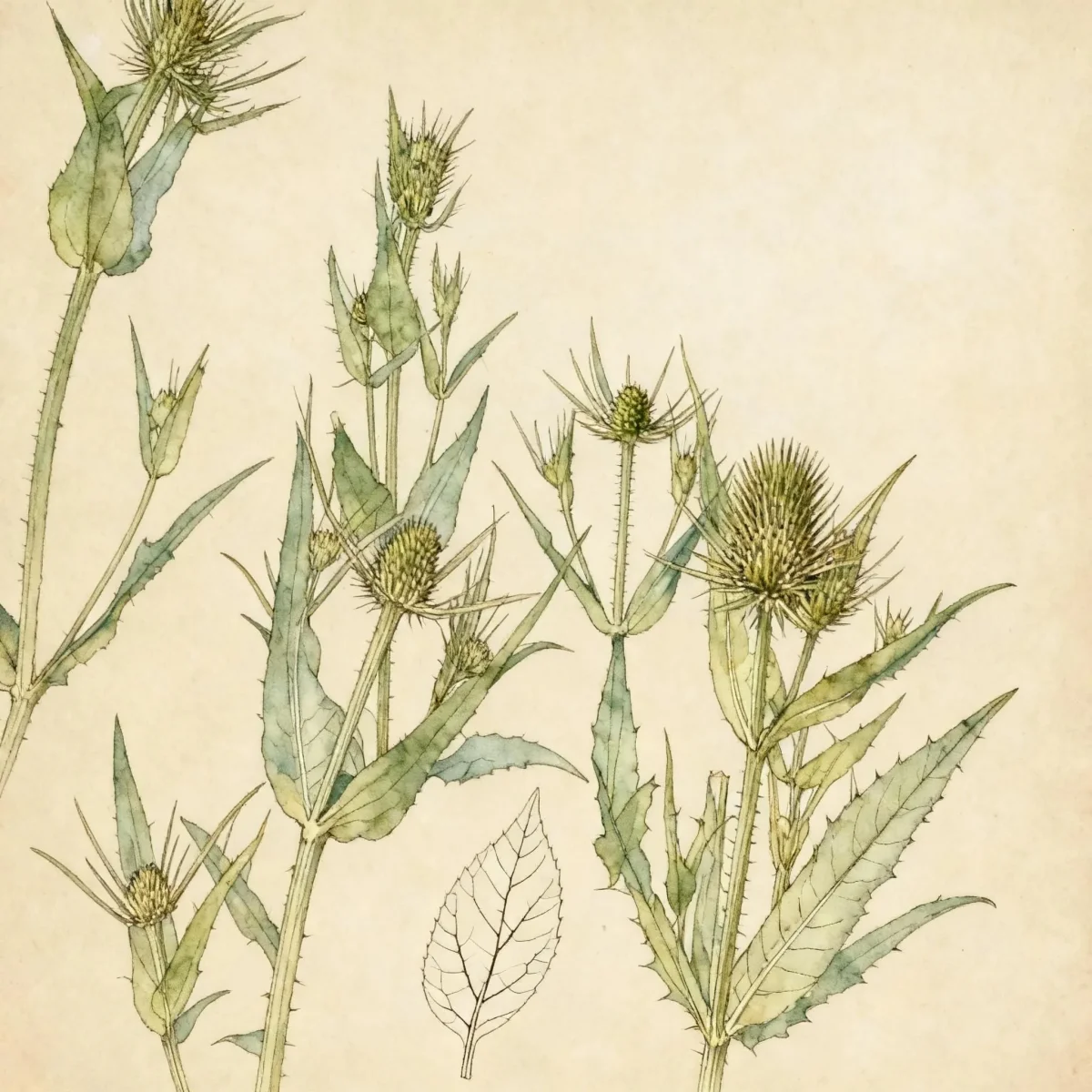
Complete Plant Information
Overview
Dipsacus fullonum, widely recognized as Common teasel, is a towering biennial known for its dramatic, thistle-like flower heads that persist well into the winter landscape. In its second year, this plant sends up stiff, deeply prickly stems reaching four to six feet tall, crowned by distinctive cone-shaped terminal flower heads. These structures start blooming mid-summer with delicate pinkish-purple flowers, offering significant visual interest.
While historically valuable for textile production (fulling cloth), the modern gardener must approach Dipsacus fullonum with caution due to its aggressive self-seeding nature. It thrives easily, naturalizing rapidly in disturbed areas and roadsides throughout its growing range. Gardeners who appreciate vertical interest and a native-mimicking wildflower look should consider its invasive potential before planting.
This species is native to Europe and Asia but has established widespread populations across North America. Its lifecycle culminates as the plant dies after producing hundreds of seeds, providing a winter food source for certain birds, though its aggressive spread often outweighs these functional benefits in managed landscapes.
Fast Facts
- Plant Family: Caprifoliaceae
- Plant Type: Annual
- Native Range: Europe, Asia
- Hardiness Zones: USDA Zones 3-8
- Size at Maturity:
- Height: 4-6 ft
- Spread: 1-2.5 ft
- Bloom Time: July to September
- Bloom Description: Pink to purple
- Sun Exposure: Full sun to part shade
- Water Needs: Medium
- Maintenance Level: Low
How to Grow
The Common teasel establishes best when sown directly outdoors in the spring or late fall for germination the following year, as it is a biennial requiring a cool period for rosette development. Plant seeds in any moderately fertile, well-drained soil. While it tolerates part shade, Dipsacus fullonum achieves its best stature in full sun locations where competition from other plants is minimal.
Once established, care is minimal. Due to its established root system, established plants require medium watering, tolerating typical garden conditions so long as drainage is adequate. Minimal fertilization is necessary, as rich soil often encourages over-vigorous vegetative growth rather than strong flowering stems.
A critical consideration for growing Dipsacus fullonum is management. Since this prickly biennial weed readily escapes cultivation, plan to deadhead (immediately cut off) flowerheads before seeds fully mature in late fall. Each plant can be prolific, producing up to 40 flowerheads each containing 900 or more seeds, necessitating diligent removal if containment is required.
Gardeners must be aware that Common teasel has been declared a noxious weed in several US states, including Colorado, Iowa, Missouri, and New Mexico. Always verify local regulations before intentionally cultivating or allowing naturalization of Dipsacus fullonum on your property.
Landscape Uses
Because of its height, upright habit, and highly architectural, prickly seed heads, Dipsacus fullonum offers strong vertical accents in wild or naturalized garden settings. It functions effectively as a structural component, adding texture along the back of a mixed border or providing screening where its height is desired. Companion planting with shorter, clumping perennials helps manage its tendency to spread visually.
It is absolutely imperative to consider the noxious weed status before introducing this plant. Where legally permitted, the Common teasel is best suited for large, informal style gardens, meadows, or areas specifically designated for wildlife viewing, such as near a bird feeder where the dried flower heads will be appreciated by finches.
If you choose to incorporate this plant, use it sparingly, perhaps allowing just a few plants to self-seed in a controlled pocket perimeter. Avoid placing it near cultivated vegetable beds or along property lines due to its aggressive seed dispersal strategy, ensuring its dramatic structure remains an asset rather than a liability.
Standout Features
Flower Qualities
- Showy
Noteworthy Characteristics
Dipsacus fullonum, commonly known as common teasel, is a biennial that typically produces a rosette of long, pointed, oblanceolate, dark green basal leaves (to 12” long) in the first year followed by prickly upright flower stems which rise from the basal rosette to 6’ tall in the second year topped in a July-to-September bloom by stiff, spiny, cone-shaped, thistle-like, terminal flowerheads (to 3-4” tall) adorned with pinkish-white to pale lavender to pinkish purple flowers, each flower being subtended by long spiny bracts. The bases of paired stem leaves embrace the stem forming a basin which can collect rain water. Fruits are 4-angled achenes. Plants die after flowering and setting seed. Common teasel is native to damp grassland and woodland areas of Europe, Eastern Asia and Northern Africa where it is an important winter food source for some birds. Genus name comes from the Greek dipsa meaning thirst (flowering stems are clad with paired leaves whose united bases form small basins which typically collect rain water).
Tolerances
There is no data provided for specific tolerances like drought or salinity, aside from its general culture requirements.
Potential Problems
Dipsacus fullonum generally faces no serious insect or disease problems, which is often typical of highly robust, weedy species. However, its primary challenge is its nature as an invasive spreader. To manage this, religiously inspect the area in late summer after blooming finishes and manually remove mature flower heads before the 4-angled achenes are dispersed by wind or movement. Containment often requires mechanical removal of second-year plants after they set seed but before the following spring germination period.
Frequently Asked Questions
What hardiness zones is Common teasel suitable for?
Common teasel, Dipsacus fullonum, is adaptable across a wide range, thriving in USDA Zones 3 through 8.
When does Common teasel bloom?
This dramatic biennial typically produces its attractive pink to purple flowerheads from July through September.
How large does Dipsacus fullonum grow?
When it reaches its second year, Dipsacus fullonum generally develops upright stems reaching between 4 and 6 feet in height, with a relatively narrow spread of 1 to 2.5 feet.
What sun exposure does Common teasel need?
For optimal growth and stature, Common teasel prefers conditions ranging from full sun exposure to light, dappled part shade.
Conclusion
The architectural height and unusual texture offered by Dipsacus fullonum, the Common teasel, make it a fascinating addition to specific, expansive garden designs where its growth can be monitored. Remember that its low maintenance masks significant self-seeding capabilities, so always check local advisories regarding its noxious weed status before planning your planting schedule.
Wildlife Benefits
The cone-like seed heads of the Common teasel are highly valued by winter wildlife. Once the pinkish-purple flowers fade, the stiff, spiny structure provides reliable cover and food. Certain seed-eating birds, particularly goldfinches, frequently perch on these rigid flower stalks to extract the small seeds held within the achenes throughout the colder months.
This makes Dipsacus fullonum an excellent, albeit aggressive, choice for naturalized areas dedicated to supporting winter bird populations. Site plants strategically where this wildlife benefit can be observed without risking encroachment into manicured perennial beds or sensitive areas.
Design Ideas
When incorporating Common teasel, utilize its height of up to 6 feet to create strong vertical punctuation marks rather than mass plantings. Pair these towering spikes with sturdy, mid-height prairie grasses or large-leaved plants like Rhubarb cultivars in naturalistic perennial drifts. This contrast breaks up the visual uniformity and gives definition to the thistle-like form.
For a truly wild garden aesthetic, allow Dipsacus fullonum to colonize meadow edges or the borders of swales where its requirements for medium water and well-drained soil are naturally met. Use its prickly nature as a functional deterrent, placing it near boundaries where you wish to discourage unwanted foot traffic, leveraging its structure for passive barrier creation.