Coastal doghobble (Leucothoe axillaris)
Coastal doghobble (Leucothoe axillaris) is a low-growing, evergreen shrub valued for its glossy foliage and fragrant spring blooms.
Scroll down to discover growing tips, care requirements, companion plants, and more
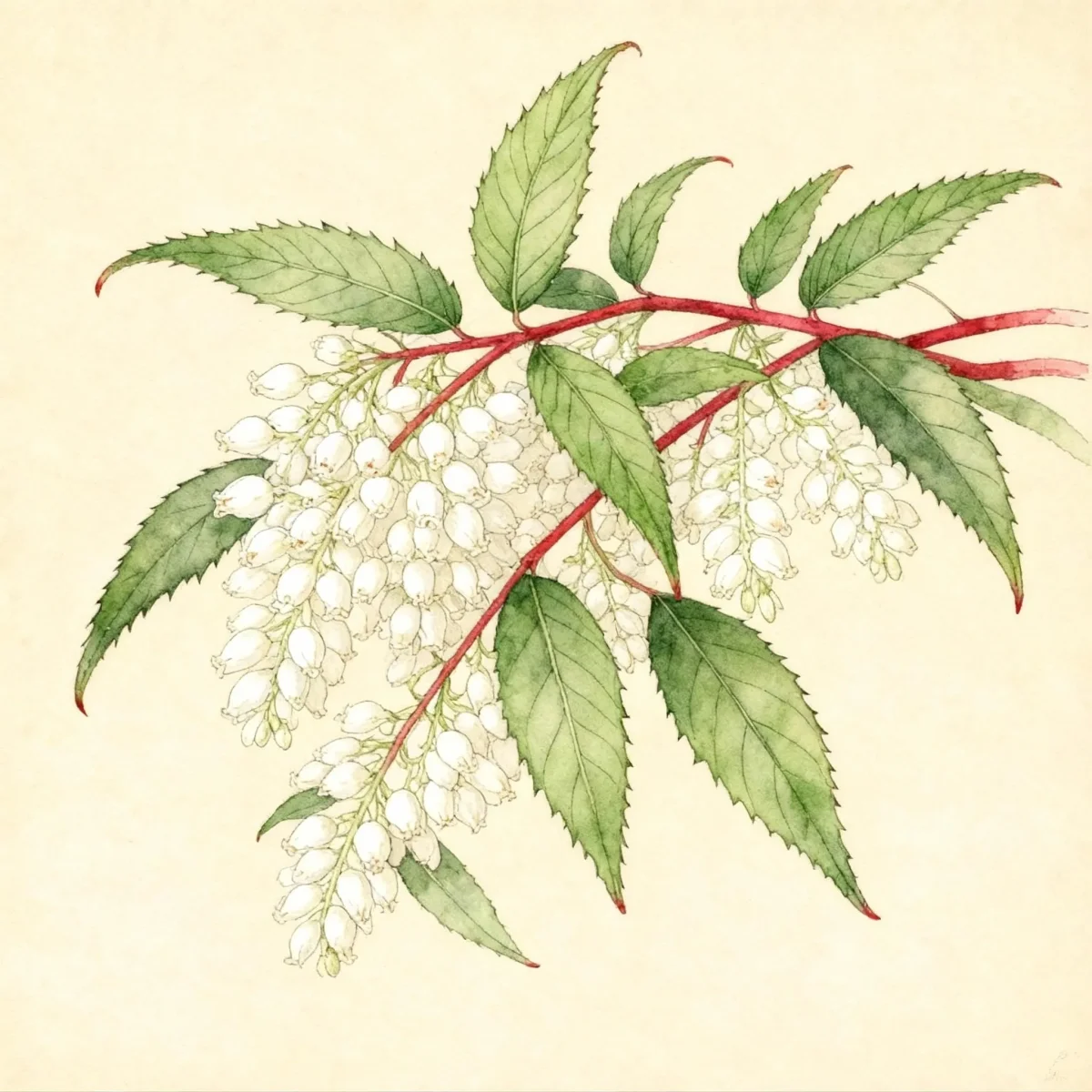
Complete Plant Information
Overview
Leucothoe axillaris, commonly known as Coastal doghobble, is a desirable broadleaf evergreen that offers excellent year-round structure in the landscape. This slow-maturing shrub maintains a low, spreading, vase-like silhouette, making it an excellent textural element beneath taller plantings. Its standout features include thick, highly reflective dark green leaves that transition to attractive purplish-bronze tones during the colder months.
The aesthetic appeal is further enhanced by clusters of slightly fragrant, heather-like white flowers that emerge in May. Coastal doghobble thrives in the woodlands of the Southeastern United States, naturally preferring the acidic, organic soils of its native habitat. Home gardeners value the enduring beauty and relatively low demands of Leucothoe axillaris when its moisture and soil pH needs are met.
While generally hardy, remember this shrub requires consistent moisture, as it truly does not tolerate drought or harsh wind exposure. Successfully integrating Coastal doghobble into your garden design provides textured evergreen massing combined with delightful spring fragrance.
Fast Facts
- Plant Family: Ericaceae
- Plant Type: Broadleaf evergreen
- Native Range: Southeastern United States
- Hardiness Zones: USDA Zones 6-9
- Size at Maturity:
- Height: 2-4 ft
- Spread: 3-5 ft
- Bloom Time: May
- Bloom Description: White
- Sun Exposure: Part shade
- Water Needs: Medium
- Maintenance Level: Medium
How to Grow
The key to establishing healthy Leucothoe axillaris lies in replicating its native environment. Plant in average, medium moisture, well-drained soil when possible, ensuring the soil pH is acidic and rich in organic matter. While it tolerates full sun, consistent high moisture must be guaranteed in those brighter locations. Planting should ideally occur in spring or early fall to allow the Coastal doghobble sufficient time to establish roots before encountering temperature extremes.
Watering during the first few seasons should be regular to maintain medium soil moisture levels; established plants are somewhat more resilient but never tolerate drought conditions. Fertilize sparingly, utilizing an acidifying fertilizer if soil tests indicate a need, usually in early spring before new growth begins. Pruning is rarely necessary, but any dead or crossing branches can be removed immediately after flowering to maintain the natural spreading shape.
Winter preparation is crucial, especially in the cooler edges of its hardiness range (Zones 6 and bordering 5). Even though Leucothoe axillaris shows some cold tolerance, providing a protective location away from drying winter winds and applying a thick winter mulch will significantly insure survival and prevent winter burn on the evergreen foliage.
Landscape Uses
Leucothoe axillaris excels where a low, textured evergreen anchor is required. It function admirably as a tidy hedge due to its dense, spreading form, providing excellent screening at ground level. Consider using Coastal doghobble as an informal border plant along woodland paths or property edges where protection from wind is available.
This plant integrates seamlessly into shaded borders or as fantastic foundation plantings near entryways or along retaining walls. Because of its preference for acidic soil, it pairs naturally with other Ericaceous plants like rhododendrons, azaleas, and camellias, creating a cohesive woodland garden palette. Furthermore, its dense growth habit makes it an excellent underplanting beneath mature, open-canopy trees, brightening shady spots where many other evergreens struggle.
Standout Features
Flower Qualities
- Showy
- Fragrant
Noteworthy Characteristics
Leucothoe axillaris is a low-growing, evergreen shrub has a spreading, vase-like shape and will mature slowly to a height of up to 3-4’. Features thick, shiny, dark green leaves and clusters of slightly fragrant, heather-like, white flowers which bloom in May. Leaves turn a purplish-bronze hue in winter.
Tolerances
No specific environmental tolerances were listed for this cultivar beyond its known intolerance to drought and wind.
Potential Problems
Fortunately, Coastal doghobble generally avoids severe pest or disease infestations, contributing to its generally low maintenance profile. However, gardeners should remain aware of two potential issues: root rot and leaf spot. Root rot occurs when soil drainage is poor or watering is excessive, confirming the need for well-drained soil practices. Leaf spot diseases, often fungal, can appear under humid or crowded conditions. Ensure good air circulation when siting your Leucothoe axillaris and water the soil directly rather than overhead to minimize leaf moisture that encourages fungal development.
Frequently Asked Questions
What hardiness zones is Coastal doghobble suitable for?
Leucothoe axillaris is hardy and reliably grown in USDA Zones 6 through 9.
How large does Leucothoe axillaris grow?
This evergreen shrub typically matures to a height between 2 and 4 feet, with a spread ranging from 3 to 5 feet wide.
What sun exposure does Coastal doghobble need?
The ideal location for Leucothoe axillaris is part shade. It can handle full sun only if guaranteed consistently medium moisture in the soil.
When does Coastal doghobble bloom?
This plant puts on its display in May, producing white flowers.
Conclusion
The Coastal doghobble offers reliable evergreen structure, lovely spring fragrance, and beautiful foliage transition in winter, making Leucothoe axillaris a standout performer in shaded garden spaces. By respecting its needs for acidic, moist, well-drained soil, you can enjoy this handsome native shrub for years. Before purchasing, confirm that your planting site falls appropriately within USDA Zones 6-9 and offers protection from drying winter winds.
Companion Planting
When selecting companions for Leucothoe axillaris, prioritize plants that share the need for acidic, rich, consistently moist soil. Ferns, such as Japanese Painted Ferns or Autumn Ferns, offer excellent textural contrast to the glossy leaves of the Coastal doghobble. Native woodland perennials like Helleborus (Lenten Rose) thrive in similar filtered light conditions and provide color before and after the Leucothoe blooms.
Consider using shade-tolerant groundcovers that won’t aggressively compete for nutrients, such as Vinca minor or Pachysandra terminalis, to blanket the area beneath the shrub. This layering effect helps maintain consistent soil temperatures and moisture levels critical for the health of the Leucothoe axillaris root system.
Seasonal Care Calendar
Early Spring (Pre-bloom): This is the best time for any structural pruning needed to remove crossing branches or correct shape. Apply a slow-release, acidifying fertilizer if indicated by soil needs, and renew mulch layer around the base of the shrub.
Late Spring/Early Summer (Post-bloom): Monitor watering closely as temperatures rise. This is the period when new flush growth is occurring, making consistent moisture important for avoiding stress. Check for the first signs of leaf spot and treat preventatively if prone to fungal issues in humid years.
Fall/Early Winter: If you live near Zone 6 limits, apply a thick layer (3-4 inches) of coarse organic mulch around the base. Ensure the plant is well-watered heading into dormancy, as dry roots are more susceptible to winter desiccation damage on this broadleaf evergreen.