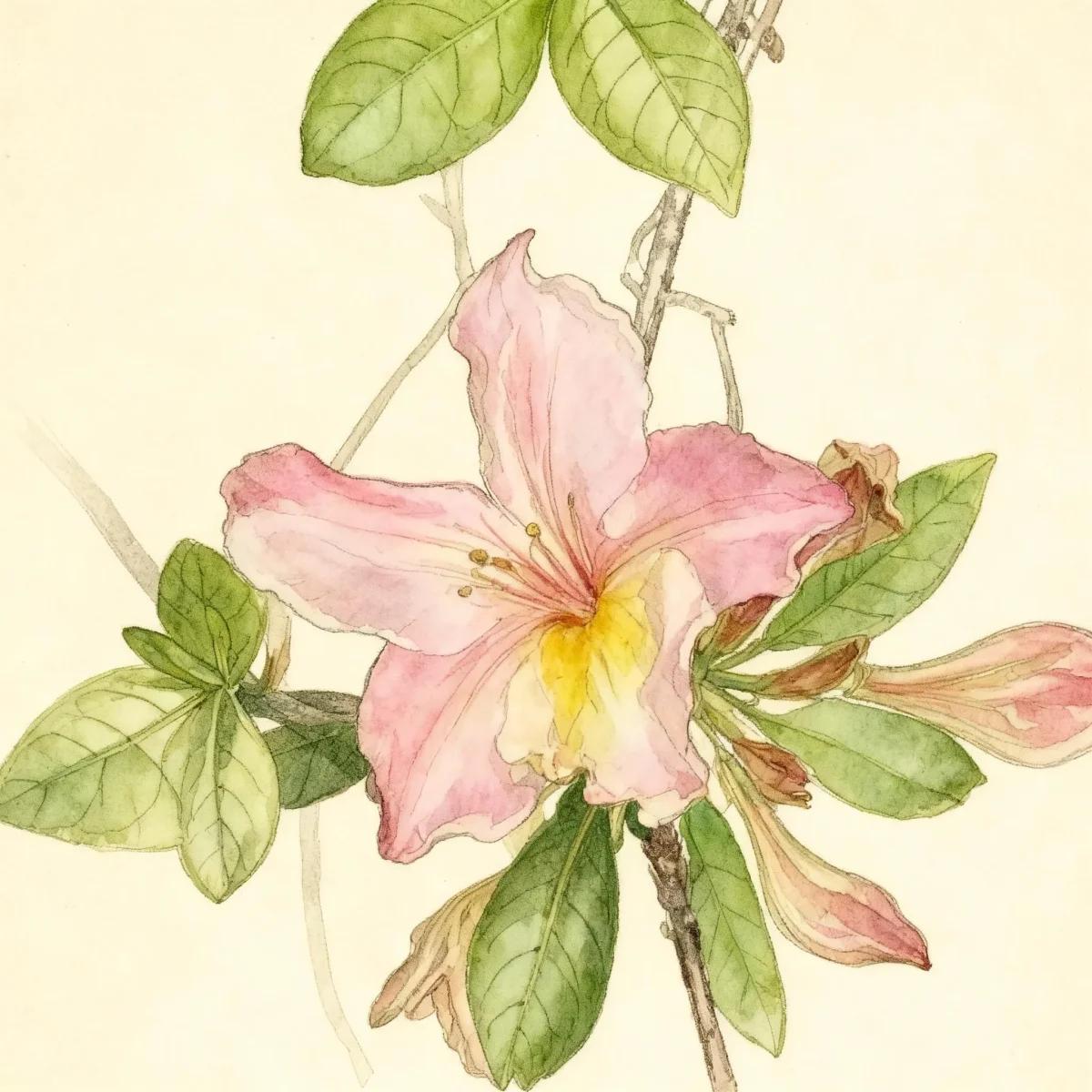
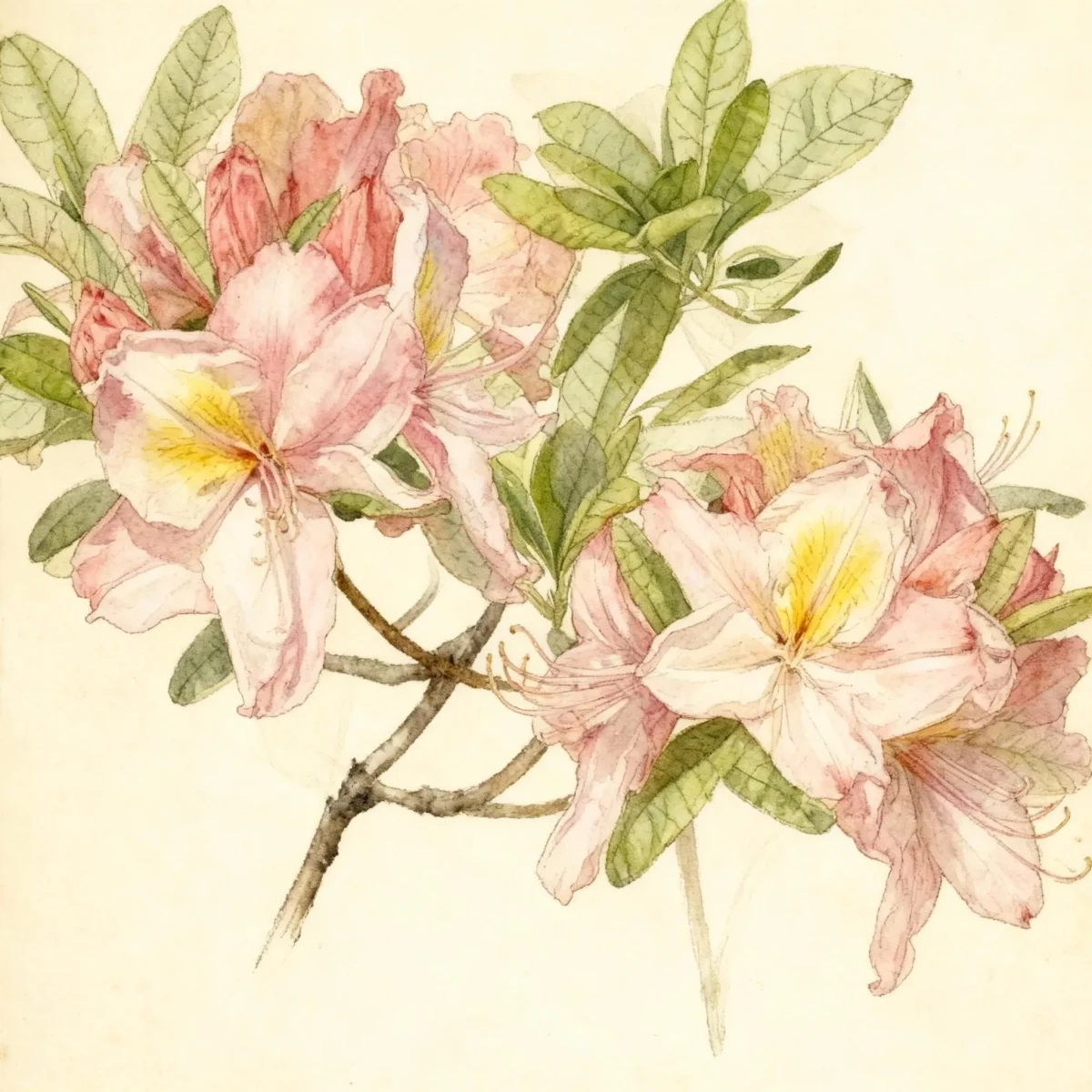
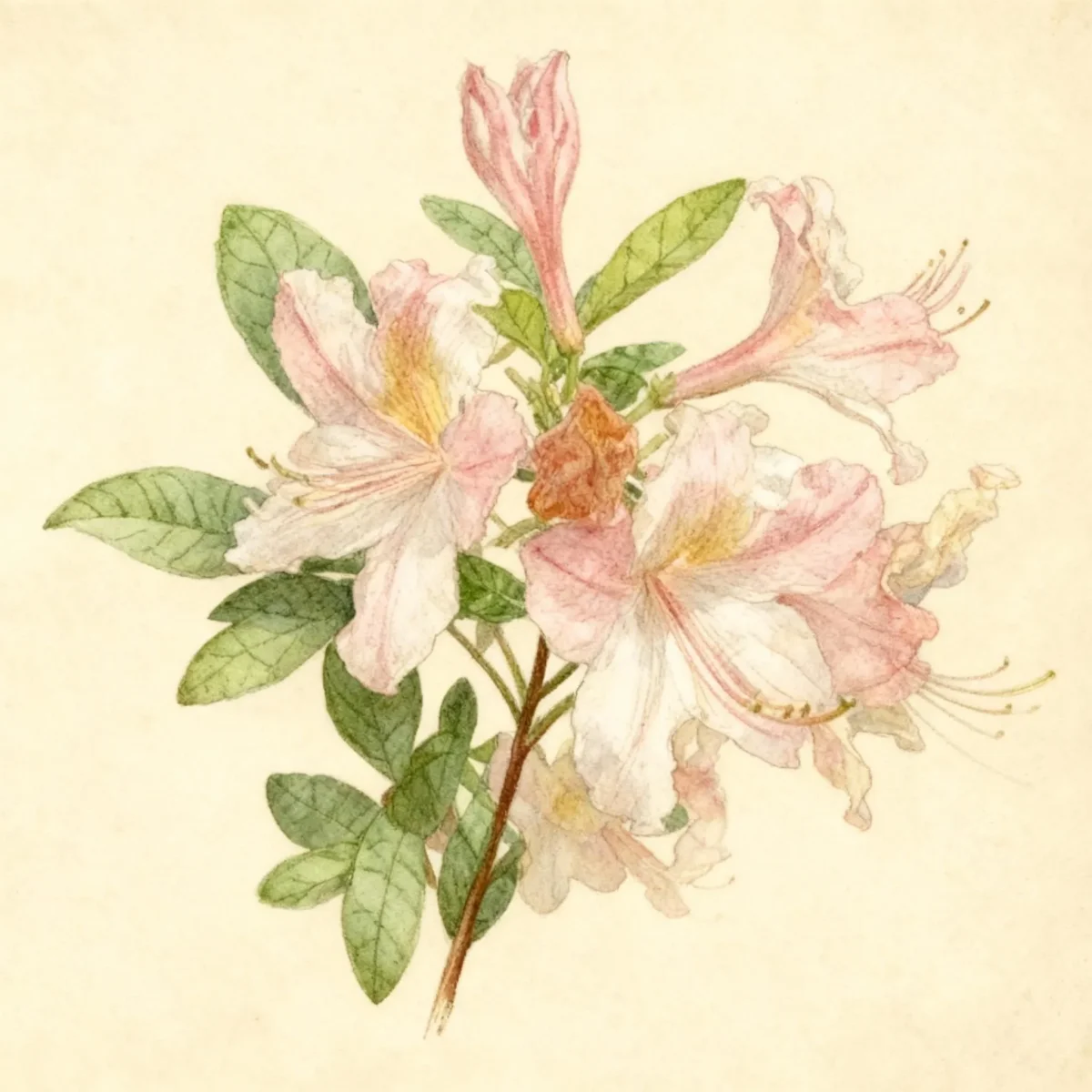
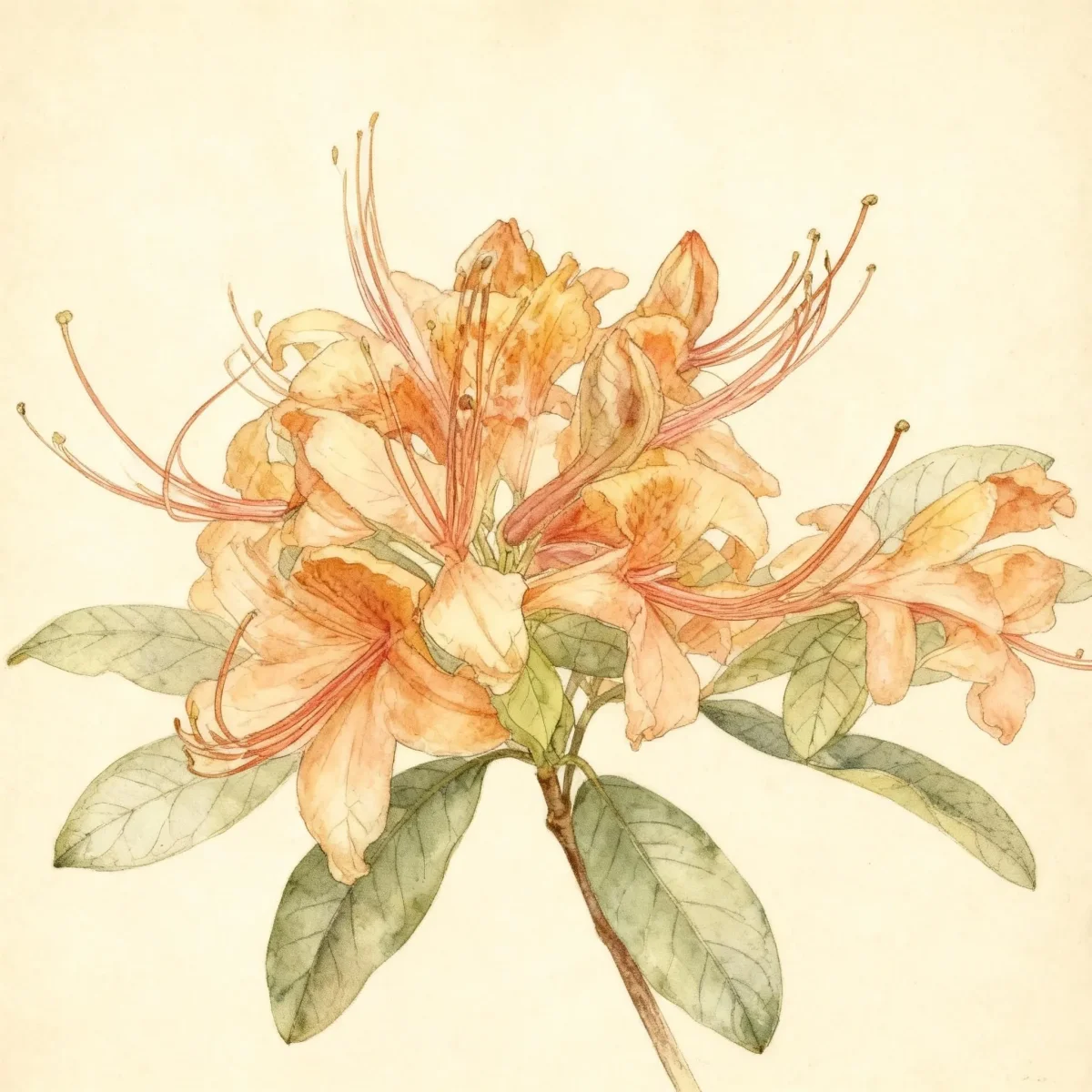
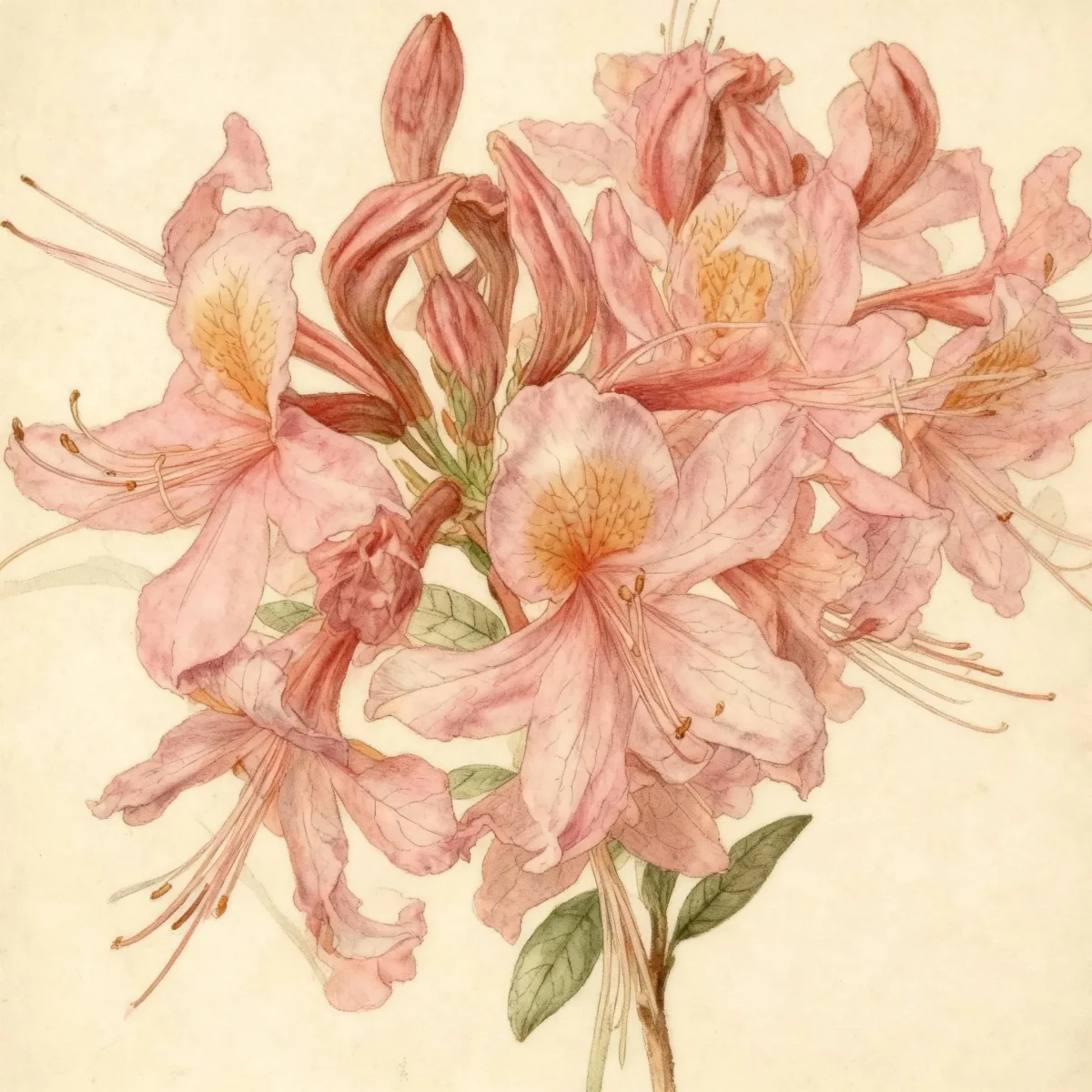
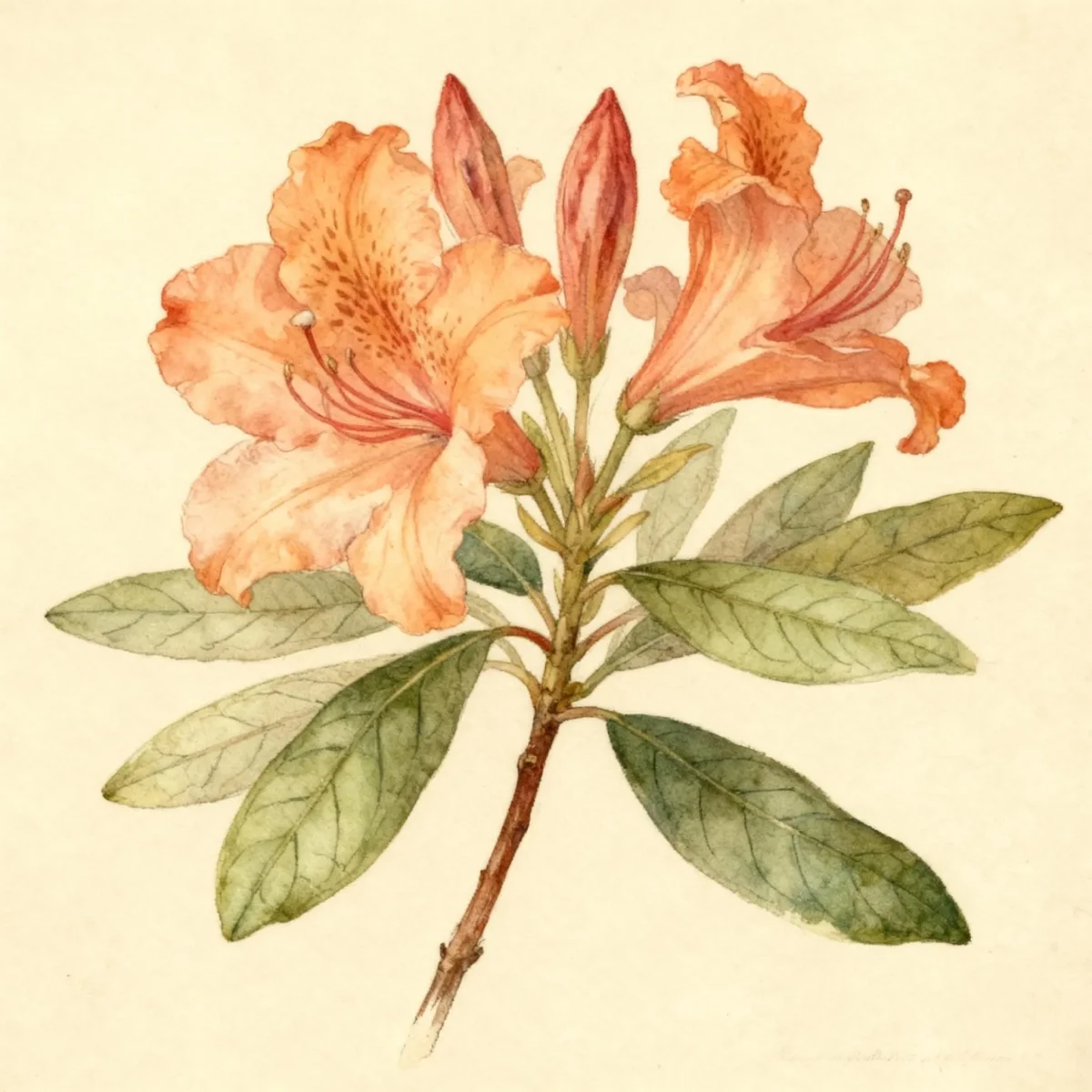
Sweet azalea (Rhododendron arborescens)
Discover Sweet azalea, Rhododendron arborescens, valued for showy, fragrant white flowers. A low-maintenance, deciduous shrub for eastern US gardens.
Scroll down to discover growing tips, care requirements, companion plants, and more
Complete Plant Information
Overview
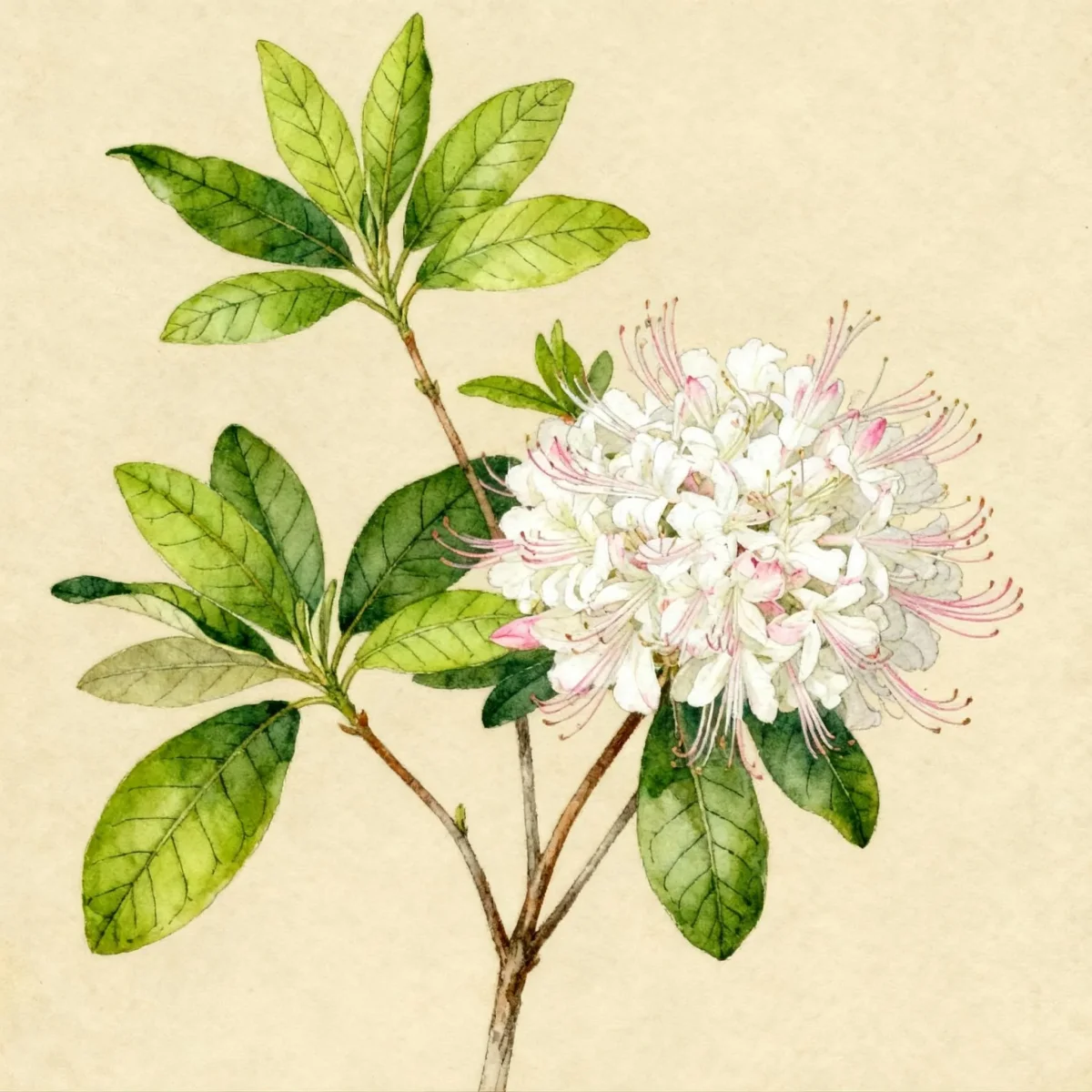
Rhododendron arborescens, perhaps best known by its common name, Sweet azalea, is a highly desirable native shrub celebrated for its powerfully fragrant blooms. This deciduous shrub provides spectacular visual interest, especially when its clusters of pure white, funnel-shaped flowers open from late spring into mid-summer. As a plant native to the Appalachian Mountains, the Sweet azalea brings reliable, low-maintenance beauty to cooler, dappled shade environments.
This species, sometimes called smooth azalea due to its glabrous twigs, matures into an upright, loosely branched specimen easily reaching 8 to 20 feet tall and wide. The dark green foliage offers excellent textural contrast and often transitions to appealing red or purple tones in the fall before dropping for winter. Given its excellent characteristics, incorporating Rhododendron arborescens into woodland gardens provides reliable seasonal structure and perfume.
Gardeners appreciate the low maintenance needs of Rhododendron arborescens once established in suitable acidic soil. Its preference for consistent moisture matched with excellent drainage makes it a rewarding choice for experienced gardeners or enthusiastic beginners willing to amend heavy soils. It offers significant aesthetic returns while thriving in its preferred acidic woodland conditions.
Fast Facts
- Plant Family: Ericaceae
- Plant Type: Deciduous shrub
- Native Range: Eastern United States
- Hardiness Zones: USDA Zones 4-7
- Size at Maturity:
- Height: 8-20 ft
- Spread: 8-20 ft
- Bloom Time: May to July
- Bloom Description: White
- Sun Exposure: Part shade
- Water Needs: Medium
- Maintenance Level: Low
How to Grow
When planting Rhododendron arborescens, focus heavily on soil preparation, as this is crucial for long-term success. Rhododendrons and azaleas thrive in light, acidic, sandy, well-drained soils, though they can tolerate humusy loams. The best planting time is typically spring or fall. Site your Sweet azalea where it receives dappled shade or high open part shade; direct hot afternoon sun can cause foliage scorch unless constant moisture is guaranteed.
Consistent moisture is essential, yet the soil structure must drain well, avoiding areas where “wet feet” cause root rot. If your garden has heavy clay soils, consider creating raised beds or heavily amending the planting area to ensure adequate drainage. It is vital to acidify soils before planting and maintain that condition thereafter, as these Ericaceae family members require low pH to absorb nutrients.
For ongoing care, apply a thick layer of mulch, such as wood chips, bark, or pine needles, around the shallow, fibrous root system. This mulch retains vital moisture, stabilizes soil temperatures, and offers winter protection. Avoid cultivating close to the shrub, as disturbing these roots can be detrimental. After the blooms fade between May and July, clip off the spent flower clusters promptly to encourage energy use toward branch and root development rather than seed production.
Landscape Uses
The versatile nature of Rhododendron arborescens makes it valuable across various landscape settings, particularly where soft screening or fragrant scent is desired. Utilize the Sweet azalea as a specimen plant near patios or entrances to fully enjoy the powerful fragrance produced by its white flowers during late spring. It functions excellently in mass plantings or as a structural element within shrub borders.
For a naturalistic aesthetic, incorporate Rhododendron arborescens into open woodland gardens or native plant collections, mirroring its habitat along moist stream slopes. It blends seamlessly with other acid-loving companions like native ferns, mountain laurel, and certain woodland perennials that also prefer part shade conditions. Furthermore, when planted in rows, it serves effectively as a substantial deciduous hedge, offering seasonal screening.
Standout Features
Flower Qualities
- Showy
- Fragrant
Noteworthy Characteristics
Rhododendron arborescens, commonly known as sweet azalea (fragrant flowers), smooth azalea (glabrous twigs and leaves) or tree azalea (occasional tree-like height), is an upright, loosely-branched deciduous shrub that typically matures to 8-12’ (occasionally to 20’) tall. It features smooth, elliptic to obovate, often blunt-tipped, dark green leaves (1-3” long) with whitened undersides. The fragrant, sticky-hairy, funnel-shaped, white flowers bloom after the leaves have appeared, distinguished by their red styles and dark pink to red protruding stamens. This azalea is native to cool, moist woodland slopes and shrubby balds throughout the Appalachian Mountains.
Tolerances
- Rabbit
Potential Problems
The Rhododendron arborescens is generally robust, but like all azaleas, it can be susceptible to various issues if cultural needs are ignored. Primary concerns include fungal issues like canker, crown rot, and root rot, which are often exacerbated by poor drainage or excessive moisture retention. Address these by ensuring proper soil structure—acidic, well-drained, and friable—and ensuring consistent but not saturated watering.
Pest pressures can include common garden nuisances such as aphids, lacebugs, scale, and mites. A healthy plant situated in its optimal environment—part shade with adequate acid levels—is the best defense against significant infestation. Regular inspection of the leaf undersides can help catch small outbreaks of pests like scale or lacebugs early, allowing for less invasive treatment. Limiting nitrogen fertilizer application and avoiding overly deep planting will also promote overall plant vigor, helping the Sweet azalea resist stress-related diseases.
Frequently Asked Questions
What hardiness zones is Sweet azalea suitable for?
Rhododendron arborescens is remarkably hardy, suitable for USDA Zones 4 through 7.
How large does Rhododendron arborescens grow?
This deciduous shrub typically reaches heights and spreads between 8 and 20 feet in maturity.
What sun exposure does Sweet azalea need?
This plant performs best in part shade conditions, preferring a sun-dappled environment; full sun often scorches the foliage unless moisture is constantly perfect.
When does Rhododendron arborescens bloom?
You can expect the fragrant, white flowers of the Sweet azalea to appear from May through July.
Conclusion
The Rhododendron arborescens, or Sweet azalea, is a fantastic cornerstone plant for any acidic woodland or shade garden, providing exceptional texture and an unforgettable summer fragrance from its white blooms. Its low maintenance profile makes it forgiving once its drainage and light requirements are met. Before planting, verify your location falls within USDA Zones 4-7 and ensure your soil pH is appropriately acidic for a flourishing display of this Appalachian native.
Companion Planting
Selecting companions for Rhododendron arborescens relies heavily on matching its cultural requirements: acidic pH, moist, well-drained soil, and tolerance for part shade. Consider pairing it with other native woodland plants that share these needs, such as native ferns (e.g., Christmas fern) to supply contrasting texture in the summer. Rhododendrons and azaleas look superb planted near evergreen companions that offer winter structure, like Mountain Laurel (Kalmia latifolia) or various native hollies (Ilex species).
In mixed borders, groundcovers that dislike heavy competition but enjoy dappled light work well beneath the high canopy of the Sweet azalea. Think about low-growing woodland phlox or foamflower (Tiarella cordifolia). These companions help shade the shallow root system of the azalea, minimizing water evaporation and helping to keep the soil temperature stable throughout the hot months.
Seasonal Care Calendar
Spring care focuses on rejuvenation and fertilization. Apply a slow-release, acid-specific fertilizer early in the season, before new growth aggressively starts, following the manufacturer’s directions carefully. Ensure consistent watering as temperatures rise, particularly if pruning off faded flowers was not fully completed immediately after blooming. This is also a good time to refresh the mulch layer around the base of your Rhododendron arborescens.
Summer is primarily about moisture management. Since the Sweet azalea dislikes drying out but hates soggy feet, observe rainfall patterns closely. Deep, infrequent watering is better than light surface sprinkling, especially during dry spells. If foliage begins to look dull or crisp, this is a sign the root zone needs deeper hydration or the soil pH is too high.
Fall preparation involves protecting the shallow roots as temperatures drop. Ensure a good layer of pine needle or bark mulch is in place before the ground freezes hard. Pruning should generally be reserved for late winter or early spring, before flower buds begin developing for the next bloom cycle, though minor deadwood removal can happen anytime; avoid heavy summer pruning which removes next year’s potential flowers.