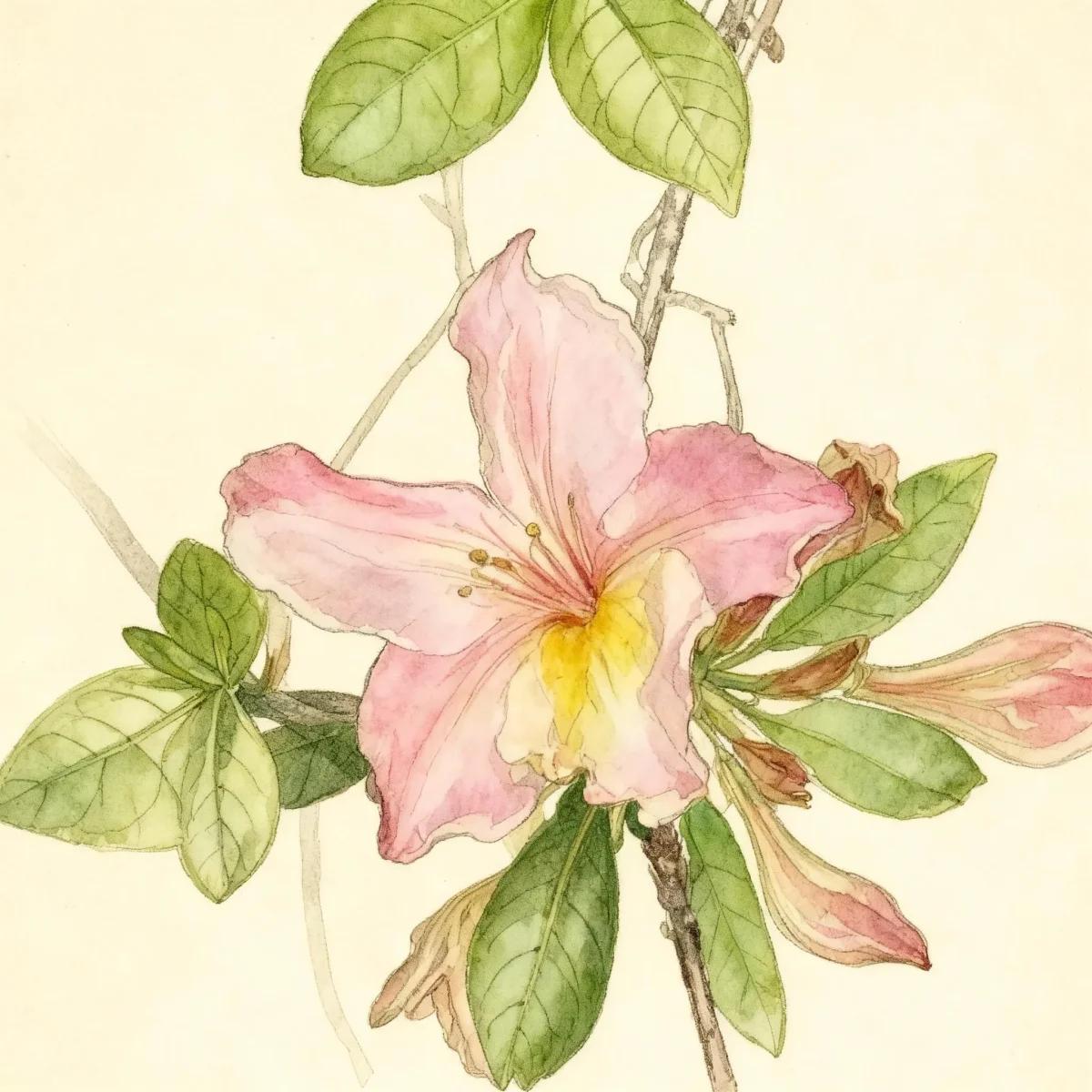
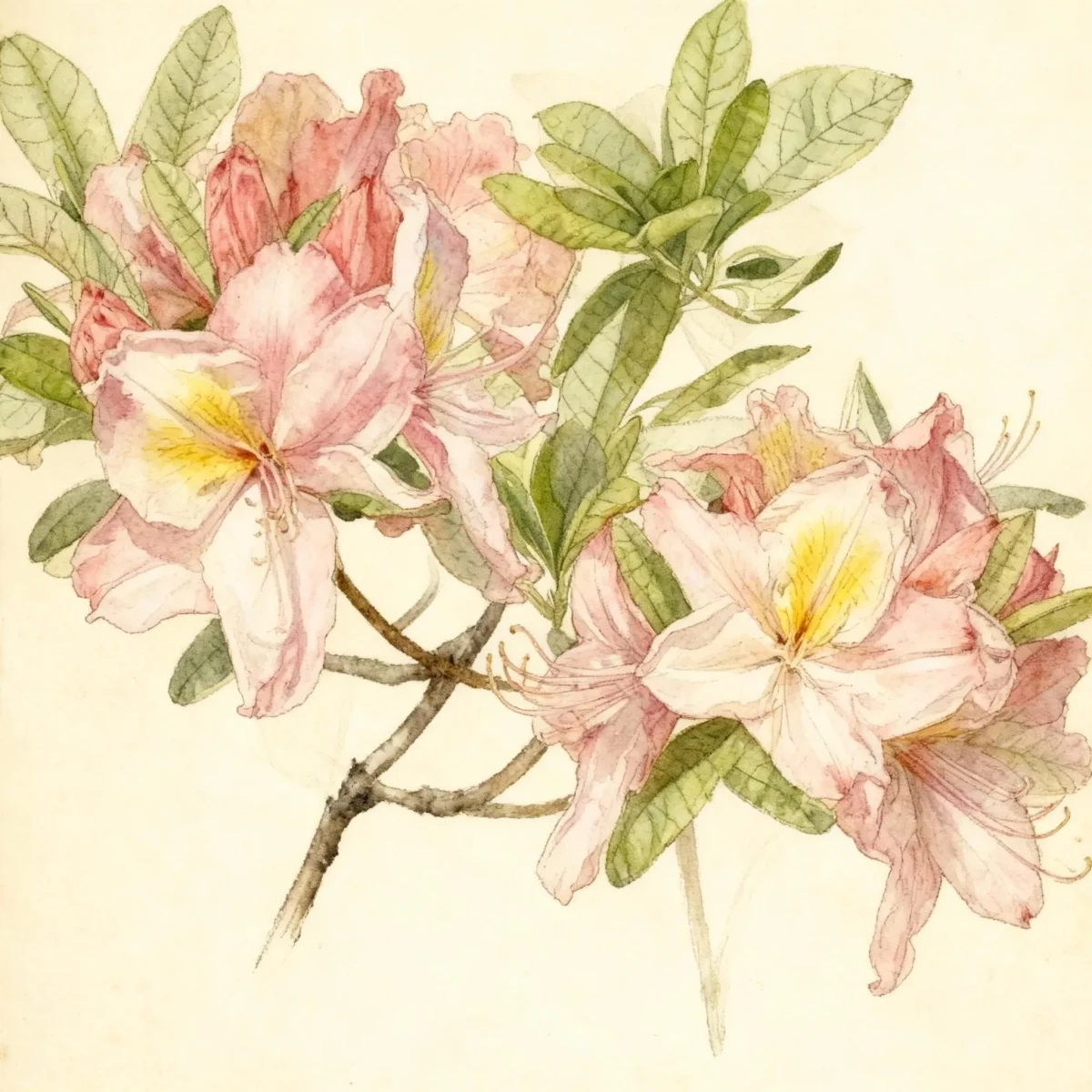
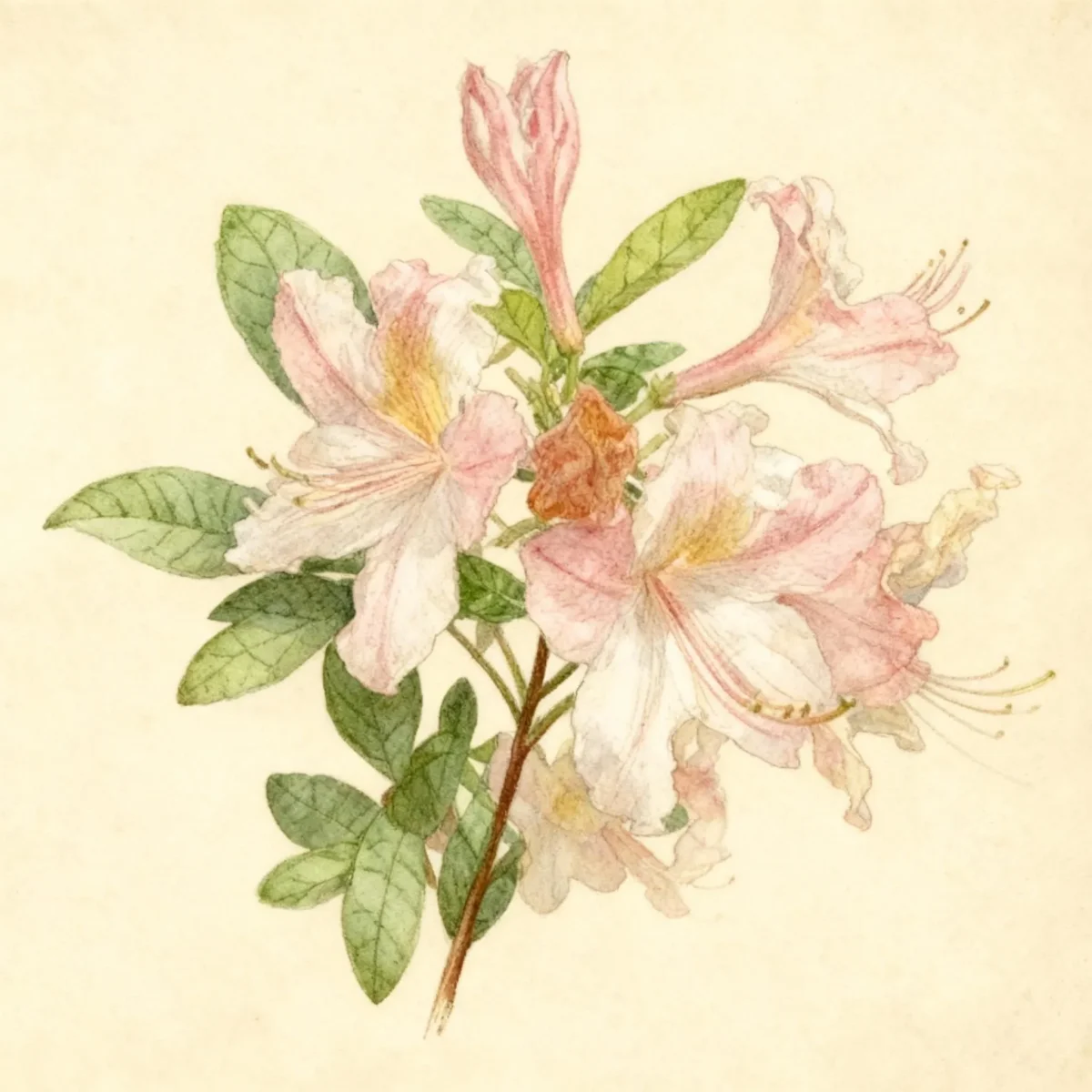
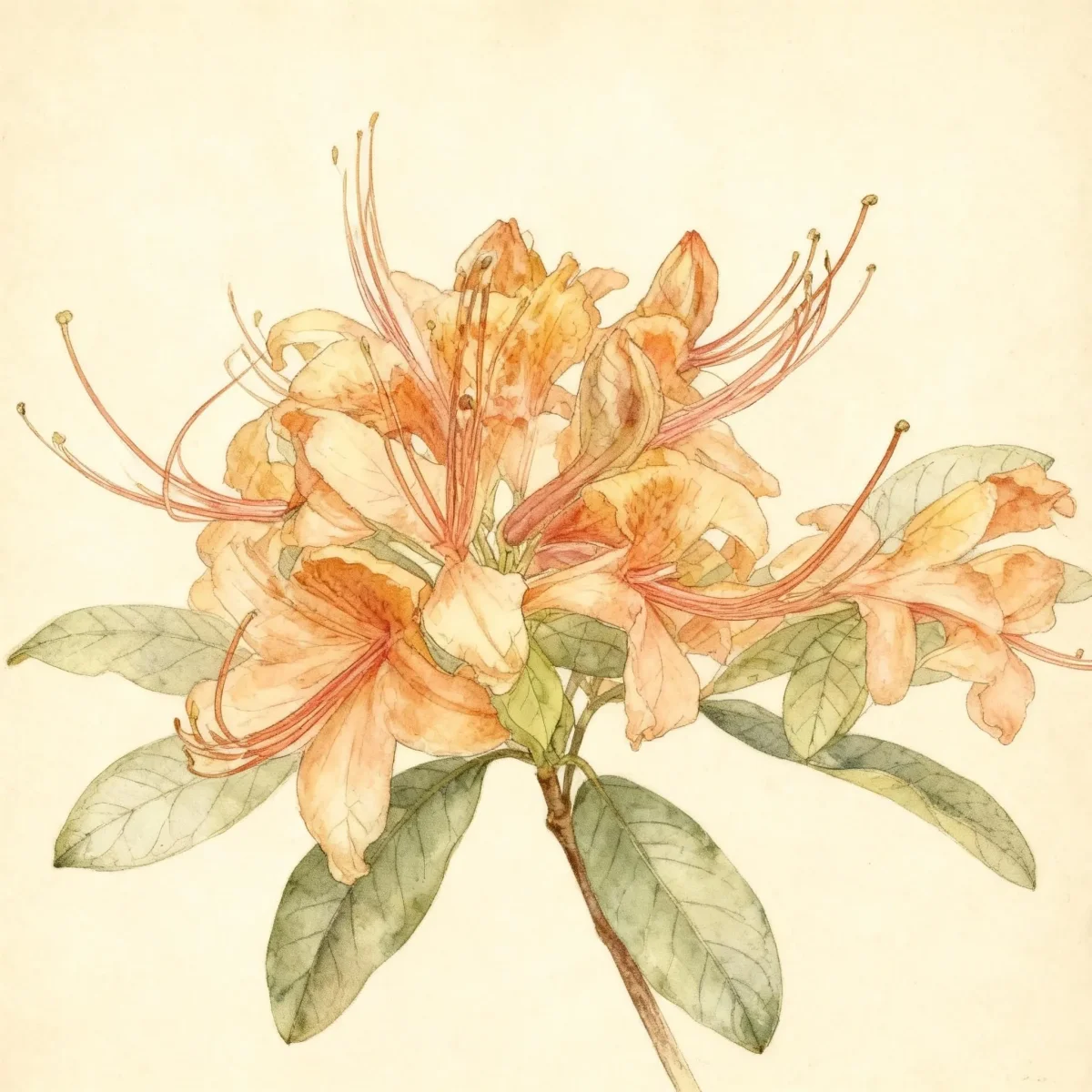
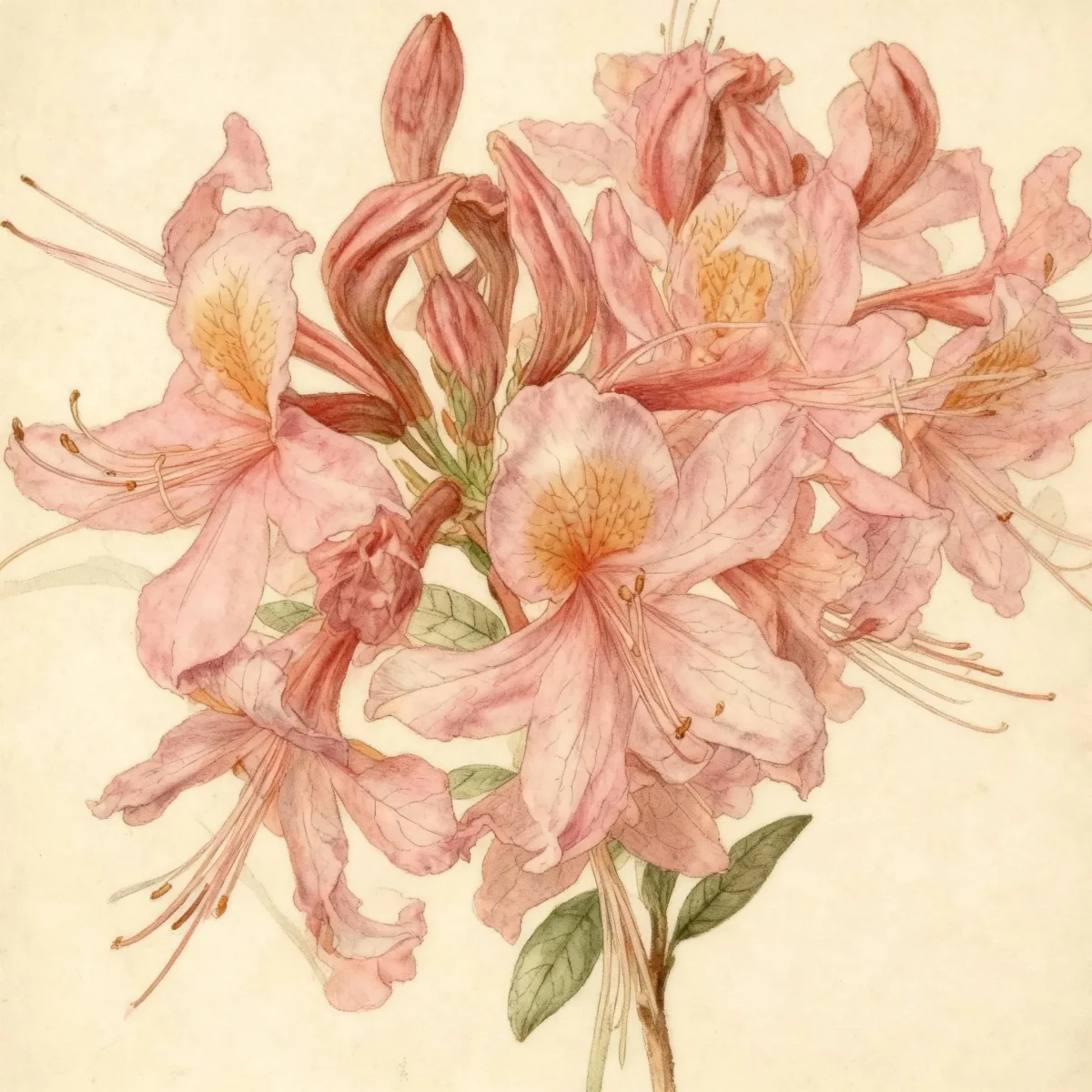
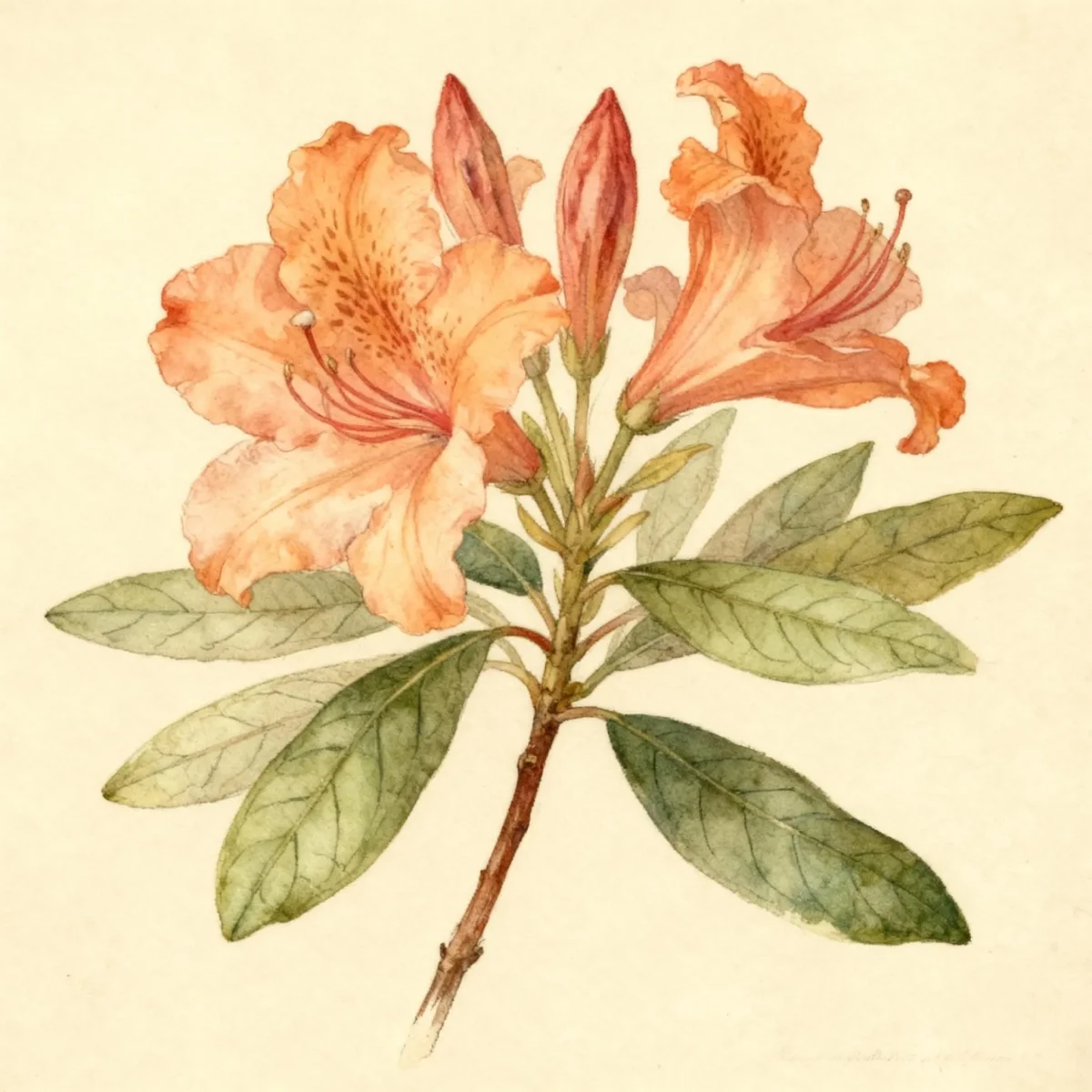
Mountain azalea (Rhododendron canescens)
Rhododendron canescens, the Mountain azalea, is a native deciduous shrub offering fragrant spring blooms in USDA Zones 5-9.
Scroll down to discover growing tips, care requirements, companion plants, and more
Complete Plant Information
Overview
The Mountain azalea (Rhododendron canescens) is a captivating native shrub prized for its spectacular early spring floral display across the Southeastern United States. This plant offers clusters of highly fragrant, funnel-shaped flowers that emerge just as the foliage begins to appear, signaling the start of warmer weather. Unlike many evergreen azaleas, Rhododendron canescens is deciduous, providing textural contrast throughout the winter landscape.
Valued for its adaptability within its native habitat, the Mountain azalea thrives in dappled shade environments, making it an excellent choice for woodlands or under high-branched trees. It provides seasonal interest with significant impact, transitioning from bare branches to a cloud of pink blooms, followed by dull green summer foliage. Gardeners appreciate this species for its naturalizing tendency and its powerful fragrance.
Cultivating Rhododendron canescens successfully requires attention to soil acidity and drainage, mimicking the moist, organic conditions found in its native swamp margins and stream banks. When these basic needs are met, this species reliably produces beautiful, showy flowers, adding both color and scent to early season plantings.
Fast Facts
- Plant Family: Ericaceae
- Plant Type: Deciduous shrub
- Native Range: Southeastern United States
- Hardiness Zones: USDA Zones 5-9
- Size at Maturity:
- Height: 6-15 ft
- Spread: 6-12 ft
- Bloom Time: April
- Bloom Description: Pink (infrequently white)
- Sun Exposure: Part shade
- Water Needs: Medium
- Maintenance Level: Medium
How to Grow
Planting Rhododendron canescens should ideally occur in spring or fall when temperatures are moderate, ensuring a long establishment period before harsh summer heat or winter freezes. The paramount concern for this azalea is soil condition: it requires acidic, humusy, organically rich, and moisture-retentive soil that drains exceptionally well. If heavy clay soils prone to poor drainage are present, consider planting in raised beds to prevent root rot, as the Mountain azalea dislikes “wet feet.”
Maintain consistent moisture levels, especially during dry spells, as the fibrous, shallow root systems must never be allowed to dry out. To support moisture retention and moderate soil temperatures, apply a thick layer of organic mulch, such as pine needles or wood chips, around the base, being careful not to pile it against the trunk. You should acidify the soil prior to planting and continue regular amendments as required to keep the pH low.
Pruning is minimal; the primary maintenance task involves clipping off spent flower clusters (deadheading) as soon as practical after the flowers fade. Avoid cultivating close to the plant, as the shallow roots are easily damaged. Protect established Rhododendron canescens specimens from intense, drying winter winds to prevent leaf scorch and stress.
Landscape Uses
The versatile Rhododendron canescens is highly effective when used for mass plantings or grouped to create dense visual screens, functioning excellently as a natural hedge due to its manageable size and reliable upright habit. Beyond hedging, it excels as a specimen plant, offering significant fragrance near entryways or patios where its April blooms can be fully appreciated. In woodland settings, this native azalea blends seamlessly into mixed borders or open shade gardens, lending an authentic regional feel.
As a native planting, the Mountain azalea pairs well with other acid-loving woodland plants such as ferns, native dogwoods, and early-blooming rhododendrons and azaleas, creating layers of spring interest. Its deciduous nature allows light penetration in winter, benefiting understory companions. Consider massing several plants together to maximize the visual impact of the showy, fragrant spring flowers.
Standout Features
Flower Qualities
- Showy
- Fragrant
Noteworthy Characteristics
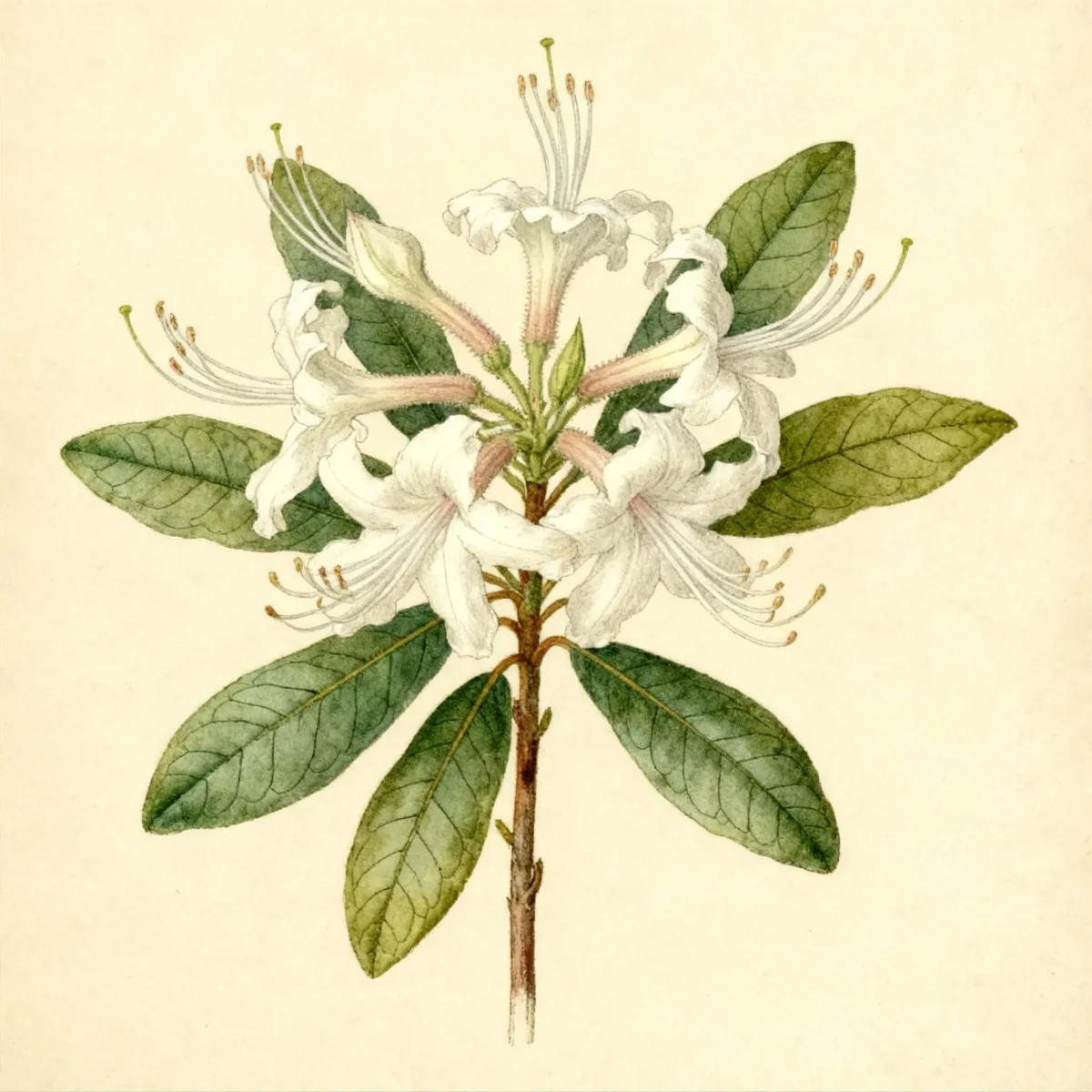
Rhododendron canescens, commonly called mountain azalea, Piedmont azalea, hoary azalea or Florida pinkster, is a large deciduous shrub that is native to moist woods, swamp margins and along streams from North Carolina to Florida west to Tennessee, Arkansas and Texas. It typically grows to 6-8’ tall in cultivation, but less frequently may grow to 10-15’ tall. It features clusters (5-9 flowers per cluster) of fragrant, funnel-shaped, pink (infrequently white) flowers (1-2” long) in early spring as the foliage begins to emerge.
Tolerances
- Rabbit
Potential Problems
Azaleas are susceptible to many insect and disease problems, including but not limited to canker, crown rot, root rot, leaf spot, rust, powdery mildew, aphids, borers, lacebugs, leafhoppers, mealybugs, mites, nematodes, scale, thrips and whitefly. Limiting potential issues relies heavily on cultural control; ensure the plant is situated in part shade with consistently perfect drainage to mitigate fungal issues like root rot. A healthy plant in the proper environment with proper care should have limited problems, however scouting regularly for pests like scale or lacebugs allows for early treatment.
Frequently Asked Questions
What hardiness zones is Mountain azalea suitable for?
The Mountain azalea (Rhododendron canescens) is best suited for USDA Hardiness Zones 5 through 9.
How large does Rhododendron canescens grow?
This deciduous shrub typically reaches a height between 6 to 15 feet and spreads between 6 to 12 feet wide at maturity.
What sun exposure does Mountain azalea need?
Rhododendron canescens prefers part shade; too much direct sun can cause the foliage to scorch.
When does Rhododendron canescens bloom?
This plant bursts into bloom primarily during April, showing off pink, infrequently white, fragrant flowers.
Conclusion
The fragrant, showy display of the Mountain azalea in early spring makes Rhododendron canescens an invaluable addition to acidic gardens throughout the Southeast. Its height and broad spread provide excellent structure, provided the crucial requirements for drainage and acidity are met during installation. Before planting, confirm your site’s light levels and soil pH compatibility to ensure your Mountain azalea establishes successfully.
Companion Planting
When designing a garden around the Rhododendron canescens, focus on companions that share its love for acidic, moist yet well-drained soil and dappled light. Consider pairing it with spring-blooming woodland bulbs like Virginia Bluebells (Mertensia virginica) which will complete their cycle before the azalea foliage fully leafs out. Evergreen groundcovers such as various native Phlox species or shade-tolerant ferns provide textural contrast and help shade the shallow roots of the azalea, stabilizing soil moisture throughout the summer.
Seasonal Care Calendar
Spring is a time for observation; watch for new growth and emerging buds, and deadhead spent flowers immediately after bloom finishes to direct energy back into root development rather than seed production. Summer care revolves entirely around consistent watering, ensuring the soil stays damp but never waterlogged, especially during periods of high heat, as Rhododendron canescens cannot tolerate drought. In autumn, apply a fresh layer of mulch to protect the roots from insulating them against winter cold and prepare for the following year’s bloom cycle.