Turkey oak (Quercus cerris)
Discover Turkey oak (Quercus cerris), a large deciduous tree valued for low maintenance and shade. Hardy in Zones 6-8.
Scroll down to discover growing tips, care requirements, companion plants, and more
Complete Plant Information
Overview
The Turkey oak, scientifically known as Quercus cerris, is a striking medium to large deciduous tree native to Western Asia and Europe. It gains recognition for its impressive stature and relatively straightforward cultivation requirements once established. This species features distinctive, bristly acorn caps, which provide visual interest late in the growing season.
As a member of the white oak group, the Turkey oak develops into a broad pyramidal form, offering substantial shade as it matures. Its hardiness across USDA Zones 6 through 8 makes it a reliable choice for larger landscapes needing a long-lived focal point. Gardeners appreciate the low maintenance level associated with established specimens of Quercus cerris.
Functionally, the Turkey oak serves excellently as a specimen tree in parks or open lawns where its 40 to 60-foot height and spread can be accommodated. While its acorns are a food source for local wildlife, the tree itself is generally durable, offering shade and structure with minimal fuss.
Fast Facts
- Plant Family: Fagaceae
- Plant Type: Tree
- Native Range: Western Asia, Europe
- Hardiness Zones: USDA Zones 6-8
- Size at Maturity:
- Height: 40-60 ft
- Spread: 40-60 ft
- Bloom Time: April
- Bloom Description: Yellowish-green
- Sun Exposure: Full sun
- Water Needs: Dry to medium
- Maintenance Level: Low
How to Grow
Planting the Turkey oak should ideally occur in early spring or fall when temperatures are moderate, allowing the root system to establish before summer heat or winter freeze. Select a site that offers adequate space, considering its mature spread of 40 to 60 feet. Quercus cerris thrives in deep, well-drained soils, although it demonstrates adaptability to various soil types as long as drainage is sufficient.
Once planted, mature Turkey oaks require minimal supplemental watering, fitting perfectly into landscapes designated as low water use areas. Water deeply and infrequently during the first one to two growing seasons to encourage deep root development. Fertilization is rarely necessary for established trees in healthy soil, as they gather sufficient nutrients naturally.
Pruning should concentrate on removing crossing or damaged limbs, a task best performed in late winter when the tree is dormant. Because the leaves persist later into the fall, a cleanup might be required after other deciduous trees have dropped their foliage. The general requirement for maintenance remains quite low for this sturdy species.
Landscape Uses
The primary roles for the Turkey oak are as a substantial Shade Tree or a robust Street Tree, particularly where large canopies are needed to moderate summer temperatures. Its impressive size ensures it makes a bold statement in open park settings or large estate lawns where expansive overhead growth is desirable. Because it is generally less common commercially in the U.S., its use often reflects intentional selection for unique species.
When integrating Quercus cerris into a design, pair it with understory plantings that tolerate dappled morning light but can handle dry summer conditions once the oak canopy matures. Consider drought-tolerant evergreens or established shrubs that won’t compete aggressively for water once the tree is established.
For street applications, ensure adequate subsurface space, as this large oak develops an extensive root system. Its tolerance for dry conditions also allows it to perform well in challenging urban environments where soil volume may be restricted or pavement limits water infiltration.
Standout Features
Flower Qualities
- Insignificant
Fruit Qualities
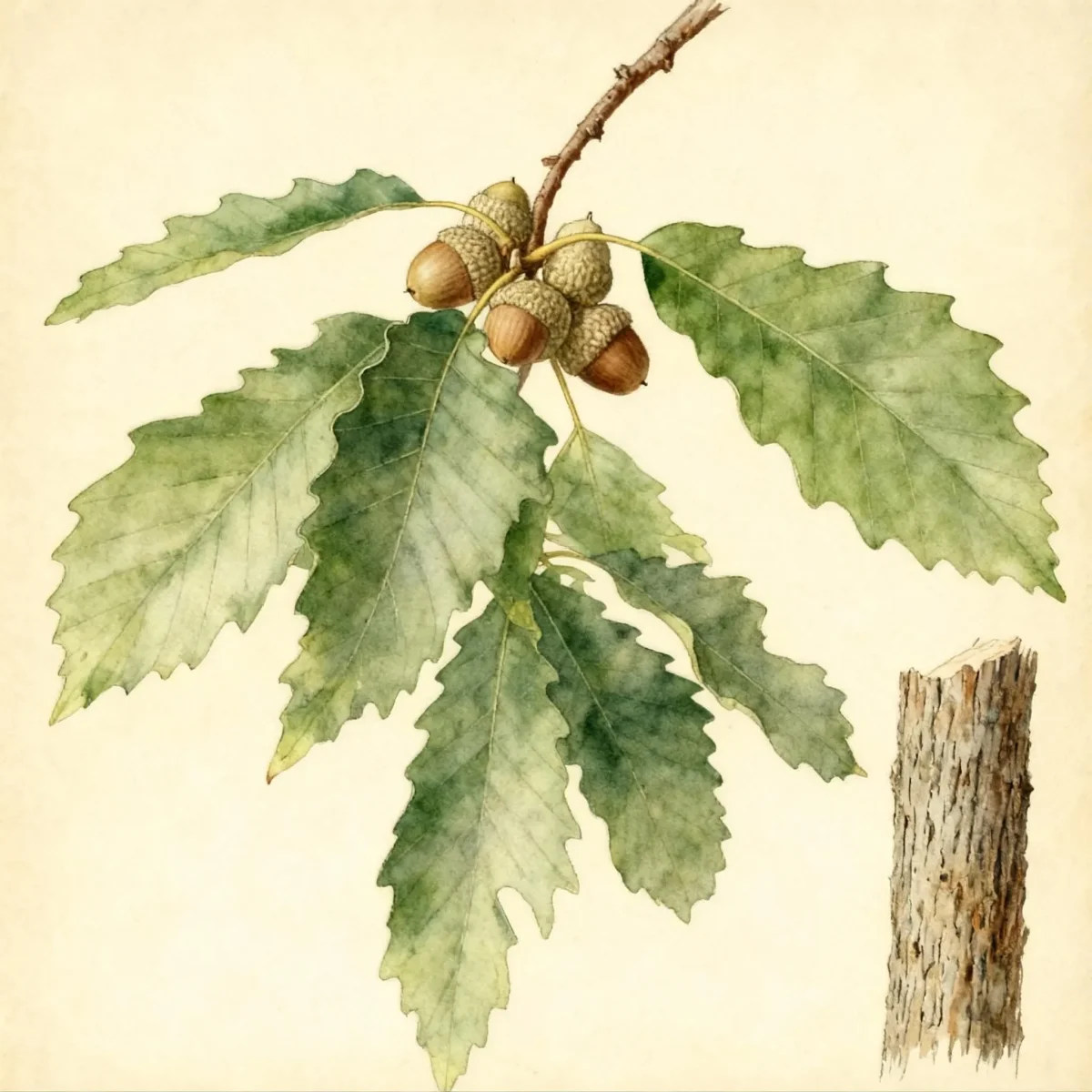
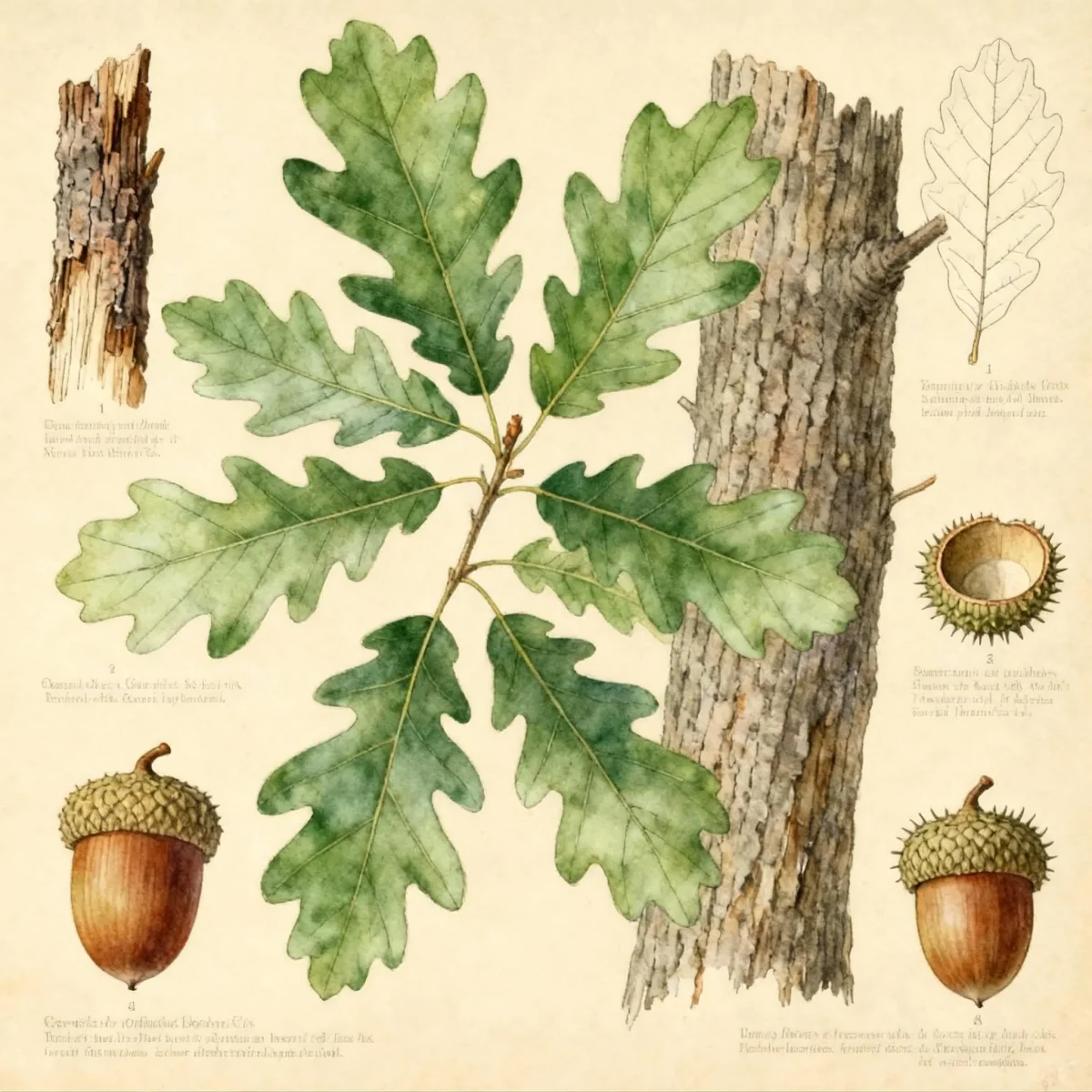
- Acorns (to 1” long) with bristly-fringed acorn cups that cover 1/2 of the acorn.
Noteworthy Characteristics
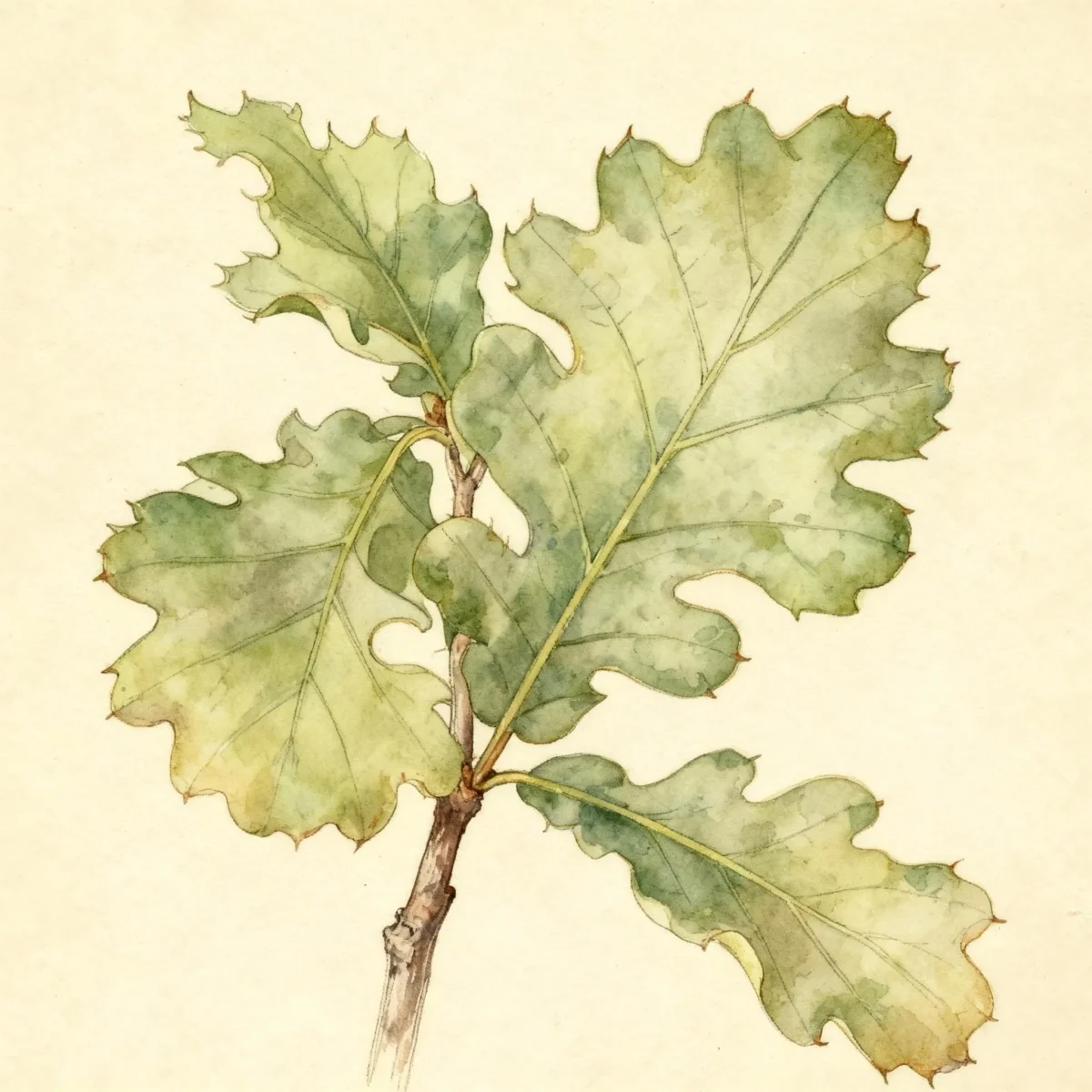
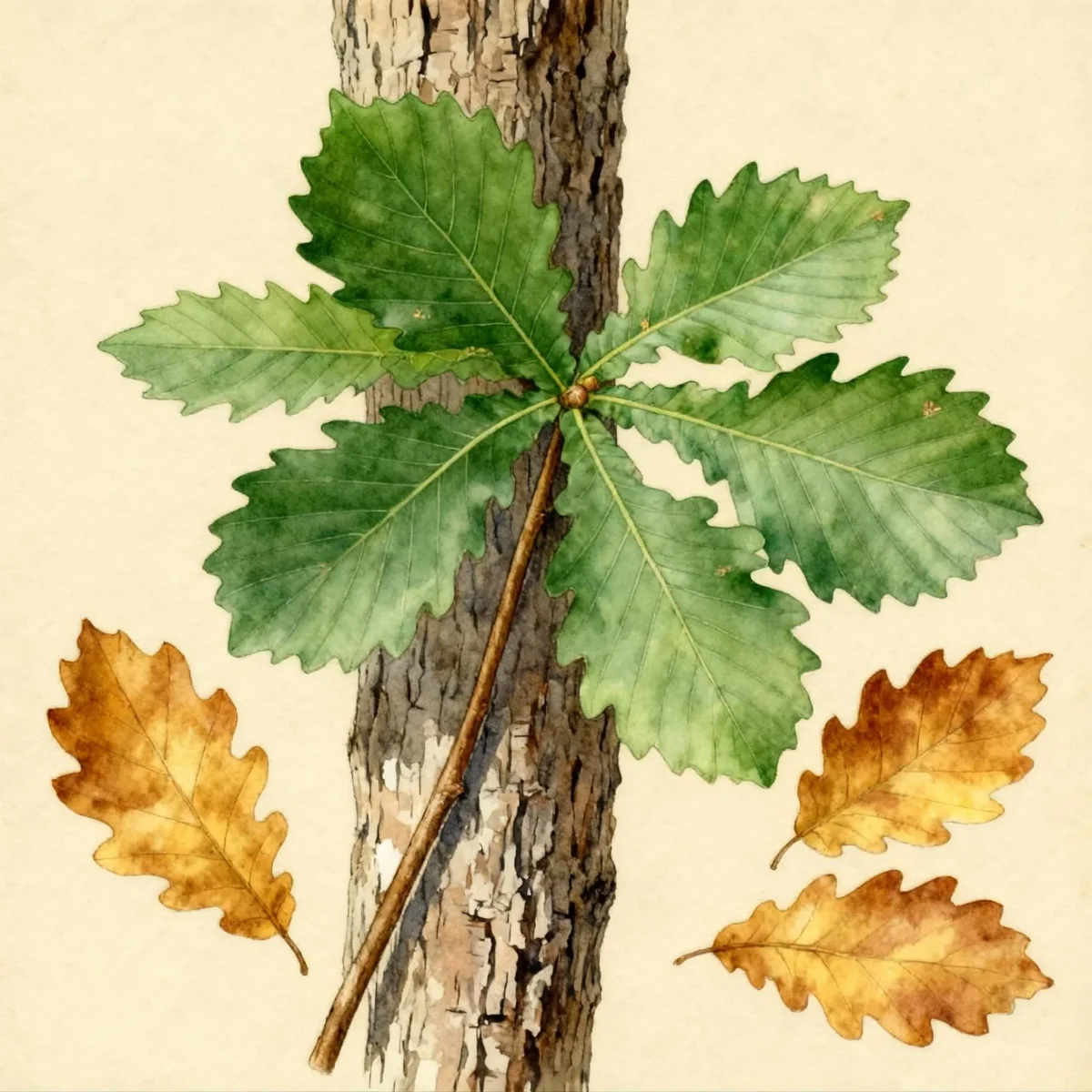
Quercus cerris, commonly called turkey oak, is a medium to large deciduous oak of the white oak group that typically grows 40-60’ tall. It develops a broad pyramidal form with age and features small, dark green leaves that often persist into late fall. Its deeply furrowed dark gray bark splits into thick plates, adding winter interest to the landscape.
Tolerances
- Drought
Potential Problems
The Turkey oak enjoys a reputation for having no serious insect or disease problems, making its low maintenance level a real advantage. It is infrequently attacked by the common maladies that plague other oaks, meaning issues like oak wilt, anthracnose, or oak leaf blister are less of a yearly concern. Potential insect pests that may occasionally cause minor cosmetic damage include scale, galls, borers, and various caterpillars. Monitoring the tree annually during the growing season is sufficient to catch potential issues early.
Frequently Asked Questions
What hardiness zones is Turkey oak suitable for?
The Turkey oak (Quercus cerris) is reliably hardy across USDA Zones 6 through 8.
How large does Quercus cerris grow?
This impressive specimen tree typically reaches a mature height between 40 and 60 feet, with an equal spread of 40 to 60 feet.
What sun exposure does Turkey oak need?
Quercus cerris requires full sun exposure to develop properly and maintain good vigor.
When does Turkey oak bloom?
The tree flowers in April, producing non-showy, yellowish-green blooms.
Conclusion
The Turkey oak offers a robust, large-scale planting solution for gardeners seeking low-maintenance shade and structure in zones 6 through 8. With its unique bristly acorns and reliable drought tolerance once established, Quercus cerris is a powerful asset in large landscapes. Before planting, confirm your site provides the full sun and space required to let this magnificent European native reach its full potential.
Wildlife Benefits
The acorns produced by Quercus cerris serve an important function as a food source for various types of wildlife common to temperate zones. While the tree itself is not heavily browsed, the nuts are a valuable autumn resource for squirrels, jays, and other animals preparing for colder months.
Wildlife generally respects the structural integrity of the Turkey oak, meaning it typically hosts fewer major pest issues than more susceptible ornamental trees. This stability ensures a reliable, low-impact natural feature in the landscape, benefitting local fauna consistently year after year.
Companion Planting
When designing a naturalized area around the Turkey oak, focus on species that share its preference for dry to medium water needs once established. Since Quercus cerris forms a dense canopy, select groundcovers or perennials that tolerate partial shade, especially during the afternoon hours.
Good companions might include native ferns that thrive in filtered light or drought-tolerant woodland edge plants. Avoid shallow-rooted, high-water-need turfgrasses directly under the drip line, as competition will stress the young oak tree.