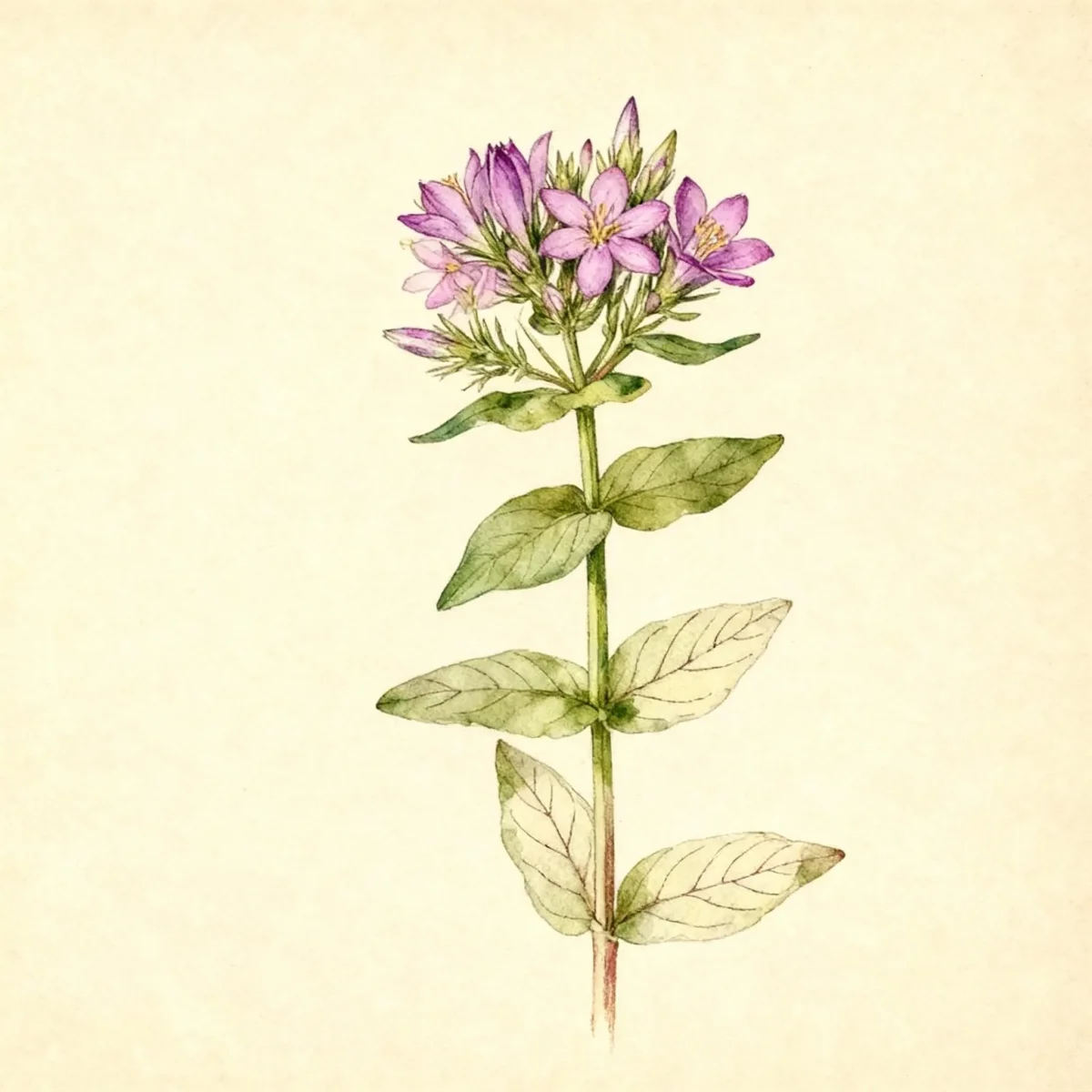
Rose gentian (Sabatia angularis)
Discover Rose gentian (Sabatia angularis), a native North American biennial wildflower producing showy, fragrant rose pink blooms from June to September.
Scroll down to discover growing tips, care requirements, companion plants, and more
Complete Plant Information
Overview
The Rose gentian, Sabatia angularis, is a captivating summer bloomer perfect for naturalized garden spaces. Valued for its showy, star-shaped, pink flowers, this plant brings dependable mid-season color across eastern North America. It excels as a low-maintenance specimen, thriving with minimal intervention once established.
While botanically described as a biennial, Sabatia angularis readily self-seeds, creating dense colonies that give the appearance of a mature perennial population year after year. Gardeners appreciate its distinct structure, featuring conspicuously four-angled stems characteristic of the species.
Cultivating this native wildflower supports local ecosystems while rewarding the gardener with abundant, fragrant blooms that last from early summer well into autumn. Planning its placement according to its sun requirements ensures the best display of this beautiful Rose gentian variety.
Fast Facts
- Plant Family: Gentianaceae
- Plant Type: Herbaceous perennial
- Native Range: Central and eastern North America
- Hardiness Zones: USDA Zones 6-9
- Size at Maturity:
- Height: 1-3 ft
- Spread: 1-2 ft
- Bloom Time: June to September
- Bloom Description: Rose pink flowers
- Sun Exposure: Full sun to part shade
- Water Needs: Medium
- Maintenance Level: Low
How to Grow
For successful establishment, plant Sabatia angularis seeds directly in the garden during the spring. This biennial requires patience; the first year is dedicated to forming a dense basal rosette of foliage close to the ground. Location is key: choose areas receiving full sun or light part shade, ensuring the soil is well-drained.
These plants prefer slightly acidic conditions, mimicking their native habitats in open woods and prairies. Once established, maintenance for Sabatia angularis is generally low. Watering should remain consistent during dry summer spells, meeting its medium water needs, though mature colonies are relatively drought-tolerant. Fertilization is typically unnecessary; rich soils can lead to excessive foliage at the expense of flowers.
In the second year, the basal rosette will send up multi-branched flowering stalks. After the blooms fade and seed capsules mature in the fall, allow dried stems to remain until early spring cleanup. This dispersal mechanism—aided by wind—is crucial for maintaining colony density, as the Rose gentian easily reseeds itself when conditions are favorable.
Landscape Uses
Sabatia angularis shines brightly when incorporated into informal or meadow-style plantings where its height (1 to 3 feet) can add mid-level texture. Utilize this attractive mid-summer wildflower in borders adjacent to driveways or along naturalized paths where its clear, rose-pink flowers can be admired up close. Because the flowers are fragrant, planting them near seating areas enhances the sensory garden experience.
Consider pairing Sabatia angularis with other summer-blooming natives that share similar sun and soil preferences. Associates like coneflowers (Echinacea), various milkweeds (Asclepias), or Black-eyed Susans (Rudbeckia) create a classic prairie tapestry effect. The unique, star-like geometry of the Rose gentian flower provides an excellent contrast to the dome shapes common among other summer perennials.
Standout Features
Flower Qualities
- Showy
- Fragrant
Noteworthy Characteristics
Sabatia angularis, commonly known as rose pink or rose gentian, is a North American biennial wildflower of the gentian family that typically grows to 1-3’ tall. It is native to open woods, glades, thickets, upland ridges, fields, prairies, meadows, marshes and roadsides, often in acid soils, from Ontario south to New Mexico and Florida. In Missouri, it is typically found in the Ozark, central and eastern regions of the State. Seeds germinate in spring of the first year establishing a dense basal rosette of leaves. Multi-branched flowering stems which are conspicuously 4-angled near the base rise up from the basal rosette in the second year bearing small, fragrant, rose pink flowers (each to 1” diameter) in flat-topped terminal cymes. Each flower has five, petal-like, corolla lobes and a star-shaped, greenish-yellow center. Flowers bloom June-September. Flowers are followed by seed capsules (1/3” long), each having numerous tiny seeds which are easily scattered by wind when ripe to new locations.
Tolerances
This plant experiences no serious insect or disease problems, making it reliably low maintenance throughout its lifecycle.
Potential Problems
Gardeners should feel confident growing Sabatia angularis due to its low susceptibility to pests and diseases. There are reported no serious insect or disease problems associated with this species, reducing the need for chemical interventions. Focus instead on site selection, ensuring the medium water needs are met and that the soil drains efficiently to prevent root issues common in overly saturated conditions.
Frequently Asked Questions
What hardiness zones is Rose gentian suitable for?
The Rose gentian, Sabatia angularis, is adaptable to USDA Hardiness Zones 6 through 9.
How large does Sabatia angularis grow?
This species typically reaches a mature height between 1 and 3 feet, with a similar spread ranging from 1 to 2 feet wide.
What sun exposure does Sabatia angularis need?
For optimal performance and best flowering, Sabatia angularis thrives in full sun conditions but will also tolerate partial shade.
When does Rose gentian bloom?
You can expect signature blooms from this plant during the peak summer months, generally running from June to September, displaying lovely rose pink flowers.
Conclusion
The Sabatia angularis offers reliable, stunning color and sweet fragrance during the summer peak, making it a low-effort star for native plantings. Its ease of care and attraction to beneficial insects highlight the value of incorporating the Rose gentian into your landscape design. Confirm your garden falls within USDA Zones 6-9, and plan to sow seeds in the spring for blooms the following year.
Companion Planting
When selecting garden partners, prioritize plants that enjoy similar, slightly acidic, well-drained soils and full to partial sun exposure. Good companions include other prairie and woodland edge natives that bloom slightly earlier or later to extend the season of interest. Consider pairing the height of Sabatia angularis with lower-growing groundcovers that appreciate medium moisture to suppress weeds around the new basal rosettes in the first year.
Wildlife Benefits
The open, accessible structure of the Rose gentian flowers makes them highly attractive to a range of generalist pollinators. The fragrant, showy petals serve as clear targets for bees and butterflies seeking summer nectar sources. Habitat specialists native to Eastern North America often rely on plant species like Sabatia angularis for food resources throughout their life cycles.