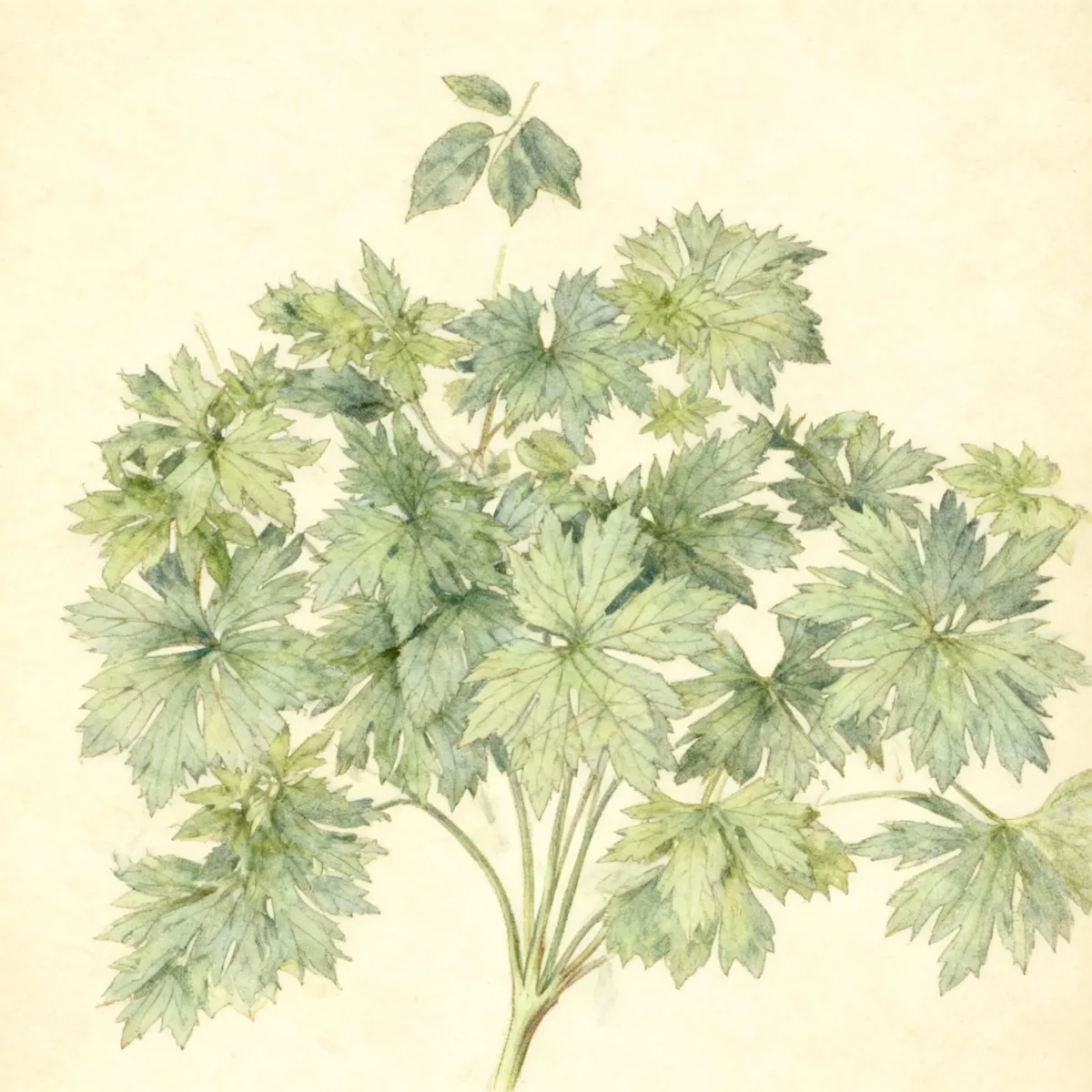
Hardy geranium (Geranium phaeum)
Discover Geranium phaeum, the low-maintenance Hardy geranium, prized for deep maroon flowers and shade tolerance in zones 5-7.
Scroll down to discover growing tips, care requirements, companion plants, and more

Complete Plant Information
Overview
The Geranium phaeum, commonly known across gardens as the Hardy geranium, offers a sophisticated, deep-toned presence in shady landscapes. Its striking, dark flowers provide a visual anchor where brighter colors often struggle, making it essential for woodland and shade garden designs. This rhizomatous perennial is celebrated for its robust constitution and low upkeep requirements once established.
Valued for its ability to thrive where many other perennials falter, Geranium phaeum performs best in dappled light or significant shade, unlike most sun-loving geranium relatives. Its unique, almost sooty, maroon-purple blooms appear consistently from late spring into mid-summer, providing long-lasting color interest.
Gardeners appreciate the structural interest provided by the lobed foliage, which often features a dark maroon blotch at the base. A truly rewarding plant, the Hardy geranium requires minimal fuss, offering reliable performance with its deep coloration, cementing its status as a workhorse perennial for shaded borders.
Fast Facts
- Plant Family: Geraniaceae
- Plant Type: Herbaceous perennial
- Native Range: Europe
- Hardiness Zones: USDA Zones 5-7
- Size at Maturity:
- Height: 1.5-2.5 ft
- Spread: 1-1.5 ft
- Bloom Time: May to August
- Bloom Description: Deep maroon purple
- Sun Exposure: Part shade to full shade
- Water Needs: Medium to wet
- Maintenance Level: Low
How to Grow
Planting should occur in the spring or early fall, when temperatures are moderate, allowing the Hardy geranium to establish a strong root system before facing summer heat or winter cold. This species thrives in average, medium to wet, well-drained soil, benefiting greatly from soil rich in humus. For optimal performance, site your Geranium phaeum where it receives reliable shade; this species actively prefers shade over sun.
Watering needs are best met by keeping the soil consistently moist, leaning toward medium to wet conditions, especially during dry spells. Fertilization is rarely required if the soil is naturally rich. Post-bloom, if the foliage begins to look ragged or declines due to summer heat, you can cut the flowering stems back and trim the foliage hard. This practice revitalizes the plant and encourages a fresh flush of green growth.
Be aware that Geranium phaeum may set seed in ideal conditions if left unmanaged. If you wish to prevent self-seeding and maintain clear boundaries, deadheading spent flowers is recommended. This plant is sensitive to intense heat and humidity, struggling in the deep South, so acclimatization to cooler, moist conditions is key to its long-term success.
Landscape Uses
The rich, dark tones of the Geranium phaeum flowers make it an excellent choice for adding drama and contrast in shaded garden spaces. It excels when used in woodland gardens, where it blends naturally with ferns, hostas, and spring ephemerals under a tree canopy. Its upright habit makes it a superb choice for the middle or back of shade gardens and cottage garden borders.
For a classic English cottage feel, intersperse the dusky flowers among silvery foliage or plants with bright green leaves to maximize the contrast inherent in this plant. It also works wonderfully in wild gardens or informal settings where its propensity for minor self-seeding can be an asset, creating charming drifts of dark color. Use it to line shady paths or place it near water features where its preference for moist soil is easily accommodated.
Standout Features
Flower Qualities
- Showy
Noteworthy Characteristics
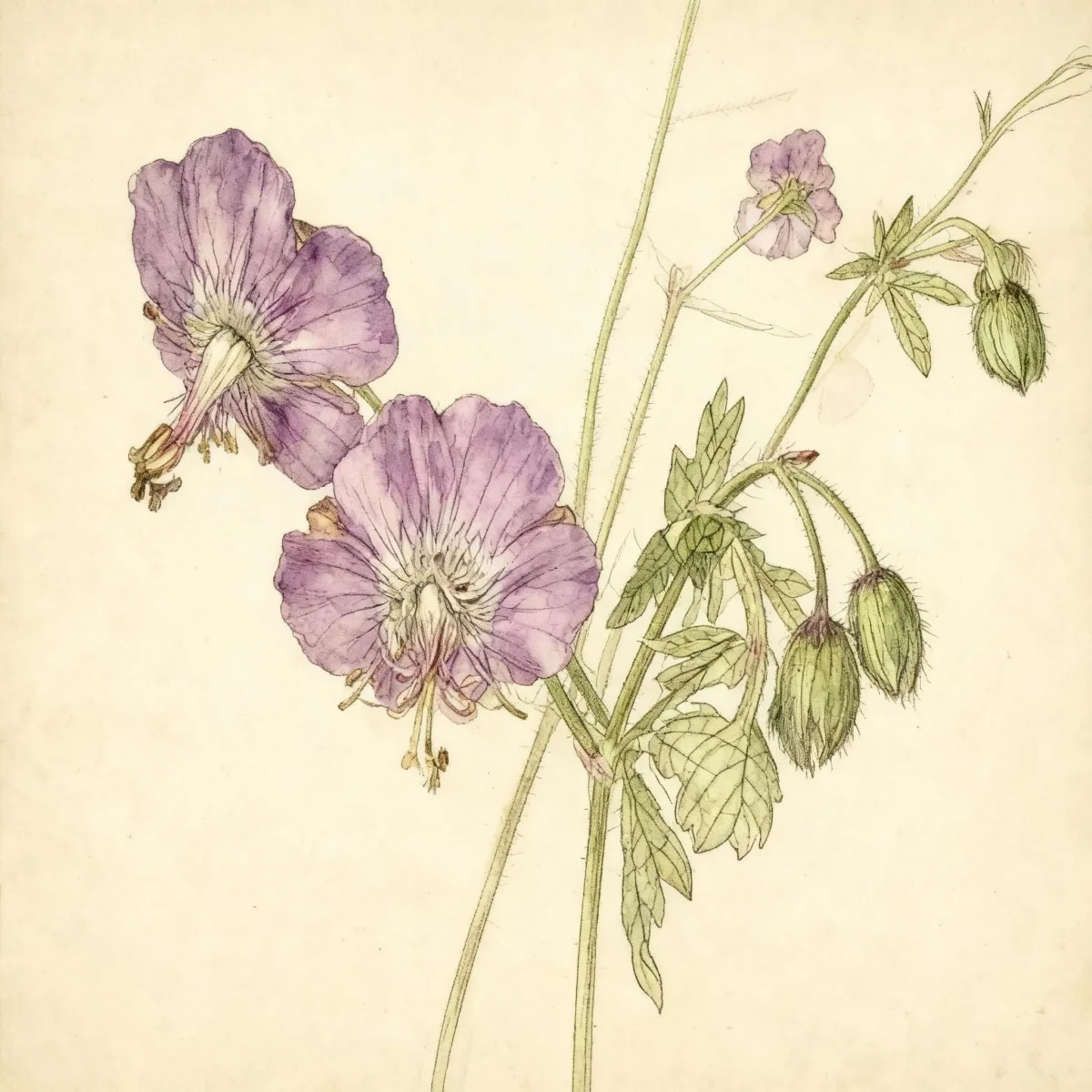
Geranium phaeum is a tall, rhizomatous, clump-forming perennial with branching stems which typically grows 18-30” tall with a spread of 12-18”. Features 5-petaled, deep maroon-purple flowers (to 1” diameter) with slightly reflexed petals and a lighter sometimes whitish center ring. Flowers bloom from late spring to early summer with sporadic rebloom throughout the summer. Flowers give way to cranesbill-like seed heads. Lobed, soft green leaves (basal leaves 4-8” across) are blotched with maroon at the base. This species is sometimes commonly called mourning widow in reference to the unusually dark (sometimes almost black) flower color.
Tolerances
- Rabbit
- Deer
Potential Problems
This plant generally avoids serious insect or disease issues, contributing to its low-maintenance status in the garden. Due to its preference for shade and moist soil, common fungal issues associated with sun exposure or dry conditions are rarely a concern. Monitor for slugs or snails, particularly when new growth first emerges in the spring, and address any damage promptly.
Frequently Asked Questions
What hardiness zones is Hardy geranium suitable for?
The Hardy geranium (Geranium phaeum) is best suited for cultivation in USDA Hardiness Zones 5 through 7.
How large does Geranium phaeum grow?
This perennial typically reaches a mature height between 1.5 and 2.5 feet tall, with a spread ranging from 1 to 1.5 feet wide.
When does Hardy geranium bloom?
The blooming period for the Hardy geranium spans from May through August, showcasing its distinctive deep maroon purple flowers.
Conclusion
The Geranium phaeum, or Hardy geranium, is an invaluable asset for gardeners seeking dramatic, low-effort color in partially shaded positions. Its superior tolerance for low light combined with its striking dusky flower color ensures it remains a staple in perennial borders. Before planting, confirm your location falls within USDA Zones 5-7 and ensure the chosen site offers the medium to wet moisture levels this plant requires for best performance.
Companion Planting
Selecting appropriate companions is key to designing a successful shade border featuring the Geranium phaeum. Since it prefers moist, humusy soil, pair it with other shade lovers that share similar cultural needs, such as Astilbe, Hosta varieties known for contrasting foliage color (like chartreuse or blue types), or Tiarella (Foamflower). These companions thrive in the same filtered light, creating a lush, layered tapestry of texture throughout the season.
Avoid pairing it with overly aggressive spreaders, as the Hardy geranium is a clump-former that deserves defined space to showcase its upright habit and dark blooms effectively. Placing it near groundcovers that tolerate foot traffic can help regulate soil temperature and moisture, which keeps its roots cool and happy during the summer months.
Propagation Tips
The primary and easiest method for increasing your stock of Geranium phaeum is through spring or fall division. As a rhizomatous perennial, the clumps can become overcrowded over several years, leading to diminished flowering. When dividing, carefully dig up the entire plant or section you wish to move. Gently separate the root ball and rhizomes, ensuring each section has a healthy portion of roots and at least a few growing points (eyes).
Replant the divisions immediately into prepared, moist soil at the same depth they were previously growing. This method refreshes the mother plant and provides you with several new, genetically identical plants ready to establish themselves quickly. While some self-seeding occurs, division is the most reliable way to propagate this specific Hardy geranium true to type.