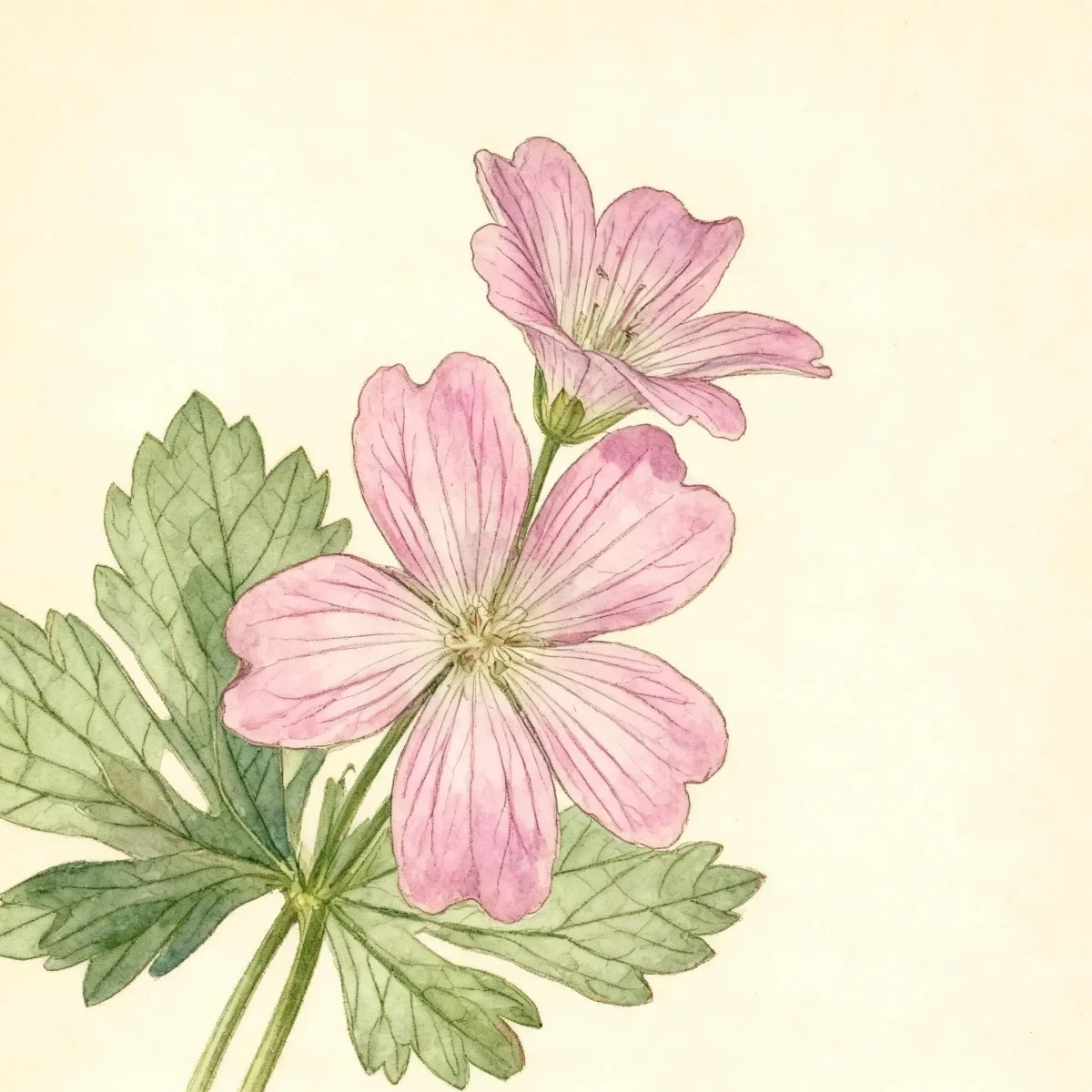
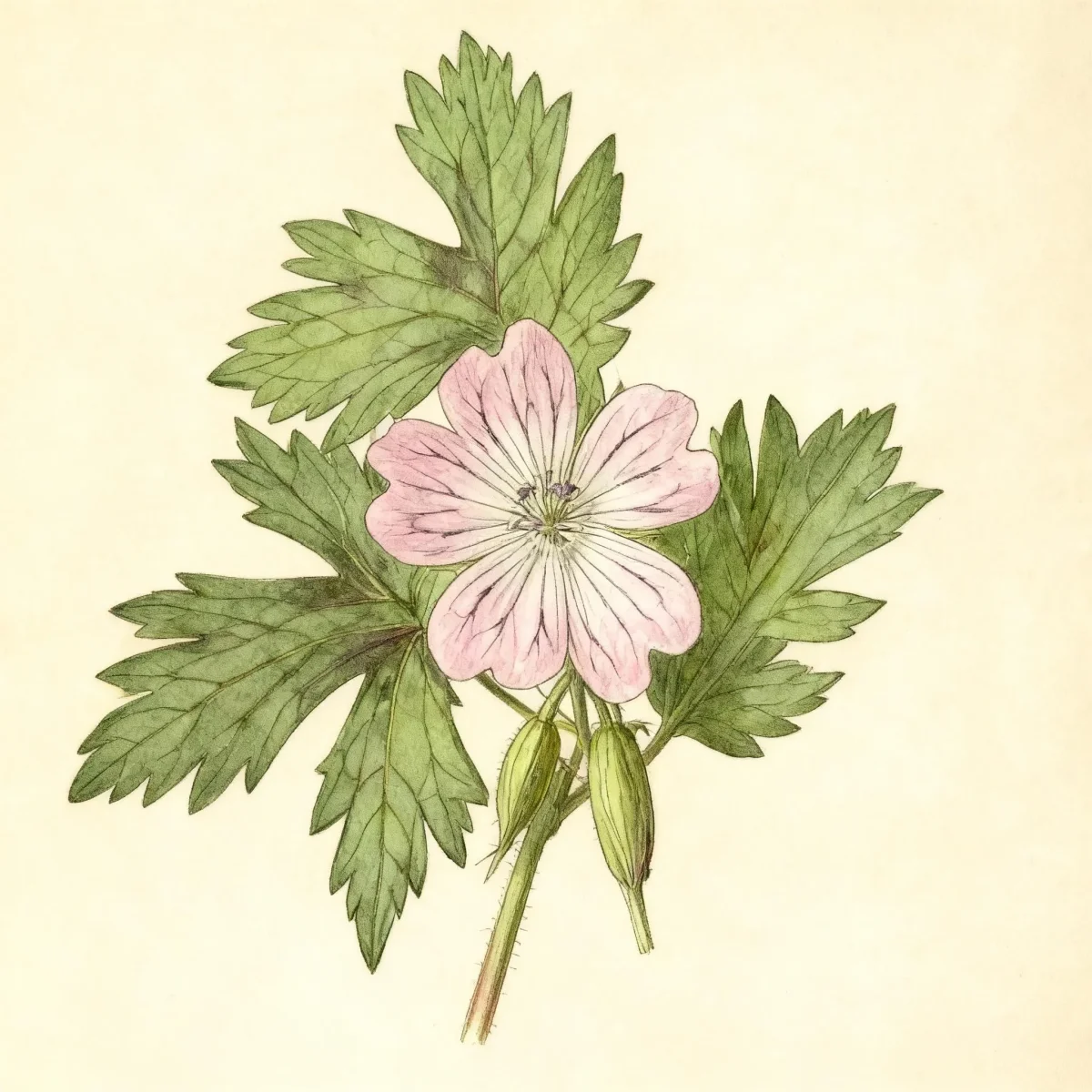
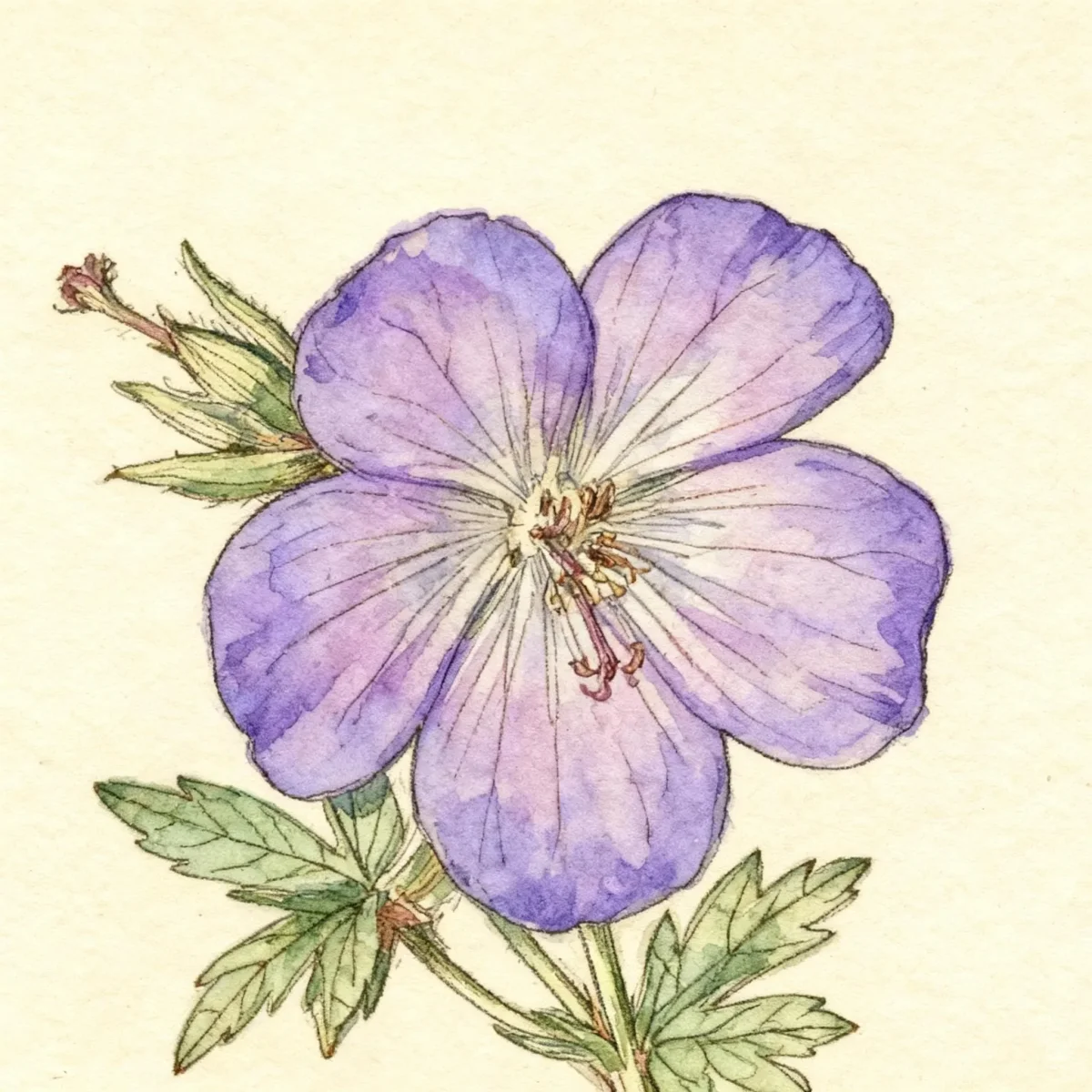
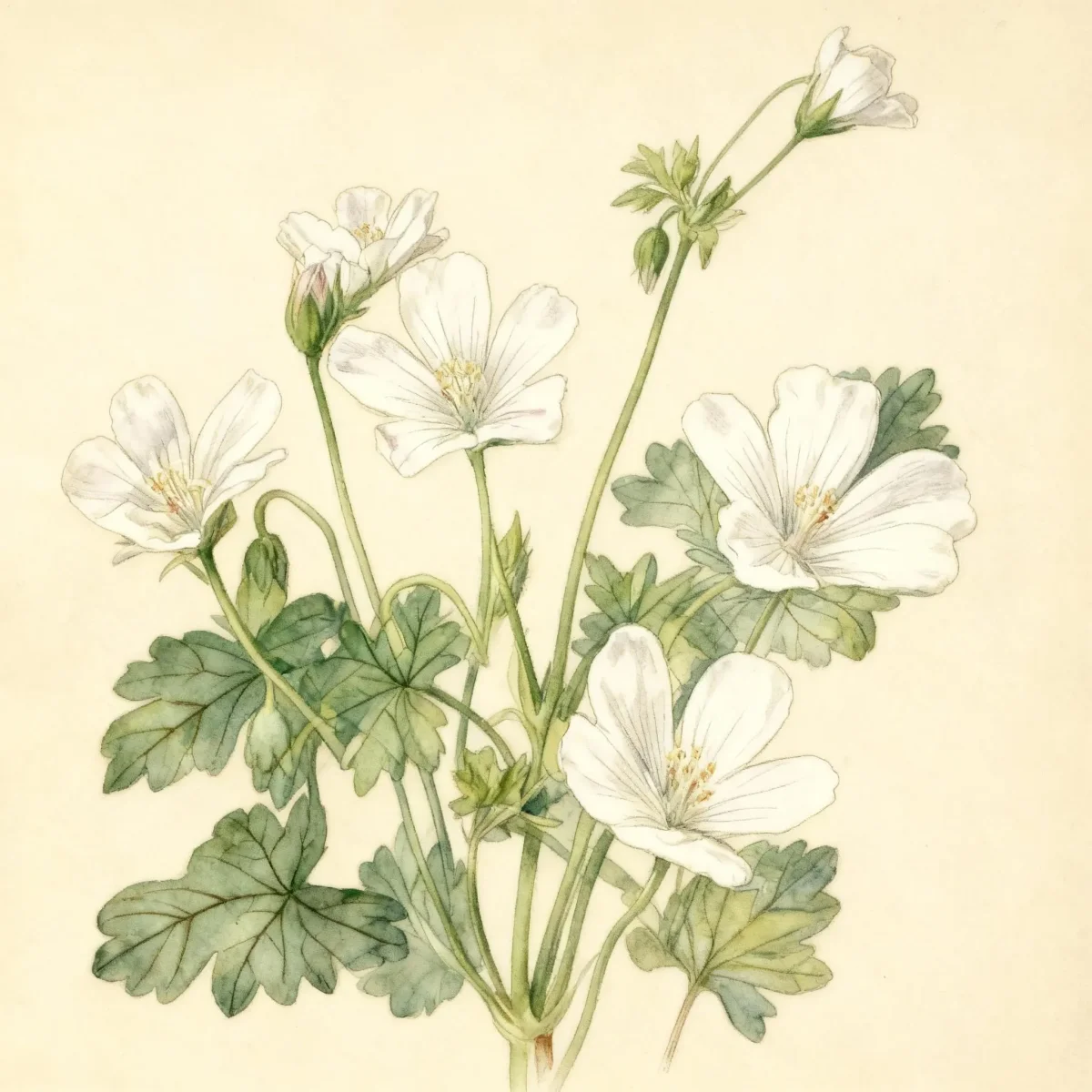
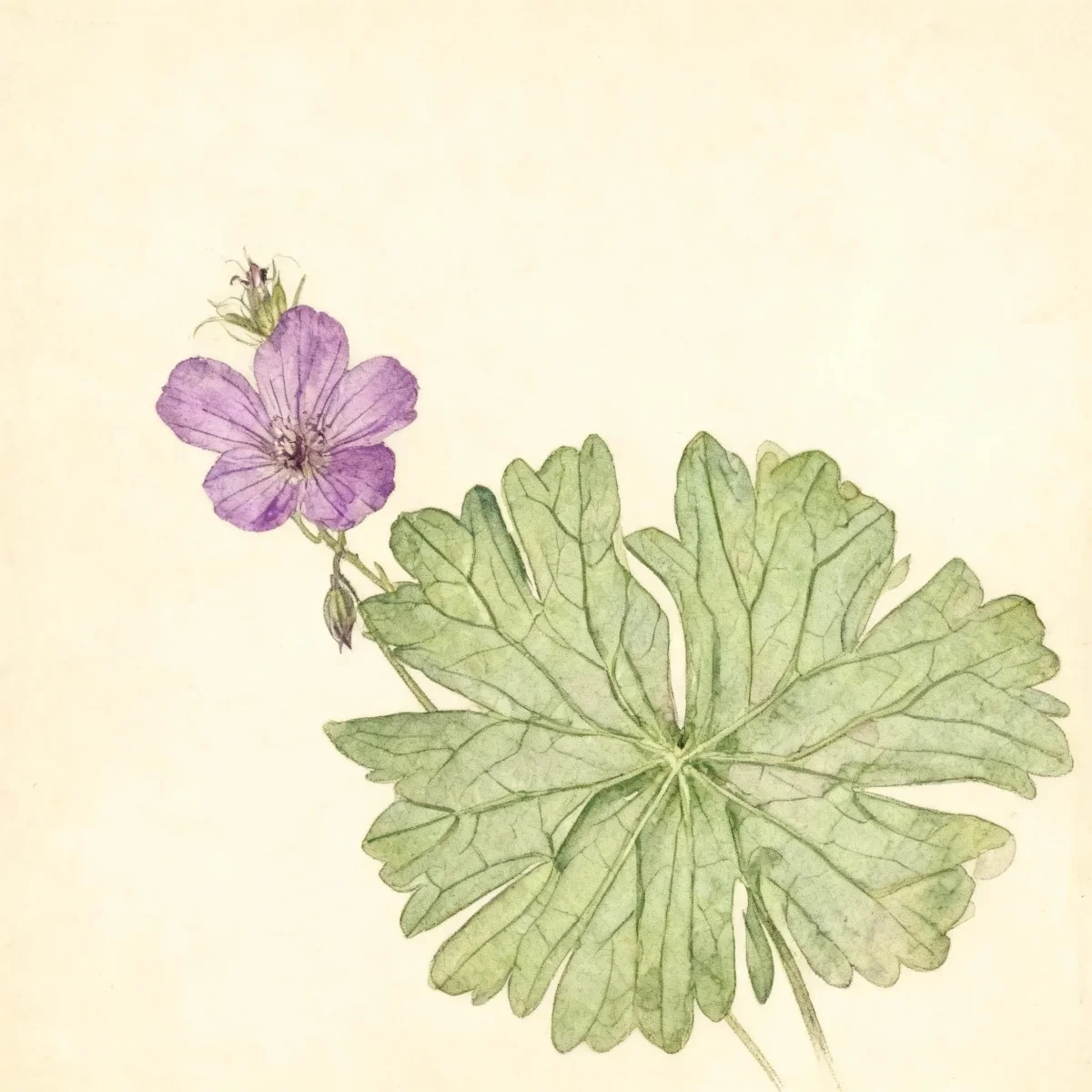
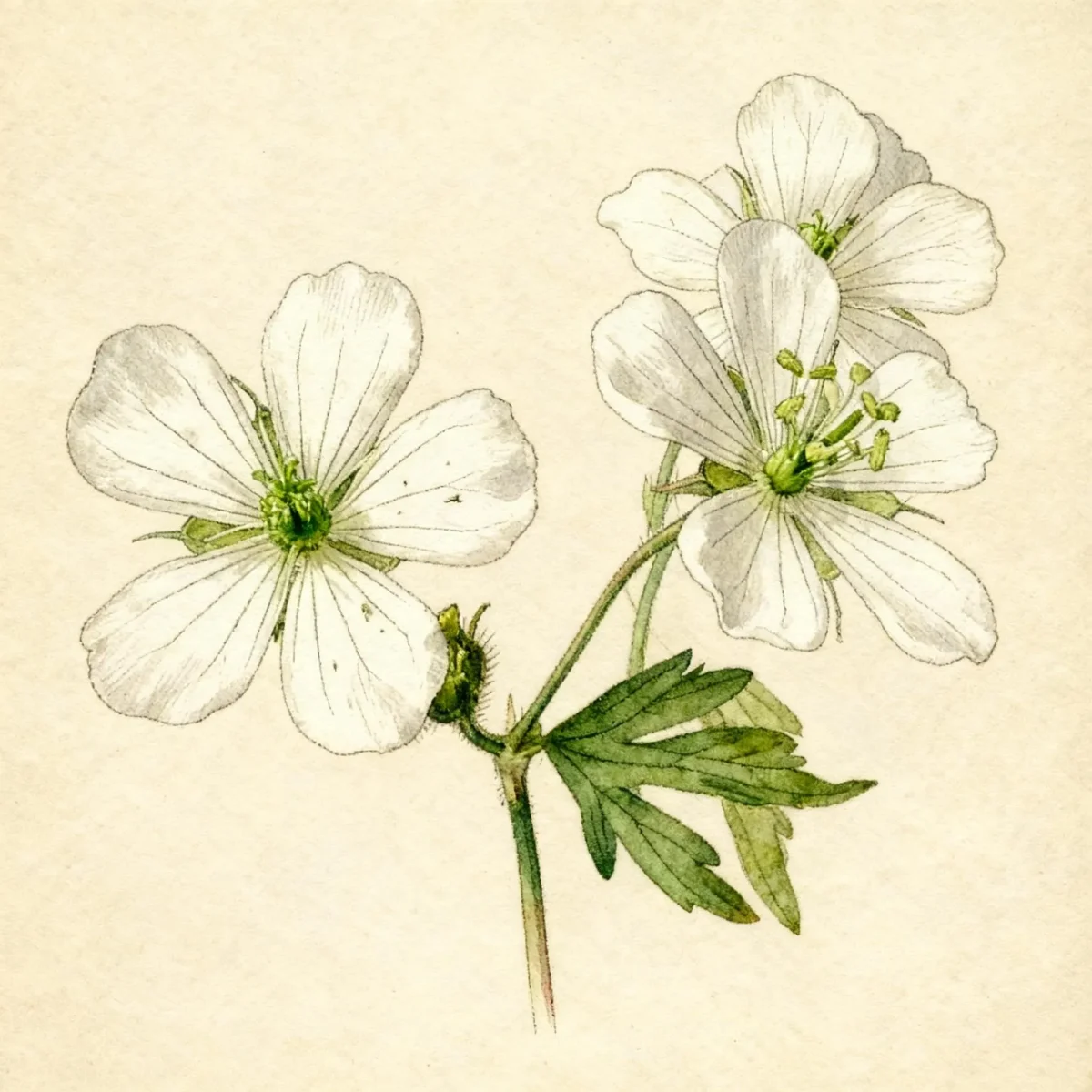
Wild geranium (Geranium maculatum f. albiflorum)
Discover Geranium maculatum f. albiflorum, the white-flowered Wild geranium. A medium-maintenance perennial for eastern woodlands.
Scroll down to discover growing tips, care requirements, companion plants, and more
Complete Plant Information
Overview
Geranium maculatum f. albiflorum offers a lovely native alternative to cultivated geraniums, gracing the landscape with delicate white flowers in the late spring. This herbaceous perennial forms attractive clumps of deeply lobed foliage, providing good texture in shaded garden areas. As a form of Wild geranium, Geranium maculatum f. Albiflorum quickly establishes itself where conditions mimic its native woodland habitat.
This plant is valued for its adaptation to partial shade conditions common beneath deciduous trees, forming an excellent mid-layer in naturalized settings. While the species often displays pink or lilac blooms, the forma albiflorum variant specifically delights gardeners seeking pure white spring color. Its tolerance for drought once established adds to the practical appeal of Wild geranium.
Gardeners looking to integrate native flora will appreciate the reliability of Geranium maculatum f. albiflorum. It provides consistent early season interest before many summer perennials get rolling. Planting Geranium maculatum f. albiflorum helps support local ecosystems while bringing understated elegance to buffered woodland edges.
Fast Facts
- Plant Family: Geraniaceae
- Plant Type: Herbaceous perennial
- Native Range: Northeastern United States
- Hardiness Zones: USDA Zones 3-8
- Size at Maturity:
- Height: 1-1.5 ft
- Spread: 1-1.5 ft
- Bloom Time: April to May
- Bloom Description: White
- Sun Exposure: Full sun to part shade
- Water Needs: Medium
- Maintenance Level: Medium
How to Grow
Planting Wild geranium is best done in spring or fall when soil temperatures are moderate. Choose a location providing full sun to part shade, remembering that woodland soils—moist, humusy, and well-drained—are preferred, though this plant tolerates poorer soils better than many woodland natives. Ensure the planting area has decent drainage to prevent root issues over time.
Water needs are medium; maintain consistent moisture, especially during establishment or if grown in sunnier exposures. Although it tolerates some drought, its foliage may yellow during severe summer dry spells if the soil remains parched. Fertilization is rarely necessary; rich, organically amended soil is usually sufficient for this vigorous perennial.
Pruning is minimal, mostly involving removing any spent or damaged foliage. Deadheading is generally considered unnecessary because the plants rarely rebloom, and the resulting beaked seed capsules are an interesting feature, giving rise to the common name crane’s bill. Geranium maculatum f. Albiflorum will readily naturalize across optimum settings, creating gentle drifts of white spring flowers.
Landscape Uses
The recommended use for Geranium maculatum f. Albiflorum centers around creating shaded, informal landscapes. It excels in open woodland gardens where it can mimic its natural habitat beneath an established canopy. Its clumping habit makes it perfect for softening the edges of naturalized areas or planting in shaded borders where it provides ground cover.
Consider integrating Geranium maculatum f. Albiflorum with spring ephemeral bulbs, allowing it to emerge and fill the space once the bulbs go dormant. It pairs well aesthetically and culturally with ferns, Hosta varieties that tolerate more sun, and other shade-loving woodland natives like wild ginger (Asarum).
For native plant enthusiasts, Wild geranium serves as an excellent component in creating low-maintenance, native habitat areas in the partial shade. Because it spreads gently via naturalization, effective use involves grouping it in drifts rather than isolated specimens.
Standout Features
Flower Qualities
- Showy
Noteworthy Characteristics
Geranium maculatum is a clump-forming perennial which typically occurs in woods, thickets and shaded roadside areas. It forms a mound of foliage topped by saucer-shaped, upward-facing flowers early in the season. Distinctive, beaked seed capsules follow the flowers, lending the plant its connection to the crane. Forma albiflorum features white flowers where the species typically presents pink or lilac tones.
Tolerances
- Rabbit
- Deer
- Drought
Potential Problems
Geranium maculatum f. albiflorum is known for having very few serious insect or disease problems under typical growing conditions. This resilience makes Wild geranium a low-stress addition to the garden. Proper site selection is the best preventative measure—avoiding areas with standing water minimizes any risk of fungal issues. Monitor occasionally for common garden pests, but widespread destruction is rare.
Frequently Asked Questions
What hardiness zones is Wild geranium suitable for?
Geranium maculatum f. Albiflorum is robustly hardy, thriving in USDA Zones 3 through 8.
How large does Geranium maculatum f. albiflorum grow?
This perennial typically forms mounding clumps reaching mature heights between 1 and 1.5 feet tall, spreading to a similar width of 1 to 1.5 feet.
When does Wild geranium bloom?
You can expect the signature white blooms of Geranium maculatum f. Albiflorum to appear during late spring, specifically from April into May.
What sun exposure does Geranium maculatum f. Albiflorum need?
This plant performs best when situated where it receives full sun to part shade throughout the day, requiring consistent moisture if placed in brighter spots.
Conclusion
The white-flowered Wild geranium, Geranium maculatum f. Albiflorum, is a dependable and aesthetically pleasing choice for woodland and native gardens across the Northeast. Its clean white spring blooms and reliable clump-forming habit offer significant landscape value with minimal fuss. Always check your specific USDA zone compatibility before planting this beautiful Geranium maculatum f. Albiflorum this upcoming spring.
Propagation Tips
While Geranium maculatum f. Albiflorum will naturalize slowly on its own, gardeners can actively propagate new plants through division. The best time for division is early spring just as new growth emerges, or in early fall. Carefully dig up the clump and gently separate the root ball into sections, ensuring each division has healthy roots and at least one viable crown node. Replant these divisions immediately into prepared, humus-rich soil at the same depth they were previously growing.
Companion Planting
Effective companion planting for Wild geranium focuses on species sharing similar moisture and light requirements. Pair it with spring ephemerals like Bloodroot (Sanguinaria canadensis) or Trout Lily (Erythronium), as the geranium’s foliage emerges slightly later to fill the gap. For summer interest in the same partial shade niche, consider planting Hostas grown for variegated foliage or shade-tolerant Geranium species like Geranium maculatum itself (although this will lack the white blooms).