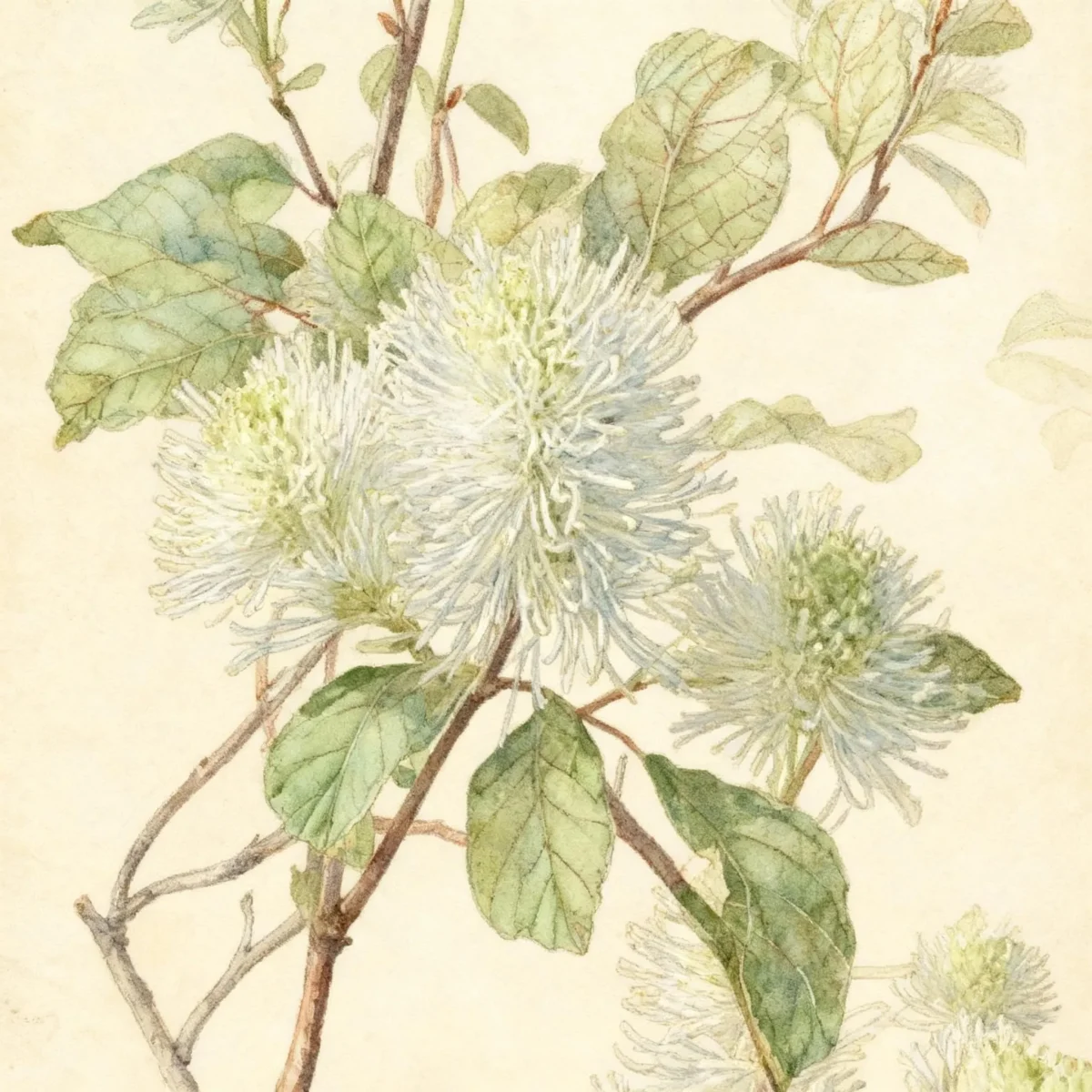
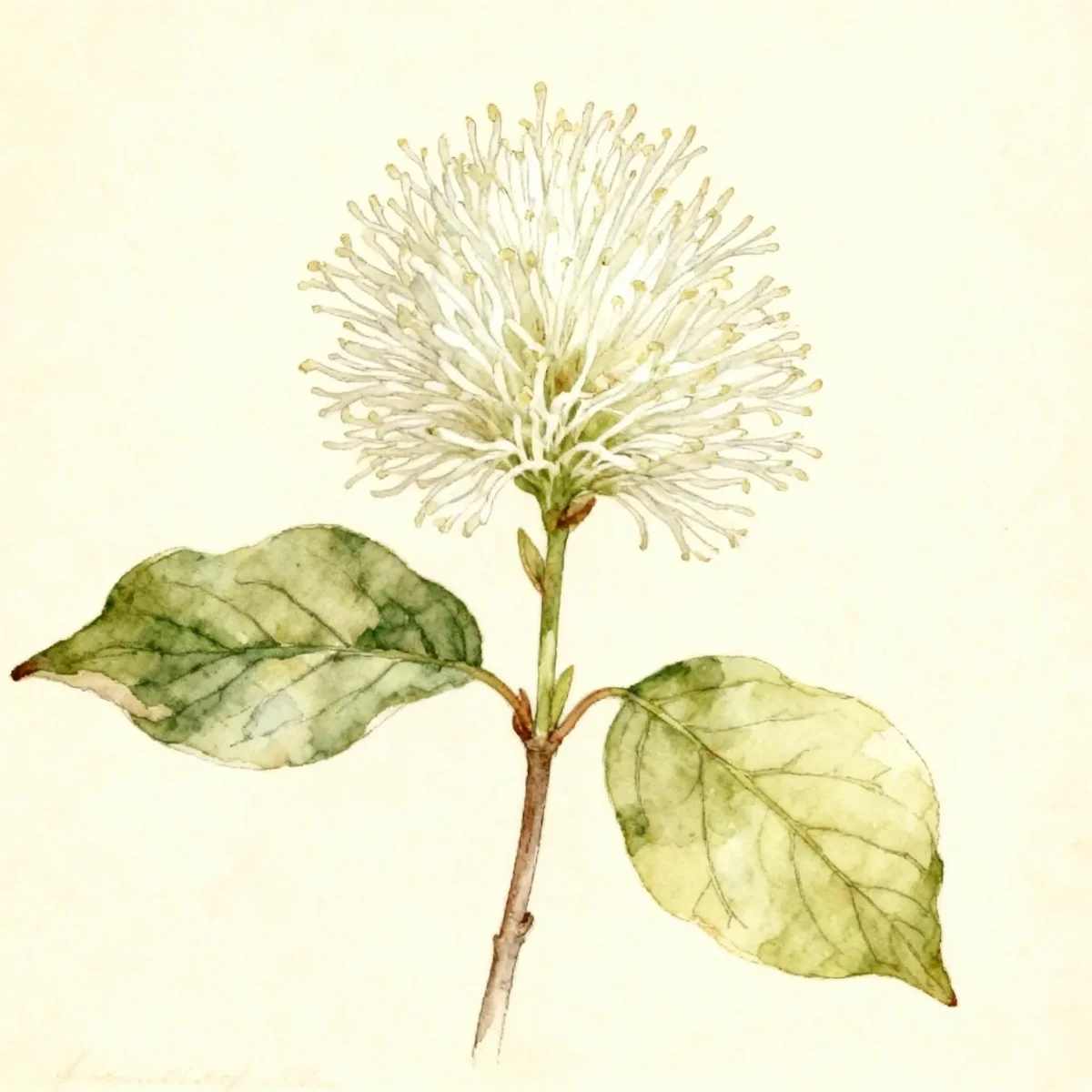
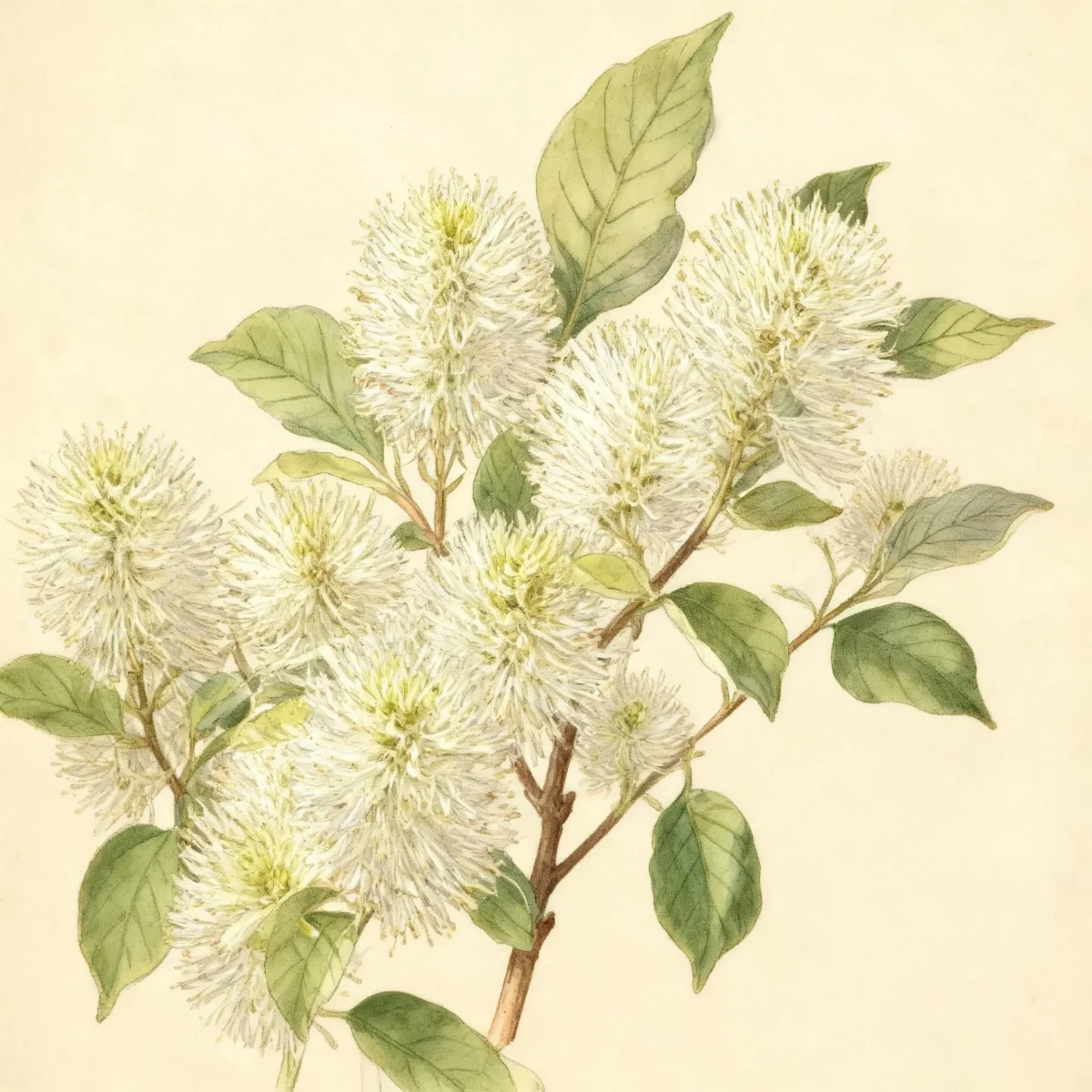
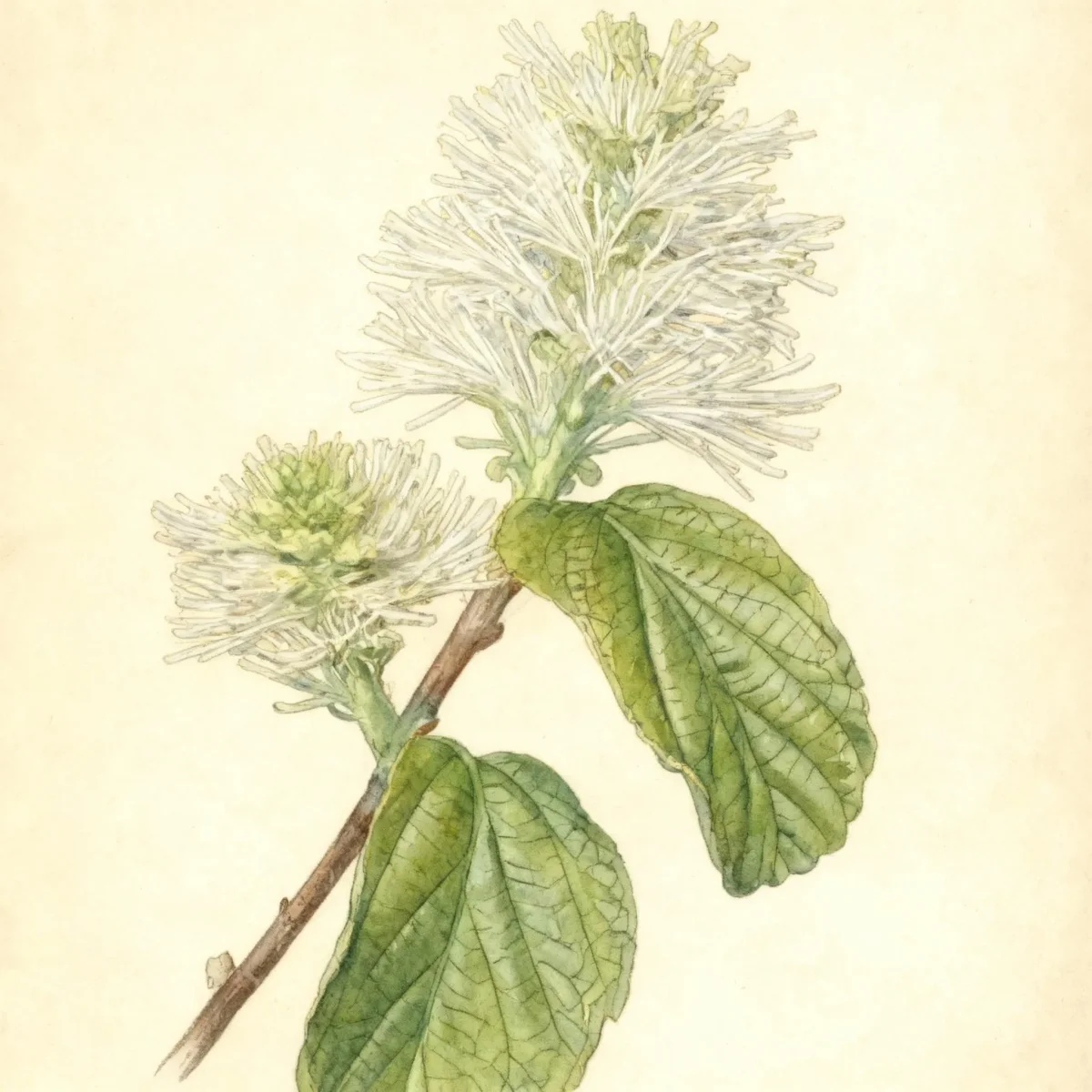
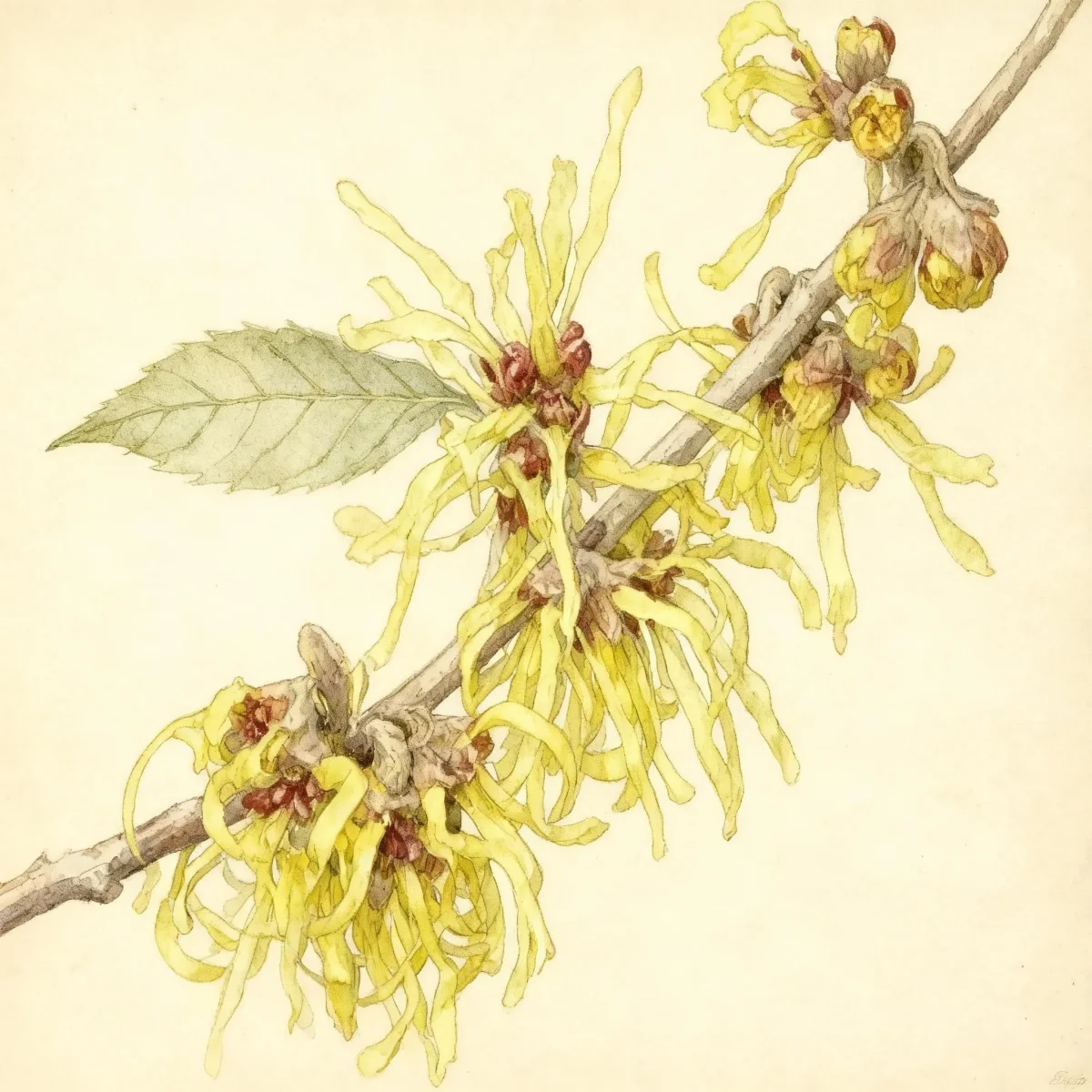
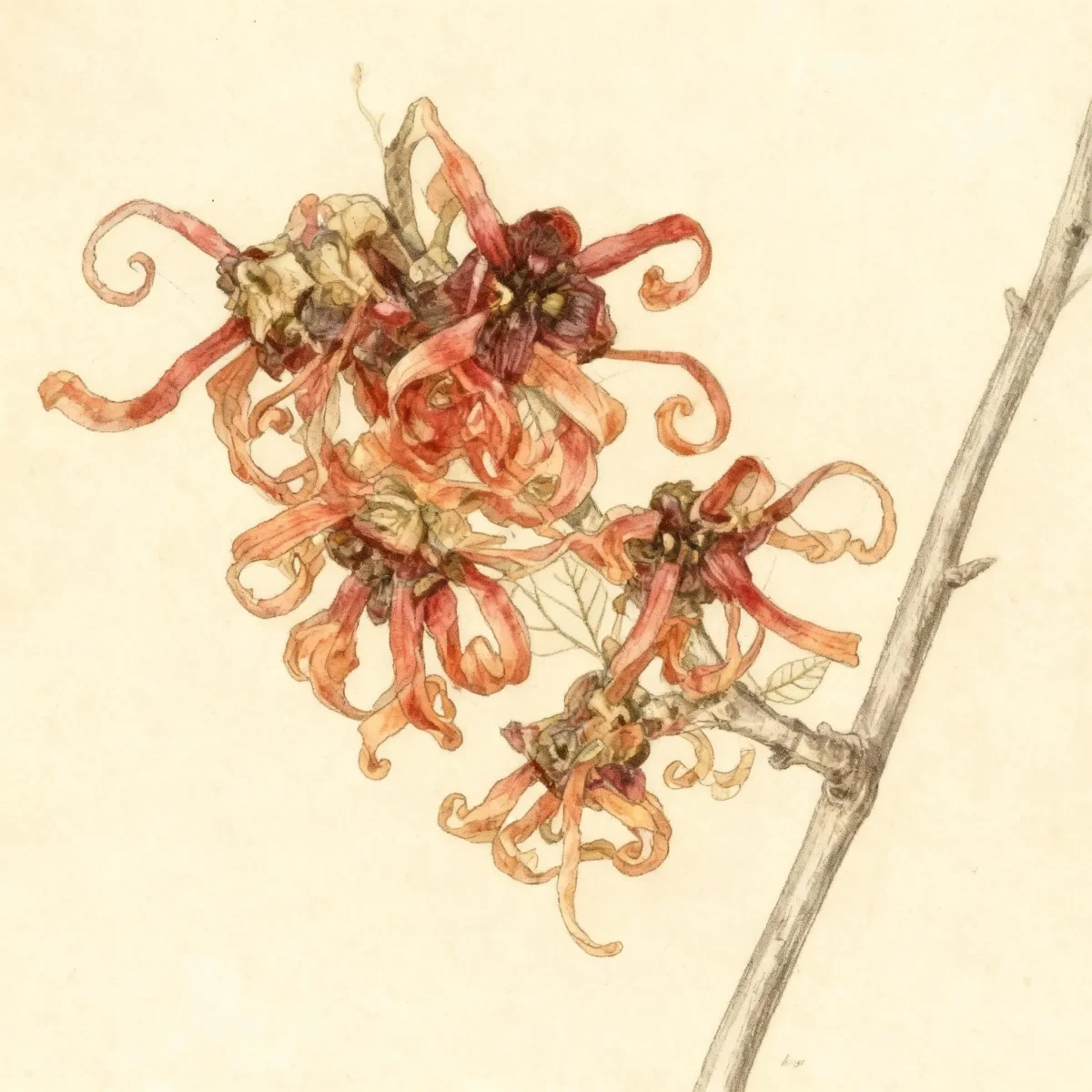
Mountain witch alder (Fothergilla major)
Fothergilla major, the Mountain witch alder, is a slow-growing shrub celebrated for fragrant spring blooms and brilliant fall color.
Scroll down to discover growing tips, care requirements, companion plants, and more
Complete Plant Information
Overview
The Fothergilla major, often known as Mountain witch alder, is a standout native shrub prized for its multi-seasonal interest, making it a superb addition to woodland or mixed borders. Gardeners value this slow-growing deciduous shrub most highly for its spectacular four-season performance, beginning with aromatic spring flowers and concluding with vivid autumn foliage. Fothergilla major develops an upright, spreading habit, maturing into a medium-sized specimen perfect for providing structure in the landscape.
Native to mountain woods and ravines in the Southeastern U.S., the Mountain witch alder thrives where summers are warm but moisture is consistent. Its cultural requirements align well with acid-loving plants like rhododendrons, simplifying mixed plantings in the appropriate native garden setting. Expect a rewarding show when you site this shrub where its unique attributes—fragrant blooms, attractive summer leaves, and brilliant fall transformation—can be fully appreciated.
This species is evolutionarily related to witch hazel, sharing some desirable qualities while maintaining distinct ornamental appeal. Its low maintenance needs translate to less time stressing over the garden and more time enjoying the annual display of the Fothergilla major.
Fast Facts
- Plant Family: Hamamelidaceae
- Plant Type: Deciduous shrub
- Native Range: Southeastern United States
- Hardiness Zones: USDA Zones 4-8
- Size at Maturity:
- Height: 6-10 ft
- Spread: 5-9 ft
- Bloom Time: April to May
- Bloom Description: White
- Sun Exposure: Full sun to part shade
- Water Needs: Medium
- Maintenance Level: Low
How to Grow
Planting Fothergilla major is best achieved in spring or fall when stress on the new shrub is minimal. Locate it in full sun to light shade, ensuring the chosen site has excellent drainage. Although easily grown in average soils, this shrub performs best when planted in moist, acidic, and organically rich ground that mimics its Appalachian home.
Once established, Mountain witch alder requires only medium water inputs, thriving best when the soil remains consistently even in moisture but never soggy. Avoid excessive soil disruption around the base, as this plant may spread slowly by root suckers to form attractive colonies; promptly remove unwanted suckers to maintain a singular specimen shape. Generally, supplemental fertilization is not necessary if the soil is organically rich.
Pruning should be minimal, focusing primarily on removing dead or crossing branches after flowering has concluded. Be cautious selecting sites for the northern reaches of Zone 5, as some reports suggest Fothergilla major may have variable winter hardiness in these cooler fringe areas.
Landscape Uses
Fothergilla major excels when grouped or massed in borders, providing excellent year-round texture and color for foundation plantings or naturalized native areas. Its medium size, reaching up to 10 feet tall, makes it an ideal mid-story shrub. It is particularly effective planted along stream banks or in woodland clearings where it can benefit from consistent moisture.
This plant integrates seamlessly with rhododendrons and azaleas, as these shrubs share similar preferences for acidic, well-drained soil conditions. Consider using Mountain witch alder to create dynamic, seasonal layers behind lower-growing perennials or evergreen foundations.
For formal structure, Fothergilla major responds well to shaping as a dense hedge, providing an opaque barrier with the added bonus of incredible fall fire. Its sturdy upright habit ensures it remains a focal point from spring bloom through late autumn color display.
Standout Features
Flower Qualities
- Showy
- Fragrant
Noteworthy Characteristics
Fothergilla major, commonly called large fothergilla or mountain witch alder, is a member of the same family as witch hazel, boasting an extremely reliable landscape performance. It is noted for its aromatic spring flowers, quality summer foliage, excellent fall color, and excellent disease resistance. Foliage turns superb shades of yellow, orange, and red-purple in the autumn, providing a stunning final act before winter dormancy.
Potential Problems
This plant enjoys an excellent resistance profile, showing no serious insect or disease problems under proper growing conditions. Good cultural practices, particularly ensuring sharp drainage, are the best preventative measures against potential root issues. Monitor for suckering, which can be managed by simple removal rather than needing pest intervention.
Tolerances
This field is empty.
Frequently Asked Questions
What hardiness zones is Mountain witch alder suitable for?
The Fothergilla major is generally suitable for USDA Hardiness Zones 4 through 8. Gardeners in Zone 5 should monitor conditions closely, as winter hardiness can sometimes be variable at the cooler edges of this range.
How large does Fothergilla major grow?
This species reaches heights between 6 to 10 feet at maturity, spreading outward to a width of 5 to 9 feet, creating a dense, upright shrub form.
What sun exposure does Mountain witch alder need?
For best performance, site Fothergilla major where it receives full sun to partial shade. It shows good shade tolerance but bloom density and fall color intensity are best achieved with more light.
When does Fothergilla major bloom?
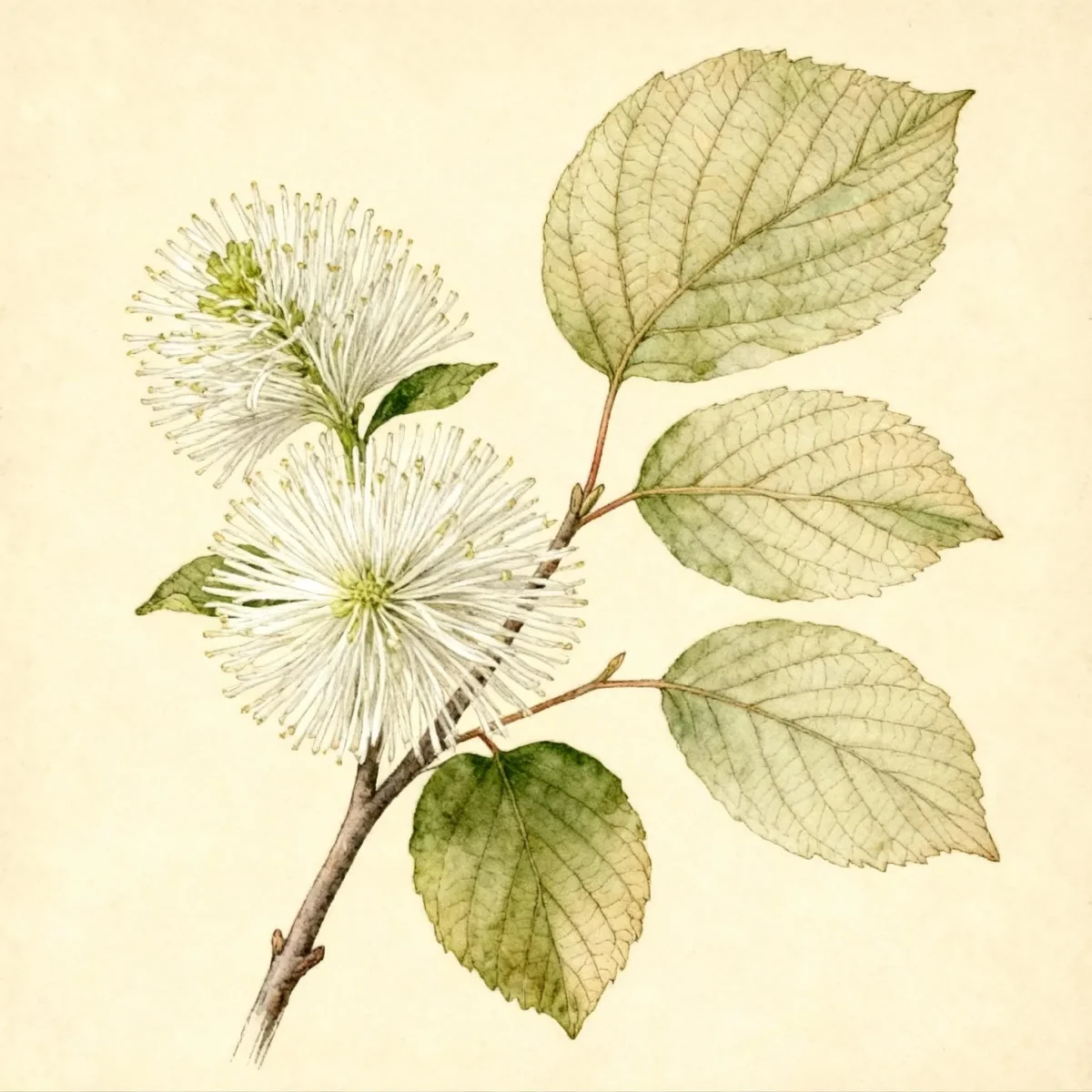
The shrub flowers in the spring, typically from April to May, producing terminal, bottlebrush-like spikes of tiny, fragrant white flowers.
Companion Planting
The soil preferences of Fothergilla major narrow the ideal companions to those that appreciate similar moisture and acidity levels. Think of the woodland edge aesthetic where dappled shade is common. Acid-loving evergreens naturally pair well; consider using Hollies, Camellias (in warmer zones), or evergreen Azaleas as foundation backdrops.
For seasonal interest below the shrub canopy, ferns provide excellent structural contrast throughout the summer months. Ensure any ground covers or understory plantings are compatible with medium water needs and do not aggressively compete for nutrients near the shallow roots of the Fothergilla major.
If you are aiming for a fully native display, investigate other Appalachian woodland inhabitants that share the need for moist, acidic, well-drained soil, creating a harmonious, low-maintenance native ecosystem around your Mountain witch alder.
Seasonal Care Calendar
Spring marks the beginning of the season’s show as the fragrant white flowers emerge just as the foliage begins to unfold. After blooming ceases, take this opportunity to prune any stray branches or shape the overall structure of the shrub. Throughout summer, maintain consistent medium moisture, especially during dry spells, to support the leathery, blue-gray backed foliage.
Fall is the most visually dramatic period for your Fothergilla major, as the leaves shift into brilliant yellow, orange, and red-purple hues before dropping. Prepare for winter by ensuring the plant has adequate moisture going into dormancy; deep watering just before the ground freezes can buffer against winter desiccation, particularly important for young plants.
Winter care is largely hands-off, though monitoring older specimens for potential crown dieback in extremely harsh years is wise. The Fothergilla major is remarkably low maintenance, requiring very little intervention outside of initial site preparation and cleanup of fallen leaves in late autumn.
Conclusion
The Fothergilla major, or Mountain witch alder, offers unparalleled seasonal appeal, moving seamlessly from fragrant spring display to unequaled fall brilliance with minimal upkeep required. Its adaptability to sun exposure and preference for acidic soil make it a versatile choice for many Southeastern gardens. Check your USDA zone compatibility and plan to plant this exceptional native shrub in enriched, well-drained soil this coming active growing season.