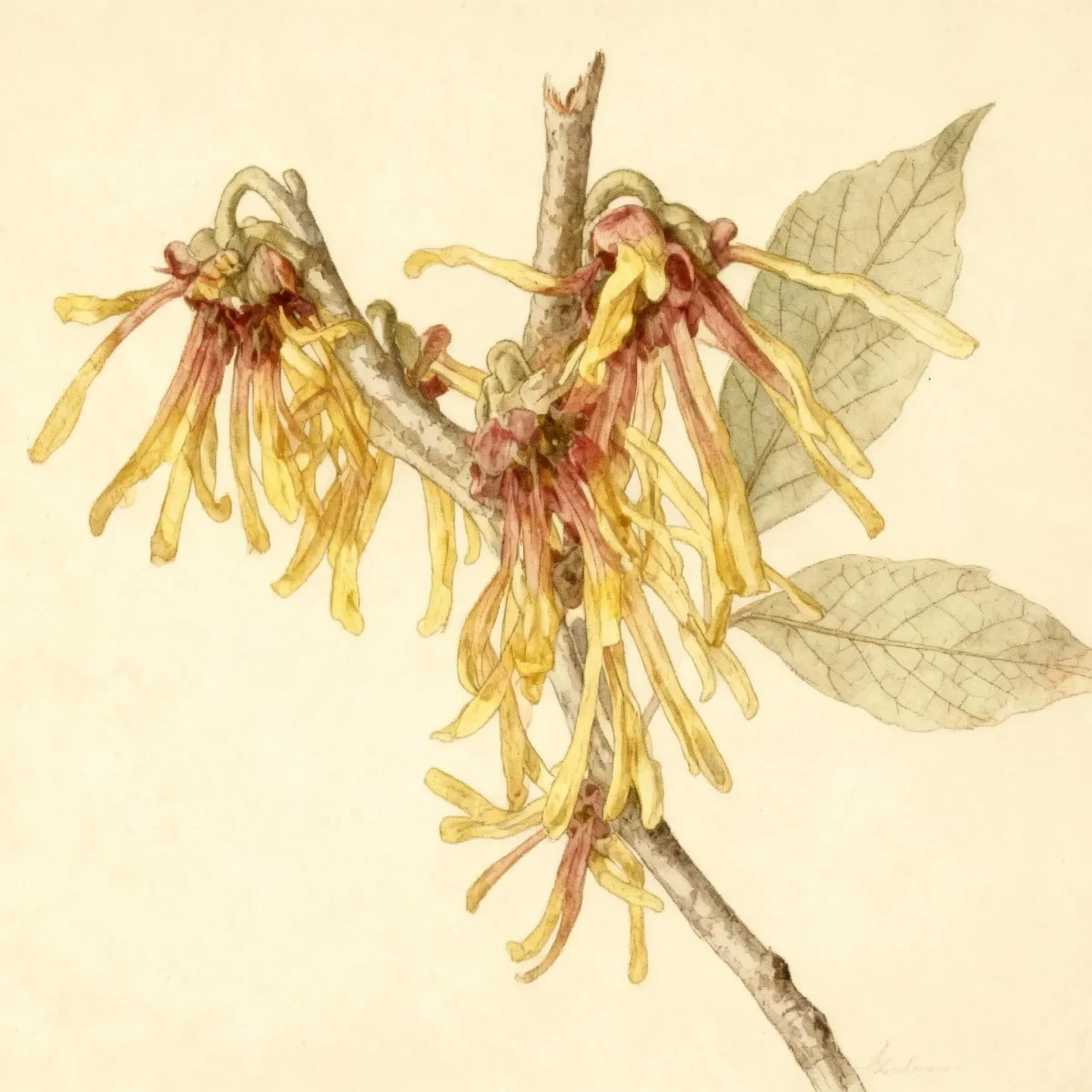
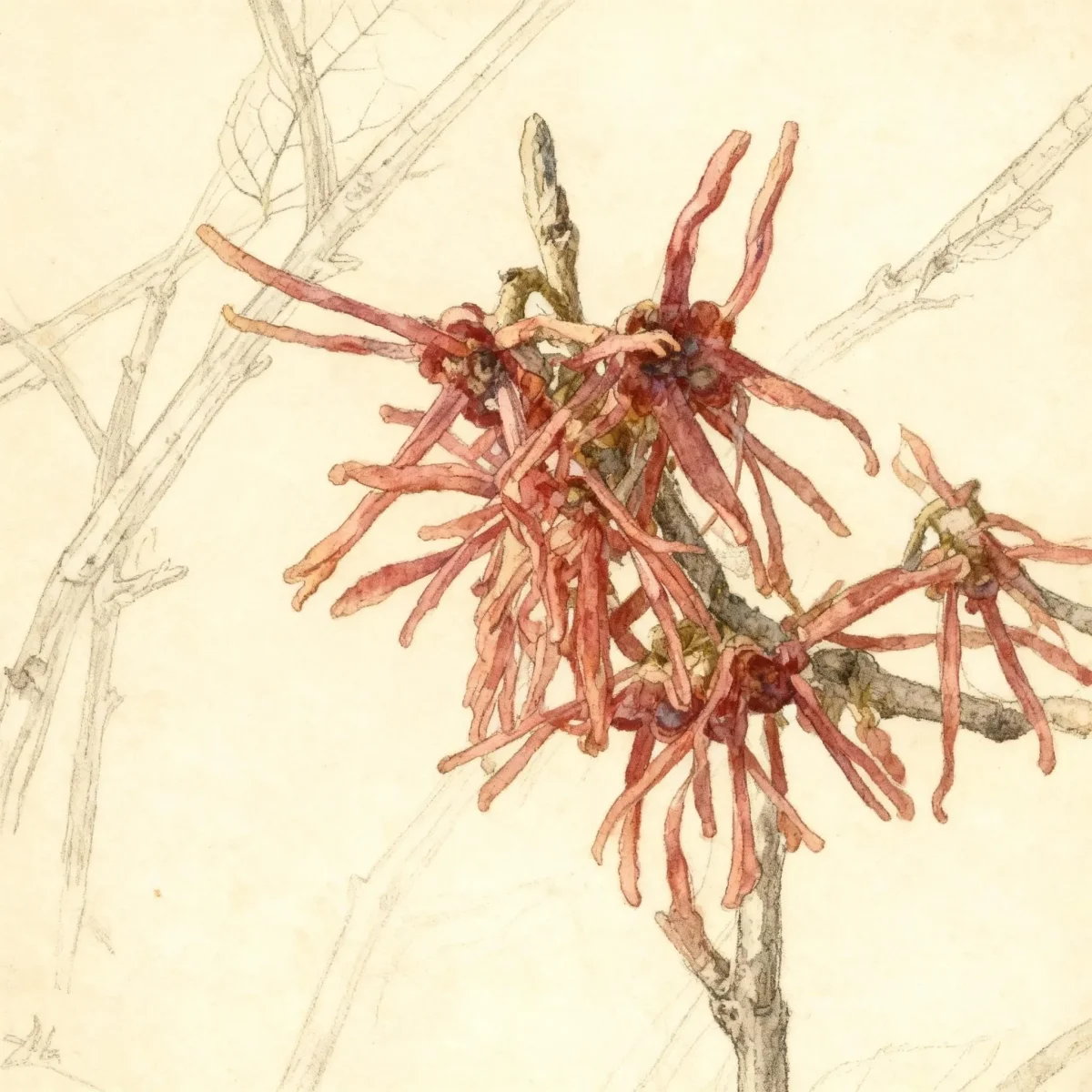
Ozark witch hazel (Hamamelis vernalis)
Discover Hamamelis vernalis, the Ozark witch hazel, prized for its stunning winter blooms and low maintenance requirements.
Scroll down to discover growing tips, care requirements, companion plants, and more
Complete Plant Information
Overview
The Ozark witch hazel, Hamamelis vernalis, provides spectacular interest during the bleakest part of the year, offering vibrant color when most woody plants remain dormant. This deciduous shrub is highly valued for its early blooming period, making it a superb structural element in the late winter landscape. As a native species, Hamamelis vernalis thrives in conditions typical of the Southern and central United States.
Cultivating this plant results in more than just winter blooms; it evolves into a substantial thicket-forming shrub well-suited for naturalized settings. Its ability to spread by suckers helps stabilize soil, making the Ozark witch hazel an excellent choice for functional planting needs like erosion control. Gardeners can rely on its relatively low maintenance needs once established.
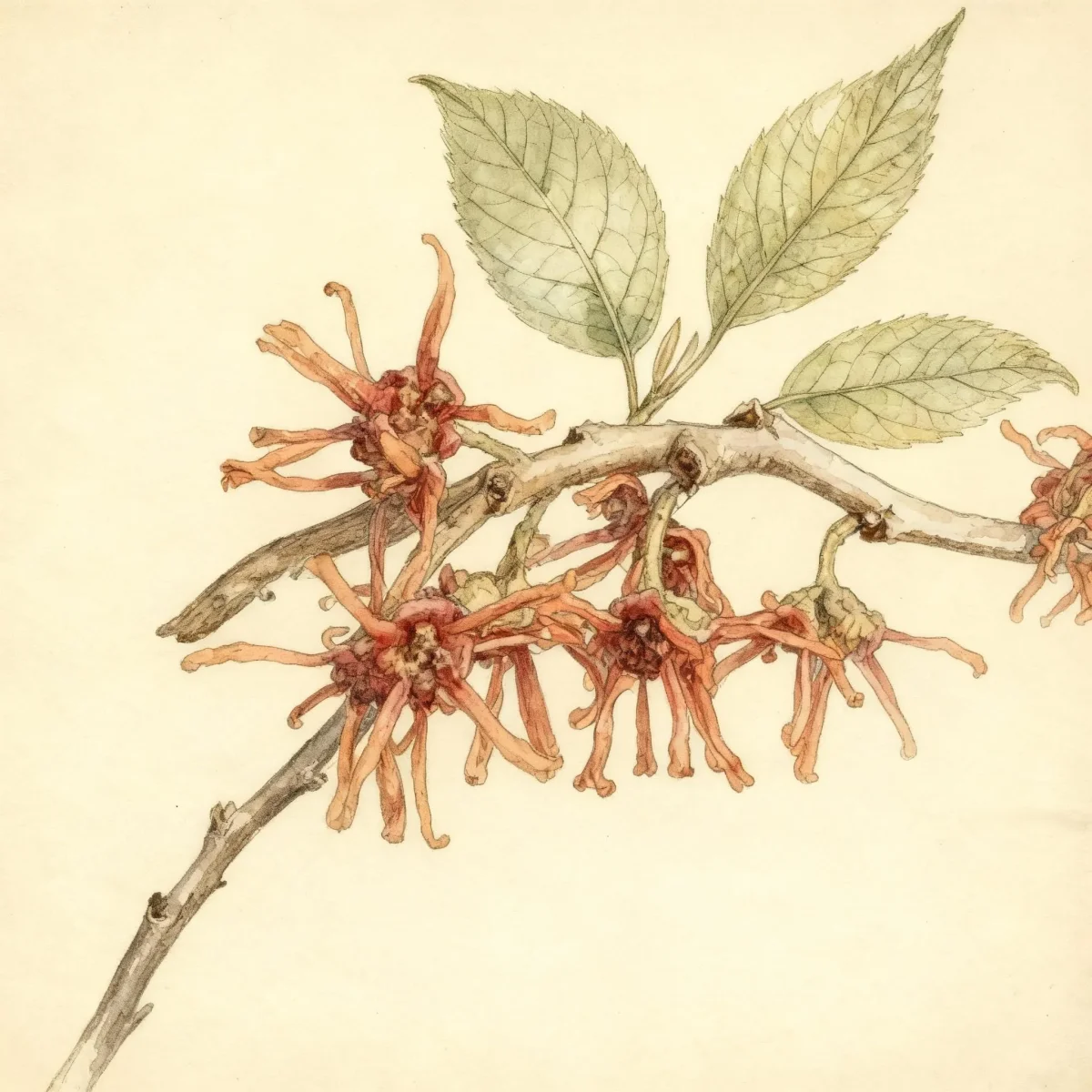
The flowers of Hamamelis vernalis are distinctly fragrant and appear before the leaves emerge, adding essential early structure and subtle beauty to borders or woodland gardens. Furthermore, its bronze-tinted spring foliage transitions to solid green, finishing the season with reliable golden yellow fall color.
Fast Facts
- Plant Family: Hamamelidaceae
- Plant Type: Deciduous shrub
- Native Range: Southern and central United States
- Hardiness Zones: USDA Zones 4-8
- Size at Maturity:
- Height: 6-10 ft
- Spread: 8-15 ft
- Bloom Time: January to April
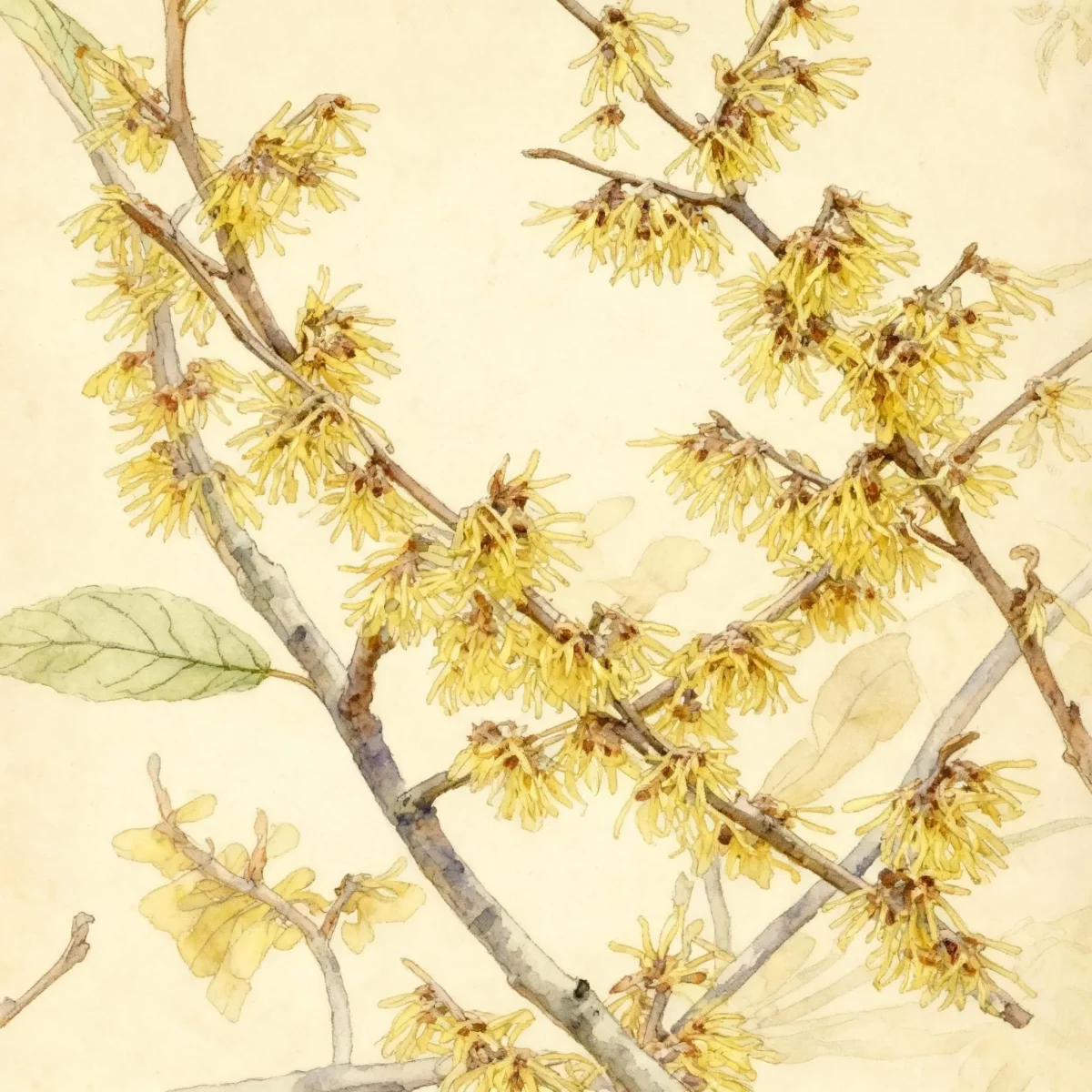
- Bloom Description: Yellow with red inner calyx
- Sun Exposure: Full sun to part shade
- Water Needs: Medium
- Maintenance Level: Low
How to Grow
Plant Hamamelis vernalis best during the dormant season—late fall or early spring—ensuring the site mimics its native habitat. Aim for full sun exposure for the most abundant flowering display, although the shrub tolerates light shade. The ideal soil is medium-moisture, well-drained, acidic, and organically rich. While this shrub shows some tolerance for clay soils, excellent drainage remains paramount to prevent root issues.
Once established, the Ozark witch hazel requires only medium water input, though consistent moisture is preferred, particularly through summer droughts to avoid leaf scorch. Fertilization is rarely necessary if the soil is organically rich. Be aware that Hamamelis vernalis spreads via root suckers; promptly remove any suckers you do not wish to encourage colonial spread.
Pruning should be undertaken selectively in the spring immediately following the termination of the flowering period. This timing ensures any necessary shaping or size control does not remove next year’s flower buds. Monitor for root suckers, especially those growing below a graft union if you have purchased a grafted specimen.
Landscape Uses
The superior winter-flowering characteristic of the Ozark witch hazel makes it invaluable for brightening otherwise bleak landscapes. Use it as a rugged screen or a structural element within shrub borders where its mid-winter display can be fully appreciated. Its ability to form colonies makes it excellent for stabilizing banks, functioning beautifully in a rain garden setting, as suggested by its water needs.
For woodland gardens, this shrub integrates well with evergreens, providing vertical contrast during the winter months. Consider pairing Hamamelis vernalis with other late-season interest plants, such as early spring bulbs, which will emerge just as the witch hazel finishes blooming. It serves effectively as a tall hedge or a dense backdrop specimen.
Standout Features
Flower Qualities
- Showy
- Fragrant
Noteworthy Characteristics
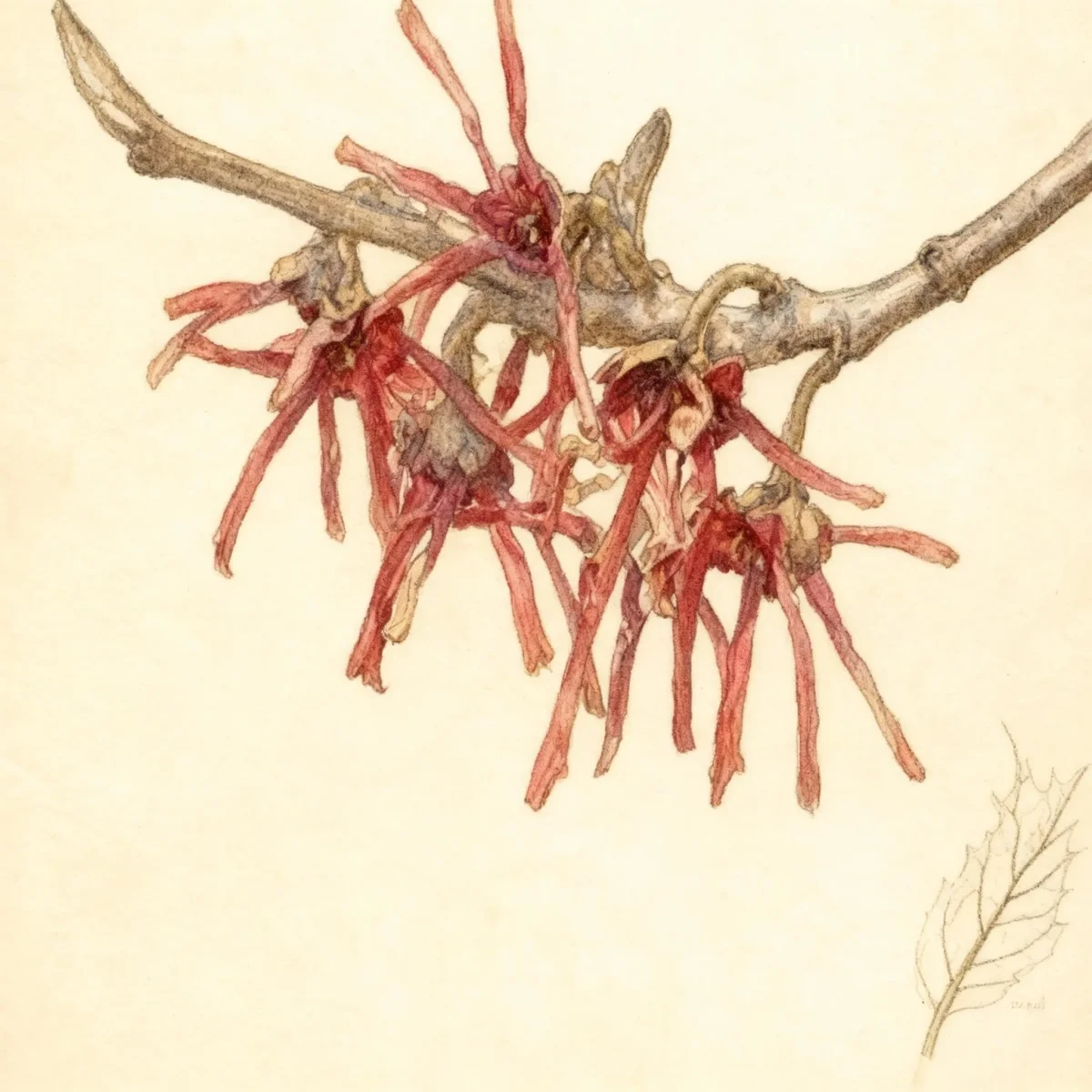
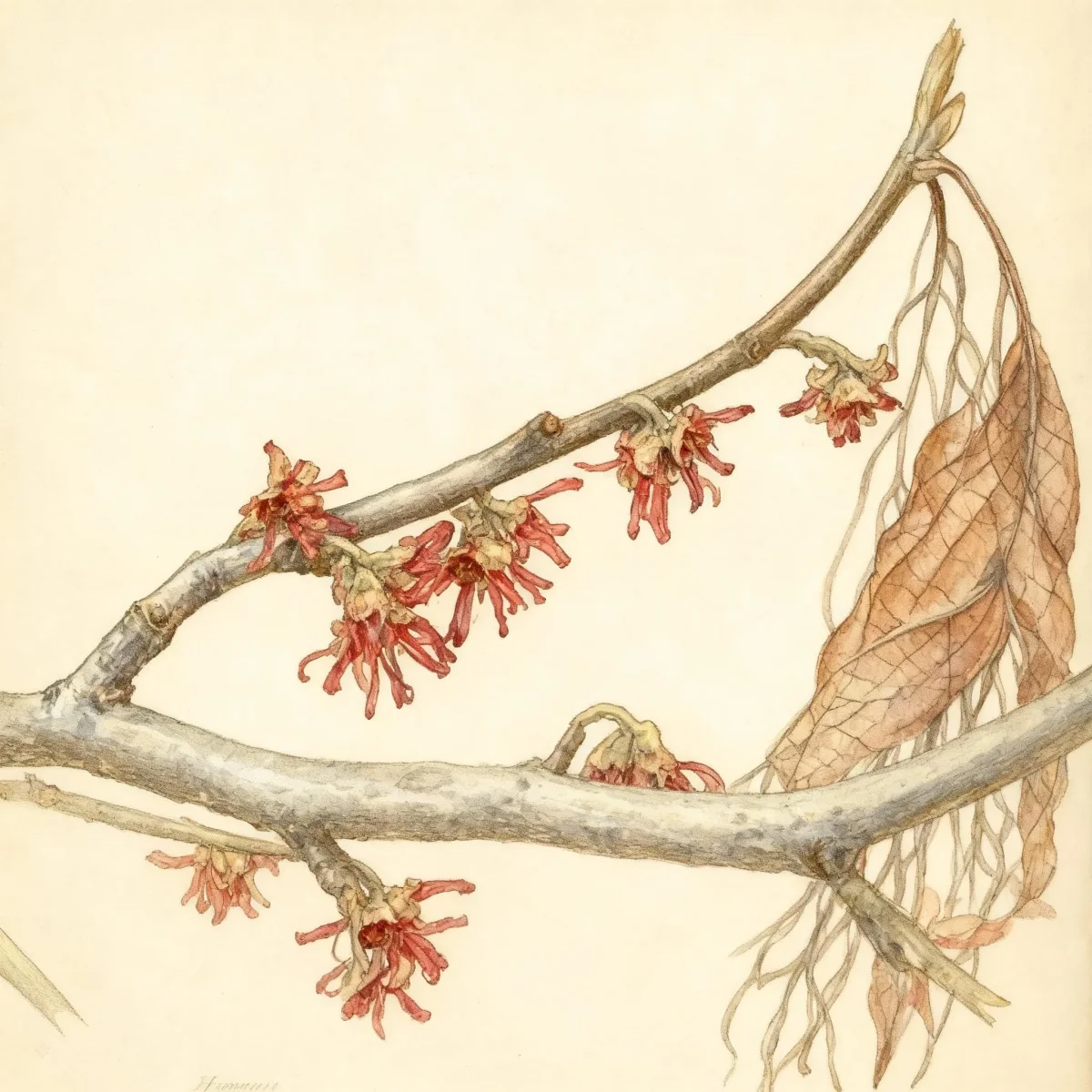
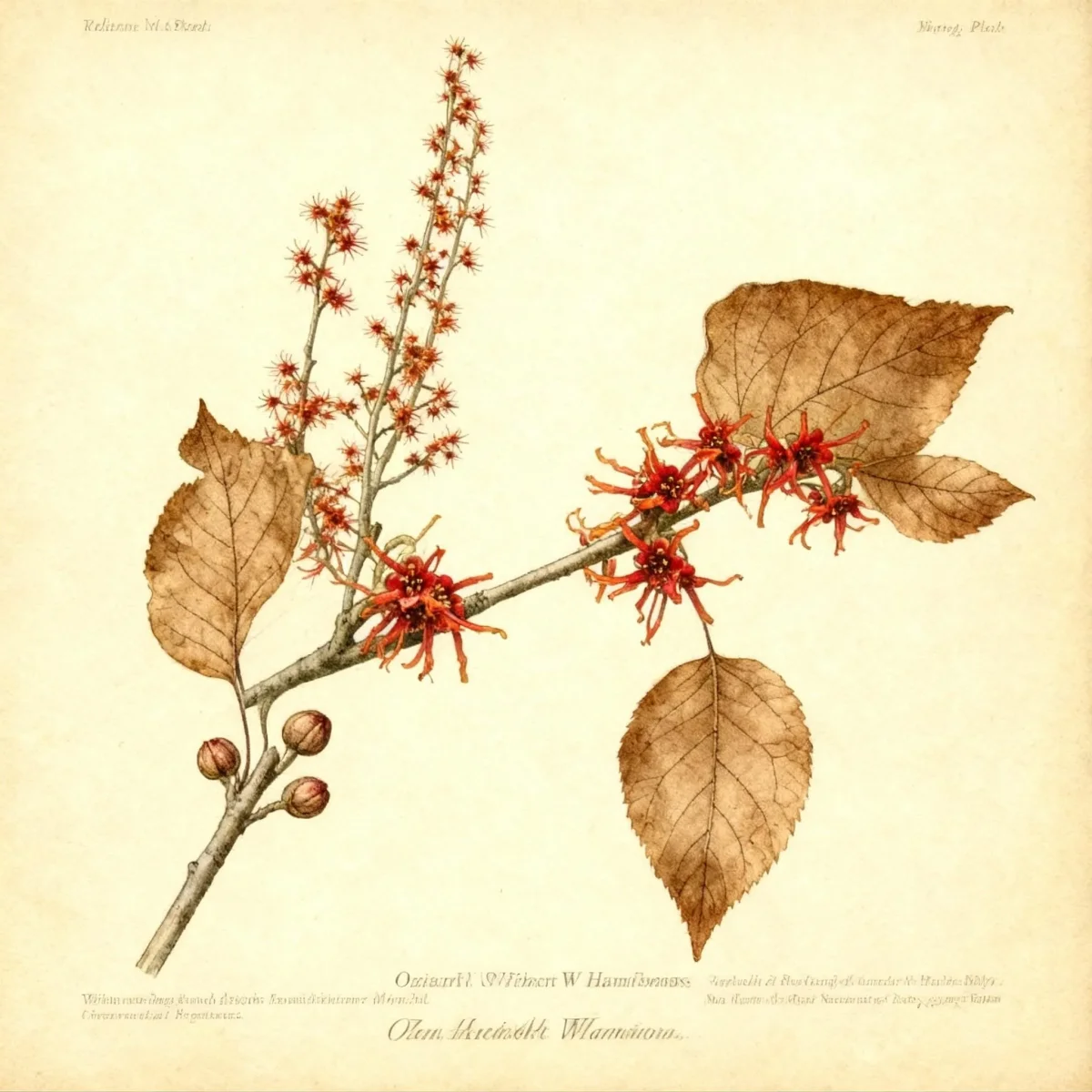
Flowers cluster in axillary groups appearing in mid to late winter before any foliage emerges, exhibiting colors from pale yellow to deep reddish-purple. Each tiny flower features four narrow, ribbon-like petals that crinkle and curl, often transitioning from a red base to a copper-orange tip. The foliage emerges bronze-tinted before maturing to dark green, eventually offering golden yellow fall color.
Tolerances
- Deer
- Erosion
- Clay Soil
Potential Problems
Insect problems for Hamamelis vernalis are typically minor and rarely necessitate chemical intervention. Watch seasonally for caterpillars or Japanese beetles that may chew holes in the foliage, and occasionally for scale insects or leafrollers. Fungal issues like powdery mildew or occasional leaf spots can occur, often signaling poor air circulation or overly wet conditions, though the plant handles medium moisture well.
If problems arise, improve airflow around the shrub and practice good sanitation by removing fallen leaves. Because this plant is notably disease and pest resistant in general, focus cultural improvements on soil drainage and consistent moisture rather than immediate chemical treatments.
Frequently Asked Questions
What hardiness zones is Ozark witch hazel suitable for?
Hamamelis vernalis, or Ozark witch hazel, is best suited for USDA Hardiness Zones 4 through 8.
How large does Hamamelis vernalis grow?
This deciduous shrub typically reaches a mature height between 6 to 10 feet, with a spread ranging from 8 to 15 feet wide.
What sun exposure does Ozark witch hazel need?
For the best flowering performance of its yellow blooms, plant the Ozark witch hazel in full sun. It will tolerate partial shade locations as well.
When does Hamamelis vernalis bloom?
You can expect the fragrant flowers of Hamamelis vernalis to appear between January and April, well before new leaves emerge.
Conclusion
As a low-maintenance plant offering unique winter fragrance and color, the Ozark witch hazel (Hamamelis vernalis) is an indispensable addition to nearly any garden structure. Its multi-season appeal, combined with its tolerance for deer and clay soils, provides significant aesthetic and ecological value. Plan your planting during the dormant season and ensure adequate moisture to fully enjoy the earliest blooms of the year.
Companion Planting
When selecting plants to place near Hamamelis vernalis, consider species that thrive under similar moist, organically rich soil conditions. Early spring ephemerals like snowdrops (Galanthus) or crocuses provide contrasting ground-level early color beneath the emerging shrub structure. For mid-season interest, consider woodland perennials that enjoy dappled light, such as Hellebores or ferns, which appreciate the light shade cast by the maturing shrub canopy.
Design Ideas
Utilize the spreading habit of Ozark witch hazel, commonly known as Ozark witch hazel, to create soft borders in less formal areas of the landscape. Its ability to form colonies makes it perfect for softening the edge between woodland areas and open lawns. Position specimens where their winter flowers are visible from a frequently used window or pathway, maximizing viewing pleasure during January and February.