Horse chestnut (Aesculus hippocastanum)
The majestic Horse chestnut (Aesculus hippocastanum) offers massive shade and striking spring flowers. A large deciduous tree for zones 3-8.
Scroll down to discover growing tips, care requirements, companion plants, and more
Complete Plant Information
Overview
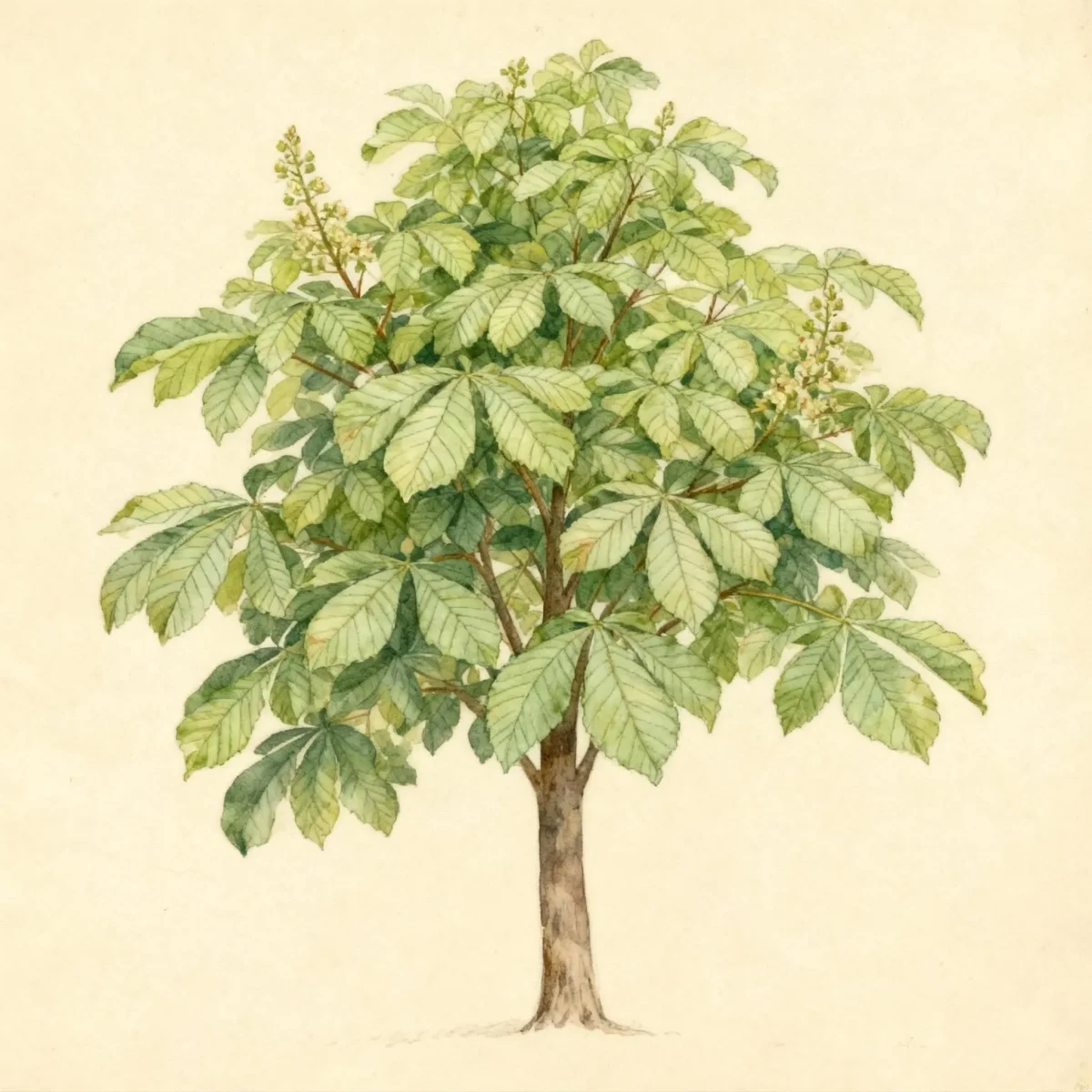
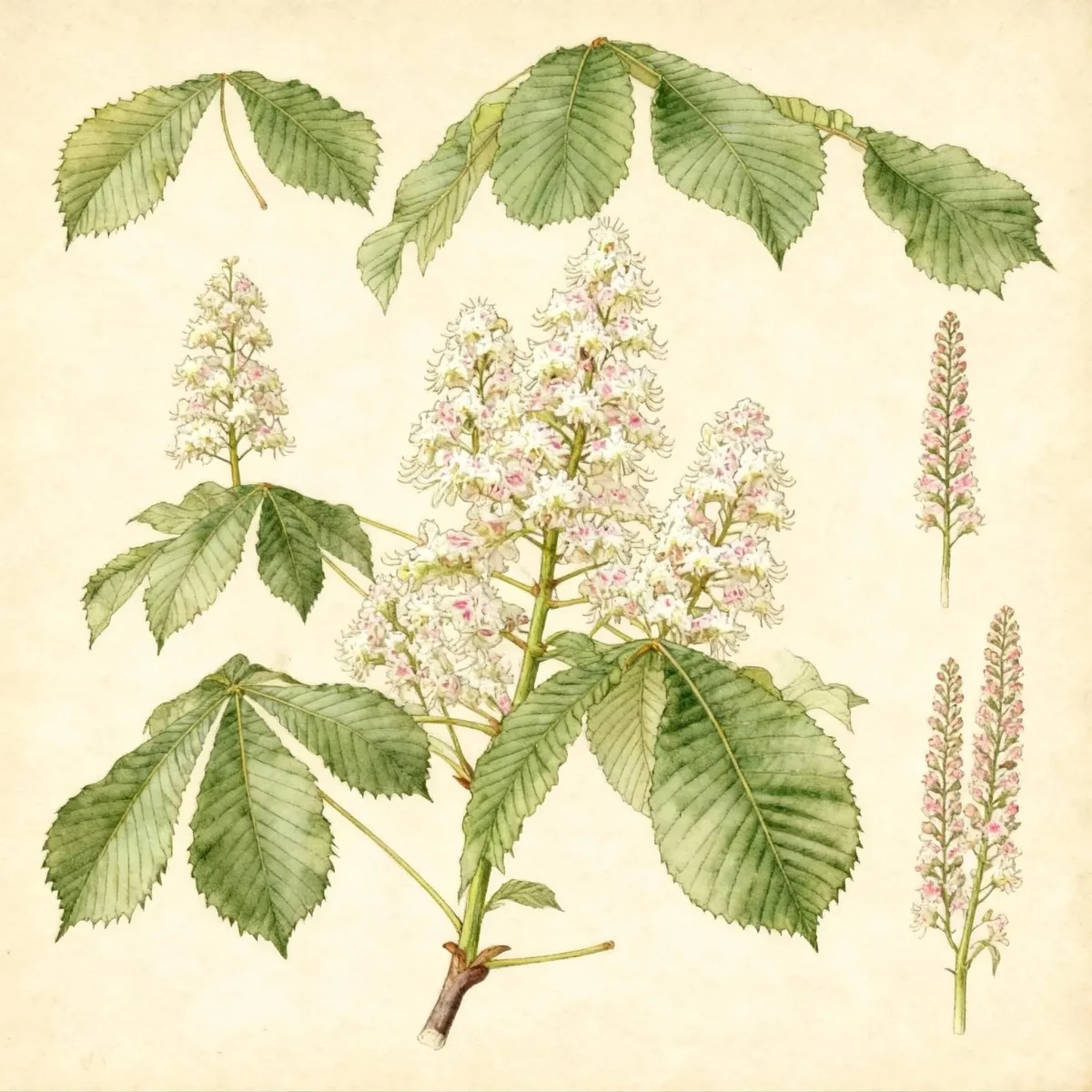
The Horse chestnut, scientifically known as Aesculus hippocastanum, is an imposing, medium to large deciduous tree prized for its substantial stature and impressive spring floral display. Native to Southeastern Europe, this species establishes itself as a dominant feature in the landscape, providing dense shade suitable for expansive properties. Gardeners value its rapid growth and the dramatic, upright panicles of white flowers that punctuate the canopy.
As its common name suggests, Aesculus hippocastanum grows into a stately specimen, typically reaching heights between 50 and 75 feet with an equally wide spread. While it offers considerable aesthetic rewards, growers must be aware that the foliage of the Horse chestnut often depreciates or scorches in dry or windy conditions, requiring mindful placement. Once established, utilize this tree where its size can be accommodated, as it develops a strong taproot making it exceptionally difficult to transplant.
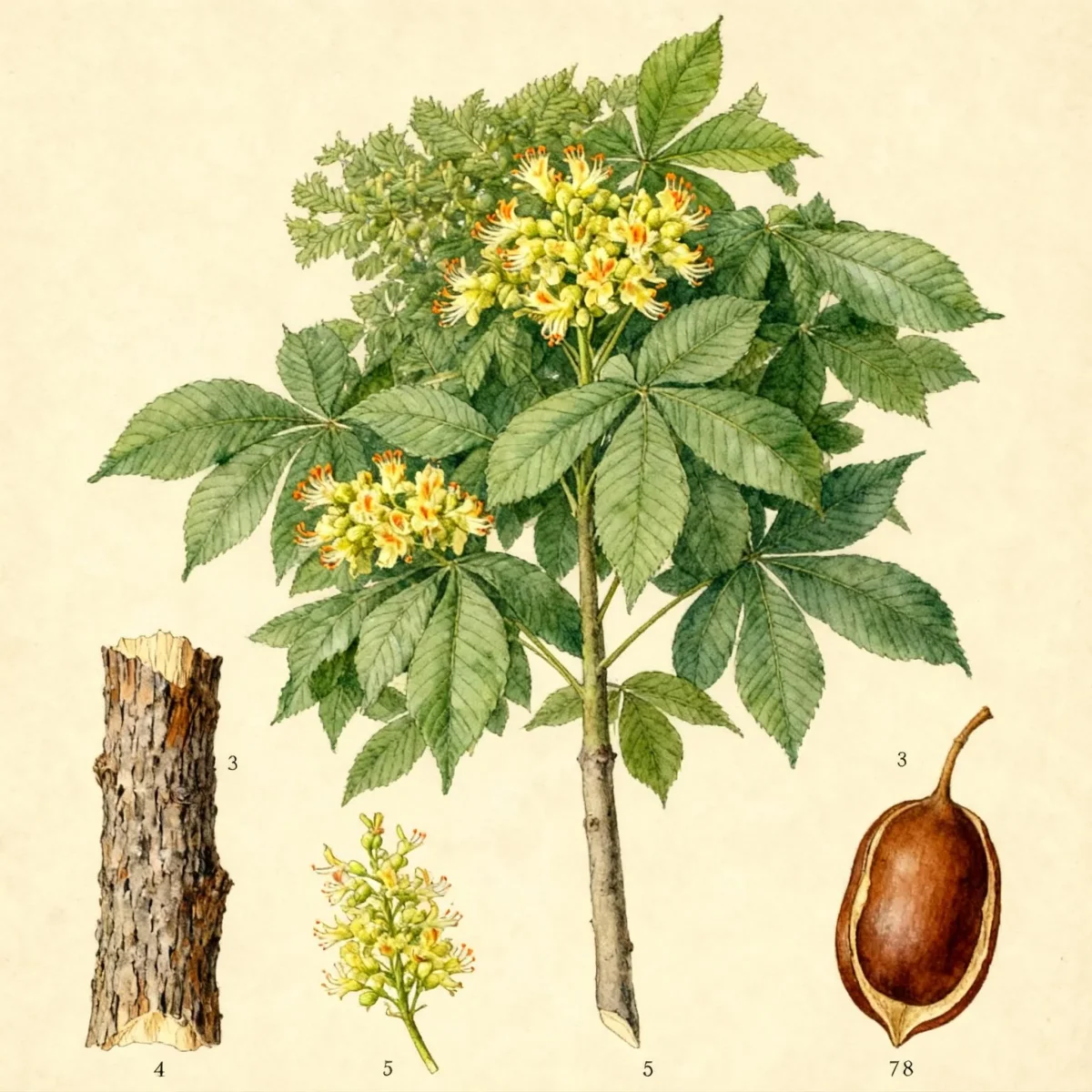
The life cycle culminates in the production of large, inedible, and poisonous nuts encased in spiny husks, which offer seasonal interest but require cleanup beneath the mature tree. For large park settings or vast lawns, the visual impact of a mature Aesculus hippocastanum provides unmatched architectural structure throughout the growing season.
Fast Facts
- Plant Family: Sapindaceae
- Plant Type: Tree
- Native Range: Southeastern Europe
- Hardiness Zones: USDA Zones 3-8
- Size at Maturity:
- Height: 50-75 ft
- Spread: 40-65 ft
- Bloom Time: May
- Bloom Description: White with red or yellow markings
- Sun Exposure: Full sun to part shade
- Water Needs: Medium
- Maintenance Level: Medium
How to Grow
The best time to plant a young Horse chestnut is during the dormant season, typically in early spring or late fall, ensuring the establishment period coincides with cooler, moister weather. Aesculus hippocastanum thrives in average, medium, well-drained soils but truly excels when positioned in moist, fertile locations. Full sun exposure encourages the best growth and flowering, though it can tolerate part shade.
Consistent moisture is key; provide medium water needs, especially throughout the first few years until the strong taproot anchors the tree firmly. Fertilization is generally unnecessary if the soil is reasonably fertile. Pruning should be limited primarily to removing damaged or crossing branches when the tree is young. Avoid heavy pruning on established specimens, as large wounds heal slowly.
Be observant concerning environmental stressors. Foliage of the Horse chestnut is susceptible to scorching, resulting in brown leaf edges, particularly during summer droughts or when planted in hot, exposed sites that lack adequate soil moisture. Due to its deep taproot system, remember that transplanting a mature Aesculus hippocastanum is extremely challenging, so site selection is a permanent decision.
Landscape Uses
The primary value for a large deciduous tree like the Horse chestnut lies in its capacity as a grand Shade Tree. Its dense, rounded crown offers extensive cooling umbrella coverage perfect for shading large lawns, open park spaces, or expansive residential properties where space is not limited. While it is historically noted as being widely planted as a Street Tree in some regions, current environmental stresses, particularly foliar diseases and scorching, somewhat limit its dependability in harsh urban corridors.
When integrating Aesculus hippocastanum into a formal landscape, its massive scale demands isolation. Avoid planting near buildings or utility lines due to its impressive spread potential of 40 to 65 feet. Consider companion planting with robust, deep-rooted understory shrubs or perennials that can tolerate the deep shade created beneath the canopy once the tree matures, though few plants survive the dense litter and moisture competition near the trunk flare.
For large estates or arboreta, the sheer visual authority of the flowering Horse chestnut in May makes it an outstanding specimen planting. Its size demands a long-term vision, reserving it for landscapes where its eventual dominance will be an intentional design feature rather than an obstruction.
Standout Features
Flower Qualities
- Showy
Fruit Qualities
- Showy
Noteworthy Characteristics
Aesculus hippocastanum, commonly called horsechestnut, is native to the Balkans. It is a medium to large deciduous tree that typically grows 50-75’ tall with an upright oval-rounded crown. Light green palmate compound leaves emerge in spring, each with 7 (less frequently 5) spreading ovate-oblong leaflets to 4-10” long. Fruit on the tree is interesting but not particularly ornamental. Horsechestnuts and buckeyes (Aesculus) are in the soapberry family (Sapindaceae) and produce poisonous nuts.
Tolerances
- Rabbit
Potential Problems
The most persistent issue facing the Horse chestnut is foliar disease; leaf blotch can become a significant problem, often appearing mid-summer. Powdery mildew and anthracnose are also frequent fungal issues that detract from the summer appearance of the canopy. Cultivators should also watch for occasional but potentially troublesome insect pests, including bagworms, Japanese beetles, and borers. Prevention focuses on good air circulation and ensuring the tree receives adequate water during dry periods to minimize leaf scorch (brown edges) caused by drought stress or wind exposure.
Frequently Asked Questions
What hardiness zones is Aesculus hippocastanum suitable for?
The Horse chestnut, Aesculus hippocastanum, is suitable for cultivation in USDA Hardiness Zones 3 through 8.
How large does Horse chestnut grow?
This large tree typically matures to a height between 50 and 75 feet, with a corresponding spread ranging from 40 to 65 feet.
When does Aesculus hippocastanum bloom?
Bloom time for the spectacular flowers of Aesculus hippocastanum occurs in May, displaying striking white blossoms marked with red or yellow centers.
What sun exposure does Horse chestnut need?
This species performs best when situated in full sun, although it can tolerate partial shade conditions.
Conclusion
The Aesculus hippocastanum, or Horse chestnut, offers unmatched scale and magnificent white spring flowers, making it a powerhouse specimen tree for large properties needing significant shade. While acknowledging its susceptibility to leaf diseases and scorching, proper siting in moist, fertile soil is crucial for success. Before planting this imposing tree, confirm that your landscape has the space and resources to support this magnificent addition for decades to come.
Companion Planting
Selecting companions for Aesculus hippocastanum requires consideration of the deep shade it casts and its aggressive root structure beneath the canopy. Focus on shade-tolerant plants that enjoy rich, well-drained soil. Hosta varieties are excellent groundcover choices, providing texture contrast to the large palmate leaves of the horsechestnut. Consider planting ferns, such as Japanese Painted Fern, along the periphery of the drip line where moisture levels remain adequate, ensuring no competition occurs near the critical root zone when the tree is young.
Seasonal Care Calendar
Spring is focused on monitoring new leaf-out for the earliest signs of disease or pest activity; treat promptly if identified, as early defense is critical for keeping foliage healthy. Summer care for the Horse chestnut must emphasize consistent watering, particularly during dry spells, to prevent leaf scorch, which is often triggered by drought stress. In the autumn, rake up and dispose of the fallen, spiny fruit capsules and leaves to reduce overwintering disease inoculum, preparing the Aesculus hippocastanum for dormancy.