Prairie blue-eyed grass (Sisyrinchium campestre)
Discover Prairie blue-eyed grass (Sisyrinchium campestre), a low-maintenance native perennial with delicate pale blue to white spring flowers.
Scroll down to discover growing tips, care requirements, companion plants, and more
Complete Plant Information
Overview
Prairie blue-eyed grass, scientifically known as Sisyrinchium campestre, is a charming, clump-forming perennial highly valued for its delicate appearance among native flora. Despite its common name, it belongs to the Iris family, Irridaceae, distinguished by its narrow, grass-like foliage and striking, short-lived spring blooms. This species brings subtle color to the landscape between April and June.
Native to Central North America, Sisyrinchium campestre thrives in open woods, glades, and prairies, exhibiting a low-maintenance nature once established. Its small stature makes Sisyrinchium campestre perfect for areas where taller plantings would overwhelm the view, such as rock gardens or border fronts.
Gardeners appreciate the low cultural demands of Prairie blue-eyed grass. It offers an excellent texture contrasting with broader-leaved perennials while requiring minimal intervention through the growing season. It is an ideal candidate for creating naturalized drifts within an informal garden setting.
Fast Facts
- Plant Family: Iridaceae
- Plant Type: Herbaceous perennial
- Native Range: Central North America
- Hardiness Zones: USDA Zones 2-8
- Size at Maturity:
- Height: 0.5-1 ft
- Spread: 0.25-0.5 ft
- Bloom Time: April to June
- Bloom Description: Pale blue to white
- Sun Exposure: Full sun
- Water Needs: Medium
- Maintenance Level: Low
How to Grow
Sisyrinchium campestre prefers medium moisture and well-drained soil conditions for optimal growth, requiring placement in full sun exposures. While it tolerates light shade, maximum flowering occurs with consistent, direct sunlight. Planting should occur when soil temperatures are appropriate for spring establishment, ensuring the soil does not completely dry out during the growing season.
Watering should be consistent to maintain medium moisture levels; however, excellent drainage is critical to prevent root issues common in the Iris family. Fertilization is rarely required; focus instead on amending the soil with compost at planting time to improve structure. Plants may need division every two to three years to maintain vigor, as clumps can become overcrowded.
To effectively manage reseeding, plantings of Prairie blue-eyed grass can be sheared back promptly after the flowering period concludes. This practice tidies the foliage for the remainder of the season and prevents unwanted seedlings from establishing in cracks or between intended garden elements.
Landscape Uses
The fine texture and diminutive size of Prairie blue-eyed grass make it exceptionally versatile. It is best naturalized in informal settings, providing excellent aesthetic value in cottage gardens, woodland edges, or dedicated native plant areas that mimic its natural prairie habitat.
Use Sisyrinchium campestre effectively along border fronts where its low stature won’t obscure taller neighbors, or incorporate it into rock gardens to soften stone edges. Its neat, clumping habit also makes it highly functional as a subtle edger defining paths or walkways without creating an overly formal barrier.
Consider companion planting this species with other low-growing spring ephemerals or native woodland plants that share similar moisture needs, ensuring year-round companion interest even after the main bloom of the blue-eyed grass has passed.
Standout Features
Flower Qualities
- Showy
Noteworthy Characteristics
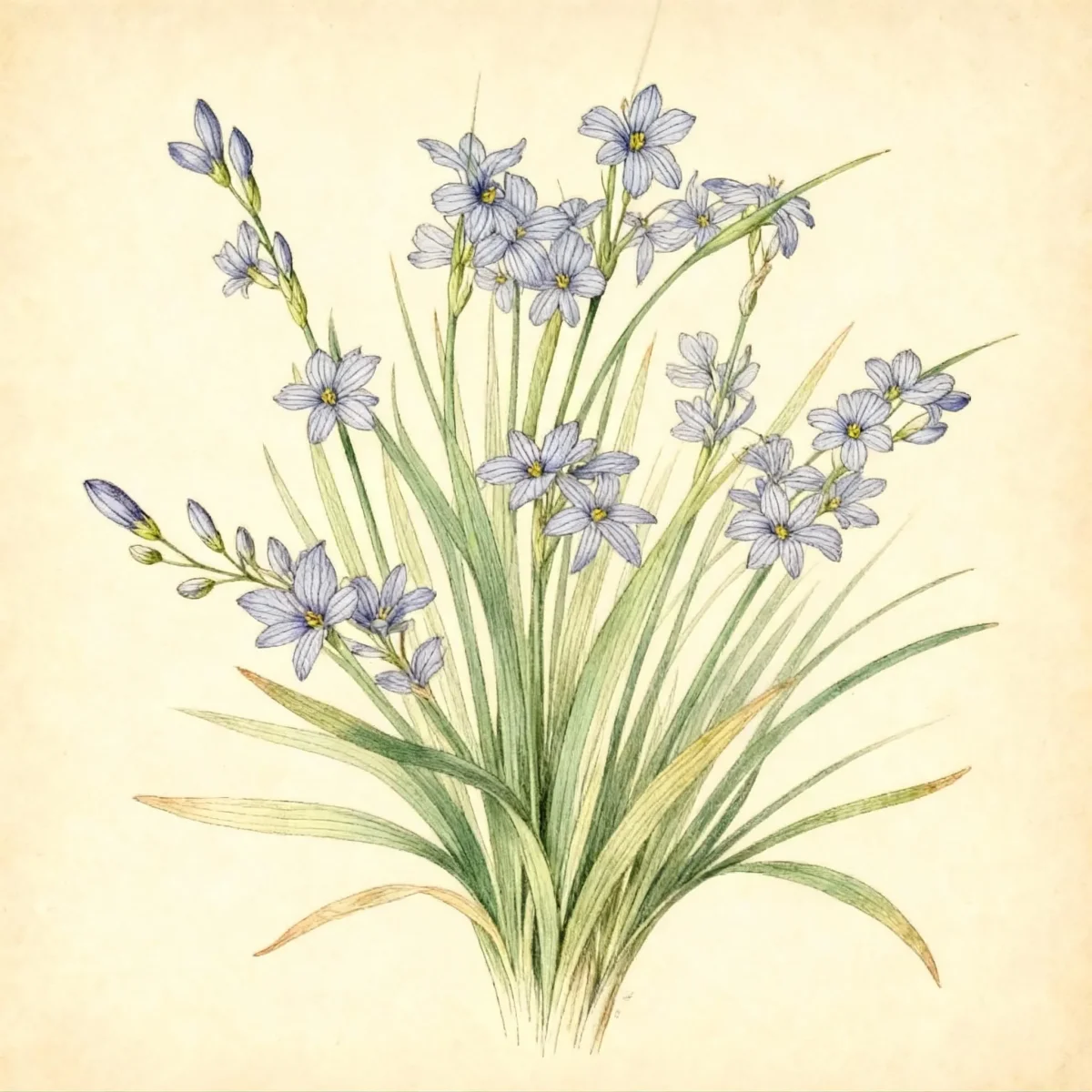
Sisyrinchium campestre is noted for its pale blue to white flowers and unbranched flowering stems, setting it apart from similar species like S. angustifolium. This clump-forming perennial features a tuft of narrow, grass-like leaves typically reaching 6 inches tall, topped by clusters of flowers (to 1/2” across) with a distinct yellow eye. Though its foliage resembles grass, it is botanically a member of the iris family.
Tolerances
There is no data available regarding specific listed tolerances.
Potential Problems
This plant is generally noted for having no serious insect or disease problems when grown in appropriate conditions. Good air circulation and avoiding overly wet winter soil are key preventative measures. If foliage becomes untidy late in the season, shearing the plant back lightly after bloom will encourage fresh, manageable growth.
Frequently Asked Questions
What hardiness zones is Prairie blue-eyed grass suitable for?
Sisyrinchium campestre is highly adaptable, thriving in USDA Zones 2 through 8, making it suitable for gardens across much of the northern and central United States.
How large does Prairie blue-eyed grass grow?
This perennial typically reaches a modest height of 0.5 to 1 foot tall, with a spread ranging from 0.25 to 0.5 feet wide, forming neat, tight clumps.
When does Prairie blue-eyed grass bloom?
The delicate blooms of Sisyrinchium campestre, which are pale blue to white, generally appear early in the season, from April into June.
What sun exposure does Prairie blue-eyed grass need?
For best flowering and overall health, aim to plant Prairie blue-eyed grass in a location receiving full sun, although it can tolerate short periods of light shade.
Conclusion
The dependable performance and charming spring flowers of Sisyrinchium campestre confirm its value in native and informal landscapes. This low-maintenance Prairie blue-eyed grass provides essential early color and fine texture. Ensure you check your local hardiness zone compatibility before planning your spring planting schedule.
Companion Planting
When selecting companions for Sisyrinchium campestre, focus on other area natives that enjoy well-drained soil but might offer blooms later in the season, extending garden interest past June. Good partners include certain low-growing Alliums or delicate spring woodland phlox, provided they do not aggressively outcompete the grass-like foliage. Avoid aggressive groundcovers that might smother the small clumps of Prairie blue-eyed grass.
Propagation Tips
The simplest method for increasing your stand of Sisyrinchium campestre is through division. Since the desirable clumping habit may need revitalizing every few years, lift and divide established clumps during their dormant period or early spring before active growth begins. Additionally, the species will freely self-seed in ideal conditions, allowing natural recruitment to expand informal groupings rapidly.