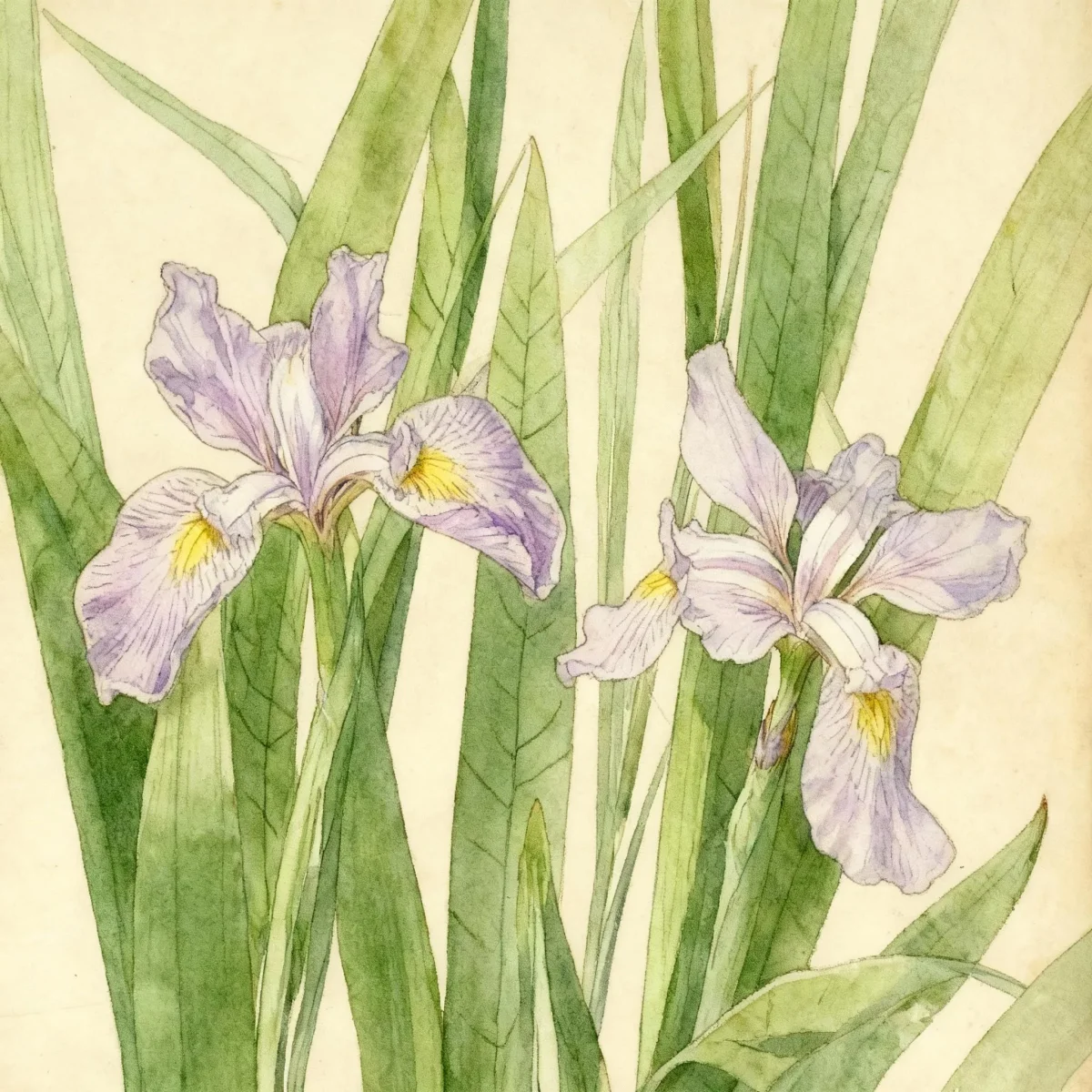
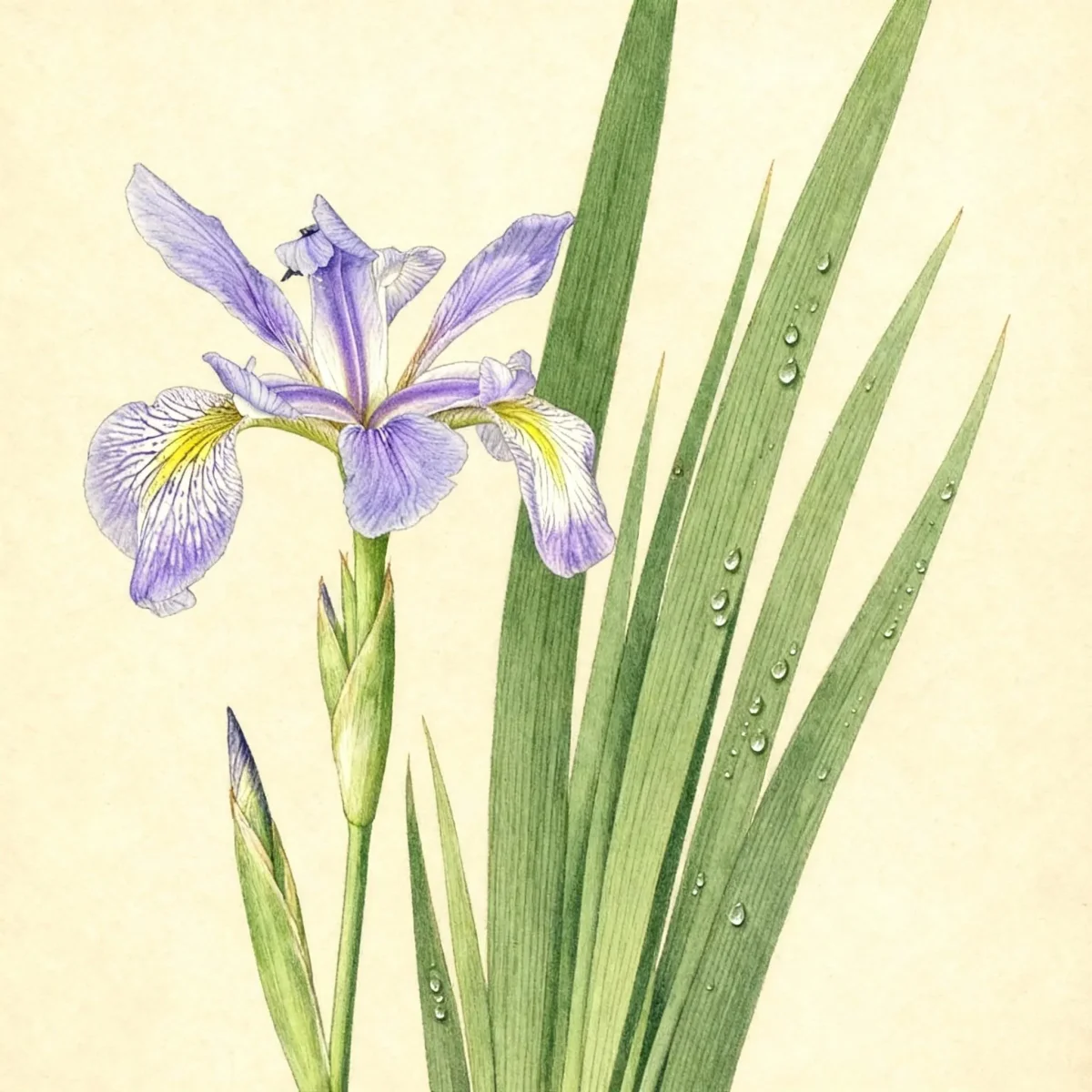
Southern blue flag (Iris virginica)
Discover the elegant Iris virginica, Southern blue flag, an herbaceous perennial thriving in wet soils with showy violet-blue blooms.
Scroll down to discover growing tips, care requirements, companion plants, and more
Complete Plant Information
Overview
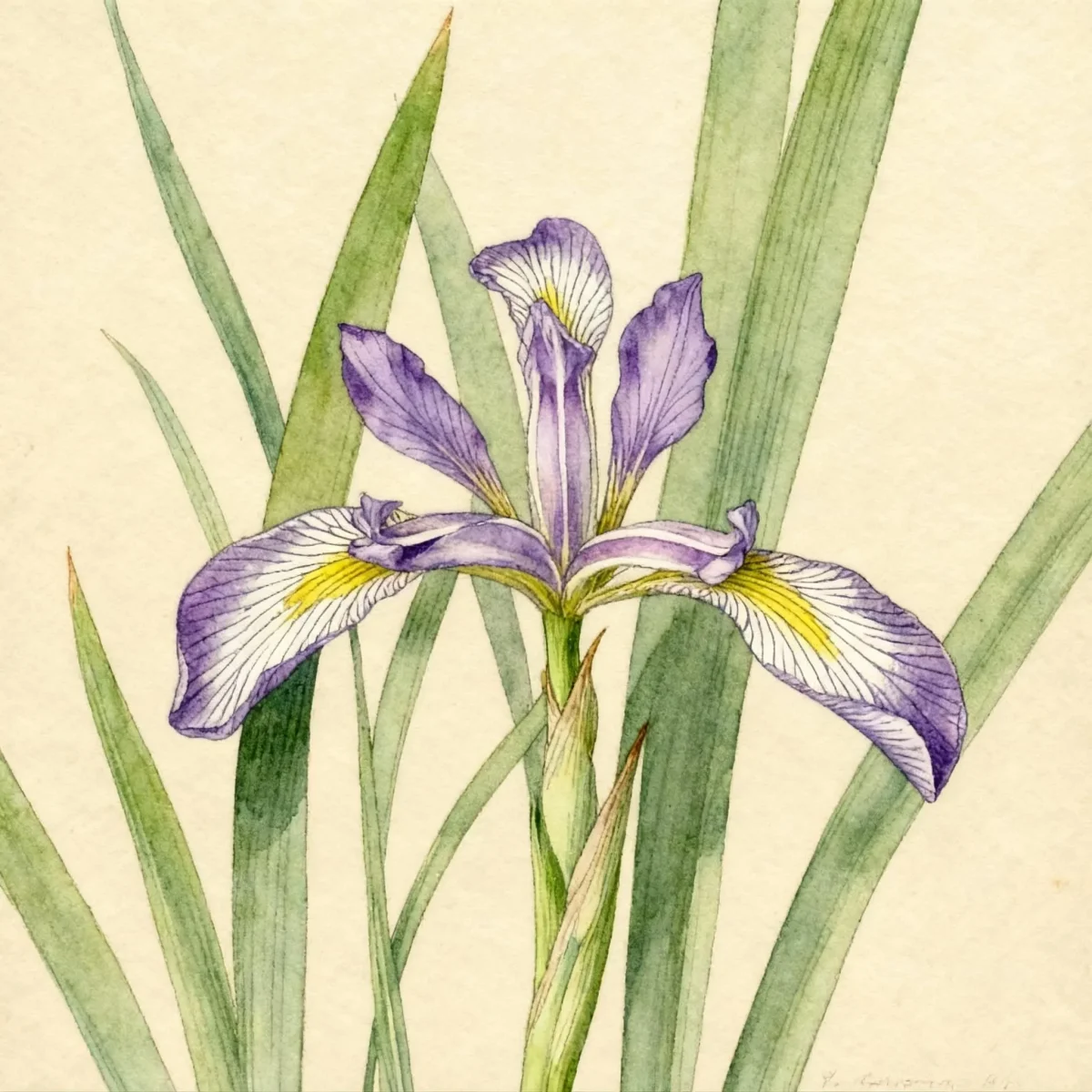
The Southern blue flag, scientifically known as Iris virginica, is a stunning herbaceous perennial prized for its adaptability, particularly in consistently moist environments. Its vibrant violet-blue flowers, elegantly marked with yellow and white crests on the falls, provide exceptional late-spring color interest in the landscape. Iris virginica is native to wetlands across the eastern United States, making it an essential choice for water gardens and rain-saturated areas where many other border plants fail.
This plant establishes slowly, forming colonies over time via creeping rhizomes, offering a naturalized look once established. While it prefers boggy, acidic conditions, the Southern blue flag performs admirably even in average garden soils, provided they are kept moist. Its striking vertical foliage and colorful blooms contribute significant texture and height, reaching up to three feet tall.
Gardeners appreciate Iris virginica for its low maintenance requirements and deer resistance. For the best display of the Southern blue flag, site it where it receives plenty of sun and consistent moisture, ensuring dramatic color near ponds, streams, or in specialized rain gardens.
Fast Facts
- Plant Family: Iridaceae
- Plant Type: Herbaceous perennial
- Native Range: United States
- Hardiness Zones: USDA Zones 5-9
- Size at Maturity:
- Height: 1-3 ft
- Spread: 1-3 ft
- Bloom Time: June
- Bloom Description: Violet blue with yellow and white crested falls
- Sun Exposure: Full sun
- Water Needs: Medium to wet
- Maintenance Level: Low
How to Grow
For optimal success with Iris virginica, plant in the spring or fall when temperatures are moderate. The ideal location mimics its native habitat: wet, boggy, acidic, and sandy soils situated in full sun. However, this adaptable Southern blue flag also performs well in average garden plots that receive consistent moisture. If planting near water, it can tolerate standing water up to six inches deep.
Watering during the first growing season is crucial to establish a deep root system; ensure the soil never dries out completely. Fertilizing is rarely necessary in rich, wet soils. If growing in leaner conditions, use a balanced, low-nitrogen fertilizer sparingly in early spring. Although it tolerates light shade, excessive shade can reduce flowering.
After blooming concludes, trim back the foliage if it becomes unattractive, although the sword-shaped leaves often remain attractive through summer. Clumps of Iris virginica will slowly spread via creeping rhizomes. You should plan to divide overcrowded colonies every three to five years in early fall to maintain vigor and improve air circulation.
Landscape Uses
The unique preference of Iris virginica for moisture makes it invaluable in water gardens, along pond margins, and beside slow-moving streams. It is an exceptional choice for designated rain gardens, where it naturally manages runoff and provides seasonal drama without demanding supplemental irrigation once established in these low-lying areas. The species also naturalizes beautifully, creating sweeping colonies of blue color in meadows or large border drifts.
When incorporating the Southern blue flag into border designs, pair it with plants that share its love for consistently moist soil, such as cardinal flower (Lobelia cardinalis) or marsh marigold (Caltha palustris). These combinations create lush, textural vignettes that peak simultaneously. Due to its striking upright form, Iris virginica also serves well as a vertical accent plant dotted throughout a wet landscape bed.
Beyond its aesthetic value, the flowers of the Southern blue flag are excellent for fresh-cut arrangements, bringing that wild, native beauty indoors. Historically, Native American tribes utilized the rhizomes for various medicinal purposes, adding a layer of cultural relevance to its use in the modern garden.
Standout Features
Flower Qualities
- Showy
- Good Cut
Noteworthy Characteristics
Iris virginica, commonly called southern blue flag, is native primarily to wetlands, marshes, lake sides, stream banks, and other moist, open areas in the eastern half of the United States and southern Canada. Two varietals are recognized, showcasing its diverse geographical range and adaptation. It typically grows around two feet tall and features non-fragrant violet-blue flowers with falls that are crested with yellow and white.
Tolerances
- Deer
- Wet Soil
Potential Problems
Iris virginica generally suffers from no serious insect or disease problems when grown in its preferred environment. The primary challenge gardeners face is accurately replicating the ideal growing conditions, as optimum performance is tied directly to consistent water availability. Ensure the soil remains wet or at least very moist throughout the active growing season to prevent stress.
If the plant is sited in average, well-drained soil that is allowed to dry out between rains, flowering may become sparse, and growth will be stunted. Proper division when clumps become crowded also helps prevent common fungal issues associated with poor air circulation, though this Iris is relatively tough.
Frequently Asked Questions
What hardiness zones is Southern blue flag suitable for?
The Southern blue flag (Iris virginica) is hardy and capable of thriving across USDA Zones 5 through 9.
How large does Iris virginica grow?
This perennial typically reaches a mature height between 1 and 3 feet, with a similar spread of 1 to 3 feet.
What sun exposure does Iris virginica need?
Iris virginica requires full sun for the best flowering performance, though it can tolerate light shade, especially in the hottest regions of its range.
When does Southern blue flag bloom?
The bloom time for this species is June, when it showcases its signature violet-blue flowers with yellow and white crested falls.
Conclusion
The Southern blue flag, Iris virginica, offers a reliable, low-maintenance splash of color ideal for water margins and consistently damp garden pockets. Its native heritage and tolerance for wet soil make it a superior ecological choice for restoring natural wetland beauty or managing drainage beautifully in the landscape. Before planting, confirm your site conditions match the medium to wet water needs to ensure your Iris virginica provides years of vibrant summer blooms.
Companion Planting
Successful companion planting for Iris virginica centers around sharing its preference for moisture-retentive, even saturated, soils. Look to other wetland natives which coexist beautifully in rain gardens and pond edges without competing aggressively. Good partners include Yellow Flag Iris (Iris pseudacorus), although be aware of its aggressive nature, and native rushes and sedges which provide excellent complementary vertical texture.
Planting these species together enhances the ecological function of the area while creating rich, layered texture. Since this Iris is deer resistant, pairing it with other resilient, moisture-loving plants creates an entire section of the yard that requires minimal intervention once established.
Propagation Tips
The most straightforward way to increase your stock of Iris virginica is through rhizome division. This process should be undertaken in the early fall, shortly after the foliage begins to fade but before the ground freezes hard, to allow the divisions time to establish roots before winter dormancy. Gently lift entire clumps using a digging fork, taking care not to damage the thick rhizomes excessively.
After lifting, slice the rhizome mass into sections, ensuring each new piece contains at least one healthy eye (growth bud) and a strong section of root stock. Allow these divisions a few hours to dry in the shade to callous over slightly. Replant the divisions quickly into prepared, moist soil beds or directly into shallow water at the correct depth, firming the soil around them.