Black walnut (Juglans nigra)
Discover Juglans nigra, the majestic Black walnut, a large deciduous shade tree native to Eastern US woodlands.
Scroll down to discover growing tips, care requirements, companion plants, and more
Complete Plant Information
Overview
The Black walnut (Juglans nigra) stands as a formidable presence in the Eastern United States landscape, renowned for its impressive size and highly valued timber and edible nuts. This large deciduous tree develops an imposing oval to rounded crown, often featuring long, clear trunks ideal for providing expansive shade in large settings. While it requires commitment due to its eventual stature, the long-term rewards—from its distinctively aromatic foliage to its hard-shelled, tasty kernels—make Juglans nigra a significant element in any space capable of accommodating it.
Maturing into a truly grand specimen, this native species is slow to establish but offers exceptional longevity once sited correctly. Its deeply furrowed, dark gray-black bark provides year-round texture while the compound leaves offer a strong, characteristic scent when crushed. Gardeners seeking natural majesty and utility often turn to the Black walnut, provided they are aware of its unique cultural requirements and allelopathic properties.
Fast Facts
- Plant Family: Juglandaceae
- Plant Type: Tree
- Native Range: Eastern United States
- Hardiness Zones: USDA Zones 4-9
- Size at Maturity:
- Height: 75-100 ft
- Spread: 75-100 ft
- Bloom Time: May to June
- Bloom Description: Yellowish-green
- Sun Exposure: Full sun
- Water Needs: Medium
- Maintenance Level: Medium
How to Grow
Establishment is key for the long-lived Juglans nigra. Plant during the dormant season, preferably spring or fall, in a location offering full sun, as this tree is intolerant of shade. The soil should be moist, organically rich, and well-drained; avoid areas where water pools. Be aware that transplanting mature stock is difficult due to the tree’s substantial deep taproot, so starting young is highly recommended.
Routine care for established Black walnut trees is moderate. Provide medium water during establishment, aiming to maintain consistent moisture without waterlogging the roots. Fertilizing is generally unnecessary if the soil is naturally rich. Structural pruning should focus on removing crossing or damaged branches, though maturation often results in a natural clearing of lower limbs.
A crucial consideration for cultivating Juglans nigra is its production of juglone, a chemical toxic to many nearby plants. Place the tree well away from sensitive species like azaleas or tomatoes. While young trees may produce nuts within 4-6 years, large, reliable crops usually require two decades of growth.
Landscape Uses
The Black walnut functions best as a magnificent shade tree in large, open landscapes where its significant spread and height can be fully appreciated. Due to its size and allelopathic influence, it is wholly inappropriate for use as a street tree or in smaller border plantings near sensitive ornamentals. While the nuts are edible and highly prized for baking, gardeners must account for the seasonal mess created when the husks drop in autumn. The wood itself is historically invaluable, historically sought after for fine furniture and gunstocks, which has impacted native populations.
When designing with Juglans nigra, select companions that thrive in similar conditions and are resistant to juglone toxicity. Consider planting hardy native grasses or robust, juglone-tolerant perimeter shrubs to define its outer edge without suffering decline. Its structure commands attention, making it a central feature specimen rather than filler planting stock.
Standout Features
Flower Qualities
- Insignificant
Fruit Qualities
- Showy
- Edible
Noteworthy Characteristics
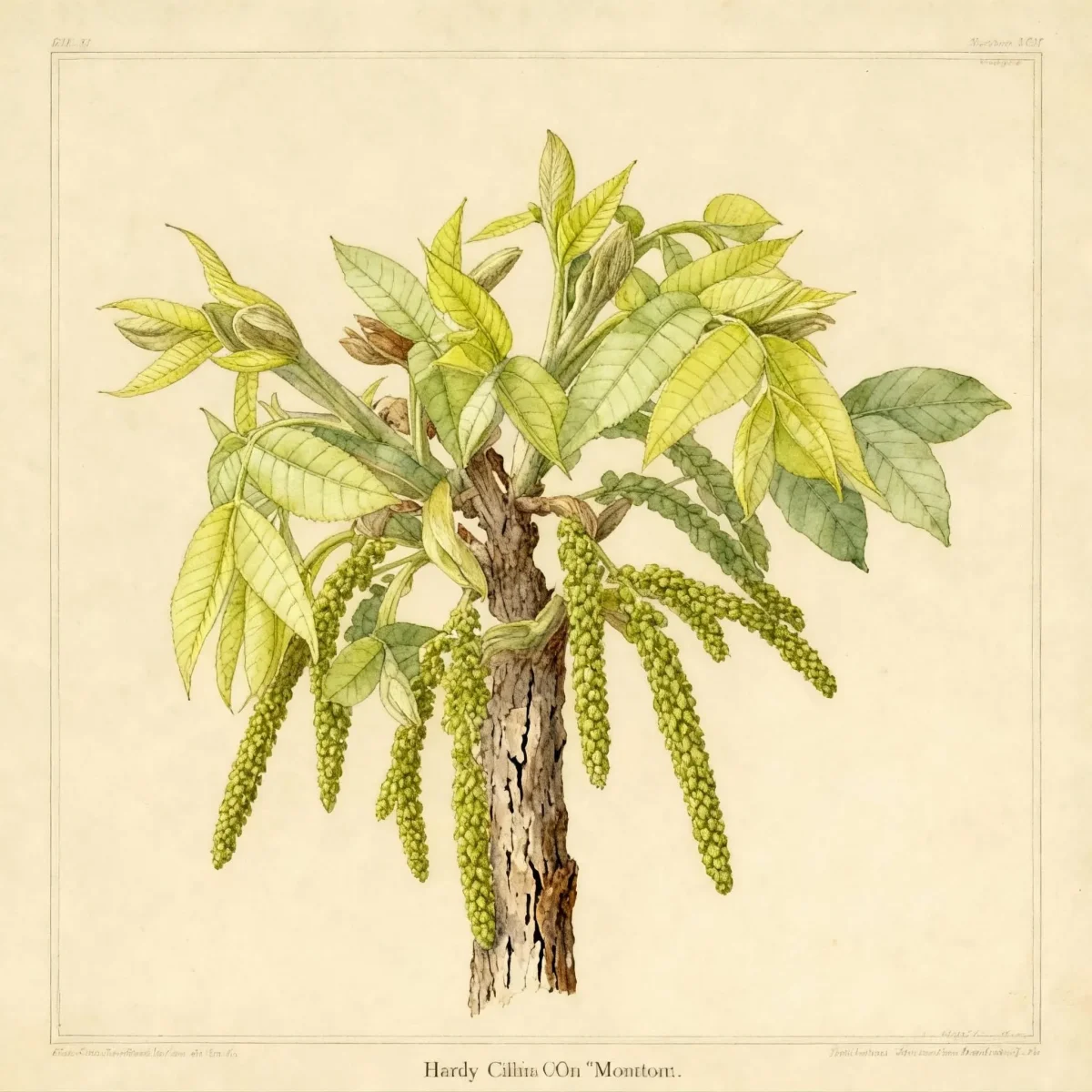
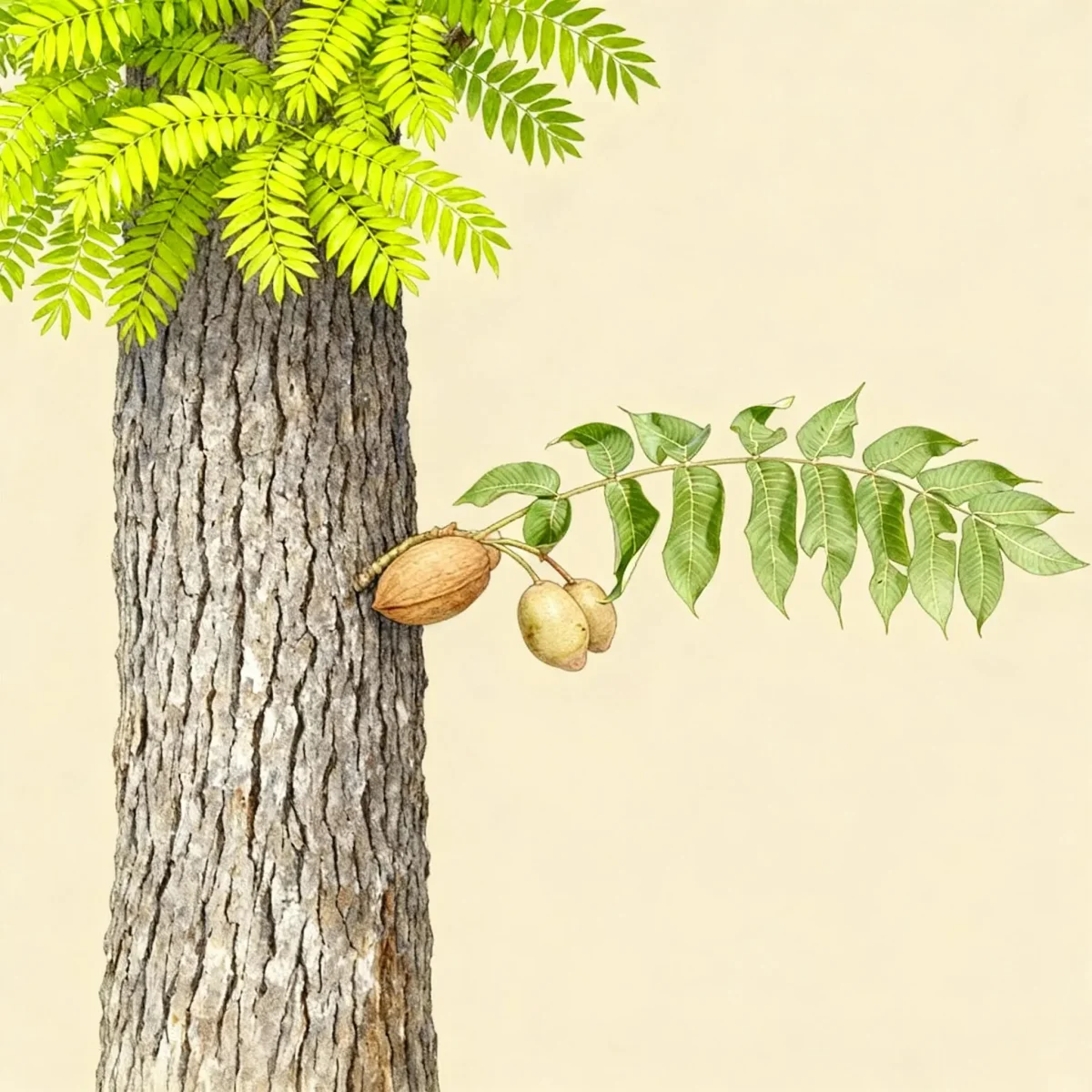
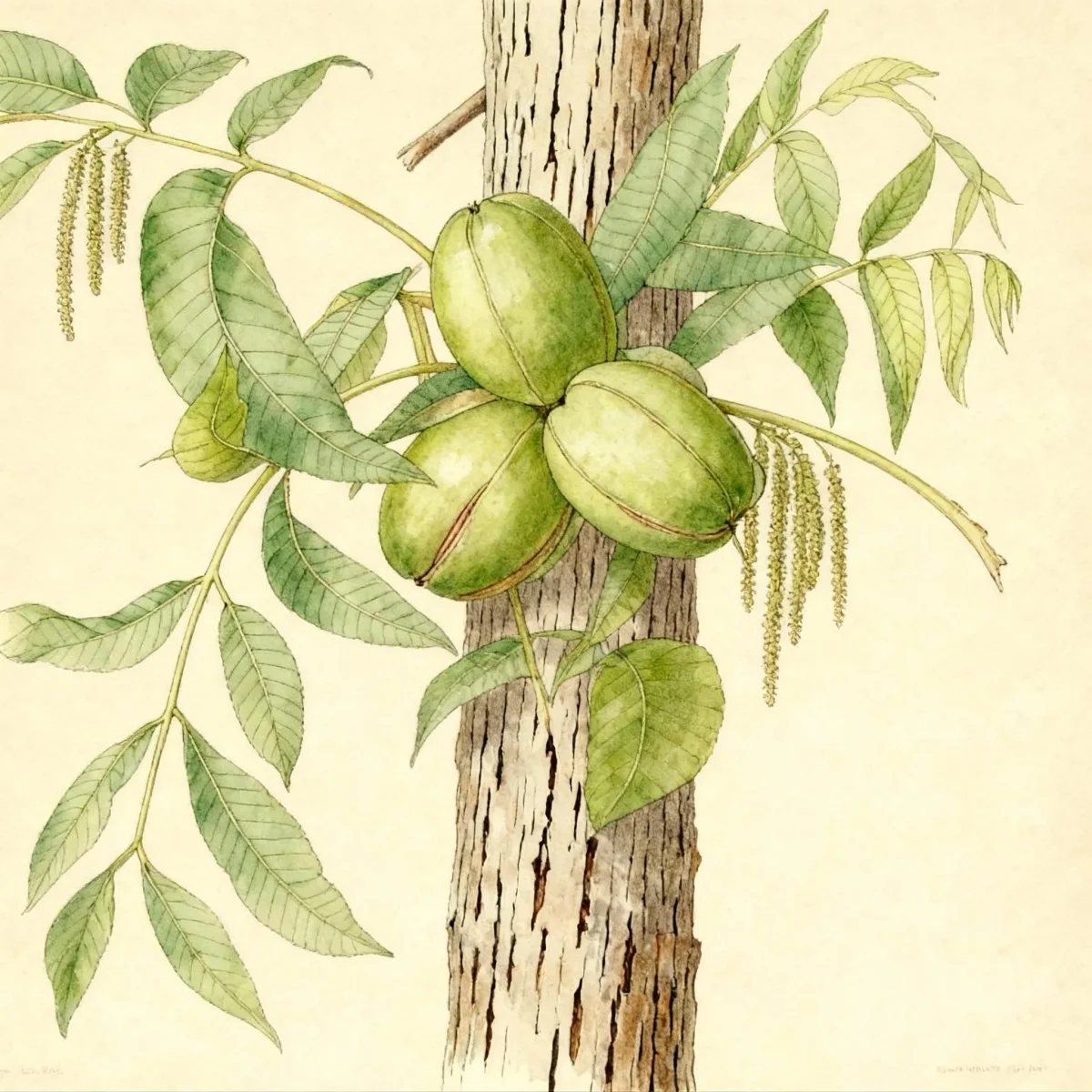
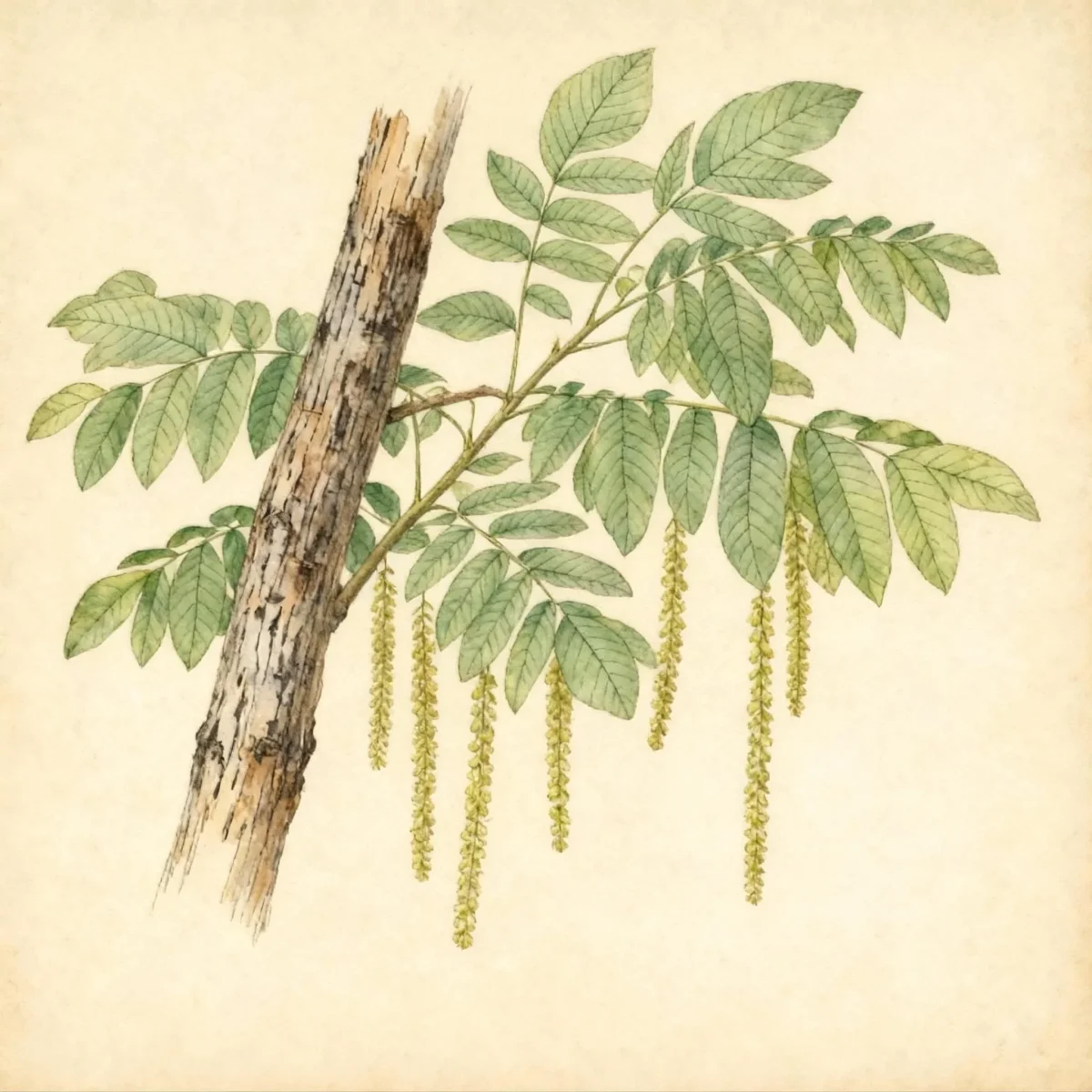
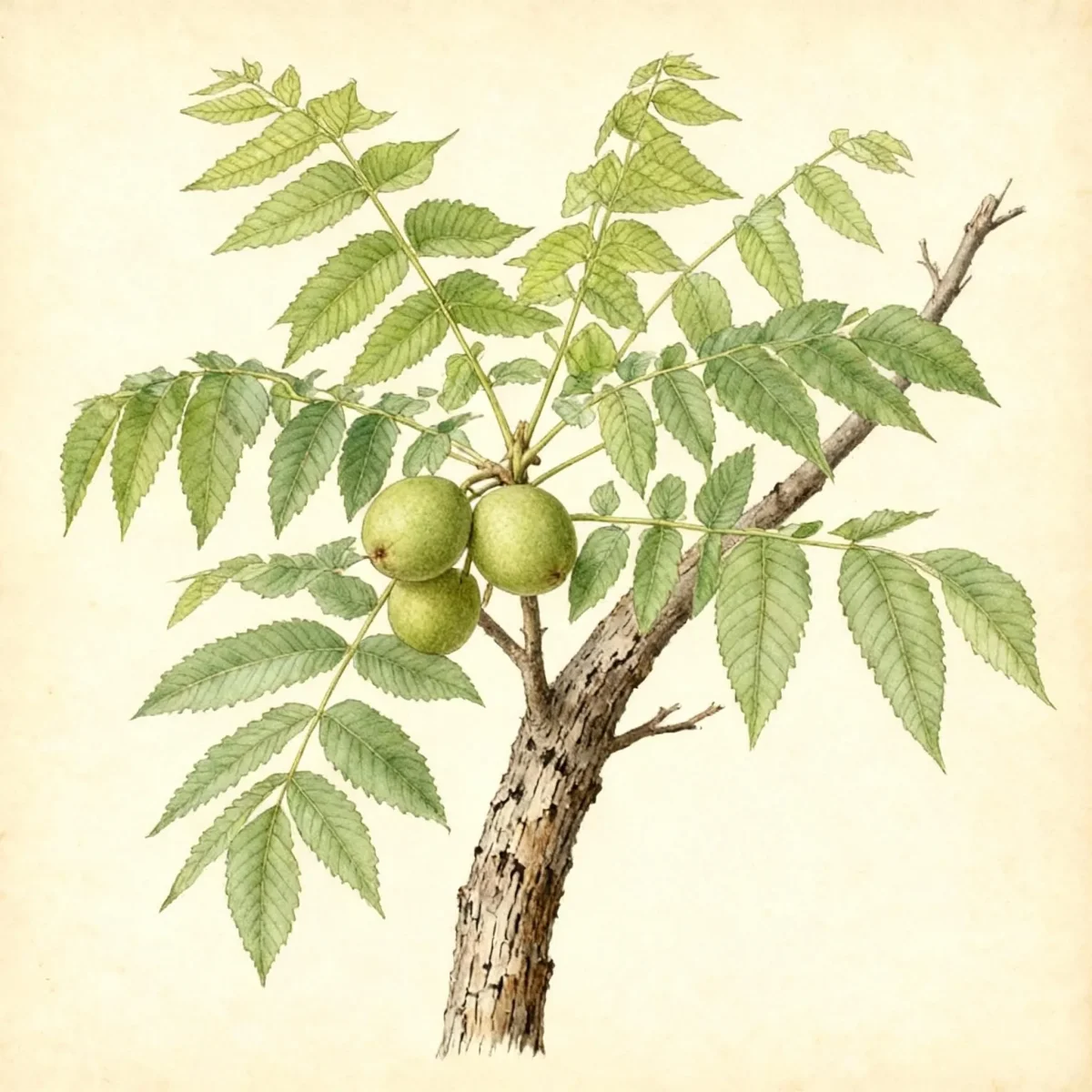
Juglans nigra, commonly called black walnut, is a large deciduous tree typically growing 75-100’ tall with an oval to rounded crown, featuring mature trees with long trunks and little lower branching. Its bark is fissured, sharply ridged, and dark gray-black, forming distinct diamond patterns. The leaves are large, odd-pinnate compound structures up to 24” long, possessing distinctively aromatic leaflets. The resultant edible nuts mature in autumn, encased in a husk that blackens upon falling.
Tolerances
- Rabbit
- Drought
Potential Problems
The Black walnut is susceptible to several fungal and bacterial diseases, including anthracnose, bacterial blight, and various leaf spots. Orchardists and homeowners must also monitor for common pests such as aphids and foliage-chewing caterpillars. Management often involves ensuring good air circulation and prompt cleanup of infected foliage.
The primary challenge in planting Juglans nigra is allelopathy; the tree releases juglone, a chemical highly toxic to many sensitive plants, particularly those in the tomato, potato, and Rhododendron families. Toxicity is usually strongest directly under the canopy, but the affected zone expands as the tree matures. Site selection must strictly consider this chemical communication to avoid widespread planting failure nearby. Furthermore, the dropping nuts and staining husks present a cleanup issue in the fall.
Frequently Asked Questions
What hardiness zones is Black walnut suitable for?
The Black walnut (Juglans nigra) is suitable for gardeners in USDA Hardiness Zones 4 through 9.
How large does Juglans nigra grow?
This tree typically matures to a substantial height between 75 and 100 feet, with an equal spread ranging from 75 to 100 feet, establishing a massive canopy.
What sun exposure does Black walnut need?
Juglans nigra requires full sun exposure to thrive and will not tolerate significant shade, making location selection vital for its success.
When does Black walnut bloom?
Flowering occurs between May and June, producing yellowish-green flowers before the leaves fully develop.
Conclusion
The majestic Juglans nigra offers unparalleled stature, highly prized hardwood, and a delicious seasonal harvest of edible nuts, making it a cornerstone native for expansive properties. While its substantial size and allelopathic nature require careful planning, the resulting shade and presence are unmatched. Before planting your Black walnut, confirm that your site offers full sun and contains no vulnerable companion plants nearby.
Companion Planting
When integrating a large Juglans nigra into your landscape, the critical factor is avoiding plants susceptible to juglone toxicity. Instead of trying to fight nature, select companions known to tolerate or even benefit from its presence. Excellent structural partners include species adapted to dry shade conditions under deciduous forest canopies, such as certain ferns or tough native groundcovers that establish once the walnut canopy matures.
Consider species that are known relatives or are naturally found in rich woodland edges alongside the Black walnut in the wild. Hardy ornamental grasses that can handle competition and variable moisture levels make excellent border accents without competing chemically. Focus perimeter plantings on species that serve an aesthetic purpose outside the immediate drip line to ensure their survival.
Wildlife Benefits
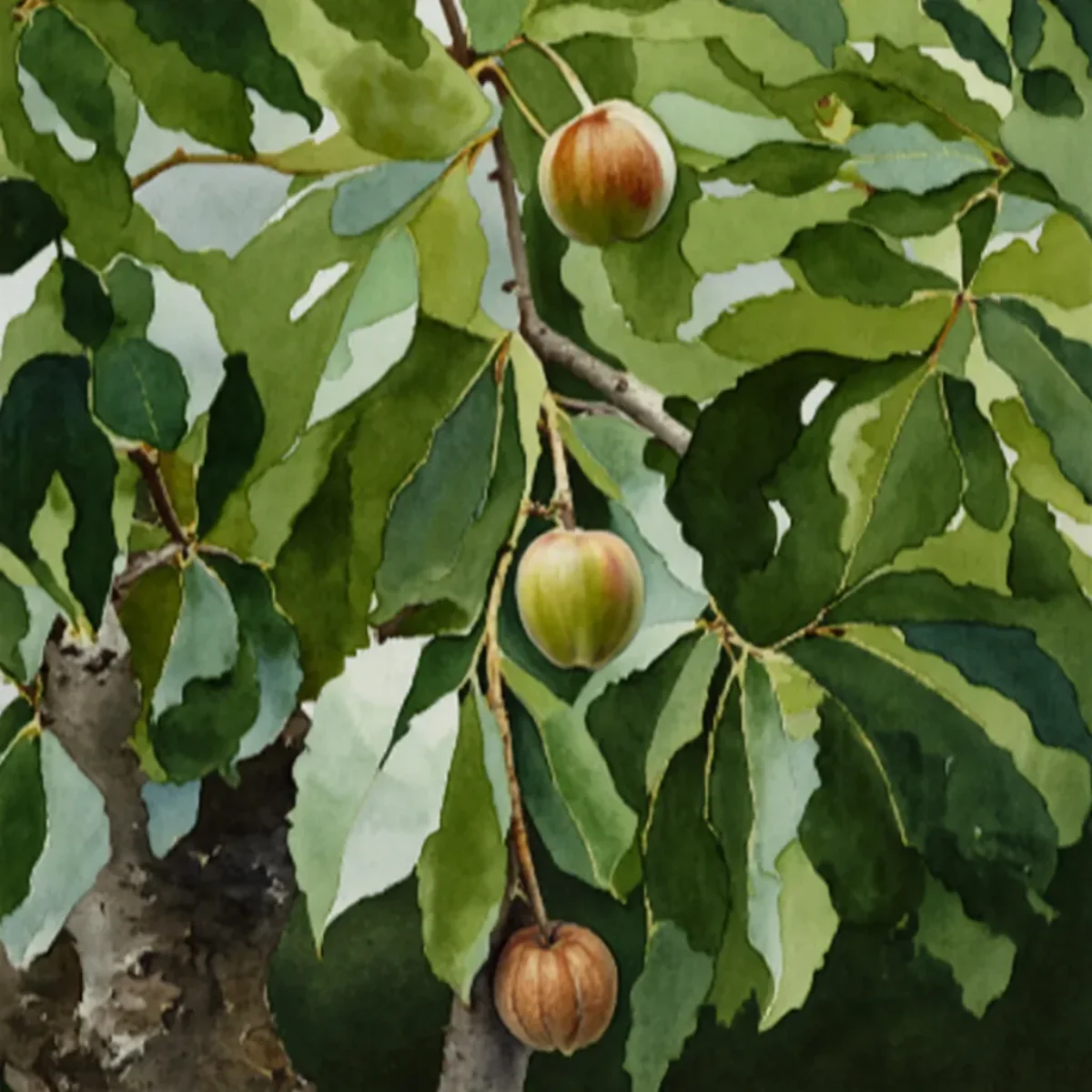
The large, dark drupes produced by the Black walnut are a significant food source for regional wildlife, particularly squirrels, deer, and various bird species who cache or consume the kernels. Providing this reliable, high-energy food source can draw desirable wildlife activity to your property during the autumn season. While the husks may stain hardscaping, they offer natural soil amendment as they decompose.
Beyond the nuts, the dense, broad canopy of mature Juglans nigra provides crucial nesting and roosting cover for a variety of woodland birds throughout the year. Its large structure creates microclimates underneath that can benefit specific understory fauna seeking refuge from harsh weather or predators.