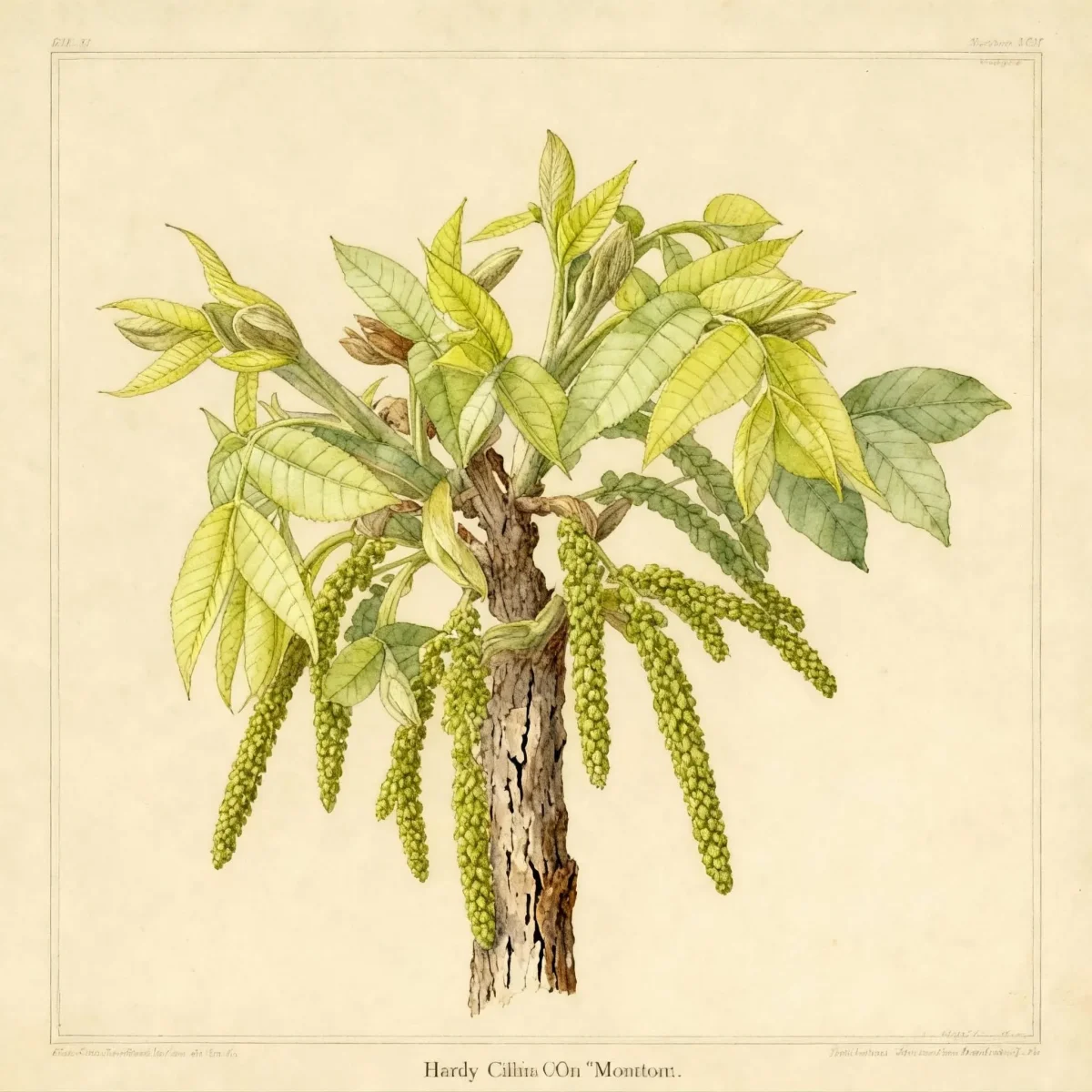
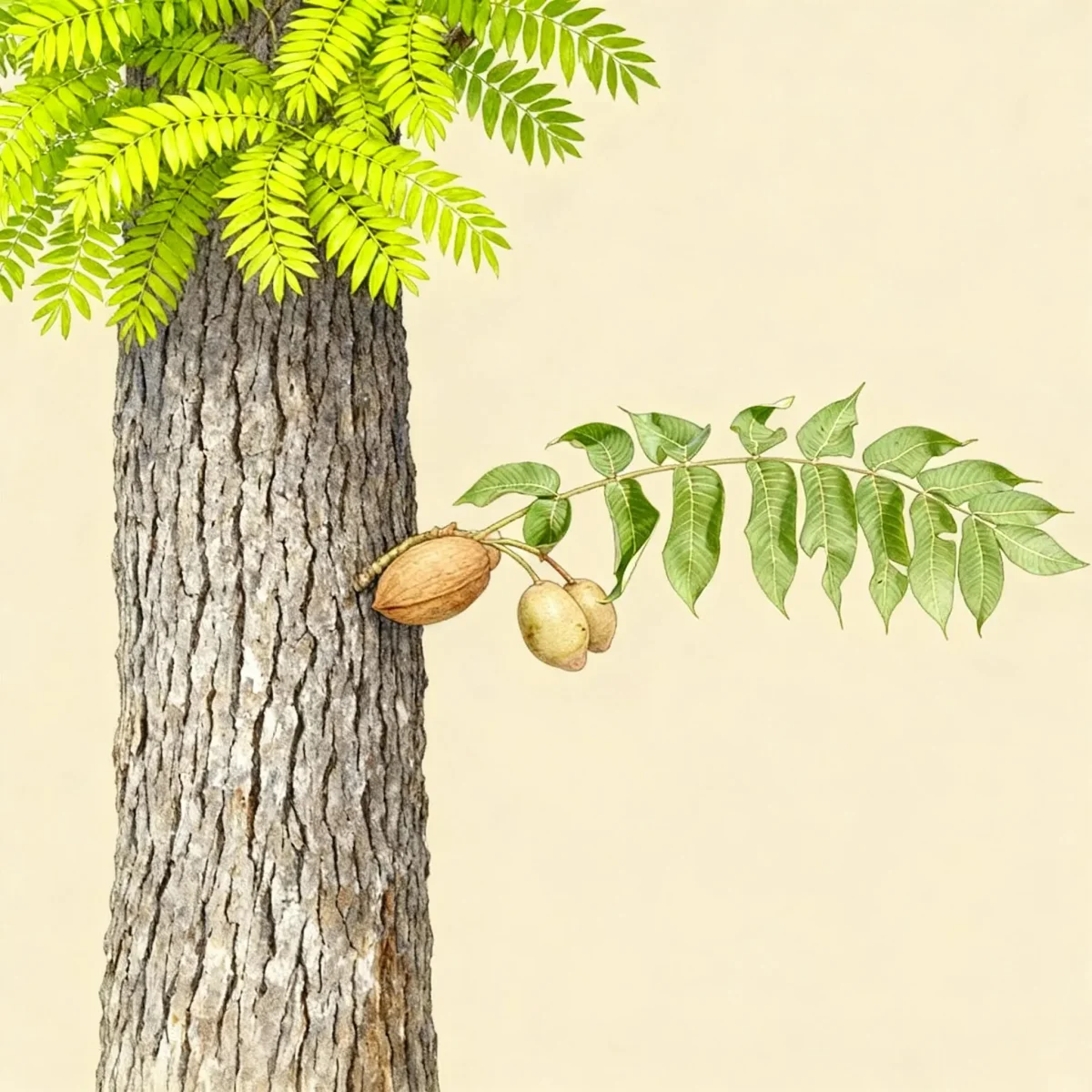
Shagbark hickory (Carya ovata)
Discover the majestic Shagbark hickory (Carya ovata), a large native shade tree known for its edible nuts and unique peeling bark.
Scroll down to discover growing tips, care requirements, companion plants, and more
Complete Plant Information
Overview
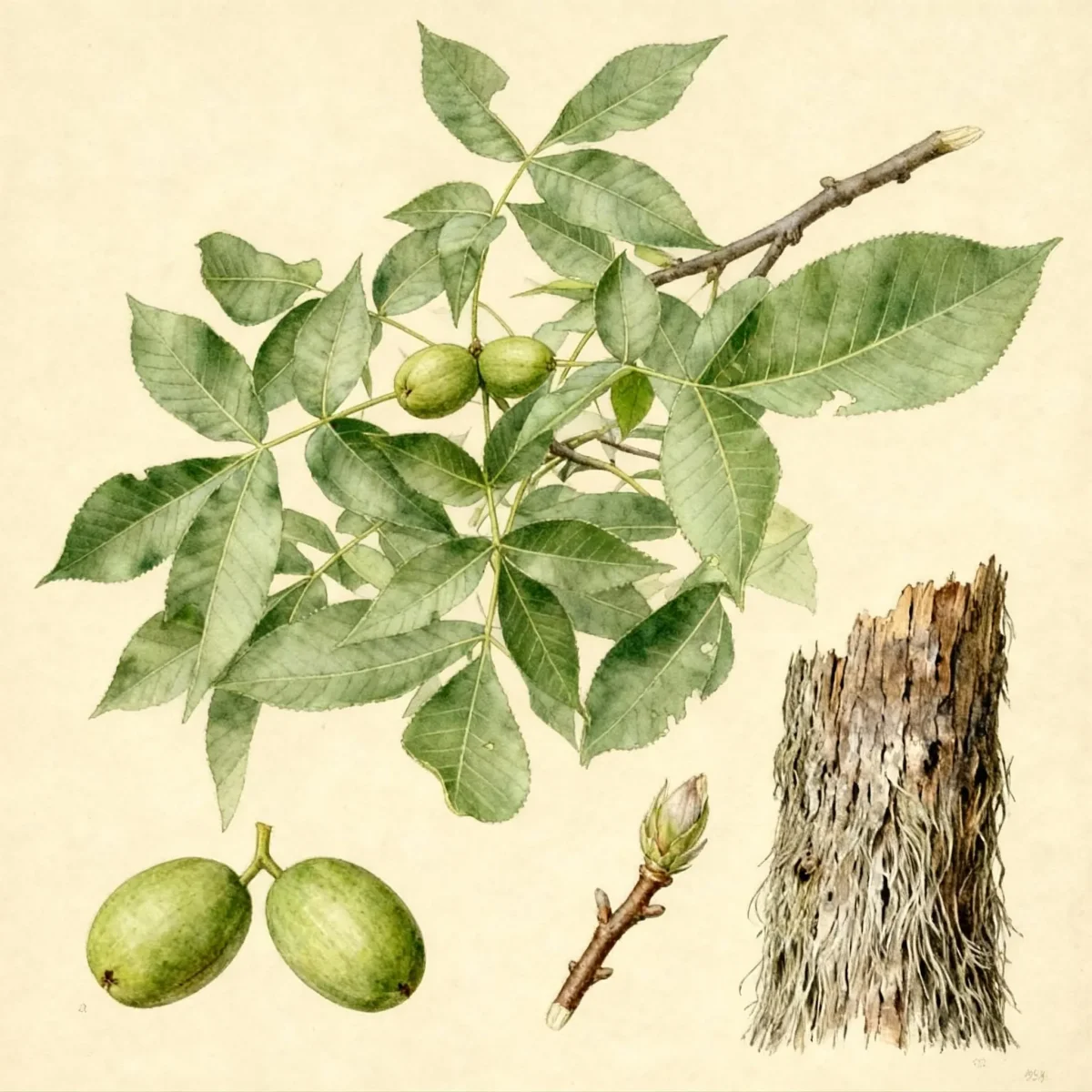
The Shagbark hickory (Carya ovata) is a magnificent, long-lived native centerpiece prized for both its distinctive visual appeal and its valuable contribution to the ecosystem. Its common name stems from its unmistakable bark, which peels away in long, thick, grayish strips, giving mature specimens a rugged, shaggy appearance unlike any other tree. This large deciduous tree is an excellent choice for gardeners seeking a substantial focal point that offers deep shade once established.
As a key member of the Juglandaceae family, Carya ovata provides highly sought-after edible nuts, which were historically significant to Native Americans and remain a treat enjoyed by wildlife and people alike today. It demands considerable space to allow its irregular, oval-rounded crown to fully develop, rewarding attentive gardeners with low annual maintenance requirements.
While providing superior natural beauty and environmental benefits, this species requires careful initial placement due to its slow growth rate and robust, deep taproot system, which makes transplanting established trees challenging. Proper placement planning ensures this stately Shagbark hickory thrives for generations.
Fast Facts
- Plant Family: Juglandaceae
- Plant Type: Tree
- Native Range: Eastern North America
- Hardiness Zones: USDA Zones 4-8
- Size at Maturity:
- Height: 70-90 ft
- Spread: 50-70 ft
- Bloom Time: April to May
- Bloom Description: Greenish-yellow
- Sun Exposure: Full sun to part shade
- Water Needs: Medium
- Maintenance Level: Low
How to Grow
The best time to establish a young tree or sapling is typically in the spring before the heat sets in, aiming for an area that can accommodate its massive mature size. Carya ovata strictly prefers humusy, rich, moist, and well-drained loam soils; avoid sites with poor drainage, as this can compromise root health. Because of its strong preference for undisturbed establishment, it is crucial to recognize that transplanting mature specimens is difficult due to its deep taproot.
Once planted, watering needs are moderate, requiring consistent moisture, especially during the first few growing seasons to encourage root establishment. Fertilization is usually unnecessary in naturally rich soils, as the tree is adapted to native woodlands. Pruning should be minimal, focused only on removing dead or damaged limbs; avoid heavy structural pruning on young trees.
For maximal nut production, consider planting at least two genetically distinct trees for optimal cross-pollination, which generally yields a much more abundant crop of higher-quality nuts. Prepare the site meticulously, as once established, this slow-to-establish giant will largely care for itself.
Landscape Uses
The Shagbark hickory is inherently suited as a massive ornamental shade tree designed for large properties, estates, or naturalized park settings where its imposing stature will not conflict with overhead utilities or structures. Its eventual height and spread mean it should be placed well away from patios or walkways where falling nuts might pose a tripping hazard in the fall.
As a native species, it integrates beautifully into woodland garden designs or as a lone statement tree in an open lawn area where its exfoliating bark can be fully appreciated throughout winter. While it generally requires space, its cultural requirements—rich, moist soil and partial sun—suggest companions that thrive in similar well-drained, humus-rich environments, often found under a higher canopy.
This tree functions as an excellent anchor piece, providing structure and scale unmatched by smaller ornamental selections. Selecting a spot where its imposing presence can be enjoyed seasonally, from its leaf-out to the eventual drop of its edible fruit, maximizes its landscape value.
Standout Features
Flower Qualities
- Insignificant
Fruit Qualities
- Showy
- Edible
Noteworthy Characteristics
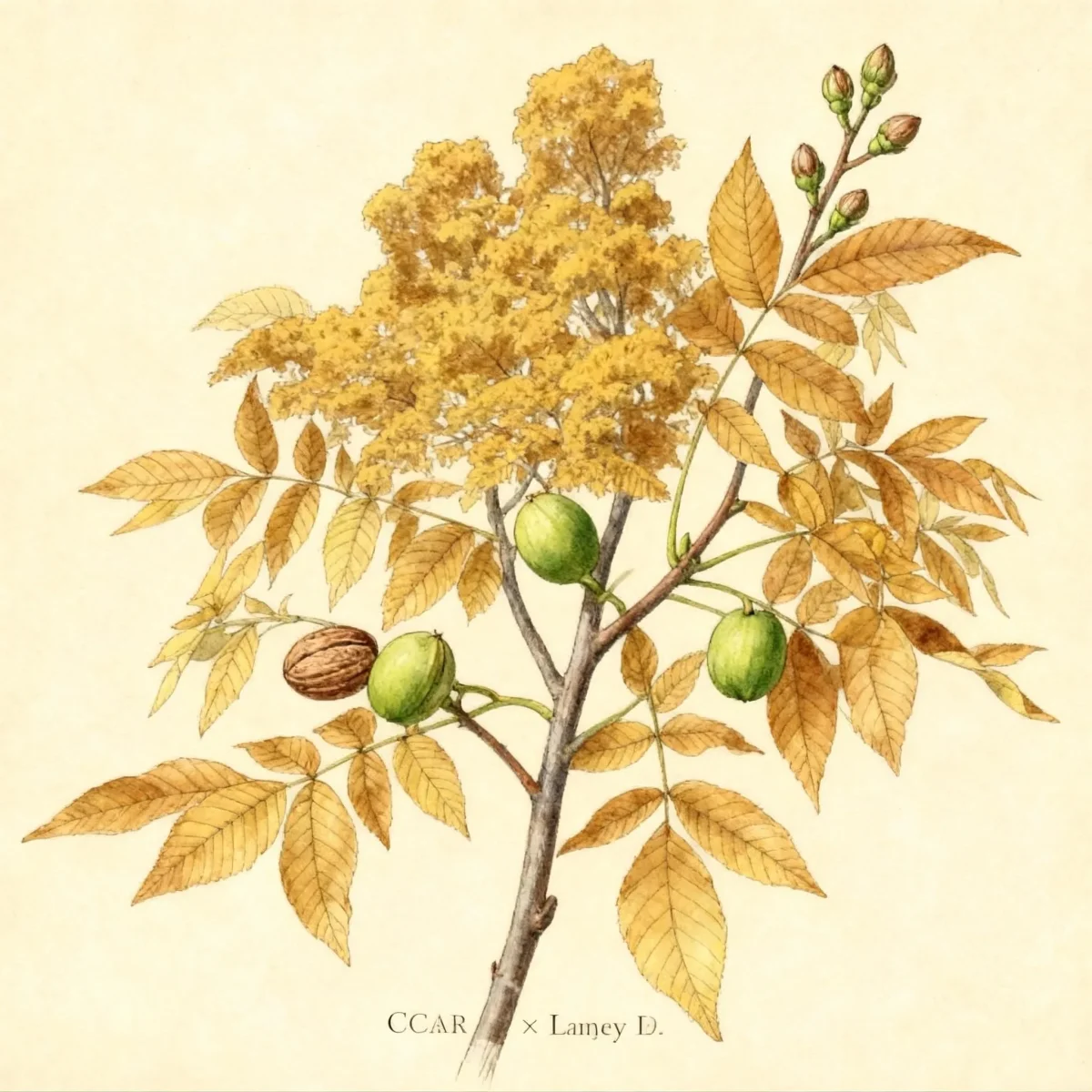
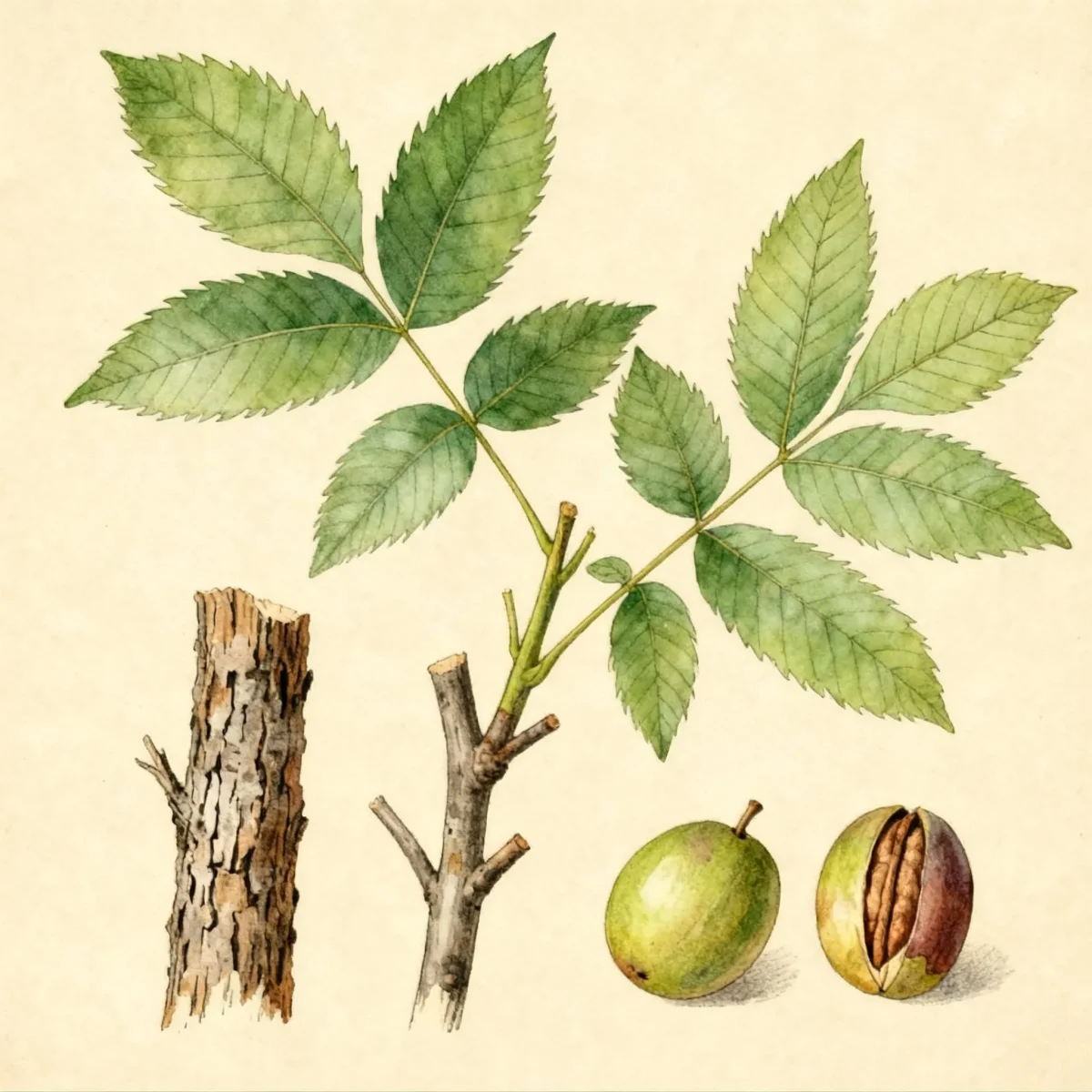
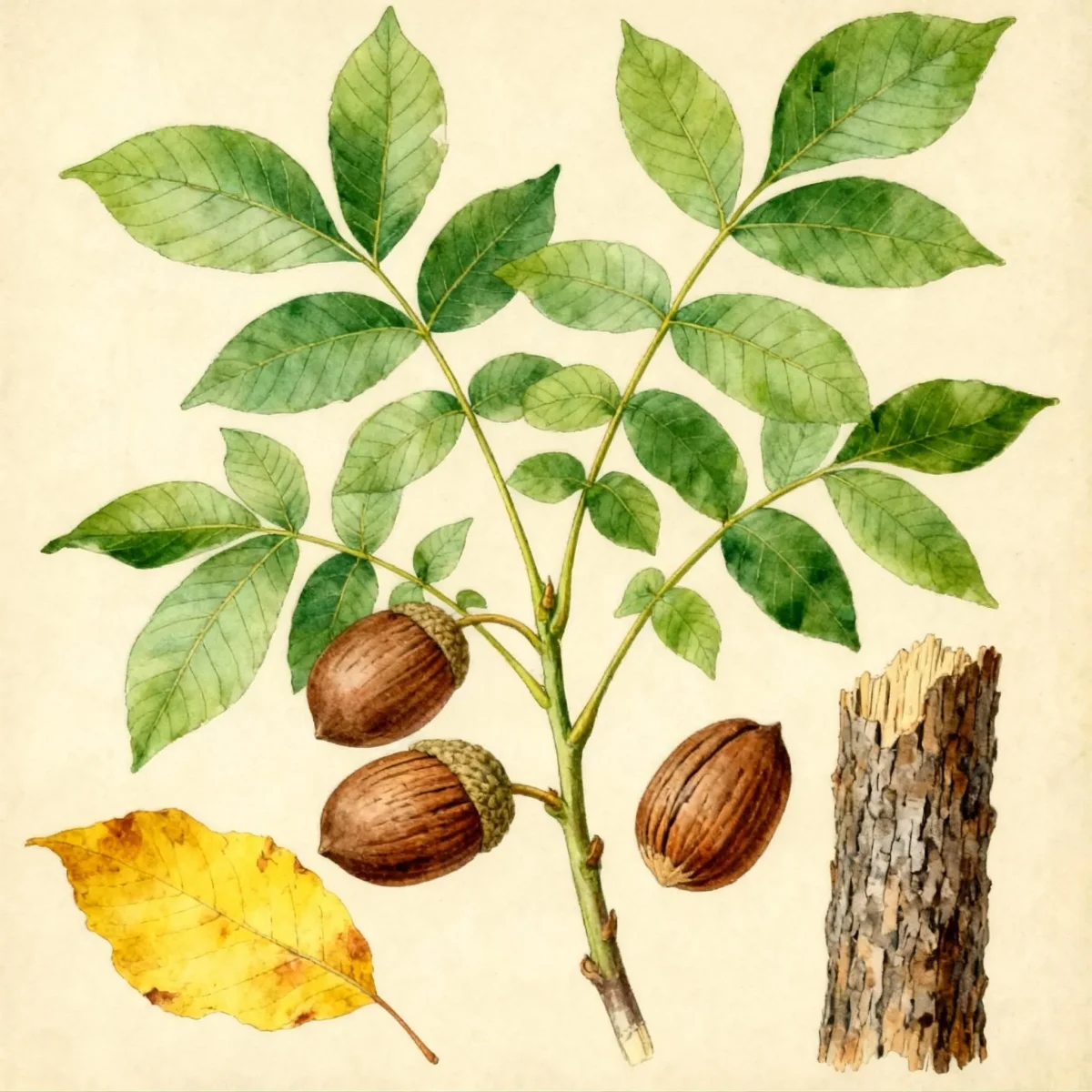
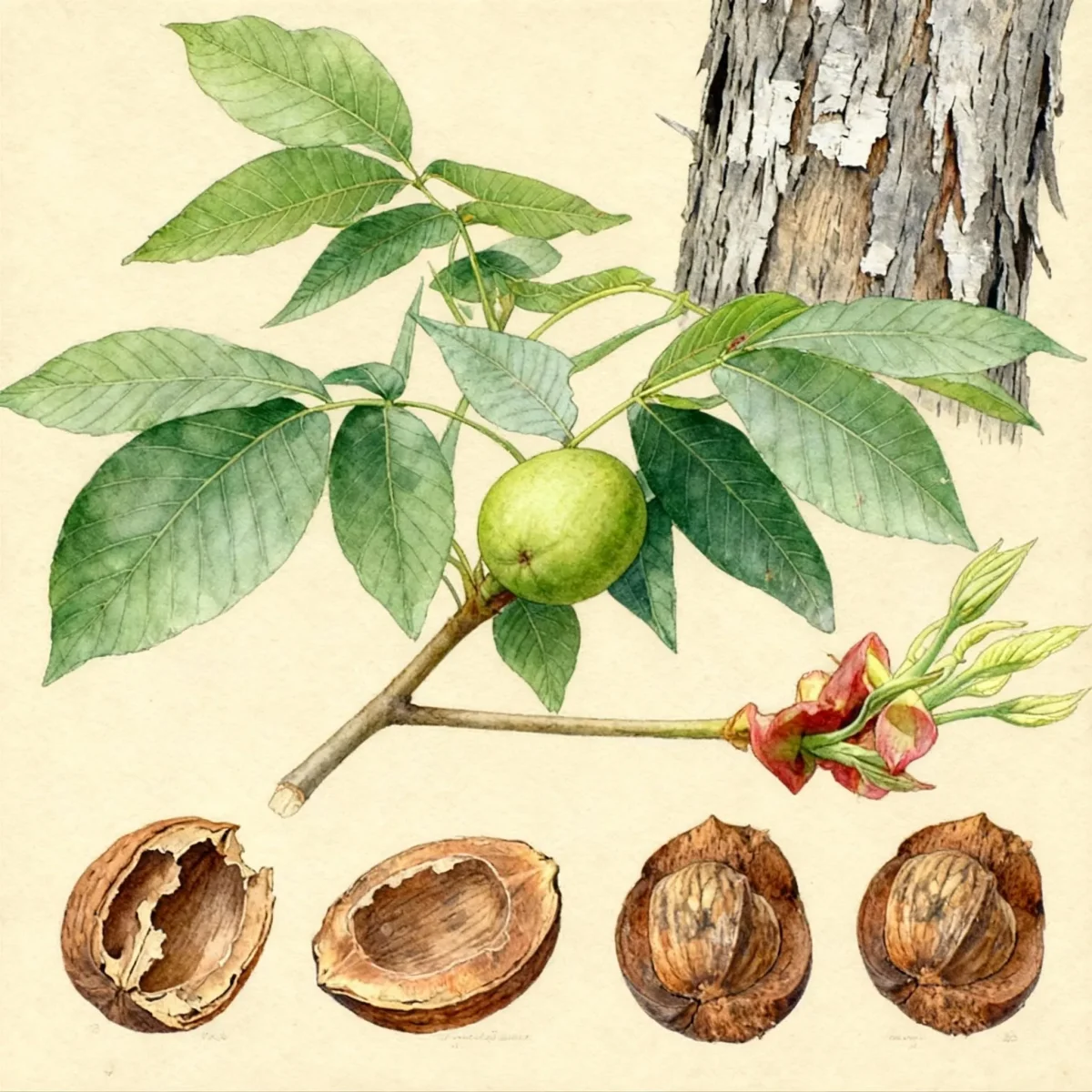
Carya ovata, commonly called Shagbark hickory, is a large deciduous tree that typically grows 70-90’ tall with an irregular, oval-rounded crown native across Eastern North America. Its signature feature is the bark of mature trees, which exfoliates in long, recurved strips, setting it apart from similar hickories. Furthermore, the nuts produced are edible, encased in a husk that splits open in four sections when ripe in the fall, historically serving as a vital food source.
Tolerances
- Clay Soil
- Black Walnut
Potential Problems
Pest management for Carya ovata generally focuses on preventing insect damage that can weaken the tree structure or affect nut yield. Common culprits include the hickory bark beetle, pecan weevil, borers, and the twig girdler, which can be significant problems in isolated areas. Occasionally, fungal issues such as white heart rot, anthracnose, and leaf spot may appear, though the tree is generally hardy.
Managing litter drop is crucial; large pecan-like nuts, twigs, and discarded leaves can accumulate significantly beneath the canopy throughout the year. Proactive monitoring for early signs of boring insects is the best defense, as chemical interventions are rarely practical for such large, established trees.
Frequently Asked Questions
What hardiness zones is Shagbark hickory suitable for?
The hardy Carya ovata performs best when grown in USDA Zones 4 through 8.
How large does Shagbark hickory grow?
This species is substantial, typically maturing to a height between 70 and 90 feet, with a corresponding spread ranging from 50 to 70 feet wide.
What sun exposure does Carya ovata need?
For optimal growth and nut production, Shagbark hickory requires full sun, though it can tolerate part shade conditions.
When does Shagbark hickory bloom?
Flowering occurs relatively late in the season, generally between April and May, producing greenish-yellow blooms.
Conclusion
The Shagbark hickory is a superlative choice for large landscapes needing a magnificent, long-lived shade provider with the added benefit of attractive, edible nuts. Its unique exfoliating bark ensures year-round visual interest, solidifying Carya ovata’s status as a truly noteworthy native specimen. Before planting, ensure you have adequate vertical and horizontal space and verify that your site falls within USDA Hardiness Zones 4 to 8.
Wildlife Benefits
The nuts produced by the Shagbark hickory are a high-energy food source that attracts a wide variety of desirable wildlife, especially squirrels, blue jays, and deer. Planting a Carya ovata significantly boosts local biodiversity by offering reliable forage throughout the fall and winter, provided the wildlife doesn’t consume the entire crop first.
In addition to the fruit, the rough, peeling bark provides excellent winter cover and nesting opportunities for numerous insects and small invertebrates, which in turn support local bird populations. The extensive root system also contributes to soil stabilization, particularly beneficial in sloping areas where the tree is natively found.
Companion Planting
When designing a space around Shagbark hickory, select other woodland edge species that share its need for rich, moist, well-drained soil and tolerance for partial overhead filtering. Good companions include native American Beech (Fagus grandifolia) or Oaks (Quercus species) that share the same hardiness range and provide a complementary woodland texture.
Avoid planting shallow-rooted turfgrass directly up to the trunk, as this can impede the natural moisture retention the tree prefers around its base. Instead, utilize a wide mulch ring that mimics the forest duff layer found beneath native Carya ovata stands, which helps maintain cool, consistent soil temperature and moisture levels for root health.