English walnut (Juglans regia)
The majestic English walnut (Juglans regia) offers edible nuts and reliable shade, thriving in zones 3-7 with full sun.
Scroll down to discover growing tips, care requirements, companion plants, and more
Complete Plant Information
Overview
The English walnut, scientifically known as Juglans regia, is a magnificent, large deciduous tree highly valued both for its aesthetic presence and its commercially significant edible nuts. Native to regions stretching from Europe through Central Asia, this species provides dense shade and features highly prized, thin-shelled walnuts harvested in autumn. Gardeners often select Juglans regia for its impressive stature and the handsome, spreading crown it develops as it matures.
While young English walnut trees might yield nuts as early as four to six years old, patience is required, as substantial crops often take two decades to establish. Its cultural demands center around specific soil and light conditions, making site selection crucial for success. Beyond nut production, the aromatic foliage and strong woody structure make the English walnut a memorable centerpiece in large landscape settings.
This tree is recognized commercially as the source of walnuts sold globally, but it also offers ornamental value with its gray bark and large, pinnately compound leaves. Planning planting locations carefully is vital due to the deep taproot and the chemical compounds released by the roots, ensuring the long-term health of both the tree and neighboring sensitive flora.
Fast Facts
- Plant Family: Juglandaceae
- Plant Type: Tree
- Native Range: Europe to central Asia
- Hardiness Zones: USDA Zones 3-7
- Size at Maturity:
- Height: 40-60 ft
- Spread: 40-60 ft
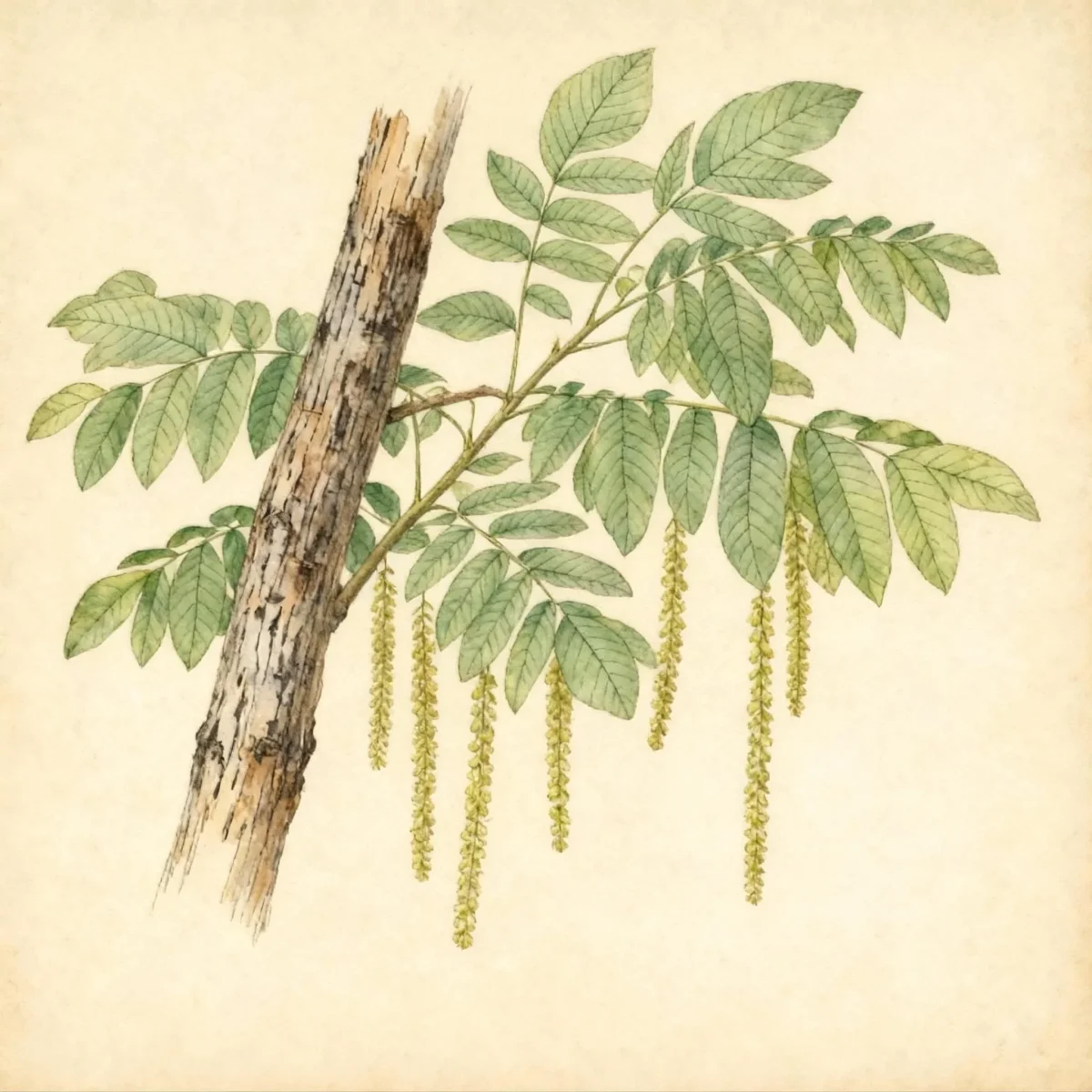
- Bloom Time: May to June
- Bloom Description: Yellowish-green
- Sun Exposure: Full sun
- Water Needs: Medium
- Maintenance Level: Medium
How to Grow
Planting the English walnut should ideally occur in spring or fall when conditions are favorable for establishing that critical deep taproot. Ensure the chosen location receives full sun throughout the day, as Juglans regia is intolerant of shade. The soil must be organically rich, moist, and exceptionally well-drained, avoiding heavy clay areas that retain too much water. Be aware that transplanting mature or semi-mature specimens is difficult due to this pronounced root structure.
Once established, the English walnut requires medium watering, focusing on consistency rather than volume, especially during dry spells. Fertilization is generally unnecessary if the soil is naturally rich. Pruning should focus primarily on removing crossing or damaged limbs while the tree is young to develop a strong scaffold structure that can support future, heavy crops of nuts.
Seasonal attention should focus on management: anticipate the strong aroma when leaves emerge in spring. In autumn, be prepared for the mess created by falling husks and nuts beneath the canopy. While exceptionally hardy in its preferred zones, avoid planting in very hot and humid southern regions where pecans often prove more successful nut producers.
Landscape Uses
The primary suggested use for the Juglans regia is as a magnificent Shade Tree, suitable for very large landscapes where its substantial size and spreading crown can be fully appreciated. Due to its impressive mature size and deep root system, it is considered inappropriate as a street tree where conflicts with pavement or underground utilities may arise.
When planning placement, consider its role as a central feature, perhaps anchoring a sweeping lawn area or defining the boundary of a large property. When utilizing the English walnut ornamentally, companion planting requires strategic thought. Because the roots of Juglans regia produce the allelopathic chemical juglone, sensitive species like azaleas, rhododendrons, and blueberries should be sited well outside the tree’s drip line, especially as the tree matures. For neighbors, choose tough, non-susceptible plants that also enjoy full sun, allowing the walnut to dominate the upper canopy while complementing ground cover or border plantings below.
Standout Features
Flower Qualities
- Insignificant
Fruit Qualities
- Showy
- Edible
Noteworthy Characteristics
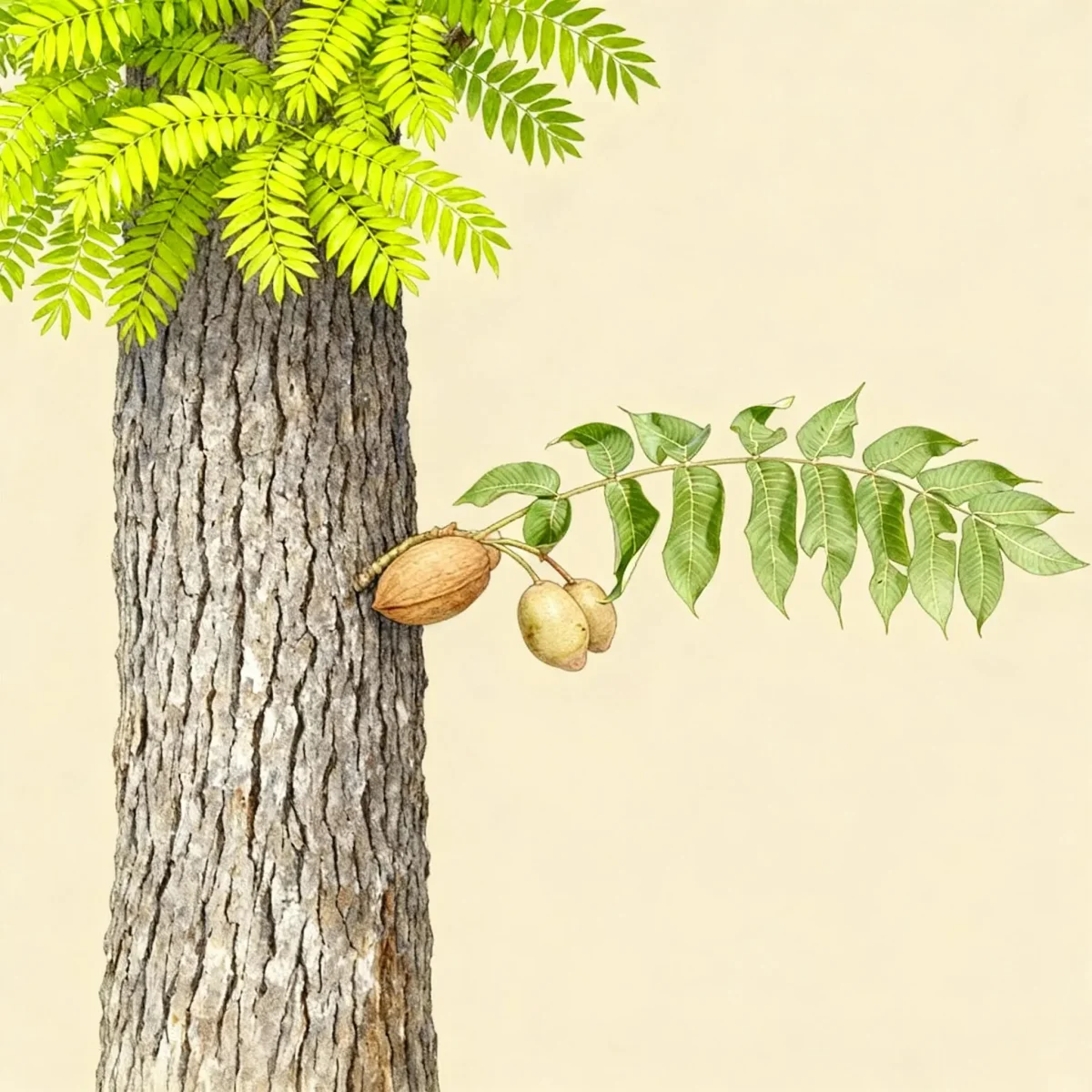
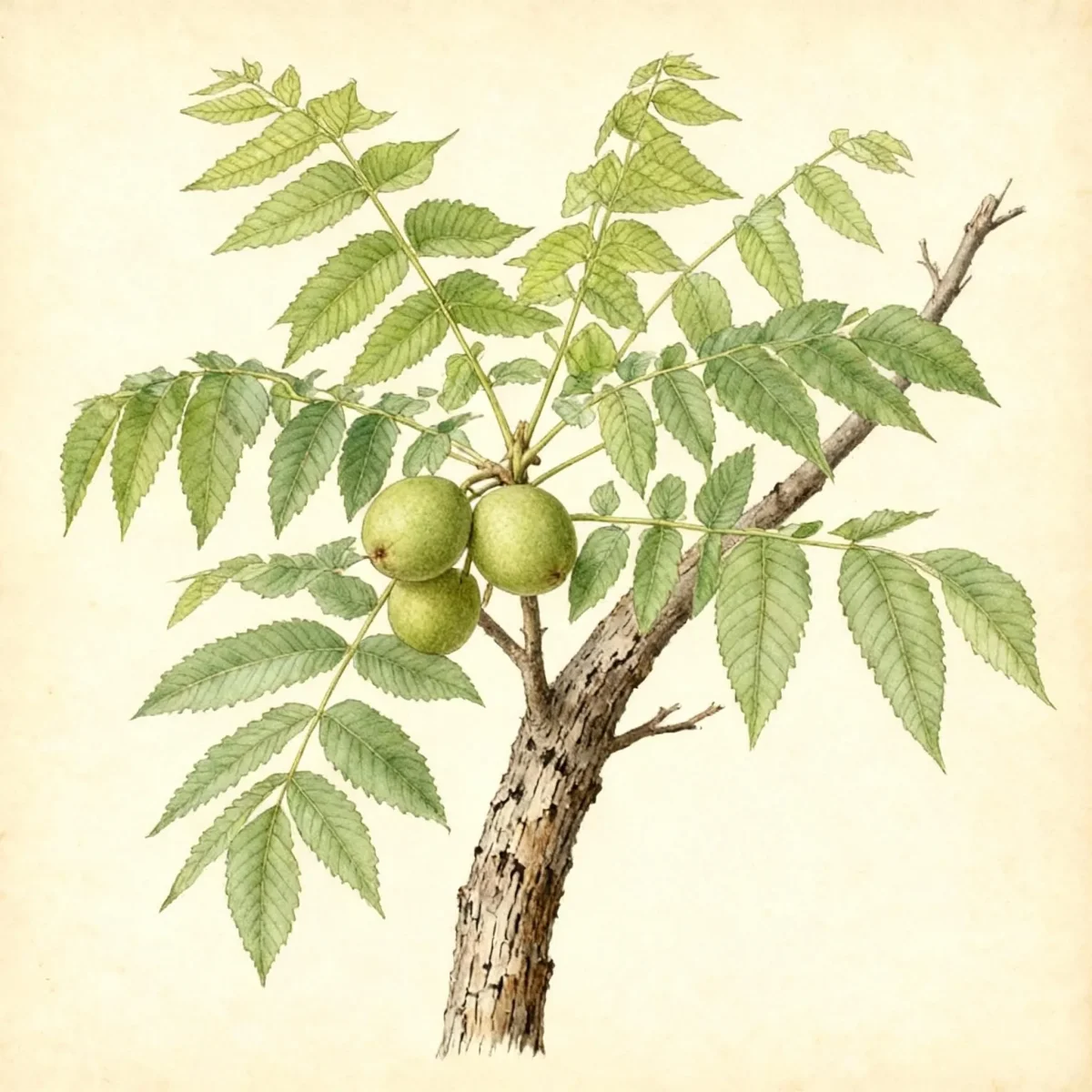
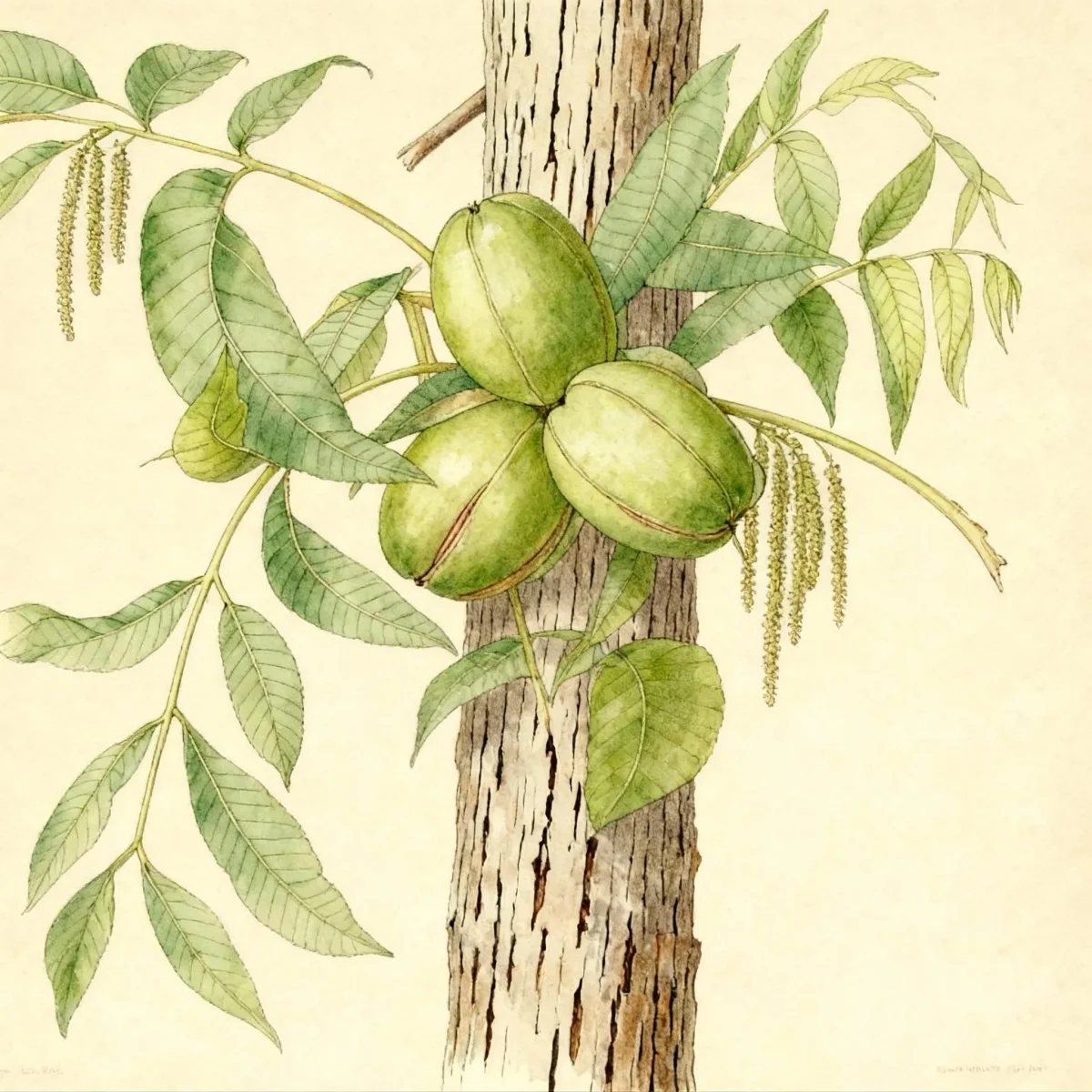
Juglans regia, commonly called English walnut or Persian walnut, is a deciduous tree prized for its superior, thin-shelled, edible nuts and fine-grained wood used in fine cabinetry and furniture. This species typically reaches 40 to 60 feet tall with a broad, rounded crown, featuring large, aromatic odd-pinnate leaves that emerge late in spring. The female flowers mature into edible nuts encased in a smooth green husk, marking this species as a superior choice among nut-bearing trees grown commercially in temperate climates.
Tolerances
- Drought
Potential Problems
English walnut generally avoids serious insect or disease infestation, but growers should monitor for potential fungal issues like anthracnose, canker, and leaf spot, which can be exacerbated by poor air circulation or overly wet conditions. Foliage-chewing insects, such as the fall webworm, may require management if populations become excessive.
The most significant cultural challenge is the production of juglones by the roots of Juglans regia. These chemicals are toxic to several common landscape and garden species, including azaleas, rhododendrons, and solanaceous crops like tomatoes and potatoes. Toxicity is usually contained within the drip line, but gardeners must plan new plantings intelligently to avoid placing susceptible plants near this powerful tree. Be aware that mature nuts and their husks can create a noticeable mess on lawns or patios during the fall drop.
Frequently Asked Questions
What hardiness zones is English walnut suitable for?
The English walnut (Juglans regia) thrives best in USDA Hardiness Zones 3 through 7.
How large does English walnut grow?
As a mature specimen, Juglans regia commonly achieves a height range of 40 to 60 feet, with a similar spread of 40 to 60 feet.
What sun exposure does English walnut need?
This tree requires full sun exposure to develop properly and produce the best yields of nuts.
When does English walnut bloom?
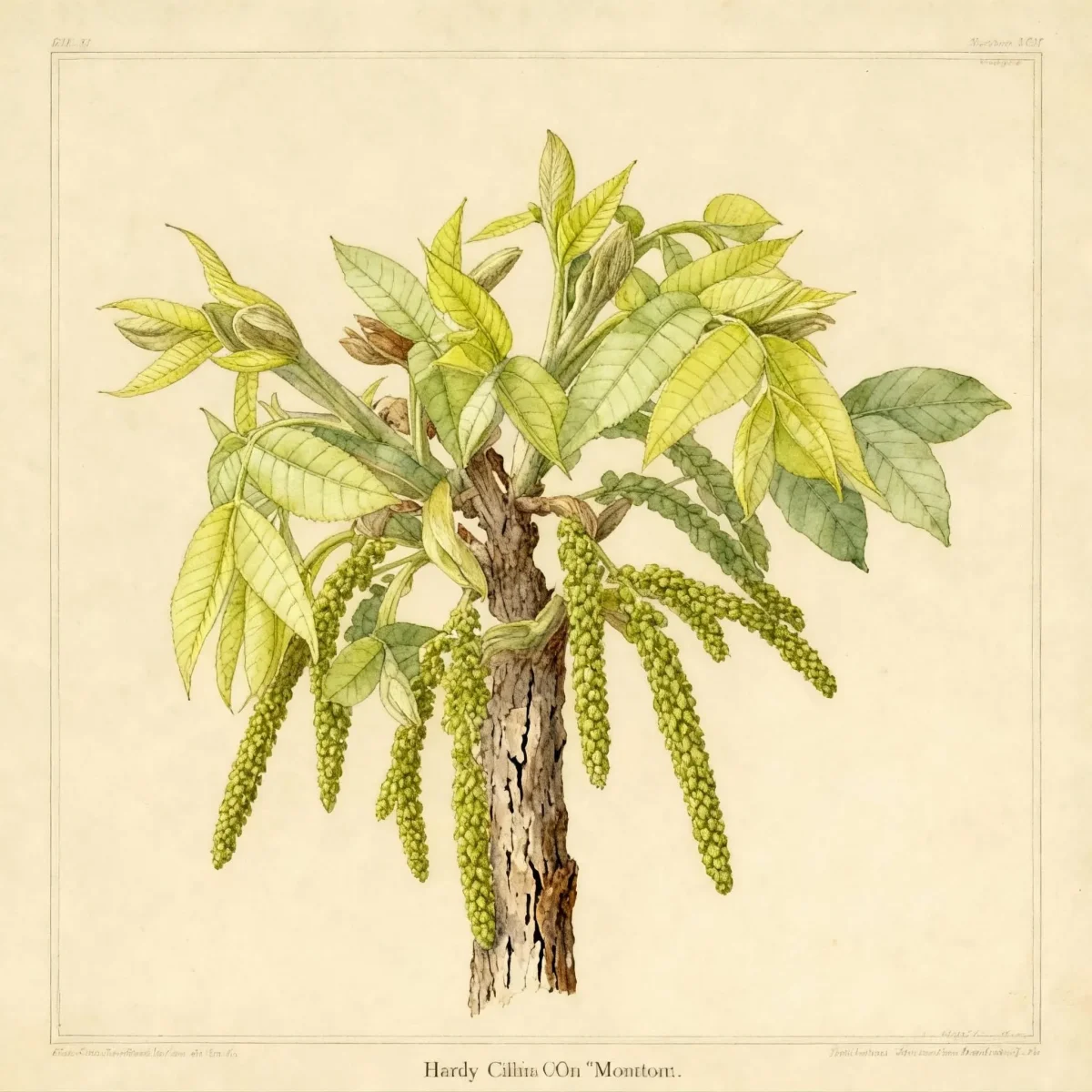
Flowering for Juglans regia occurs between May and June, producing somewhat inconspicuous yellowish-green blooms.
Conclusion
The Juglans regia stands out as a valuable addition to large estates, offering the dual benefits of substantial shade and a reliable harvest of high-quality edible nuts. Successful cultivation of the English walnut depends heavily on providing full sun and well-drained, rich soil, while respecting its allelopathic tendencies toward sensitive nearby plants. Before planting, ensure your location falls within USDA Zones 3 to 7 to give your magnificent Juglans regia the best chance for longevity and productivity.
Companion Planting
When establishing a landscape around your English walnut, focus on plants that are known to be tolerant of juglone compounds released by the roots. Avoid planting traditional acid-loving shrubs or common vegetable gardens directly underneath the canopy. Instead, look toward hardy perennials and ornamental grasses that thrive in full sun and medium moisture. Native grasses, certain hardy ferns situated at the edge of the dripline, or robust groundcovers that tolerate competition are excellent choices for filling the space beneath this large tree.
Seasonal Care Calendar
Springtime is crucial for observing the emergence of the yellowish-green flowers and ensuring adequate moisture as the large compound leaves unfurl. In summer, monitor water needs during dry spells, remembering the tree prefers consistency. Fall is the season for harvesting the nuts; clean up the fallen husks promptly to prevent potential staining or creating a dense, decaying layer over lawn areas. Winter is a time of dormancy, where structural pruning can be performed on mature trees to maintain health and shape before the next growing cycle begins.