Mad-dog scullcap (Scutellaria lateriflora)
Discover Mad-dog scullcap (Scutellaria lateriflora), a North American native perennial perfect for wet conditions, blooming blue from July to October.
Scroll down to discover growing tips, care requirements, companion plants, and more
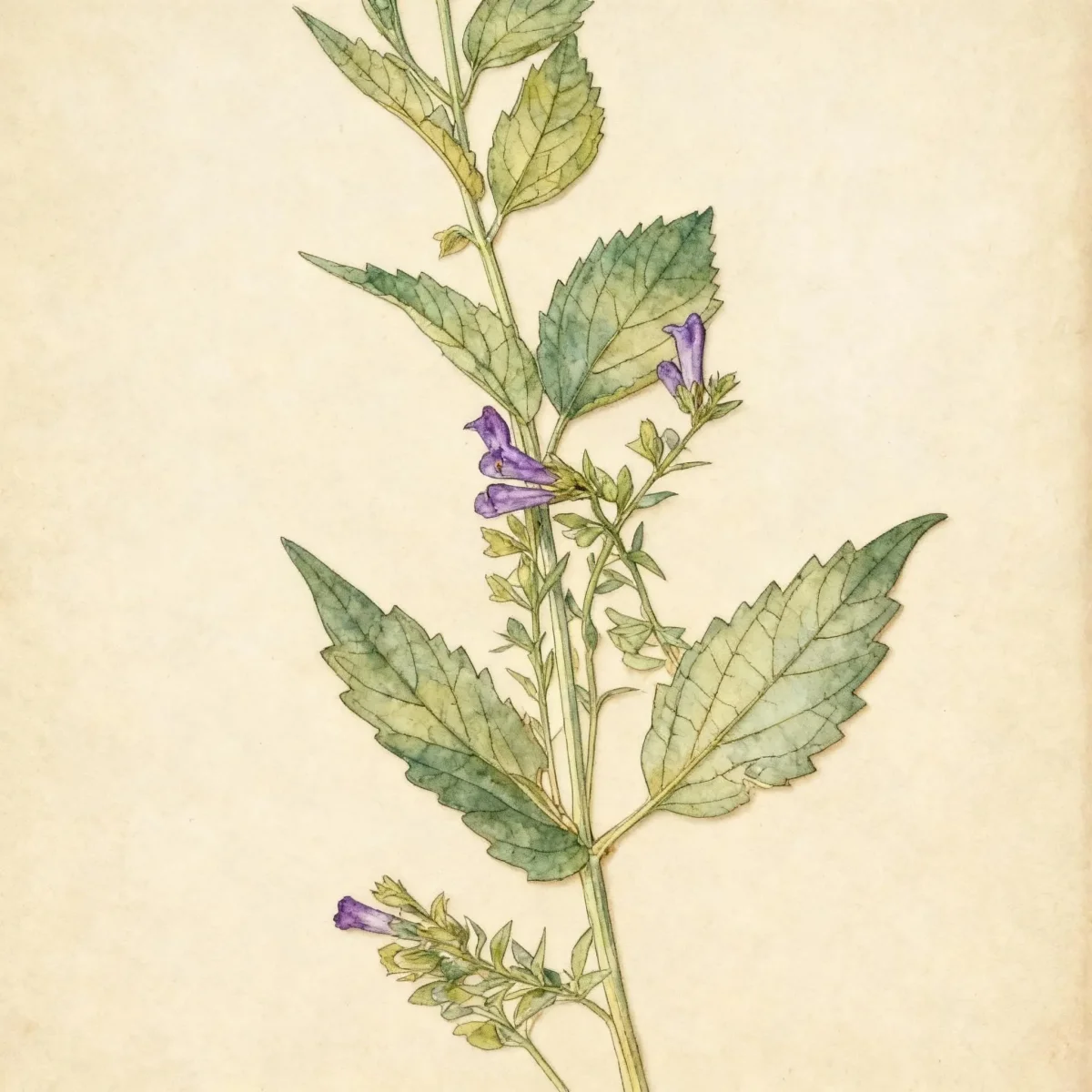
Complete Plant Information
Overview
This low-growing herbaceous perennial, Scutellaria lateriflora, also well-known as Mad-dog scullcap, brings delicate blue flowers and robust constitution to landscape areas that stay consistently moist. As a member of the mint family (Lamiaceae), it possesses the characteristic square stems and spreads reliably via rhizomes and runners, making it excellent for filling in damp spots naturally. Gardeners value Mad-dog scullcap not only for its aesthetic appeal in wetland settings but also for its historical medicinal use as a calming agent. It thrives where many other ornamentals struggle, offering dependable color from mid-summer into the fall.
The plant is native across much of North America and readily naturalizes, creating swathes of seasonal interest beneath the full or dappled sun it prefers. Its structure generally reaches 2 to 3 feet tall, providing vertical texture amidst lower-growing marsh plants. The ease of care associated with Scutellaria lateriflora establishes it as a foundational element for restorative, low-maintenance garden designs focused on water management.
Fast Facts
- Plant Family: Lamiaceae
- Plant Type: Herbaceous perennial
- Native Range: North America
- Hardiness Zones: USDA Zones 3-9
- Size at Maturity:
- Height: 2-3 ft
- Spread: 1.5-2.5 ft
- Bloom Time: July to October
- Bloom Description: Blue
- Sun Exposure: Full sun to part shade
- Water Needs: Medium to wet
- Maintenance Level: Low
How to Grow
Plant Scutellaria lateriflora during the spring after the last frost, or in autumn if conditions allow for root establishment before winter. The key cultural requirement for Mad-dog scullcap is moisture; it must be grown in soils that range from consistently moist to actively wet environments. While it prefers full sun, it tolerates light afternoon shade, which can be beneficial during the hottest part of summer. Ensure the selected location features rich, well-draining soil even if it retains moisture.
Maintenance for this plant is exceptionally low once established. Minimal fertilization is usually required, as excessive richness can encourage weak, floppy growth instead of dense flowering. Water thoroughly, especially during dry spells, to maintain the medium to wet conditions this wetland plant prefers. Since Scutellaria lateriflora spreads via rhizomes, monitor its growth annually if you wish to restrict its naturalizing tendency. No extensive pruning is typically needed, though light trimming after the first flush of bloom can encourage a secondary wave of flowers.
Landscape Uses
The suggested use for Mad-dog scullcap is to naturalize, making it an excellent choice for large areas where a meadow or bog garden effect is desired. It shines when used near the edge of ponds, streams, or in low spots in the yard where water collects after rain. Its requirement for moist to wet soils makes it a functional partner for plants like irises, swamp milkweed, and cardinal flower, all of which appreciate wet feet.
Utilize the vigorous spreading habit of Scutellaria lateriflora to stabilize banks near water features or to create living groundcover in moist woodland clearings. Avoid planting it in dry borders, as desiccation will quickly stress the plant. Instead, view it as a workhorse for ecological restoration or for accenting the moist margins of constructed water gardens, where its late-season blue flowers offer high contrast.
Standout Features
Flower Qualities
- Showy
Noteworthy Characteristics
Scutellaria lateriflora, commonly known as blue skullcap, mad dog skullcap and side-flowering skullcap, is a low-growing herbaceous perennial in the mint family that typically grows to 2-3’ tall. It is native to wetland areas from Quebec and Newfoundland west to British Columbia and south to California, Louisiana and Florida. Steyermark describes its range in Missouri as “low wet woods, swampy meadows, alluvial thickets, gravel bars, river flood plain forests, borders of sloughs, spring branches, streams, swamps, lowland and sink-hole ponds, and moist ledges of limestone and sandstone bluffs.” Tiny, tubular, two-lipped, snapdragon-like, blue flowers (to 1/3”) bloom solitary or in one-sided racemes, mostly from the leaf axils but occasionally terminal from July to early October. The leaves of blue skullcap have a history of use in herbal medicines as a sedative and tranquilizer.
Tolerances
- Rabbit
- Deer
- Wet Soil
Potential Problems
Scutellaria lateriflora is generally robust, presenting no serious insect or disease problems when situated in its preferred moist habitat. However, growers should remain vigilant for common fungal issues, particularly powdery mildew and leaf spot, which become more likely in conditions of poor air circulation or overly high humidity, despite the plant tolerating wet soil. Watch actively for aphid infestations, which occasionally target new growth, especially during warmer periods. Prevention involves ensuring adequate spacing between plants to maximize airflow, which helps mitigate fungal outbreaks before they take hold.
Frequently Asked Questions
What hardiness zones is Mad-dog scullcap suitable for?
Mad-dog scullcap (Scutellaria lateriflora) is highly adaptable, thriving in USDA Zones 3 through 9.
How large does Scutellaria lateriflora grow?
When mature, this species typically achieves a height between 2 and 3 feet, with a spread ranging from 1.5 to 2.5 feet wide.
What sun exposure does Mad-dog scullcap need?
This plant prefers locations ranging from full sun to partial shade, performing best when protected from intense, scorching afternoon light if planted in hotter climates.
When does Scutellaria lateriflora bloom?
The bloom period for this species is reliably long, running from July straight through October, presenting small, attractive blue flowers.
Conclusion
Scutellaria lateriflora is an invaluable native perennial for gardeners needing lush, reliable growth in consistently wet areas of their landscape. Its tolerance for moisture, coupled with its low maintenance needs, makes Mad-dog scullcap a superior choice for naturalizing stream banks or bog gardens. Before planting, confirm your soil remains moist throughout the season and ensure you are gardening within USDA Zones 3 to 9 for best results.
Companion Planting
When designing a water garden utilizing Scutellaria lateriflora, select companions that share its affinity for wet, rich soil. Good partners include various wetland sedges (Carex species), Marsh Marigold (Caltha palustris), and native cardinal flower (Lobelia cardinalis). These selections will complement the blue flower color of Mad-dog scullcap while maintaining a similar moisture profile, creating a cohesive, thriving shoreline ecosystem. Grouping plants with similar water needs simplifies long-term care significantly.
Propagation Tips
Propagating Scutellaria lateriflora is straightforward, primarily due to its rhizomatous nature, which allows for easy division in spring before new growth fully emerges. Simply dig up clumps of established Mad-dog scullcap, separate sections that clearly show roots and viable growth points, and replant them immediately into prepared, moist soil. For a slower approach, you may harvest seeds after the flowers fade, though vegetative division provides faster, more reliable results for establishing new colonies of this helpful perennial.