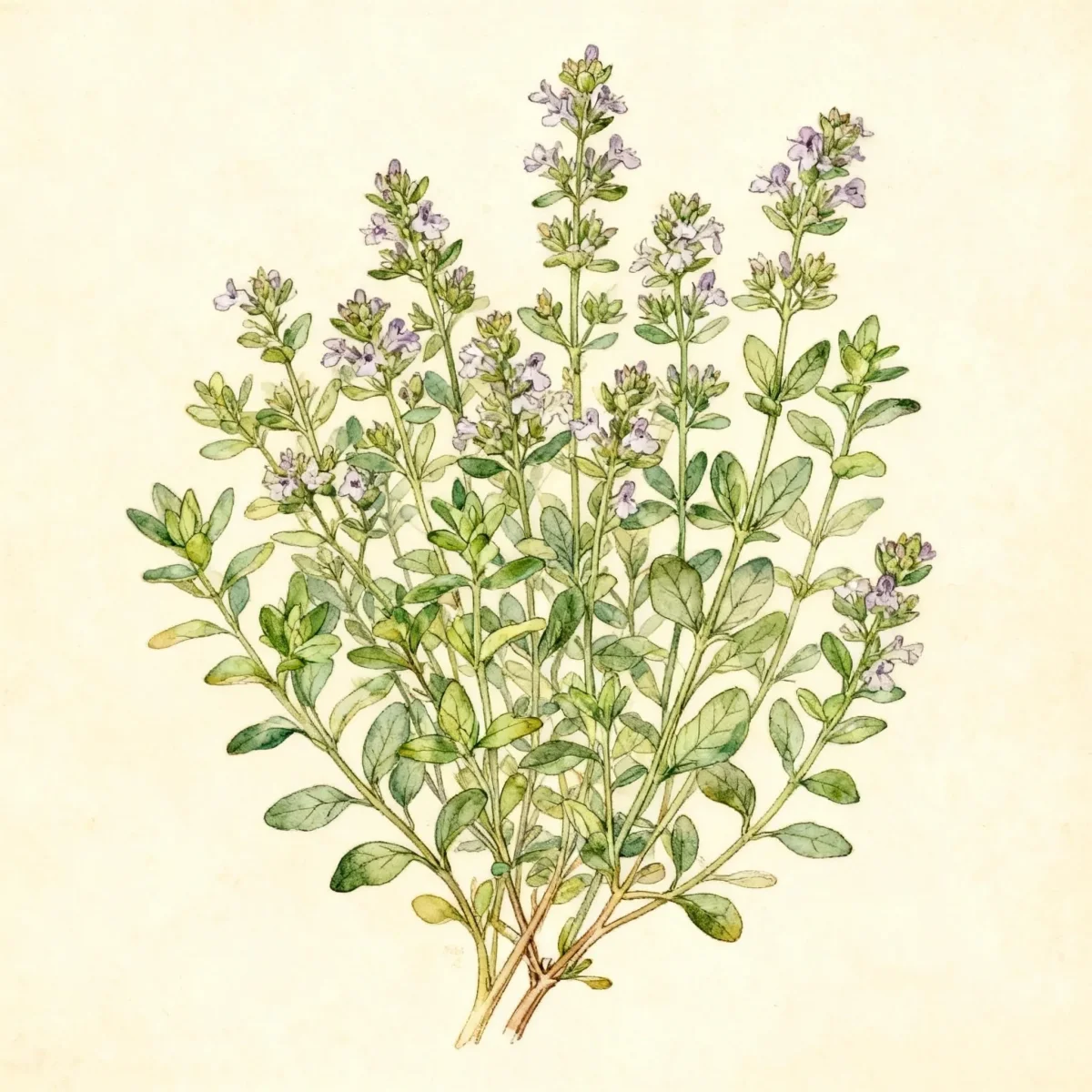
Mother of thyme (Thymus serpyllum)
Discover Mother of thyme (Thymus serpyllum), a low, spreading perennial perfect ground cover for sunny, dry garden spots. Low maintenance.
Scroll down to discover growing tips, care requirements, companion plants, and more
Complete Plant Information
Overview
Mother of thyme (Thymus serpyllum) is a highly valued, prostrate, woody-based perennial celebrated primarily for its function as an ornamental ground cover. It forms dense mats of aromatic foliage that are attractive year-round, especially in mild winters where the plant remains evergreen. This tough plant thrives where many others struggle, preferring lean, well-drained soils in full sun.
The aesthetic appeal of Thymus serpyllum is enhanced by its summer display of deep pink, bell-shaped flowers, which draw in beneficial pollinators like bees. Although frequently confused with culinary thyme, Mother of thyme is more often selected for its creeping habit, making it exceptional for suppressing weeds and covering difficult areas. Its resilience against drought and poor soil conditions makes it an essential tool for xeriscaping and rock gardens.
Gardeners rely on this species, commonly known as wild thyme or creeping thyme, for low-profile edging, path filling, and bank stabilization. Its easy care and adaptability ensure that Thymus serpyllum remains a staple ground cover option for sunny, dry locations across a wide range of USDA zones.
Fast Facts
- Plant Family: Lamiaceae
- Plant Type: Herbaceous perennial
- Native Range: Northern Europe
- Hardiness Zones: USDA Zones 4-8
- Size at Maturity:
- Height: 0.25-0.25 ft
- Spread: 0.25-1 ft
- Bloom Time: June to July
- Bloom Description: Deep pink
- Sun Exposure: Full sun
- Water Needs: Dry to medium
- Maintenance Level: Low
How to Grow
For optimal establishment, plant Mother of thyme in the spring or fall when conditions are cooler. Location is key: ensure it receives full, direct sunlight throughout the day, as shade will weaken its creeping habit and reduce flowering. The most critical requirement is excellent drainage; this species thrives in loose, sandy, gritty, or rocky, nutrient-poor soils. Avoid heavy, consistently moist garden spots, as Thymus serpyllum dislikes wet feet and is susceptible to root rot in poorly drained settings.
Watering should be infrequent once the plant is established, reflecting its high drought tolerance. Allow the soil to dry out significantly between waterings, particularly during summer heat. Fertilizing is generally unnecessary and can actually encourage weaker, leggier growth rather than the desired tight mat. If the plant becomes woody or scraggly over time, cut back the stems to refresh the appearance and encourage new, dense growth closer to the soil.
Pruning after the main bloom flush helps maintain a tidy look and controls its spread. If the mat becomes too dense or woody, division is the best method to propagate new, vigorous plants. While species plants can be grown from seed, division ensures the desired characteristics are maintained for cultivars of Thymus serpyllum. Remember that in mild winters, this perennial maintains its attractive, short foliage mat.
Landscape Uses
Thymus serpyllum excels where a rugged, walkable, yet attractive carpet is needed. Because of its incredibly low stature and spreading nature, it is best employed as a small area ground cover or skillfully planted as filler between stepping stones, softening hardscaping edges beautifully. It naturally sprawls over small rocks or cascades gently over ledges, making it a staple in rock gardens and along retaining walls.
This creeping thyme is highly effective in sunny borders, along pathways where fragrance is released when brushed, and as an edging material to provide a neat transition to lawns or beds. Its ability to anchor dry, exposed banks makes it a practical choice for erosion control where turfgrass struggles. Furthermore, its low profile works well contained in shallow containers or window boxes, provided drainage is impeccable.
The dense, mat-forming habit helps suppress weeds once coverage is complete, reducing long-term maintenance. Consider planting Mother of thyme alongside other sun-loving, drought-tolerant herbs or low alpine plants that appreciate sharp drainage for a cohesive, low-water-use garden display.
Standout Features
Flower Qualities
- Showy
Noteworthy Characteristics
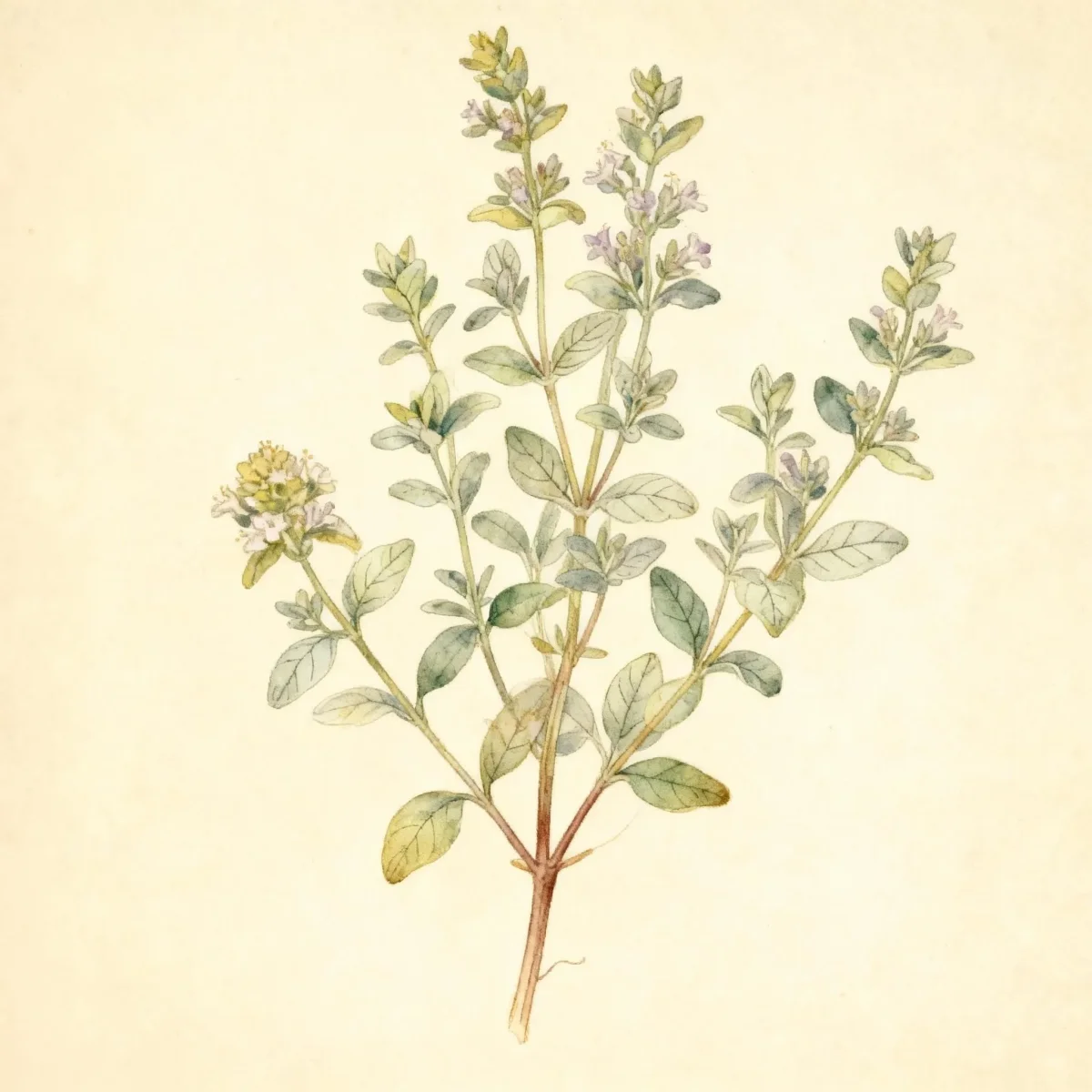
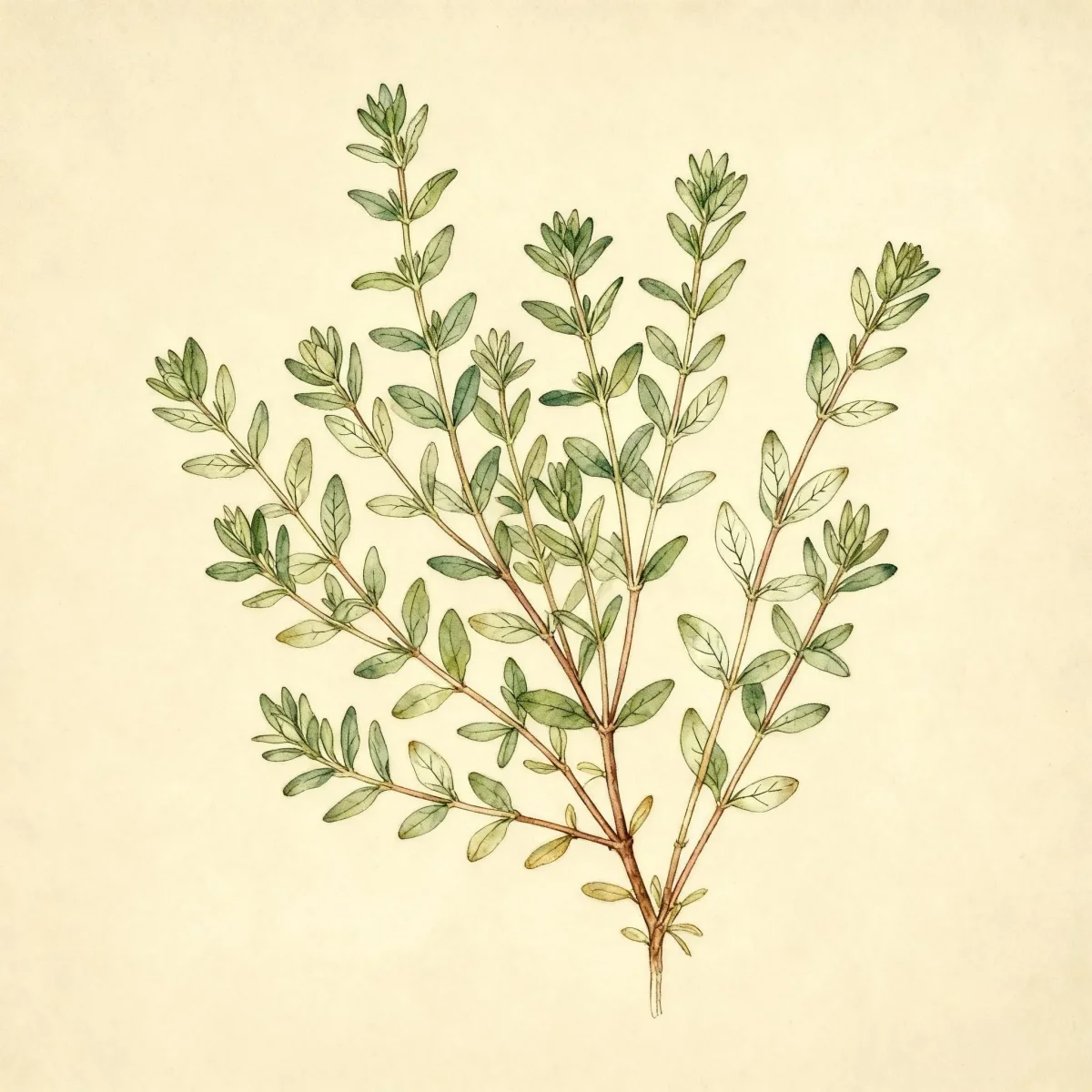
Thymus serpyllum, commonly called wild thyme, creeping thyme or mother-of-thyme, is a hairy, prostrate, creeping, woody-based perennial which is primarily grown as an ornamental ground cover. It forms a flat foliage mat composed of tiny, glossy blue-green leaves on trailing stems, reaching 2-3” tall and spreading up to 18” wide by rooting stems. In summer, dense terminal flower clusters of tiny, deep pink to purple, bell-shaped flowers appear on short, erect stems, attracting numerous bees. The specific epithet serpyllum refers directly to its creeping habit, which allows it to hug the ground perfectly.
Tolerances
- Deer
- Drought
- Dry Soil
- Shallow-Rocky Soil
- Air Pollution
Potential Problems
Mother of thyme is generally robust, exhibiting no serious insect or disease problems under the correct cultural conditions. The primary threat comes from improper moisture management; it is highly susceptible to root rot, especially when planted in heavy, moist, or poorly-drained soils. Avoid overwatering strictly for this reason. In extremely hot and dry summer conditions, gardeners should be observant for occasional outbreaks of spider mites, which can usually be managed with strong blasts of water or insecticidal soap.
Frequently Asked Questions
What hardiness zones is Mother of thyme suitable for?
Thymus serpyllum is hardy across USDA Zones 4 through 8, offering great flexibility for gardeners in temperate climates looking for robust ground cover.
How large does Thymus serpyllum grow?
This plant maintains a very low stature, typically staying only 0.25 feet tall, but it spreads horizontally from 0.25 to 1 foot wide as its stems root along the ground.
When does Mother of thyme bloom?
Mother of thyme produces its abundant, deep pink flowers primarily during the months of June and July.
What sun exposure does Thymus serpyllum need?
For the healthiest growth, tight mat formation, and best flowering display, Thymus serpyllum absolutely requires full sun conditions.
Conclusion
Mother of thyme (Thymus serpyllum) provides exceptional ground-hugging coverage combined with low maintenance and drought resilience. Its ability to thrive in lean, dry soils makes it indispensable for difficult sunny areas, and its summer blooms attract vital pollinators. Before planting, ensure your site offers excellent drainage and full sun exposure to guarantee the long-term success of this creeping perennial.
Companion Planting
When selecting neighbors for Thymus serpyllum, prioritize plants that share its affinity for intense sunlight and dry, gritty soil conditions. Excellent companions include Sedums, Hens and Chicks (Sempervivum), and other low-growing Alyssum varieties, which create beautiful textural contrasts while having similar cultural needs. Avoid planting it near moisture-loving perennials like Hostas or Astilbes, as the constant water will quickly lead to fungal issues in the thyme.
Wildlife Benefits
The aromatic flowers of Mother of thyme are highly attractive to beneficial insects, making it a key plant for supporting local pollinator populations. During its bloom time in early to mid-summer, the dense clusters of pink flowers offer a rich nectar source for bees, providing crucial forage when other garden plants may be slowing down. Integrating patches of Thymus serpyllum into sunny borders is an easy way to boost ecological function in your landscape design.