Chocolate vine (Akebia quinata)
Akebia quinata, or Chocolate vine, is a vigorous, fast-growing woody vine prized for its unique bloom and rapid coverage of structures in USDA Zones 4-8.
Scroll down to discover growing tips, care requirements, companion plants, and more
Complete Plant Information
Overview
Akebia quinata, commonly known as Chocolate vine, is a highly vigorous, deciduous, twining woody vine celebrated for its rapid growth and unique spring display. This plant offers compound palmate leaves, which provide dense screening when given adequate support, making it excellent for covering large surfaces quickly. Gardeners appreciate the slight, sweet fragrance of its early spring flowers, even if the blooms are often partially obscured by developing foliage.
Originating from China, Korea, and Japan, Akebia quinata establishes quickly in most well-drained soils. While it thrives in full sun, its adaptability allows it to tolerate significant shade, although flowering and fruiting may be reduced in lower light conditions. Its sprawling nature means it requires diligent management if planted near smaller shrubs, but it excels as a ground cover or when trained over hefty structures.
The Chocolate vine provides substantial functional value by offering quick cover for unsightly fences, arbors, or banks needing erosion control. Furthermore, the violet fruit pods that appear later in the season are showy, and the internal pulp is edible, adding an element of curiosity to this aggressive climber.
Fast Facts
- Plant Family: Lardizabalaceae
- Plant Type: Vine
- Native Range: Japan, China, Korea
- Hardiness Zones: USDA Zones 4-8
- Size at Maturity:
- Height: 20-40 ft
- Spread: 6-9 ft
- Bloom Time: March to April
- Bloom Description: Chocolate-purple
- Sun Exposure: Full sun to part shade
- Water Needs: Medium
- Maintenance Level: Medium
How to Grow
Planting Akebia quinata is best done in the spring or fall, allowing the roots to establish before summer heat or winter cold. This vine is easily established, preferring well-drained sandy loams, though it tolerates a wide range of soil types. Ensure the location provides a sturdy support structure—trellis, fence, or arbor—as it needs vertical assistance unless intentionally used as a ground cover.
Water needs are moderate; keep the soil evenly moist, especially during the establishment phase and dry periods. Fertilization is rarely required due to the rapid growth rate of Akebia quinata. Pruning should be executed in late spring, right after the flowers have finished blooming. For renovation or severe control of aggressive spread, the plant tolerates being cut back hard, even to the ground.
Be prepared to manage its vigor; this plant grows rapidly and has the potential to suffocate other vegetation if allowed to roam unchecked. For optimal fruit production from your Chocolate vine, plant more than one specimen to ensure good cross-pollination; hand-pollination can sometimes enhance fruiting success in cooler seasons.
Landscape Uses
Akebia quinata excels where rapid, dense coverage is the primary objective. It is an excellent choice for screening unsightly utility boxes, topping tall fences, or adorning large pergolas, providing structure and year-round interest due to its semi-evergreen nature in warmer climates. Its vigorous twining habit makes it a powerhouse for quickly covering vertical elements in the landscape.
Beyond vertical use, the Chocolate vine performs admirably when sprawled over the ground. Use it to stabilize steep banks, camouflage large, unattractive landscape features like old stumps or rock piles, or create a dark, leafy carpet in large shady borders. Its tolerance for heavy shade makes it a reliable ground cover solution where turfgrass struggles.
When selecting companion plants, choose robust species that can compete with the vigorous growth of the Akebia quinata. Avoid placing it near delicate shrubs or perennial borders that could easily be overwhelmed by its spreading canopy.
Standout Features
Flower Qualities
- Showy
- Fragrant
Fruit Qualities
- Showy
- Edible
Noteworthy Characteristics
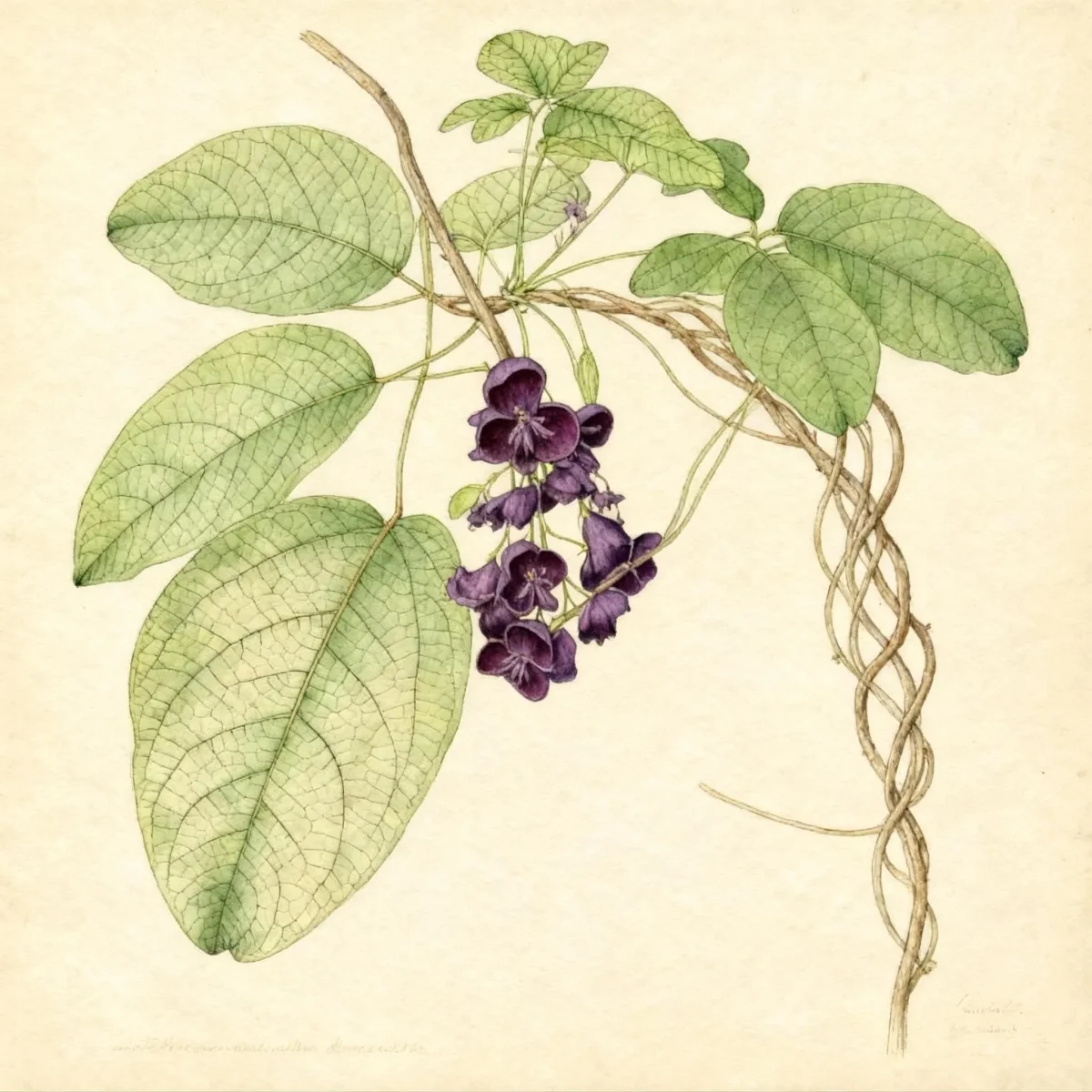
Akebia quinata, commonly called fiveleaf akebia, is a deciduous, twining, woody vine that rapidly grows to 20-40’. It produces compound palmate leaves, each with 5 elliptic to oblong-obovate leaflets (1-3” long) which are dark green above and glaucous below. Small chocolate-purple flowers bloom in drooping axillary racemes in spring, giving this plant the common name chocolate vine. Flowers give way to sausage-shaped, violet fruit pods (to 4” long) which split open in fall to reveal small black seeds imbedded in a whitish pulp, which is edible.
Tolerances
- Deer
- Heavy Shade
- Erosion
Potential Problems
The primary challenge associated with growing Akebia quinata is its invasive potential and rampant growth. While it suffers no serious insect or disease problems historically, its aggressive nature means it can easily smother smaller shrubs, perennial beds, or native ground covers if not actively monitored and pruned.
Management must prioritize containment. Regularly inspect areas bordering desirable plants and physically remove runners attempting entry. Late spring pruning is the most effective way to control size and shape after the flowering period has elapsed.
Frequently Asked Questions
What hardiness zones is Chocolate vine suitable for?
Akebia quinata is reliably hardy in USDA Zones 4 through 8.
How large does Chocolate vine grow?
This swift-growing vine typically reaches heights between 20 and 40 feet, with a spread ranging from 6 to 9 feet wide if allowed to sprawl.
What sun exposure does Akebia quinata need?
For best performance, aim for full sun, but Akebia quinata is very accommodating and will perform well in partial shade, though flowering may be sparse.
When does Chocolate vine bloom?
The characteristic chocolate-purple flowers of Akebia quinata appear relatively early in the season, blooming from March to April.
Conclusion
The vigorous nature and aesthetic appeal of Akebia quinata secure its spot as a highly functional landscape plant, offering fast coverage, fragrance, and edible fruit potential. While the sheer growth rate of the Chocolate vine demands consistent attention to prevent unwanted spread, its adaptability across sun conditions and soil types makes it an outstanding choice for large screening projects or stabilizing tough banks. Before planting, ensure you have an adequate support system and a plan for annual pruning to keep this powerful vine in check within your desired area.
Companion Planting
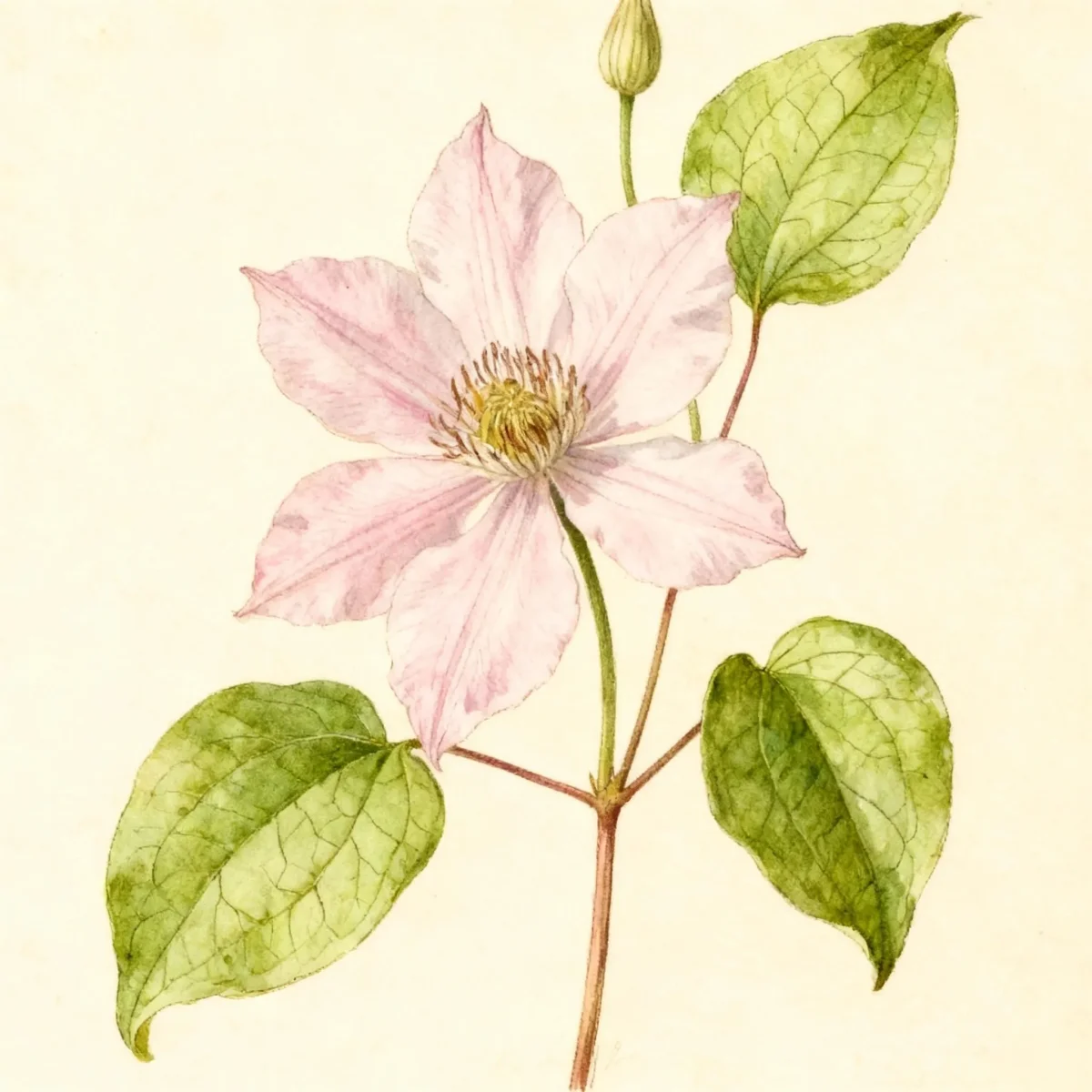
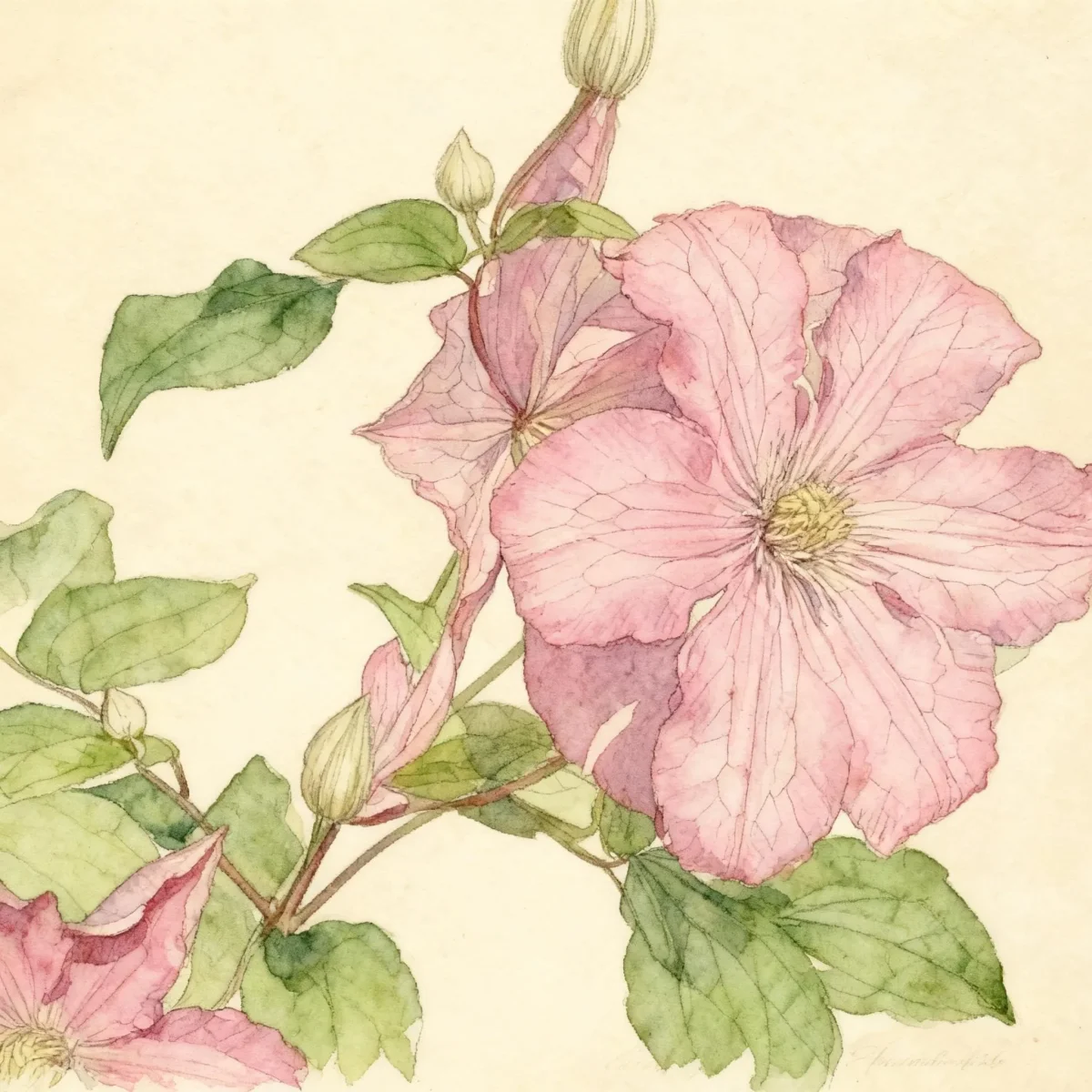
Due to the dense canopy and aggressive root structure of Akebia quinata, companion planting should focus on resilient, robust species, particularly in shady or groundcover contexts. Consider pairing it with hardy ferns or larger, shade-tolerant hostas that can withstand competition. When using the vine on an arbor or structure, hardy climbing roses or vigorous clematis varieties that bloom later in the season can offer sequential color interest above or alongside the vine’s spring display.
Design Ideas
The Chocolate vine shines in situations where concealment is paramount. Use it as a ‘green wall’ over chain-link fences that require total blackout screening, or train it over substantial, broad arbors where its twining vines can form a thick overhead roof offering deep shade. For erosion control, plant the Akebia quinata on banks and allow it to sprawl naturally, as its dense matting root system binds soil effectively, transforming an eyesore bank into a lush, low-maintenance green area.