Spice bush (Lindera benzoin)
Lindera benzoin, the Spice bush, is a low-maintenance native shrub offering fragrant spring flowers and brilliant red fall berries.
Scroll down to discover growing tips, care requirements, companion plants, and more
Complete Plant Information
Overview
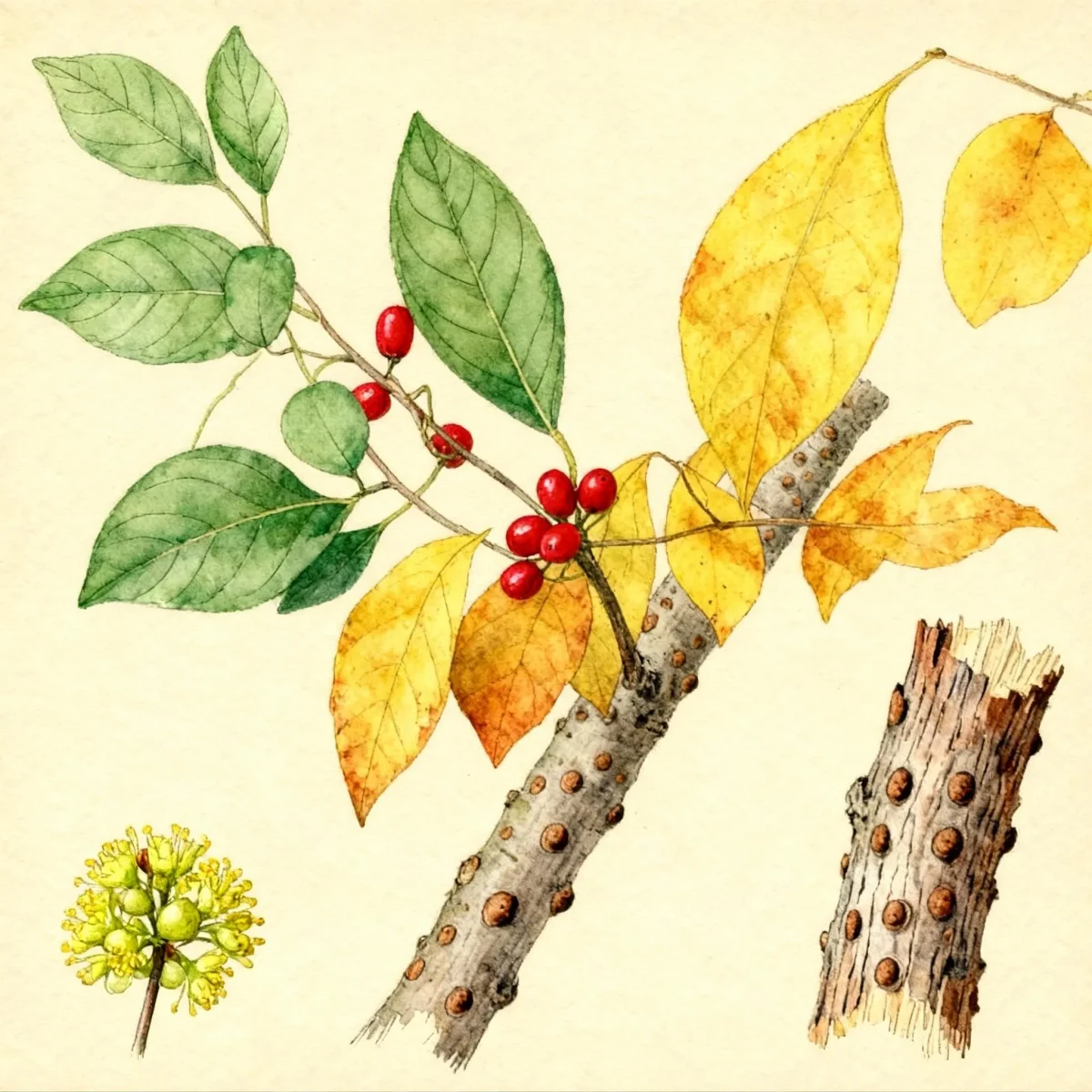
Lindera benzoin, widely known as Spice bush, is a highly valued native deciduous shrub celebrated for its multi-season interest. Its early spring display features clusters of tiny, intensely fragrant, greenish-yellow flowers that perfume the woodland air before leaves emerge. This shrub provides essential structure in the landscape, developing a broad, rounded habit perfect for screening or naturalizing.
The value of Spice bush extends through the growing season; its bright red fall drupes, if pollinated, offer a spectacular visual display attractive to local bird populations. Furthermore, the crushed leaves release a distinctive aromatic scent, contributing to its common name and making this selection a fantastic addition to native plant gardens focused on ecological benefits.
Growing Lindera benzoin generally requires little intervention, classifying it as a low-maintenance choice suitable for diverse conditions found across its central and eastern US native range. It adapts well to challenging sites, provided moisture is available, establishing itself as a significant, reliable component in woodland borders and wet areas.
Fast Facts
- Plant Family: Lauraceae
- Plant Type: Deciduous shrub
- Native Range: Central and eastern United States
- Hardiness Zones: USDA Zones 4-9
- Size at Maturity:
- Height: 6-12 ft
- Spread: 6-12 ft
- Bloom Time: March
- Bloom Description: Greenish yellow
- Sun Exposure: Part shade
- Water Needs: Medium
- Maintenance Level: Low
How to Grow
For optimal establishment, plant Lindera benzoin in the spring or fall when conditions are cooler. This shrub performs best in average, medium, well-drained soils but is notably adaptable, tolerating clay soil and wet soil conditions, making it excellent for rain garden installations. While it thrives in part shade, gardeners seeking the fullest fall color from their Spice bush should ensure it receives a bit more sun exposure during the growing season.
Care for your Spice bush is generally straightforward. Once established, it requires medium water input, focusing on consistent moisture rather than excessive daily saturation. Fertilizing is rarely necessary; healthy specimens growing in rich woodland soils rarely need amendment. Pruning, if required, should focus on removing crossing or damaged branches, though the natural habit is generally attractive and requires minimal shaping.
A key growth consideration is the plant’s dioecious nature; only female plants produce the attractive red berries that mature in autumn. If fruiting is desired, ensure a male pollinator plant is situated nearby to guarantee successful fertilization. Conversely, if aesthetics are the main concern, planting several non-fruiting specimens will still reward you with fragrant spring flowers and excellent fall foliage.
Landscape Uses
Lindera benzoin excels in settings where adaptable, medium-sized native shrubs are needed. Its tolerance for heavy shade makes it an indispensable asset for woodland gardens or planting beneath mature trees where light levels are low. Use Spice bush to soften the edges of borders, establish informal, dense screens, or utilize its tolerance for wet soil along natural streams, ponds, or in dedicated rain gardens.
For gardeners focused on creating layered scenes, the Spice bush serves as a wonderful mid-story element. It pairs beautifully with spring ephemerals that bloom before it leafs out, or with ferns and hostas that appreciate similar moisture and shade conditions during the summer. Its versatility also allows it to be integrated into naturalized plantings designed to mimic native habitats.
The unique qualities of Lindera benzoin—its fragrant flowers and wildlife appeal—mean it contributes significantly to a biodiverse landscape. Consider mass planting groups of three or five for maximum visual impact during the spring bloom and fall berry season, allowing the shrub to develop its naturally broad, rounded form.
Standout Features
Flower Qualities
- Showy
- Fragrant
Fruit Qualities
- Showy
Noteworthy Characteristics
Lindera benzoin, commonly called spicebush, is a Missouri native deciduous shrub with a broad, rounded habit which typically grows 6-12’ (less frequently to 15’) high in moist locations in bottomlands, woods, ravines, valleys and along streams. Clusters of tiny, apetalous, aromatic, greenish-yellow flowers bloom along the branches in early spring before the foliage emerges, and the leaves turn an attractive yellow in autumn. The larva (caterpillar) of the spicebush swallowtail butterfly feeds on the leaves of this shrub, increasing its value to local ecology.
Tolerances
- Deer
- Drought
- Heavy Shade
- Clay Soil
- Wet Soil
- Black Walnut
Potential Problems
Lindera benzoin generally exhibits superior pest and disease resistance, meaning gardeners rarely contend with serious insect infestations or fungal issues. Because it handles poor conditions well, cultural stress is often the only factor leading to distress. Ensure the planting site remains adequately moist, especially when the plant is young or grown in sunnier locations, as prolonged drought is more likely to cause temporary leaf scorch than true disease.
Frequently Asked Questions
What hardiness zones is Spice bush suitable for?
The Spice bush (Lindera benzoin) is hardy and performs reliably across USDA Zones 4 through 9.
How large does Lindera benzoin grow?
This deciduous shrub typically matures to a height and spread between 6 to 12 feet, forming a broad, rounded shape.
When does Spice bush bloom?
Lindera benzoin bursts into bloom early in the season, typically in March, producing small, greenish yellow flowers.
What sun exposure does Lindera benzoin need?
This plant prefers part shade but is highly adaptable and can tolerate full shade (though it may be more open) or even full sun, provided the required soil moisture is maintained.
Conclusion
The Spice bush, Lindera benzoin, offers year-round appeal through its fragrant spring blossoms, distinctive foliage, and vibrant red fall fruit, making it a low-maintenance champion for native gardens. Its significant tolerance for shade, wet soil, and challenging conditions ensures success in diverse landscape niches. Before planting, check your local hardiness zone to ensure optimal growth for this fantastic native shrub.
Wildlife Benefits
The contribution of Spice bush to local ecosystems is substantial, particularly regarding avian and lepidopteran life. The bright red drupes produced on female plants are a crucial late-season food source for many species of songbirds as they prepare for migration or overwintering. Furthermore, this shrub serves as an essential host plant for the Spicebush Swallowtail butterfly.
Caterpillars of the Spicebush Swallowtail feed exclusively on the leaves of Lindera benzoin. The caterpillars mimic bird droppings in their early instars, providing significant camouflage, before developing into their striking final form. Providing this specific host plant is a simple, effective way to support butterfly populations in your local area.
Companion Planting
When site selection prioritizes the medium water needs shared by Lindera benzoin, consider pairing it with other moisture-loving natives that thrive in part to full shade. Excellent partners include various species of ferns, such as Ostrich Fern (Matteuccia struthiopteris), which share similar woodland aesthetics and soil preferences.
Other strong companions that appreciate consistent moisture include plants prized for their foliage texture, such as large perennial Sedges (Carex species) or certain woodland shrubs like Witch Hazel (Hamamelis). Combining these elements creates a robust, multi-layered understory that mimics a rich, moist native ravine habitat.