Garlic chives (Allium tuberosum)
Allium tuberosum (Garlic chives) offers edible flavor and fragrant white flowers; hardy bulb ideal for herbs, zones 3-9.
Scroll down to discover growing tips, care requirements, companion plants, and more
Complete Plant Information
Overview
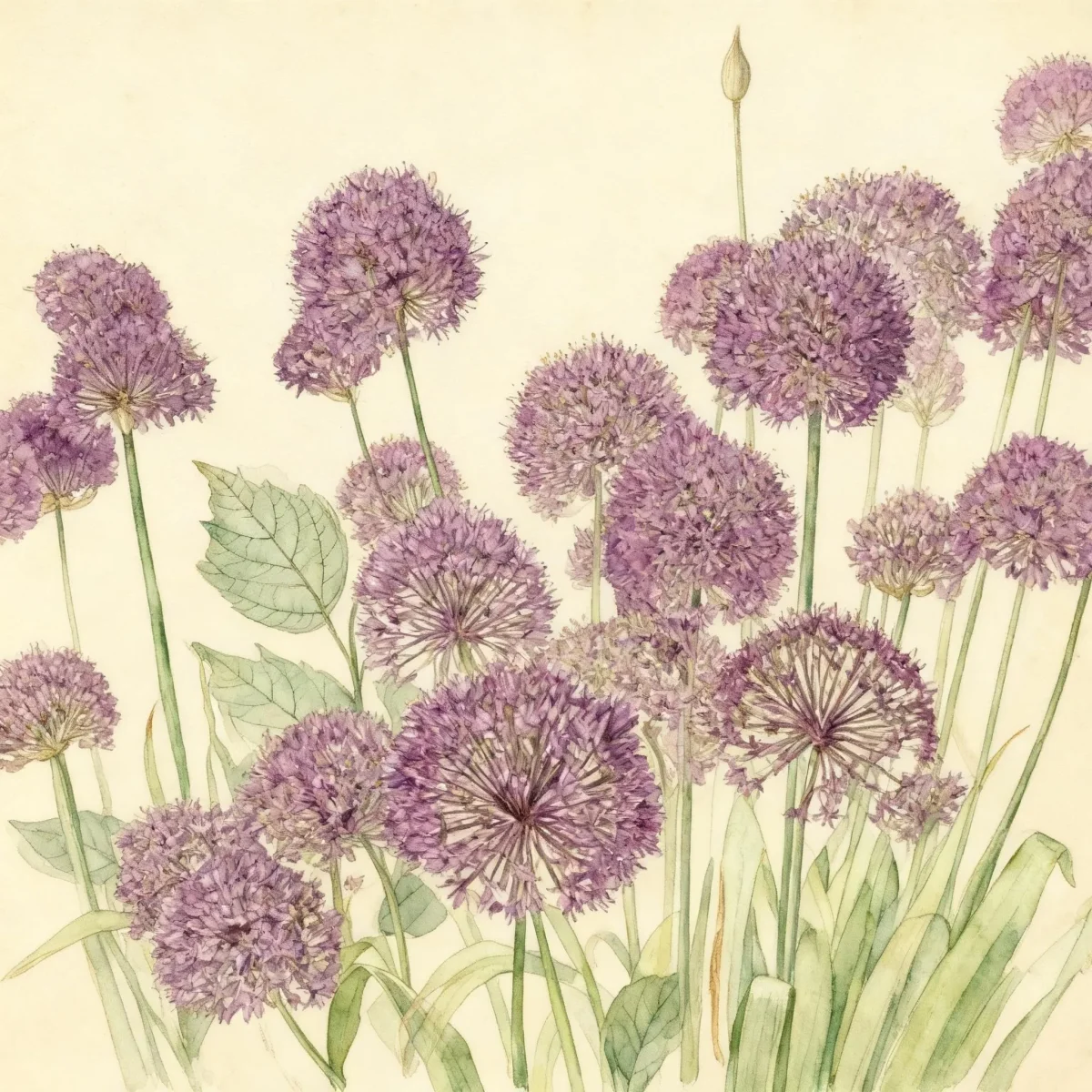
Allium tuberosum, commonly known as garlic chives, is a highly valued member of the onion family, prized equally for its culinary uses and its ornamental value. Gardeners appreciate this clump-forming plant for its distinctive, mildly garlicky flavor provided by its chive-like, flat, gray-green leaves. Beyond the kitchen, the plant rewards gardeners in late summer with aesthetically pleasing, fragrant blooms atop stiff stems.
This resilient perennial bulb thrives across a wide range of climates, requiring only average soil conditions when provided with adequate sunlight. While it is simple to integrate into almost any garden space, be aware that Allium tuberosum spreads reliably through clumps and self-seeding mechanisms. Successful cultivation relies on timely management to keep the handsome clumps contained within their designated area.
Garlic chives offers dual functionality, making it an excellent choice for herb gardens, mixed borders, and naturalized plantings. The presence of this plant introduces texture and late-season flowers, while the crushed leaves offer a flavorful addition to countless dishes, solidifying its importance in both functional and ornamental landscaping.
Fast Facts
- Plant Family: Amaryllidaceae
- Plant Type: Bulb
- Native Range: Southeastern Asia
- Hardiness Zones: USDA Zones 3-9
- Size at Maturity:
- Height: 1-1.5 ft
- Spread: 1-2 ft
- Bloom Time: August to September
- Bloom Description: Creamy white
- Sun Exposure: Full sun to part shade
- Water Needs: Dry to medium
- Maintenance Level: Medium
How to Grow
Start growing Allium tuberosum by planting the tuberous rootstocks in spring or early fall, though it is often established from purchased divisions or sets. Garlic chives prefers average, well-drained soil and can tolerate full sun or benefit slightly from afternoon shade in the hottest climates. Ensure the planting location allows for its eventual spread by giving it adequate room, especially if you are allowing it to naturalize slightly.
Care for Allium tuberosum is generally straightforward. Water only when the soil is dry to medium; established clumps are quite drought tolerant once they settle in. Fertilization is rarely necessary unless growing in extremely poor soil, as rich soil can encourage excessive leaf growth at the expense of flowering.
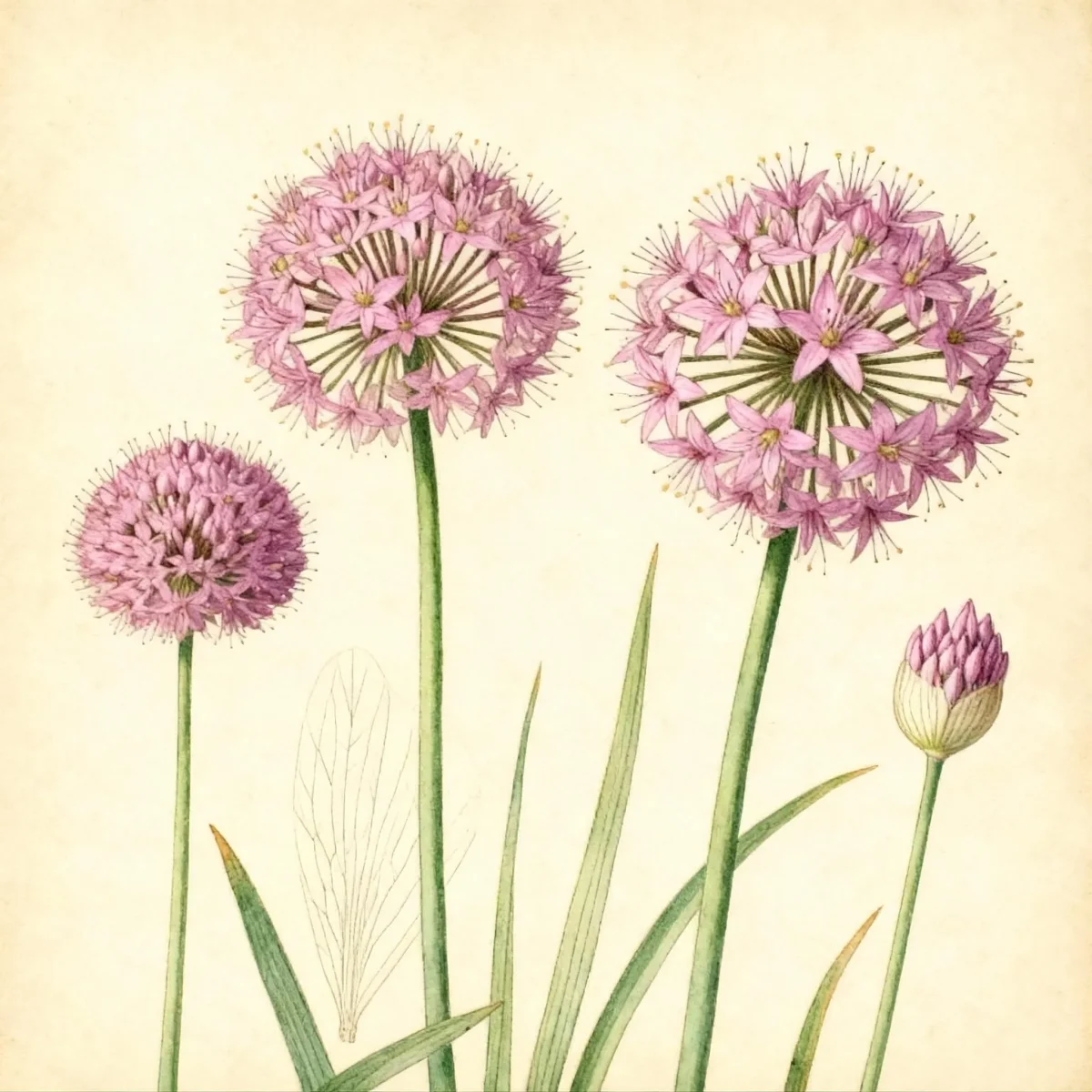
The most critical aspect of maintenance involves managing its spreading habit. To prevent this strong spreader, commonly called Chinese chives, from taking over, you must deadhead the flowers immediately after blooming finishes but before the seeds have fully set. Allowing the umbels of tiny, star-shaped flowers to go to seed will result in numerous new seedlings appearing throughout the adjacent garden areas.
Landscape Uses
The versatility of Allium tuberosum makes it a stellar addition to diverse garden designs. Its primary recommended use is in herb gardens and vegetable patches where the culinary leaves can be easily harvested throughout the growing season. However, the attractive growth habit and late-season creamy white flowers lend themselves well to cottage gardens and border fronts, softening the edges of pathways.
For a more relaxed look, garlic chives can be allowed to naturalize in areas where its vigorous clumping is welcome, such as in informal woodland transitions or rock gardens, provided you check soil drainage. If planting near more delicate perennials, ensure proper spacing, as overcrowding can occur quickly. The flowers themselves are quite showy and offer a pleasant, though subtle, fragrance, attracting attention late in summer.
When using Allium tuberosum ornamentally, remember the cardinal rule: deadheading is essential. If you want controlled clumps of chives and the ornamental flower display without subsequent seeding, remove the spent flower heads once all blossoms fade. This single action keeps the borders tidy and prevents low-maintenance garlic chives from becoming a persistent weed.
Standout Features
Flower Qualities
- Showy
- Fragrant
Noteworthy Characteristics
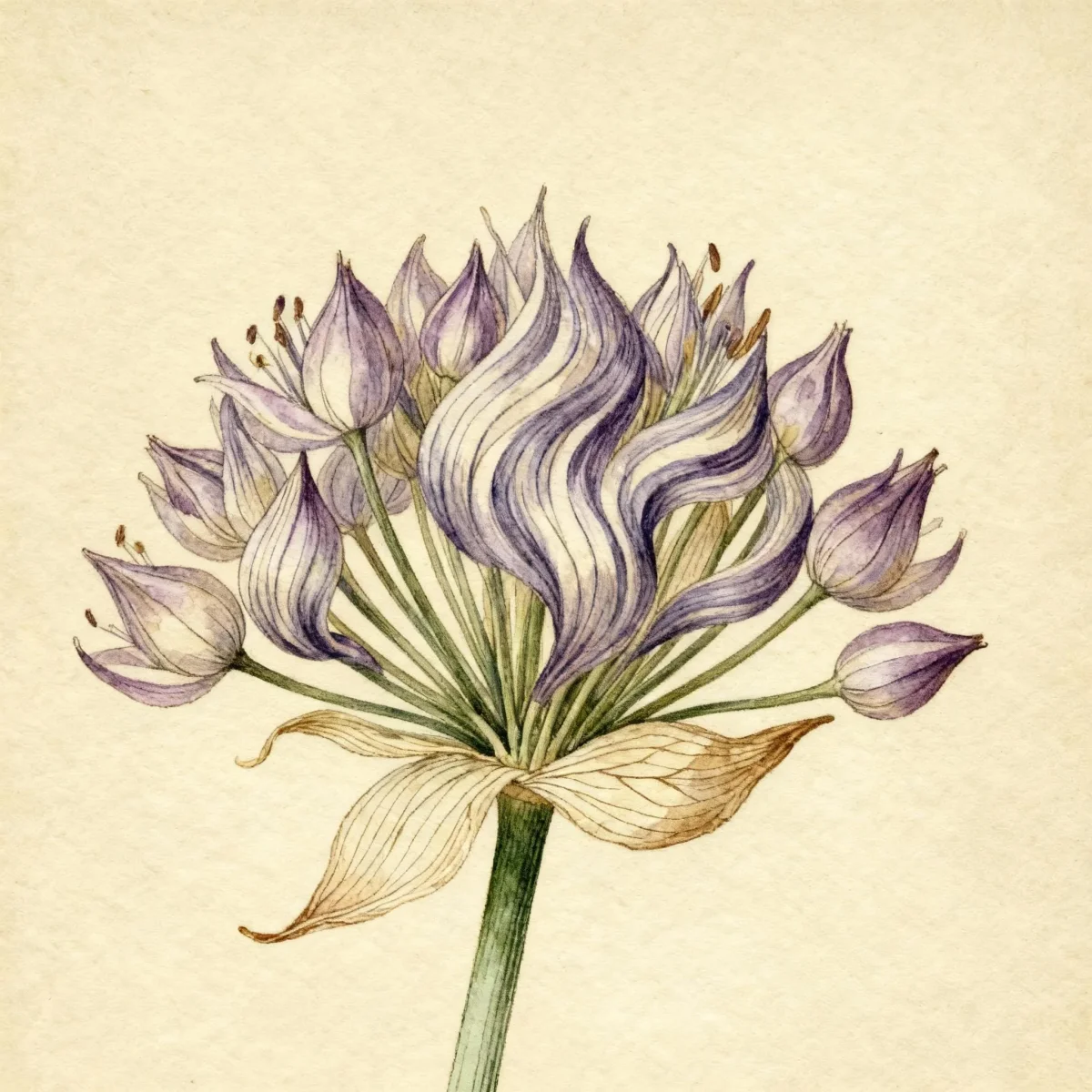
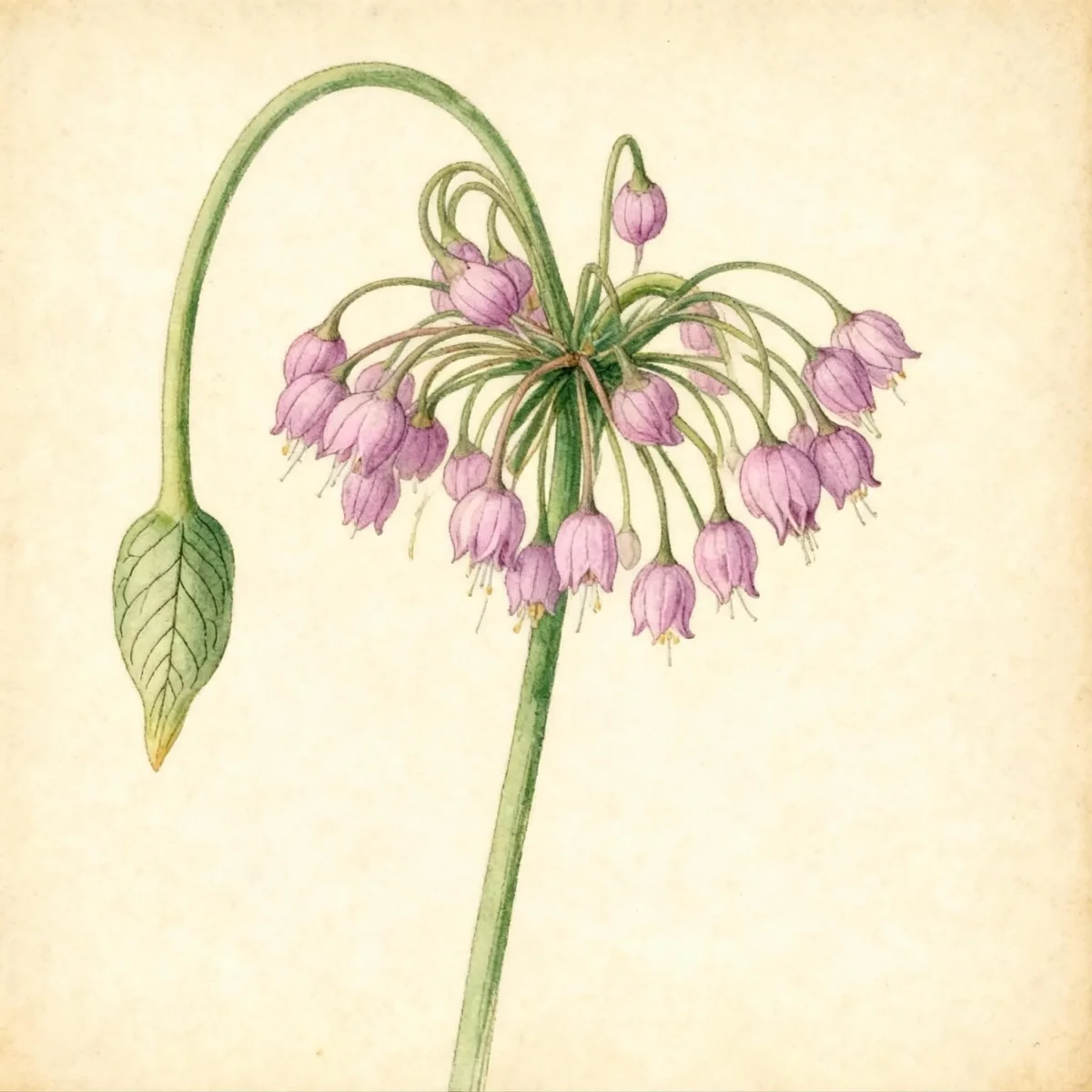
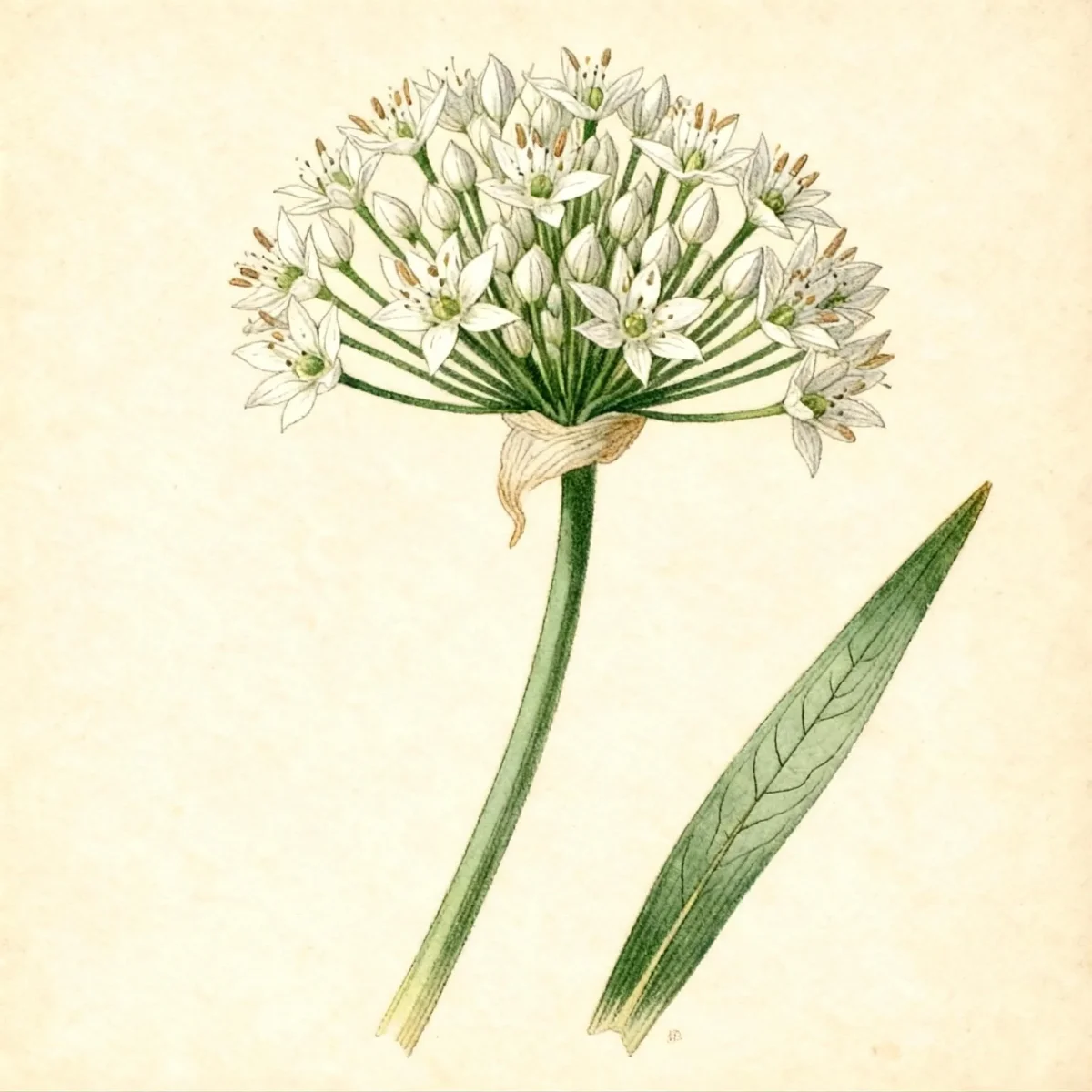
Allium tuberosum, commonly called garlic chives, is a clump-forming onion family member which may be grown for both culinary and ornamental purposes. Features chive-like, gray-green leaves up to 12” long which may be used in cooking in the same manner as chives (Allium schoenoprasum). Tiny, star-shaped, white flowers with brown striped tepals appear in loose clusters atop leafless stems in late summer into fall. The flower scent is notably more suggestive of violets compared to the strong oniony smell of the foliage.
Tolerances
- Deer
- Drought
- Black Walnut
Potential Problems
Garlic chives typically presents very few health concerns regarding pests or diseases, making it a reliably low-risk plant. Its robust nature means serious fungals, viruses, or insect infestations are rare in typical garden settings. The primary ‘problem’ associated with this species is its vigorous reproductive nature.
Allium tuberosum can become vigorous and spread somewhat aggressively through both self-seeding and the expansion of its tuberous rootstocks. If not managed, this spreading can cause it to behave like a weed, encroaching on less assertive neighboring plants. Proactive deadheading after the blooms fade is the most effective cultural practice to entirely control unwanted spread and keep the planting tidy throughout the season.
Frequently Asked Questions
What hardiness zones is Garlic chives suitable for?
Allium tuberosum is reliably hardy in USDA Zones 3 through 9, offering a long range of adaptability for many gardeners.
How large does Garlic chives grow?
This plant typically reaches a mature height between 1 and 1.5 feet, with a spread of 1 to 2 feet, forming a dense clump.
When does Garlic chives bloom?
Garlic chives produce their blooms relatively late in the season, typically flowering from August into September with small, creamy white flowers.
What sun exposure does Garlic chives need?
For optimal performance, Allium tuberosum thrives best when situated in locations receiving full sun to partial shade conditions.
Conclusion
Garlic chives provides exceptional value by blending culinary utility with dependable ornamental appeal, thanks to its fragrant late-summer flowers and edible foliage. The reliable performance of Allium tuberosum in varied conditions, along with its substantial drought tolerance, makes it a staple keeper. Before planting, ensure you are comfortable with its slightly aggressive spreading habits and commit to deadheading to maintain clean garden borders.
Companion Planting
Allium tuberosum performs excellently near plants that appreciate similar dry-to-medium soil conditions and full sun exposure. Pairing garlic chives with herbs like rosemary or lavender can create an attractive Mediterranean-style section, leveraging shared water needs. In vegetable beds, its presence near carrots or tomatoes is traditional, as some gardeners believe the oniony scent helps deter certain common vegetable pests, creating a mutually beneficial relationship.
Propagation Tips
The most common and effective way to propagate Garlic chives is through division. Since Allium tuberosum forms dense clumps of tuberous roots, divide the existing clumps every three to four years, ideally in early spring or fall just before or after the main growing season. Simply dig up the entire clump and gently separate sections, ensuring each division has a healthy segment of roots and foliage before replanting immediately at the same depth in well-drained soil.