Snake's head fritillary (Fritillaria meleagris)
Discover the unique checkered blooms of Snake's head fritillary (Fritillaria meleagris). A low-maintenance bulb perfect for naturalizing.
Scroll down to discover growing tips, care requirements, companion plants, and more
Complete Plant Information
Overview
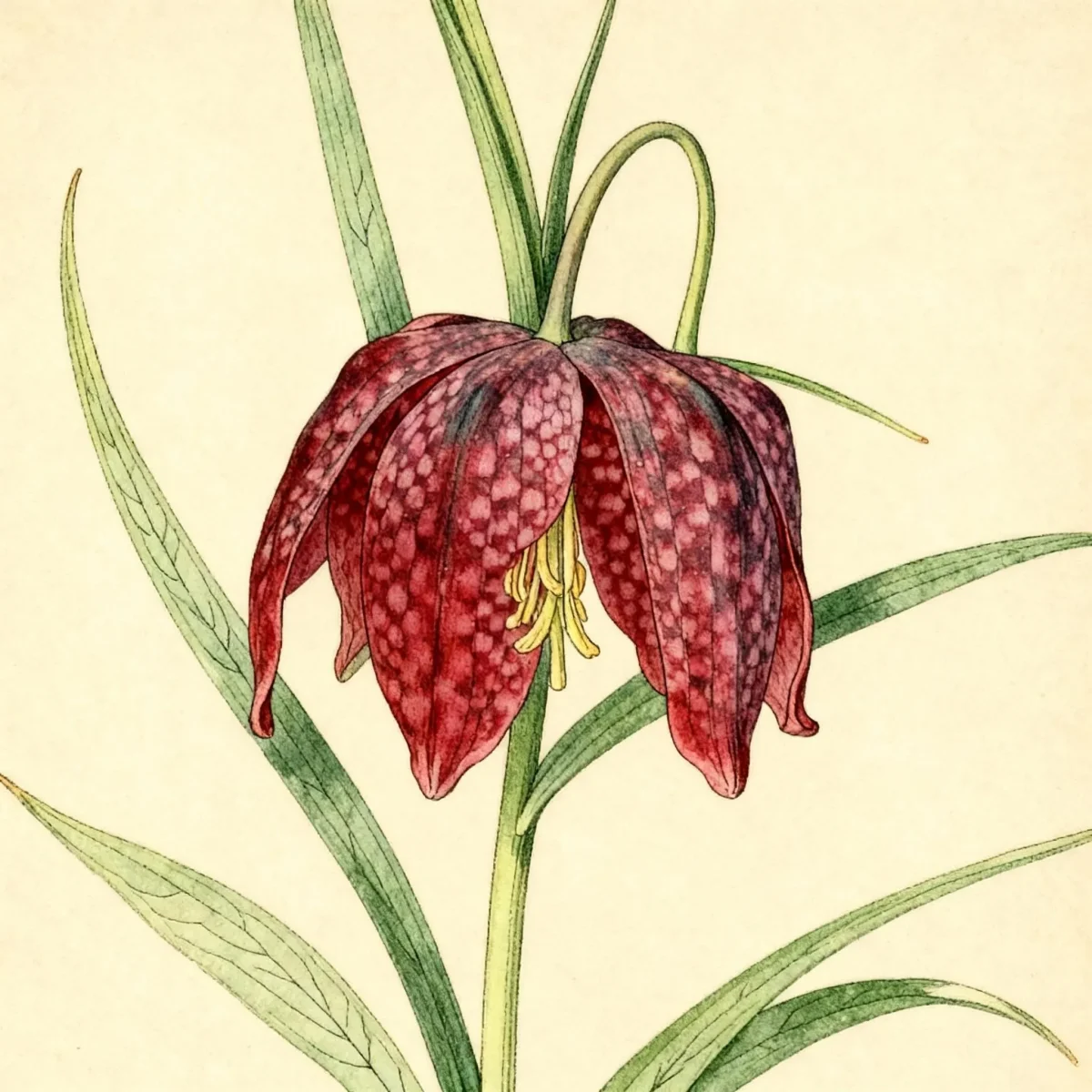
The Snake’s head fritillary, botanically known as Fritillaria meleagris, is a captivating early-spring bulb prized for its distinctive, nodding, bell-shaped flowers. These blooms feature a unique tessellated or checkered pattern, reminiscent of a guinea fowl’s plumage, providing essential color when few other perennials are active. Growing easily from bulbs, this species thrives when naturalized in suitable settings, forming attractive drifts over time.
Native to flood plains across Europe and Western Asia, Fritillaria meleagris brings a touch of wild elegance to manicured gardens. Its dainty stature and low-maintenance requirements make it an excellent choice for gardeners seeking spring interest without high demands. The foliage, which is grassy and slender, should be left intact after flowering to allow the bulbs to store energy for future seasons.
Gaining popularity for its naturalizing ability, the checkered lily adds textural and chromatic diversity to woodland edges and lawn naturalization projects. Successful cultivation focuses on mimicking its native damp, grassy habitat, ensuring consistent moisture during the growing phase while avoiding soggy winter conditions.
Fast Facts
- Plant Family: Liliaceae
- Plant Type: Bulb
- Native Range: Western Asia, Europe
- Hardiness Zones: USDA Zones 3-8
- Size at Maturity:
- Height: 0.75-1 ft
- Spread: 0.5-0.75 ft
- Bloom Time: April
- Bloom Description: Checkered reddish-brown, purple, white, gray
- Sun Exposure: Full sun to part shade
- Water Needs: Medium
- Maintenance Level: Low
How to Grow
Planting Fritillaria meleagris bulbs should occur in the fall, ideally before the first hard freeze. Locate areas that receive full sun to light, dappled shade, such as beneath deciduous trees that will leaf out later in spring. The soil must be organically rich and possess excellent drainage, though the plant requires medium moisture throughout its active growing cycle. Plant bulbs approximately 3 inches deep and space them 3 to 4 inches apart to encourage eventual naturalization.
During spring growth and blooming, maintain consistent moisture levels; erratic watering can stress the bulbs. Fertilization is rarely necessary if the soil is prepared properly with organic matter. Following the bloom period in April, the primary care task is patience: the foliage must be allowed to die back naturally, which usually occurs by late spring, as this process signals the bulbs entering summer dormancy.
This requirement for natural die-back is crucial for the long-term health of the Snake’s head fritillary. Do not cut back the stems once flowering ceases; instead, let the leaves yellow and wither completely before tidying the area. This plant settles well into meadows or lawn edges where mowing is delayed until summer.
Landscape Uses
The recommended use for Fritillaria meleagris is naturalizing, where its delicate structure melts beautifully into established settings. Plant bulbs en masse in woodland gardens or along the edges of streams or ponds where soil moisture is naturally higher in spring. They also work exceptionally well when scattered throughout rock gardens, where the unusual flower form provides a surprising vertical accent among low-growing alpine plants.
For borders, these springtime beauties serve as excellent complementary accents near later-emerging perennials or spring-flowering shrubs. Because they are deer-tolerant, you can plant them freely in areas where browsing is a concern. The unique, dusky coloration of the flowers makes Fritillaria meleagris a fantastic pairing material for plants with bright yellow or crisp white blooms, creating high contrast in the early spring palette.
Standout Features
Flower Qualities
- Showy
- Good Cut
Noteworthy Characteristics
Fritillaria meleagris, commonly called checkered lily, is a bulbous perennial that is native to river flood plains in Europe where it is frequently seen growing in large colonies. Plants are somewhat dainty in appearance, featuring solitary (less frequently 2-3), drooping, 2” long, bell-shaped flowers which are checkered and veined with reddish-brown, purple, white and gray atop slender stems growing to 15” tall. Blooms in April. Linear, lance-shaped, grass-like green leaves are widely-spaced on the stems. Also commonly called guinea-hen flower because of the resemblance of the mottled flower color to a guinea hen. In the right environment, it will live long and naturalize well. Genus name is from the Latin word fritillus meaning dice box in reference to the checkerboard pattern on the petals of Fritillaria meleagris. Specific epithet means spotted like a guineafowl.
Tolerances
- Deer
- Black Walnut
Potential Problems
The Snake’s head fritillary generally remains free from significant pest or disease issues, offering reliable performance as a low-maintenance perennial. Gardeners should be mindful that bulb rot is the primary threat, which occurs if the soil remains waterlogged, particularly during the summer dormancy period. Ensuring excellent drainage, as detailed in the cultural requirements, is the best preventative measure against fungal issues.
If slugs or snails are prevalent in your garden, they might occasionally nibble on emerging spring foliage, though severe damage is uncommon for this species. Monitoring plants early in the season and implementing organic slug controls if necessary will keep your Fritillaria meleagris looking pristine throughout its short growing window.
Frequently Asked Questions
What hardiness zones is Snake’s head fritillary suitable for?
Fritillaria meleagris is very resilient, suitable for USDA Zones 3 through 8, making it adaptable to a wide range of climates across North America and Europe.
How large does Fritillaria meleagris grow?
This plant maintains a delicate stature, typically reaching a height between 0.75 to 1 foot tall, with a spread of only 0.5 to 0.75 feet wide.
When does Snake’s head fritillary bloom?
The bloom time is consistently in April, showcasing its unique checkered pattern of reddish-brown, purple, white, and gray shades before most other spring flowers appear.
What sun exposure does Fritillaria meleagris need?
This species performs best in conditions ranging from full sun exposure to lighter, part shade environments, making it quite flexible for early spring planting sites.
Conclusion
Offering captivating checkerboard blooms and exceptional longevity when situated correctly, the Snake’s head fritillary is a must-have for early spring interest. Its deer resistance and low maintenance elevate the value of Fritillaria meleagris for naturalized settings. Plan to plant your bulbs this fall in well-drained soil and look forward to its unique performance next April.
Companion Planting Considerations
When selecting neighbors for Fritillaria meleagris, consider plants that share similar moisture requirements during the spring but fade quietly during the summer dormancy of the bulb. Early emerging perennials such as Scilla, Grape Hyacinth (Muscari), or early Narcissus make excellent ground-level companions. As the fritillary fades, plants that enjoy partial shade and consistent medium moisture, like certain Hosta varieties or woodland Phlox, will fill in the area seamlessly.
Avoid planting them directly under dense evergreens where summer shade is too heavy or winter moisture retention is excessive, as this exacerbates the risk of bulb rot. The goal is to integrate the Fritillaria meleagris into a tapestry where subsequent planting covers the dying back foliage without requiring gardeners to disturb the dormant bulbs.
Seasonal Care Calendar
Fall (Planting Time): This is the critical window for planting your Fritillaria meleagris bulbs 3 inches deep. Ensure the site has excellent drainage before installation.
Early Spring (Emergence): Monitor for signs of growth following the last hard frost. This is when the plant requires consistent moisture to support flowering. Avoid walking heavily on newly emerging shoots.
Late Spring/Early Summer (Dormancy Prep): Once flowering finishes in April and May, resist the urge to cut back the foliage. Allow the linear, grass-like leaves to remain until they have fully yellowed and collapsed, typically by late spring, ensuring adequate energy storage for the following season.
Summer/Winter: The bulbs are dormant during the heat of summer and require little attention, provided the soil does not become excessively arid or conversely, waterlogged in winter.