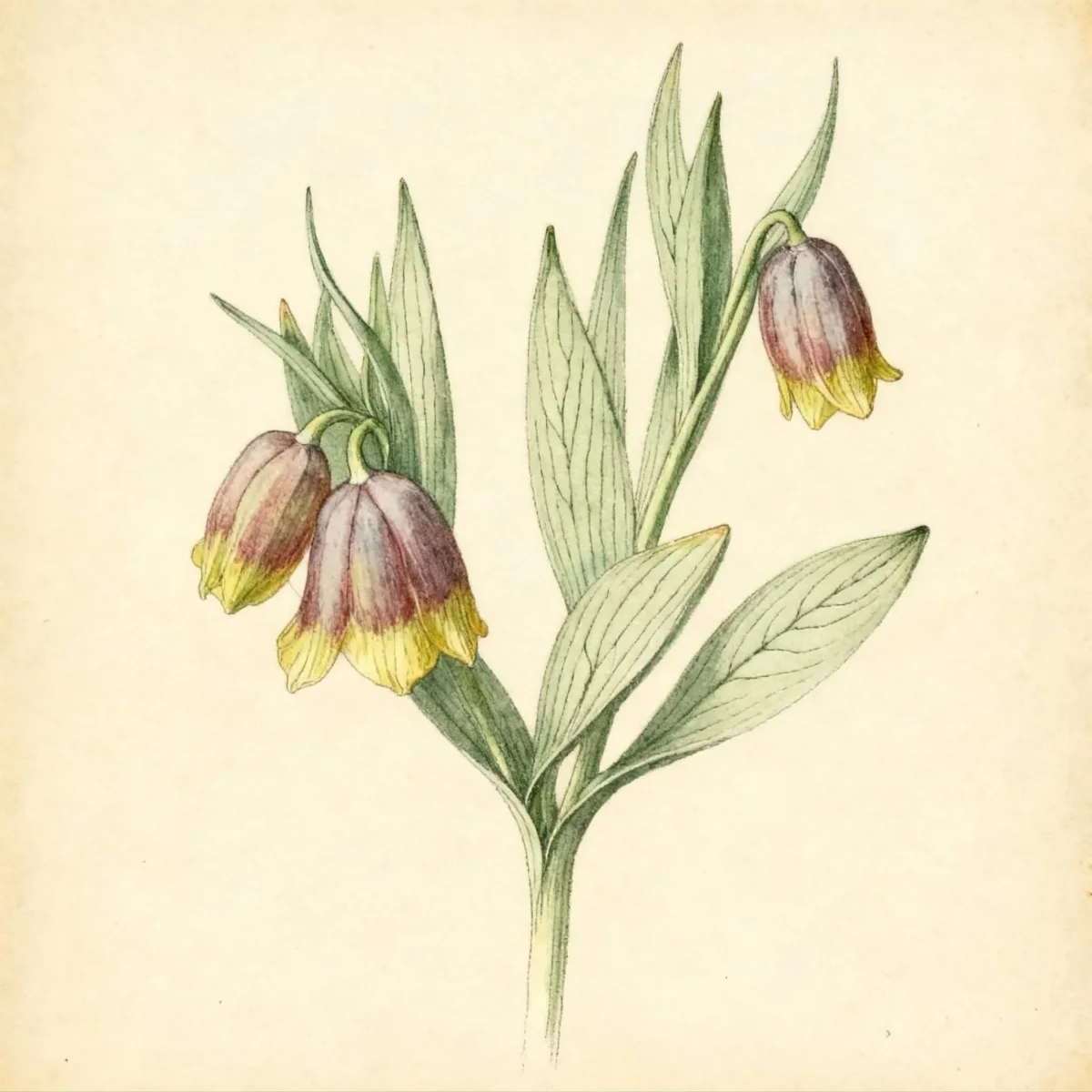
Fritillary (Fritillaria michailovskyi)
Compact Fritillaria michailovskyi Fritillary bulb with nodding brownish-purple flowers, ideal for rock gardens in zones 5-8.
Scroll down to discover growing tips, care requirements, companion plants, and more
Complete Plant Information
Overview
The Fritillaria michailovskyi, commonly known as Fritillary, is a highly sought-after bulbous perennial native to the stony slopes of the Transcaucasus and northeastern Turkey. It gains notoriety for its squat, compact habit and unique, nodding, bell-shaped flowers that display a deep brownish-purple hue, often accented by bright yellow petal edges. Gardeners value this species for its early spring interest, bringing structure and unusual color to rock settings before many other bulbs emerge.
This short Fritillary typically reaches less than a foot in height, making it perfect for foreground planting or alpine displays. While it demands well-drained soil—a critical factor for alpine species success—it is generally considered low-maintenance once established. Its ability to naturalize, coupled with its deer resistance, further enhances its practical appeal for long-term garden design.
Cultivating Fritillaria michailovskyi successfully requires mimicking its native alpine scree environment. Focus intently on soil drainage, as wet feet, especially during summer dormancy, invite bulb rot which is its primary threat. When planted correctly in fall, this beautiful species rewards the patient gardener with one of spring’s more intriguing floral displays.
Fast Facts
- Plant Family: Liliaceae
- Plant Type: Bulb
- Native Range: Northeastern Turkey, Transcaucasus
- Hardiness Zones: USDA Zones 5-8
- Size at Maturity:
- Height: 0.5-1 ft
- Spread: 0.5-0.75 ft
- Bloom Time: April to May
- Bloom Description: Brownish-purple
- Sun Exposure: Full sun to part shade
- Water Needs: Medium
- Maintenance Level: Low
How to Grow
Planting Fritillaria michailovskyi bulbs should occur in the fall, setting them quite deep—about 4 inches below the surface—and spaced approximately 6 inches apart. The most critical aspect of cultivation is ensuring superior soil drainage. Amend heavy soils by incorporating significant amounts of sand or grit into the planting hole to mimic the stony slopes where this Fritillary thrives.
During the growing season (early spring through bloom), the plants require a medium amount of water. However, once the foliage begins to senesce after flowering in late May or early June, moisture requirements drastically drop. The bulb enters summer dormancy and becomes intolerant of wet soil conditions during this period; allow the soil to dry out significantly until fall planting time resumes.
Provide a protective, good quality winter mulch after the ground freezes to buffer temperature fluctuations, especially in the northern reaches of its hardiness range. While they perform best in full sun in cooler climates, providing light shade may be beneficial in very hot regions. Propagation is straightforward, relying on natural offsets that form around the parent bulb over time; disturbance should be minimized once established.
Landscape Uses
The short stature and dramatic, nodding blooms of Fritillaria michailovskyi make it an excellent candidate for dedicated spring displays. Its recommended uses heavily lean towards creating naturalized drifts within rock gardens or established perennial borders where the soil is lean and exceptionally well-drained. Avoid placing them in heavy clay areas or spots that retain standing water.
For structured designs, consider integrating this Fritillary into sunny borders where its low profile won’t obscure taller spring bulbs like daffodils or early tulips. They also perform admirably in patio containers; when using pots, utilize a very gritty potting mix supplemented with extra drainage material to guarantee protection over summer dormancy. Planting in groups rather than singles maximizes the visual impact of the unique flower structure.
Because this bulb naturally goes dormant and disappears by mid-summer, companion planting with later-emerging perennials that enjoy similar dry summer conditions is advised. Conversely, plant companions that emerge later in spring to neatly fill the gap left when the Fritillaria michailovskyi foliage dies back, ensuring the garden remains attractive all season.
Standout Features
Flower Qualities
- Showy
Noteworthy Characteristics
Fritillaria michailovskyi, commonly called fritillary or Michael’s flower, is a bulbous perennial of the lily family that typically grows to 8-10” tall with a spread to 5-7” wide. This is a short, compact fritillary that is native to alpine screes and stony slopes near snow line in the mountains of northeastern Turkey. Each bulb produces narrow, strap-shaped, gray-green leaves and 1 to 4 nodding, downward facing, bell-shaped to bowl-shaped, brownish-purple flowers with a bright yellow border along the outer petal edges. Genus name is from the Latin word fritillus meaning dice box in reference to the checkerboard pattern on the petals of Fritillaria meleagris.
Tolerances
- Deer
- Black Walnut
Potential Problems
Bulb rot is consistently the most significant concern when growing Fritillaria michailovskyi, occurring specifically due to inadequate drainage, particularly when the bulbs enter their summer resting phase. Management requires amending soil heavily with grit, sand, or fine gravel prior to planting to ensure rapid water egress.
Beyond soil issues, these plants can be susceptible to common fungal and viral diseases, including leaf spot, rust, and mosaic virus; promptly removing any visibly diseased foliage helps prevent spread. Slugs and snails are also noted pests that can damage the tender new foliage emerging in the spring, so protective measures like horticultural baits or barriers may be necessary during early growth periods.
Frequently Asked Questions
What hardiness zones is Fritillary suitable for?
This bulb is suitable for USDA Zones 5 through 8, requiring cold winters but needing excellent drainage yearly.
How large does Fritillaria michailovskyi grow?
Fritillaria michailovskyi typically reaches a height between 0.5 and 1 foot tall with a spread of 0.5 to 0.75 feet.
When does Fritillary bloom?
The bloom time for this species is April to May, showcasing distinctive brownish-purple flowers.
What sun exposure does Fritillaria michailovskyi need?
It tolerates a range, preferring full sun to part shade; full sun exposure yields the best results in cooler northern zones.
Conclusion
The Fritillaria michailovskyi offers exceptional value to the alpine or rock garden enthusiast due to its robustly charming, low-growing habit and unique early blooms. Successfully growing this striking Fritillary hinges entirely on providing deep, fast-draining soil, especially during its summer dormancy. Before purchasing, diligently check your native soil composition against its requirements and plan your fall planting accordingly to ensure this Turkish native thrives for years to come.
Companion Planting
Selecting appropriate companions is essential for ensuring the success of Fritillaria. Look for other spring-ephemeral bulbs or perennials that enjoy similar sharp drainage but have different foliage habits. Good companions include spring-flowering bulbs that disappear by summer, such as certain species of Scilla or smaller Narcissus.
Avoid planting next to moisture-loving perennials which may keep the soil damp through summer dormancy, inadvertently causing rot. Plants that enjoy lean, rocky soil and thrive in similar sun exposure, such as Draba or Saxifraga species, make excellent neighbors, as they share the need for grit and open space around the bulb base.
Design Ideas for Alpine Screes
Mimicking the plant’s native scree environment is the best approach for landscape design. Create shallow berms or pockets within a larger rock garden using a mix of grit, gravel, and low-nutrient compost to ensure rapid moisture movement away from the bulbs of Fritillaria michailovskyi.
Use small, light-colored stones or gravel chips as a top dressing around the emerging foliage. This technique helps regulate soil temperature, deters slugs, and visually reinforces the alpine setting this Fritillary prefers. Plant bulbs in small colonies of 5 to 9 bulbs for substantial visual impact when they bloom simultaneously in April and May.