Foxtail lily (Eremurus himalaicus)
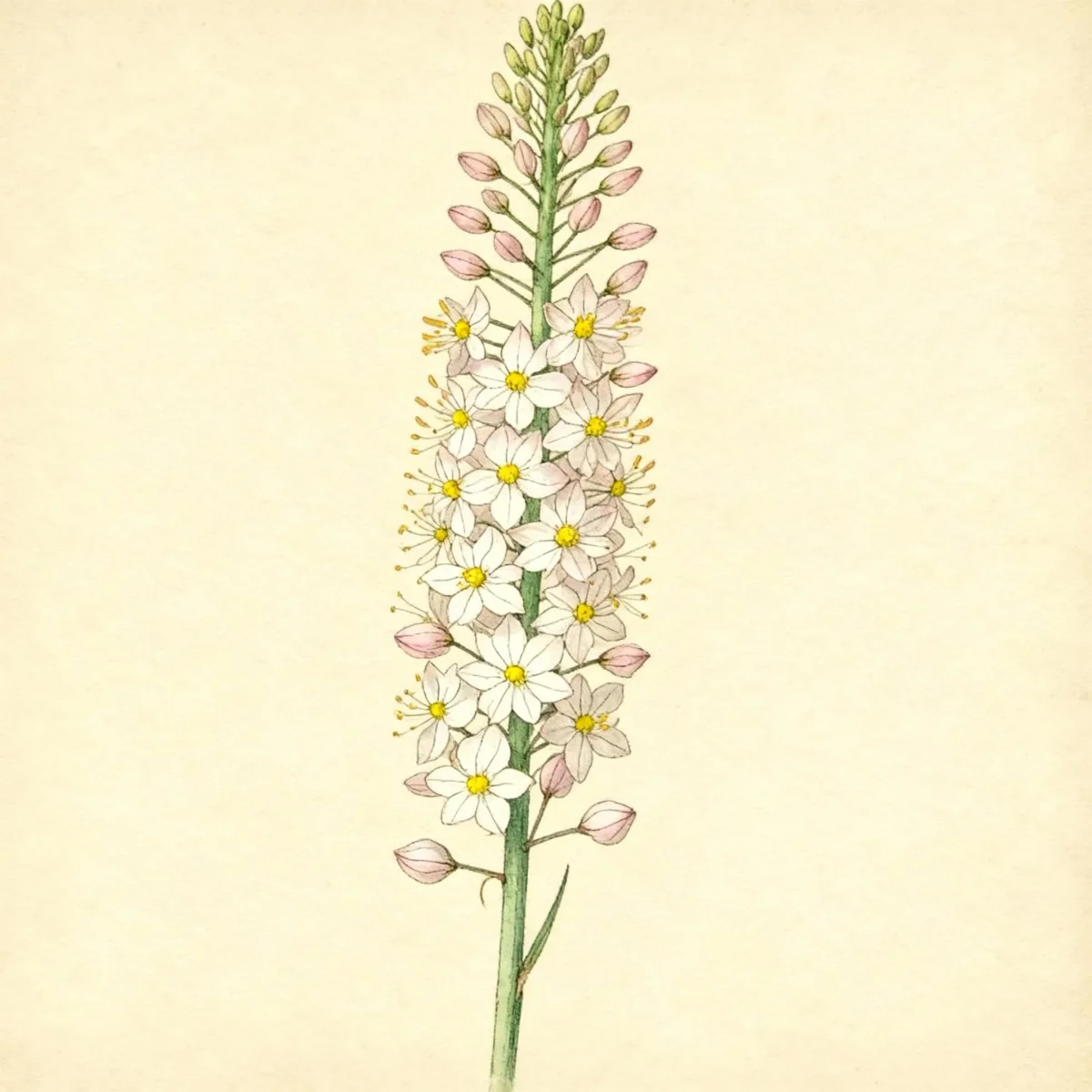
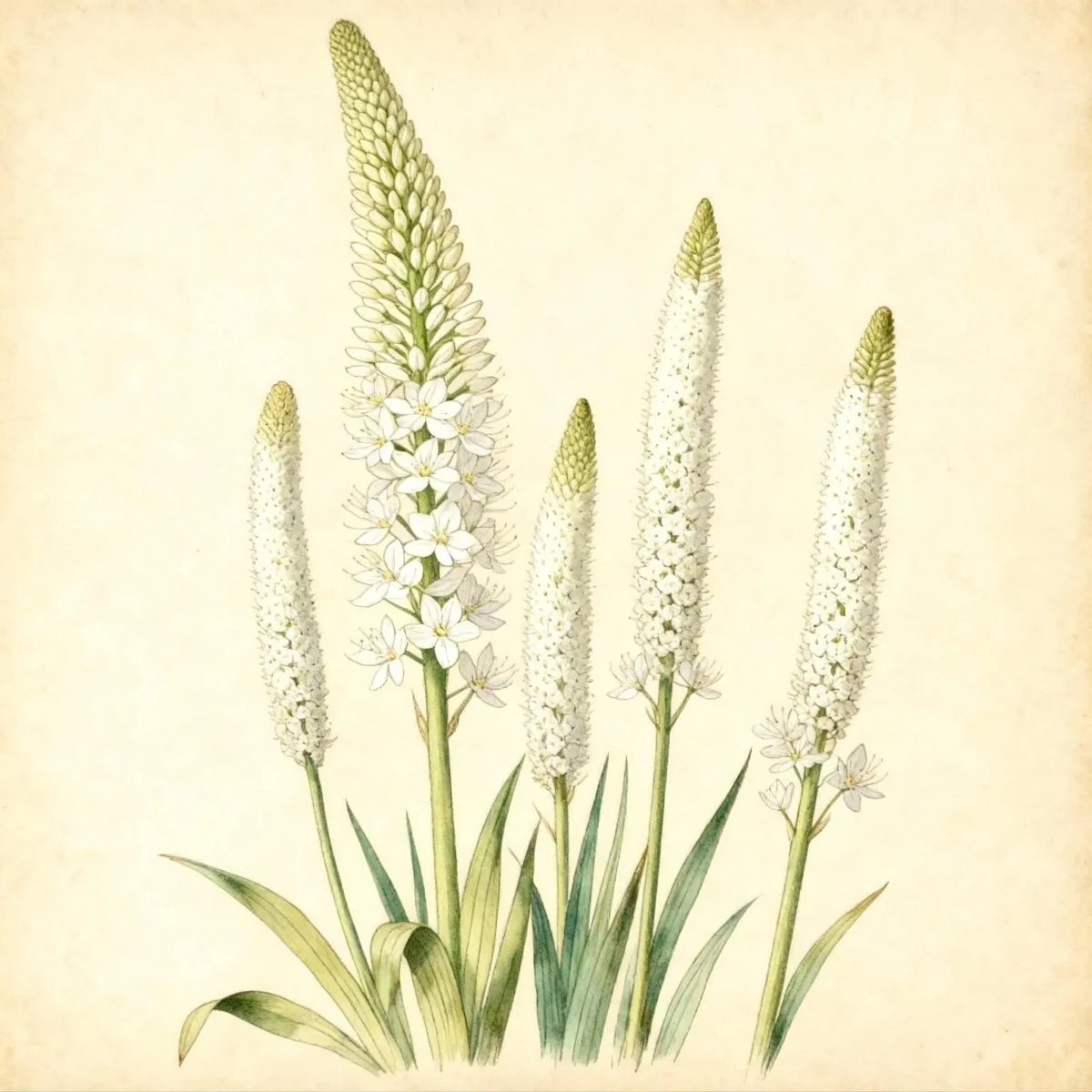
Eremurus himalaicus, the Foxtail lily, offers stunning 4-6 ft white flower spikes in late spring. A star for borders.
Scroll down to discover growing tips, care requirements, companion plants, and more
Complete Plant Information
Overview
The majestic Eremurus himalaicus, popularly known as the Foxtail lily, is an essential feature for dramatic vertical accent in the perennial garden. Native to the western Himalayas, this spectacular bulb produces towering flower spikes that command attention throughout late spring and early summer. Gardeners prize the Eremurus himalaicus for its bold architecture, reaching heights of four to six feet topped by dense racemes of radiant white blooms.
These dramatic plants emerge from a unique, starfish-shaped rootstock, requiring specific planting techniques to ensure success. While the initial setup requires care, the resulting display—especially when paired against darker backgrounds—rewards the effort put into growing this Foxtail lily. Proper drainage is the single most critical factor for long-term establishment of Eremurus himalaicus.
Once established, the Foxtail lily offers both visual height and delightful fragrance during its bloom window of May through June. Following blooming, the foliage naturally enters summer dormancy, meaning their space can be utilized by later-season perennials. Considering its striking appearance, thoughtful placement is key when integrating the Eremurus himalaicus into your landscape design.
Fast Facts
- Plant Family: Asphodelaceae
- Plant Type: Bulb
- Native Range: Afghanistan, western Himalayas, Pakistan
- Hardiness Zones: USDA Zones 5-8
- Size at Maturity:
- Height: 4-6 ft
- Spread: 1-2 ft
- Bloom Time: May to June
- Bloom Description: White
- Sun Exposure: Full sun
- Water Needs: Medium
- Maintenance Level: Medium
How to Grow
Planting the Foxtail lily must be done correctly to accommodate its unusual root structure. The best time for planting is early fall. Cultivate the soil deeply, ensuring it is organically rich and exceptionally well-drained; sandy loams are ideal. Plant the crown 4–6 inches deep over a small mound of soil, carefully spreading the thick, fleshy, finger-like roots outward over this mound, similar to planting a bare root rose. Space plants 2 to 3 feet apart to allow for mature spread.
This bulb demands excellent drainage; root rot is a severe threat in poorly drained clay soils. Water needs are medium during the active growing period, but crucially, reduce soil moisture significantly once the foliage begins to yellow and the plant enters its summer dormancy period. Since the flower spikes are high, the Eremurus himalaicus benefits greatly from being sited in a location protected from strong winds, and staking tall stalks may be necessary for support.
Protect the tuberous roots over winter by applying a winter mulch, which also helps guard emerging young foliage from potential late spring frosts. If a late frost threatens new growth, take immediate action, such as covering the delicate shoots with a simple structure like a waste basket or cardboard box. Divisions can be performed roughly every three to four years to maintain vigor.
Landscape Uses
The towering presence of the Foxtail lily naturally lends itself to positions where height is desired, making them perfect for the rear of mixed perennial borders. They create magnificent vertical accents, shooting upward to pierce the skyline without creating a heavy, dense profile. For the most impactful display, plant Eremurus himalaicus in front of a dark background, such as a hedge of dark green shrubs, which allows the white flower spikes to truly glow.
Beyond the border, these striking plants excel when used as a focal point or specimen planting where their singular form can be appreciated. They are also excellent candidates for cutting gardens; the long, dramatic spikes make for stunning, modern arrangements indoors. Consider mixing them with mid-height companions that fill the void once the foxtail lily’s foliage quietly recedes into summer dormancy.
Standout Features
Flower Qualities
- Showy
- Fragrant
Noteworthy Characteristics
Eremurus himalaicus, commonly called Foxtail lily, is native to the western Himalayas. Each plant features a 2’x 2’ clump of strap-shaped basal leaves (each to 12-18” long). From the center of each clump rises a thick leafless stalk to 4-6’ tall bearing, an erect, foxtail-like spike (terminal raceme) of tiny, densely-packed, outward facing, white flowers (each to 1” across). The genus name derives from the Greek words eremia (desert) and oura (tail), referencing the flower spike’s appearance, while the specific epithet means of the Himalayas.
Tolerances
Potential Problems
The Foxtail lily generally remains resistant to most severe insect or disease pressures. The primary cultural challenge revolves around drainage; root rot is a significant threat if the plant sits in poorly drained, heavy clay soils. Gardeners in certain challenging climates may find this plant difficult to establish well, requiring precise soil modification. Always ensure planting is done in raised mounds or amended soil to promote rapid water runoff.
Frequently Asked Questions
What hardiness zones is Foxtail lily suitable for?
The Eremurus himalaicus is suitable for USDA Hardiness Zones 5 through 8.
How large does Foxtail lily grow?
This plant typically reaches a height between 4 and 6 feet, with a modest spread of 1 to 2 feet at maturity.
When does Foxtail lily bloom?
The Eremurus himalaicus exhibits its bloom time from May to June, displaying striking white flowers along the spike.
What sun exposure does Foxtail lily need?
The Foxtail lily requires a location that receives full sun exposure to perform optimally.
Conclusion
The Eremurus himalaicus, or Foxtail lily, provides indispensable vertical architecture and charming fragrance to the late spring garden. By paying close attention to establishing excellent drainage and planting in full sun, you can successfully cultivate these dramatic spikes in USDA Zones 5-8. Plan your planting for early fall to maximize successful establishment before winter arrives.
Companion Planting
When designing a border around your Foxtail lily, select companions that appreciate similar full sun and medium moisture conditions while blooming slightly later. Consider pairing them with late-blooming bearded irises or early peonies, whose mid-season blooms overlap nicely. For summer structure after the Eremurus himalaicus foliage dies back, incorporate mid-height perennials like sturdy Salvias or ornamental grasses that can tolerate the slightly drier soil conditions that develop as the Foxtail lily goes dormant.
Design Ideas for Vertical Impact
Vertical elements are crucial for adding dynamism to any design, and the Foxtail lily excels here. Use them sparingly as intentional exclamation points rather than planting them in large blocks to maintain their drama. Placing them near pergolas or against the vertical lines of hardscaping emphasizes their height. Placing a dark evergreen foundation planting directly behind the white blooms of the Eremurus himalaicus ensures the flower spike remains the uncontested focus, even from a distance.