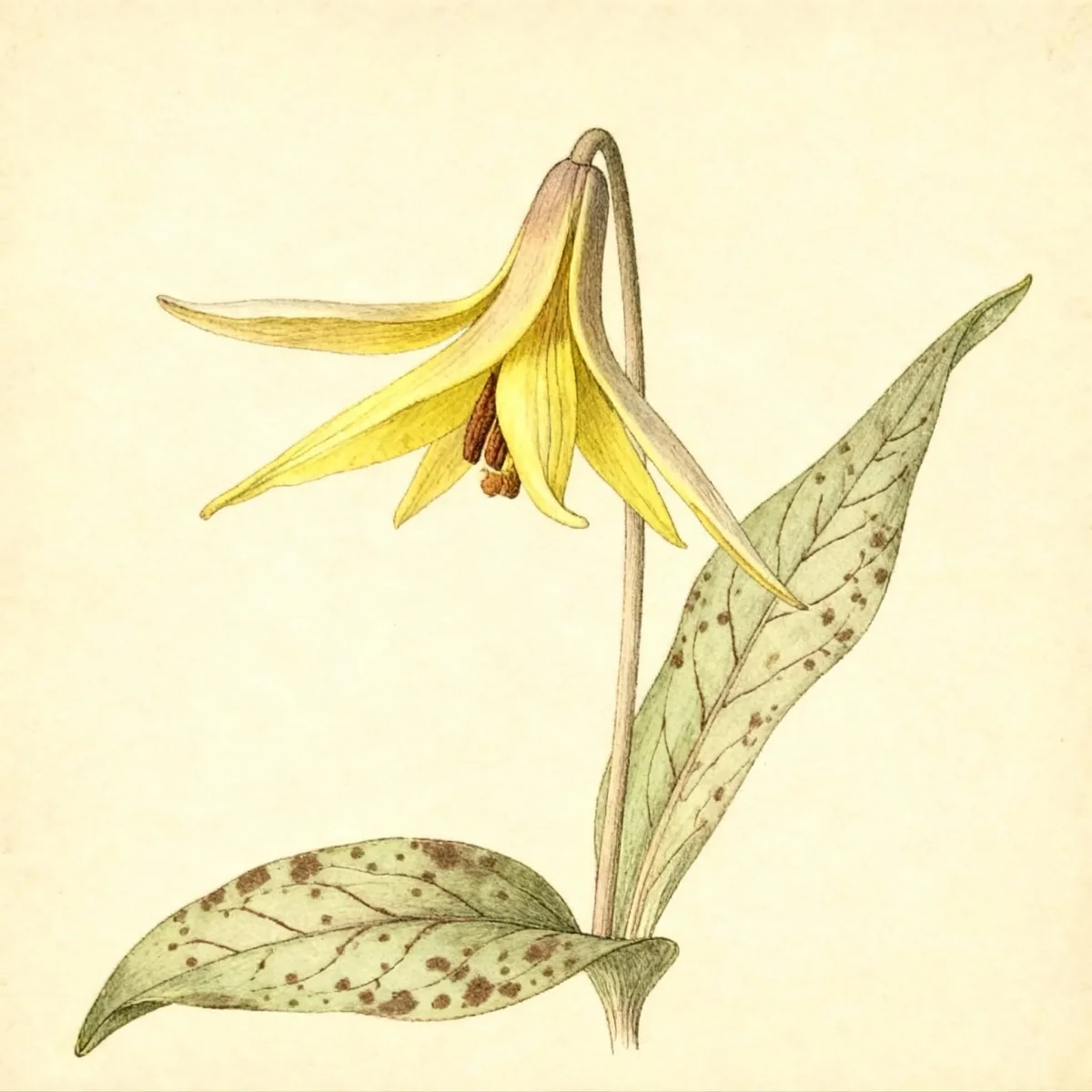
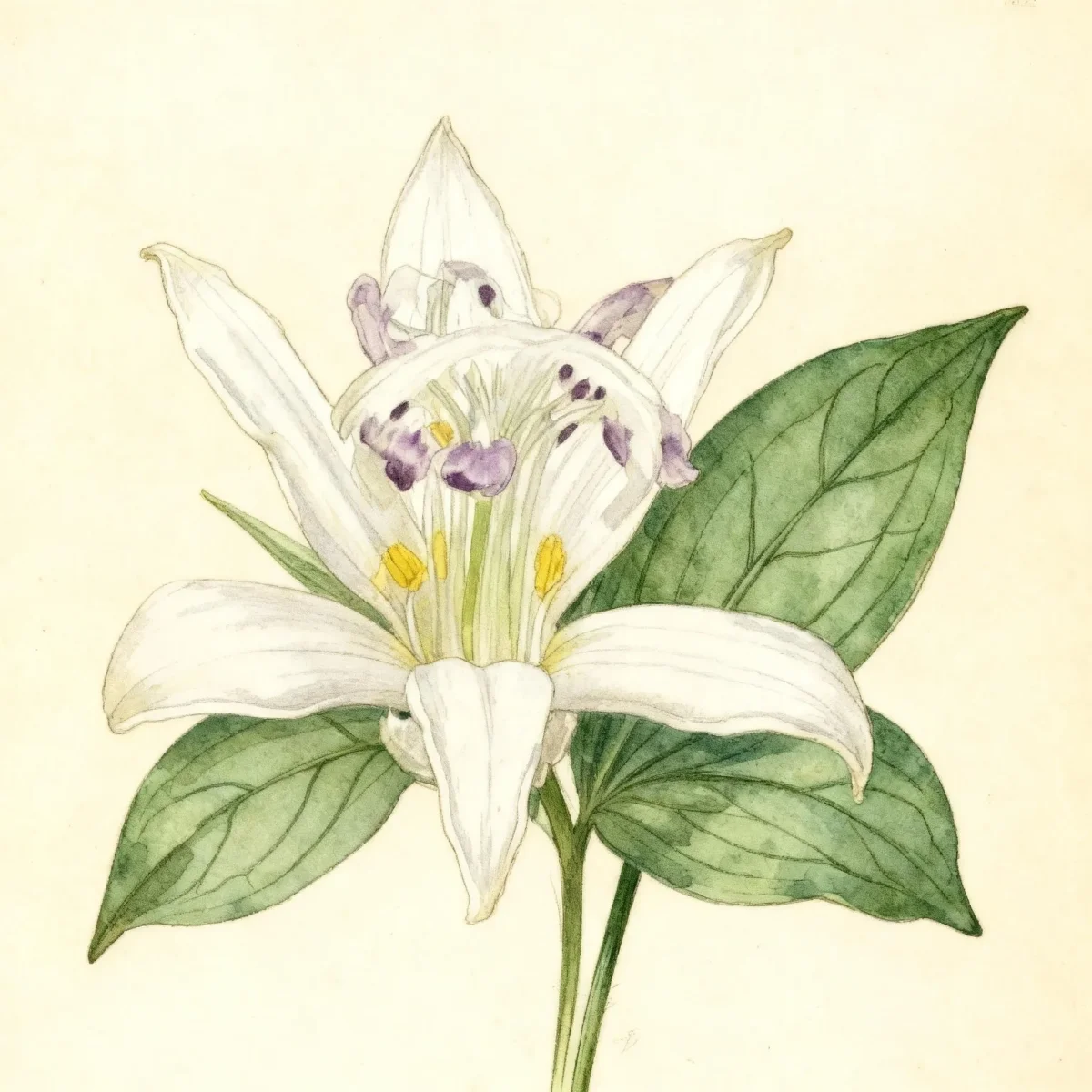
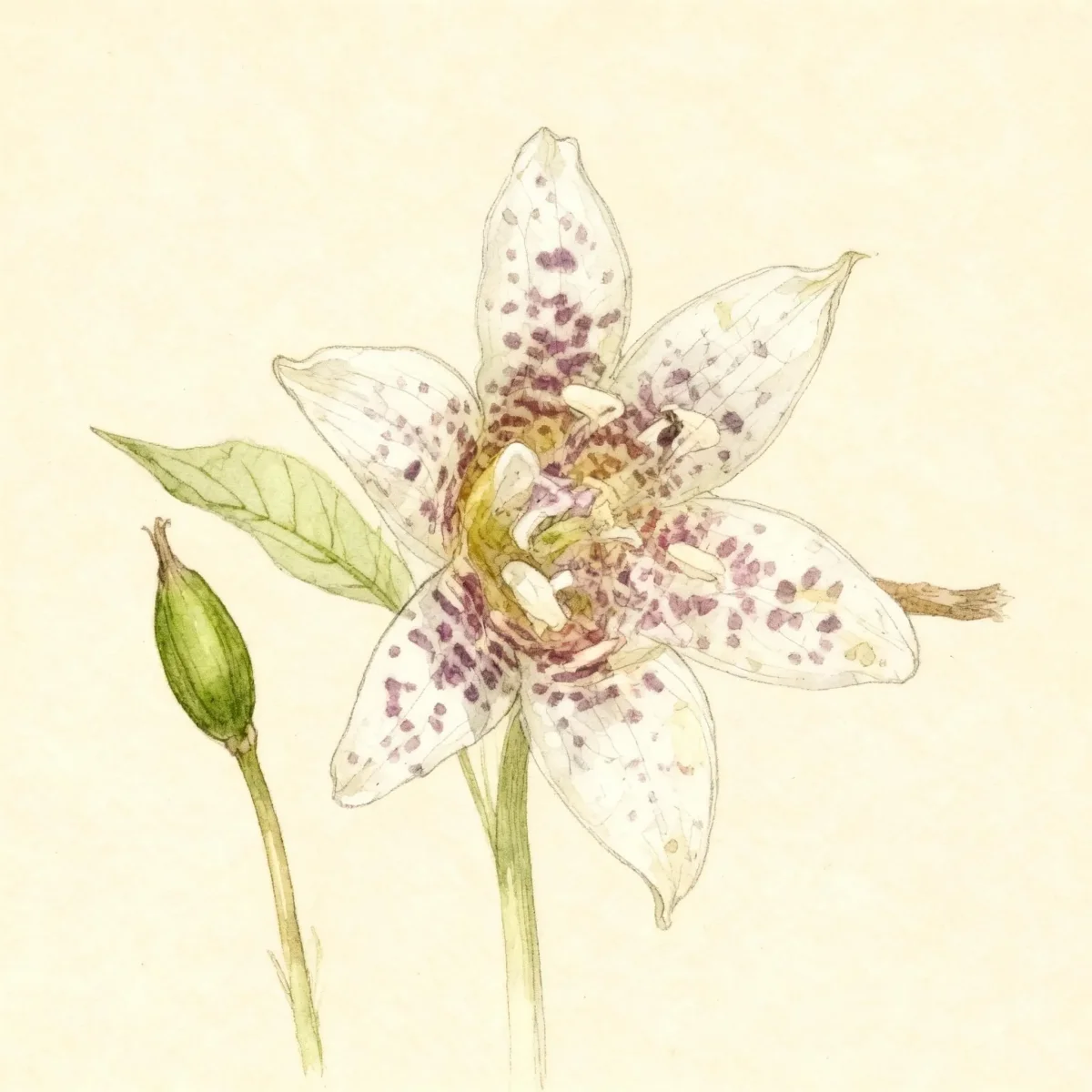
White dog's-tooth violet (Erythronium albidum)
Discover Erythronium albidum, the White dog's-tooth violet, a stunning Eastern North American native for shaded, moist woodland gardens.
Scroll down to discover growing tips, care requirements, companion plants, and more
Complete Plant Information
Overview
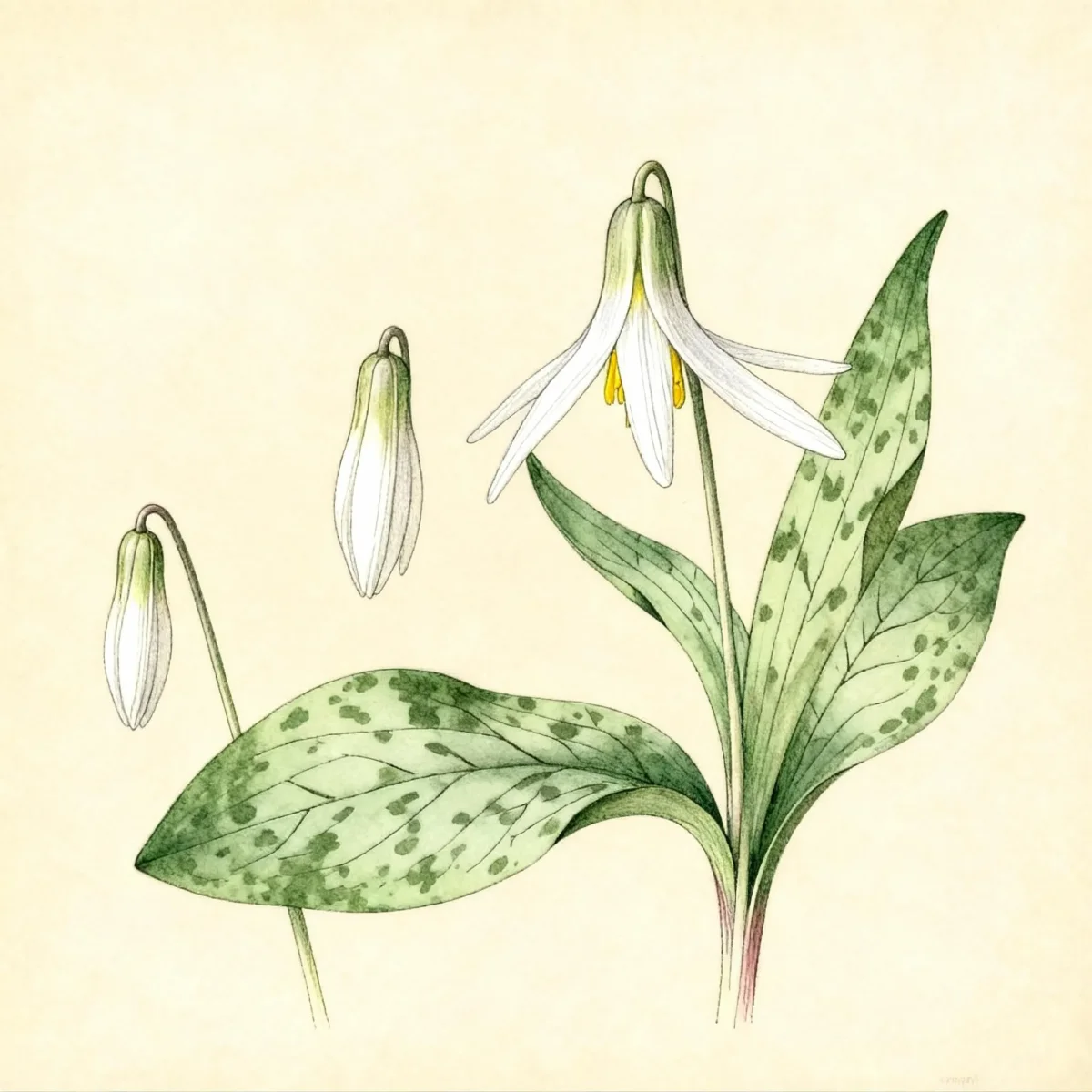
The White dog’s-tooth violet, scientifically known as Erythronium albidum, is a cherished spring ephemeral native to Eastern North America. Gardeners seek this plant for its delicate, nodding, lily-shaped white flowers that appear early, bravely announcing the arrival of spring in the woodland garden. Despite its common name, it belongs to the Lily family, not the Violet family, a distinction highlighted by its mottled, tulip-like basal leaves.
Erythronium albidum thrives when tucked into protected, shaded environments mimicking its native moist woods and bluffs. While it establishes slowly from seed, rewarding patient gardeners with long-lived colonies, planting small corms ensures much faster flowering results. This reliable perennial provides subtle beauty before deciduous overhead trees fully leaf out, making it an essential component of layered shade plantings.
Its cultural requirements align perfectly with native plant gardens and naturalized woodland settings where disruption is minimal. Successful cultivation focuses on replicating the moist, acidic, humus-rich soil conditions it prefers, allowing the underground corms to slowly spread via stolons over time into beautiful drifts of white blooms.
Fast Facts
- Plant Family: Liliaceae
- Plant Type: Herbaceous perennial
- Native Range: Eastern North America
- Hardiness Zones: USDA Zones 3-8
- Size at Maturity:
- Height: 0.5-1 ft
- Spread: 0.25-0.5 ft
- Bloom Time: April
- Bloom Description: White with yellow
- Sun Exposure: Part shade to full shade
- Water Needs: Medium
- Maintenance Level: Medium
How to Grow
To successfully establish Erythronium albidum, plant corms in the fall, ensuring they are set 2–3 inches deep and spaced 4–5 inches apart. The ideal location mimics the plant’s native habitat: moist, acidic, humusy soils found in part shade to full shade. This species dislikes being disturbed once established; these native plants do not transplant well, so select your final location carefully.
Watering should be consistent, meeting medium needs, especially during the spring growing season. Once the foliage dies back in late spring as the plant goes dormant, watering requirements decrease significantly. Avoid excessive soil disturbance around the clumps, as this can damage the delicate root structure and growing stolons.
While propagation via seed is possible, expect bulbs to take four to five years before producing their first flower. For quicker results, plant the small corms purchased from reputable suppliers, or division of offsets from established colonies in the fall. Remember that the foliage of the White dog’s-tooth violet vanishes by late spring, which is a natural part of its life cycle.
Landscape Uses
The primary suggested use for Erythronium albidum is to naturalize it extensively in suitable conditions. It excels in woodland gardens, where its early spring bloom brightens dimly lit areas under mature trees. Planting it en masse creates a stunning, authentic woodland carpet effect, provided the soil remains consistently moist and rich in organic matter.
These plants are excellent selections for native plant gardens and shaded borders where ground disturbance is infrequent. They also perform beautifully along the banks of ponds or slow-moving streams where soil moisture content is reliably high. Consider pairing the White dog’s-tooth violet with other spring ephemerals that emerge slightly later, ensuring continuous interest as the woodland floor transitions from spring to summer.
Standout Features
Flower Qualities
- Showy
Noteworthy Characteristics
Erythronium albidum, commonly called white dogtooth violet, is a Missouri native spring wildflower which occurs in moist woods, on wooded slopes and bluffs, and along streams throughout the State (Steyermark). It grows from tiny corms which purportedly resemble dogteeth and its flowers somewhat resemble violets, hence the common name. A single, nodding, bell- or lily-shaped white flower with yellow at the base blooms atop a naked scape sheathed by two basal, tongue-shaped, tulip-like leaves in early spring.
Tolerances
Potential Problems
Fortunately, Erythronium albidum typically avoids any serious insect or disease problems when grown in appropriate conditions. The major cultural challenge gardeners face is recognizing and respecting its dormancy period. As with many of the early spring wildflowers, white dogtooth violet usually goes dormant by late spring, causing the foliage to disappear entirely. Many gardeners mistake this dormancy for plant death; resist the temptation to dig or water heavily during this summer rest period.
Frequently Asked Questions
What hardiness zones is White dog’s-tooth violet suitable for?
The Erythronium albidum is reliably hardy across USDA Zones 3 through 8, offering a wide planting range for this woodland native.
How large does Erythronium albidum grow?
At maturity, this species generally reaches a height between 0.5 and 1 foot tall, and it spreads narrowly, typically between 0.25 and 0.5 feet wide.
When does White dog’s-tooth violet bloom?
Flowering occurs reliably in April, presenting a singular, nodding white bloom accented with yellow coloration at the flower’s base.
What sun exposure does Erythronium albidum need?
This plant requires protection from intense afternoon sun, thriving best when situated in areas receiving part shade to full shade conditions.
Conclusion
The Erythronium albidum, or White dog’s-tooth violet, brings undeniable early spring charm to shaded landscapes through its elegant white flowers and mottled foliage pattern. Its ability to colonize moist, rich soils makes it a cornerstone for naturalized woodland settings. Before planting, confirm your garden resides within USDA Zones 3-8 and that you can provide the necessary moisture and shade for lasting success.
Companion Planting
When designing a habitat for Erythronium albidum, select companions that share its preference for medium moisture and dappled light. Spring wildflowers like Bloodroot (Sanguinaria canadensis) or Trilliums (Trillium species) emerge around the same time, creating an early season tapestry. As the White dog’s-tooth violet fades into dormancy, later-season shade lovers such as ferns (e.g., Japanese Painted Fern) or woodland phlox (Phlox divaricata) can fill the void, ensuring the area maintains green cover throughout summer without competing for early spring resources.
Propagation Tips
While patience is required when growing Erythronium albidum from seed, it provides a rewarding, long-term cultivation project typical of many native spring ephemerals. Corms should be planted in autumn, and for quicker spread, division of offsets from established patches is recommended. When dividing older colonies, handle the small corms gently and replant them immediately at the correct depth of 2–3 inches to minimize stress and ensure they establish quickly for subsequent seasons.