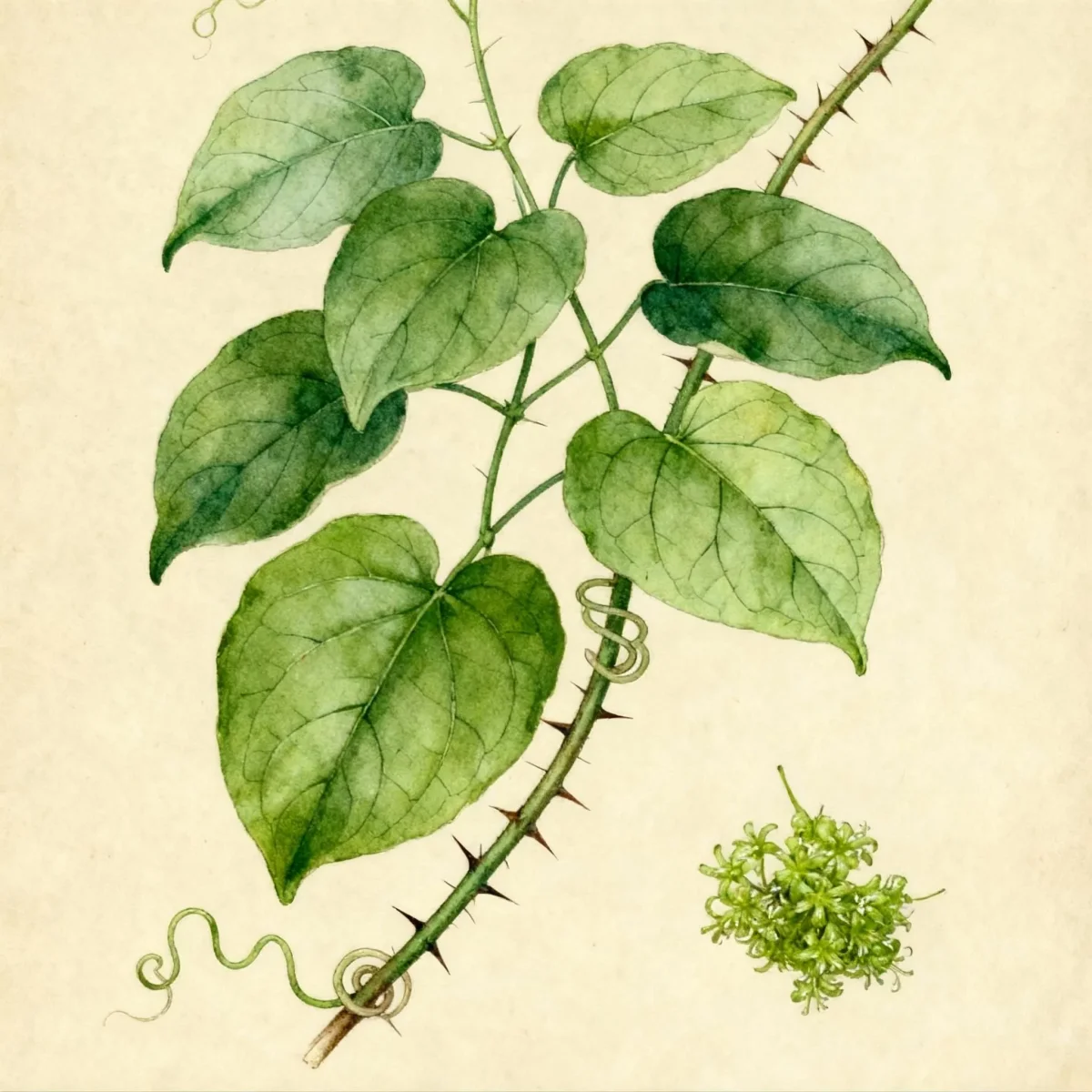
Sarsaparilla plant (Smilax hispida)
Discover Smilax hispida, the Sarsaparilla plant, a vigorous, bristly vine for naturalizing areas in USDA Zones 4-8.
Scroll down to discover growing tips, care requirements, companion plants, and more
Complete Plant Information
Overview
The Sarsaparilla plant (Smilax hispida), also widely known as Greenbrier, is a vigorous, woody, deciduous vine native to the southern and central United States. True to its specific epithet, Smilax hispida is characterized by green stems densely covered in weak, bristle-like prickles that mature to a distinct black. Though it is a robust climber that can reach heights up to 40 feet using tendrils, it often rambles on the ground, creating dense thickets in the wild.
This species offers substantial utility in specific landscape niches, particularly where a tough, low-maintenance native plant is required. While its bristly nature makes the Sarsaparilla plant unsuitable for formal landscaping near homes, it excels in naturalized settings, rain gardens, and areas needing dense coverage. Its dense growth provides critical cover for small wildlife throughout the cold months.
The shrubby thickets formed by this vine offer excellent ecological benefits, while the bloom time of May to June provides early summer interest before its attractive blue-black berries ripen in late summer. Gardeners seeking truly rugged, native screening or bank stabilization should consider the widespread and resilient Smilax hispida.
Fast Facts
- Plant Family: Smilacaceae
- Plant Type: Vine
- Native Range: Southern and central United States
- Hardiness Zones: USDA Zones 4-8
- Size at Maturity:
- Height: 20-40 ft
- Spread: 3-6 ft
- Bloom Time: May to June
- Bloom Description: Greenish
- Sun Exposure: Full sun to part shade
- Water Needs: Medium to wet
- Maintenance Level: Low
How to Grow
The Sarsaparilla plant is remarkably adaptable regarding soil, being easily grown in most soil types, though it prefers moist loams for optimal performance. Plant in locations receiving full sun or partial shade. Due to its native habitat along stream banks and low woods, this species thrives where moisture is consistent or even wet, making it an excellent candidate for rain garden installations.
Maintenance for Smilax hispida is correctly labeled as low, though management requires caution due to the bristles covering its stems. While it doesn’t spread invasively via roots or seed, its physical growth habit can be weedy and difficult to control in confined spaces. Pruning should focus on containment rather than refinement; avoid planting this vine where frequent contact or close proximity to structures is necessary.
Watering is straightforward; aim for medium to wet conditions, especially when establishing new plants. Fertilization is generally unnecessary for this aggressive native species. If desired for hedging, light control pruning after flowering may help shape it, but remember that the main goal when incorporating the Sarsaparilla plant into the landscape is to let it ramble in appropriate, managed areas.
Landscape Uses
The widespread recommendation for Smilax hispida is to utilize it where its vine structure and dense coverage can serve a functional purpose without interfering with high-traffic areas. It is inappropriate for decorative trellises or fences due to its aggressive, prickly nature. Instead, leverage its vigor in open woodland borders or large native plant sections where it can establish large masses.
This vine is highly effective when left to grow along the ground, acting as a living mulch that provides superb erosion control for steep slopes and banks. Furthermore, the plant can be deliberately trained into a hedgerow or property line barrier. In these roles, the thickets formed by the Sarsaparilla plant offer excellent protective cover for ground-nesting birds and small mammals.
When placed intentionally in rain gardens, its medium to wet water needs are perfectly met, and its robust nature helps filter runoff. Pair it with other tough, upright natives like certain tall grasses or robust shrubs that can handle similar moist conditions, allowing the Greenbrier to form a rugged, textured backdrop.
Standout Features
Flower Qualities
- Showy
Fruit Qualities
- Showy
Noteworthy Characteristics
Smilax hispida, called greenbriar, bristly greenbrier or catbrier, is the most common greenbriar found in Missouri where it typically occurring in thickets, low woods, wooded slopes and stream banks in virtually every county in the state (Steyermark). It is a deciduous, twining, woody vine that grows to 20-40’. It will climb by tendrils or ramble along the ground, often forming dense, impenetrable, shrubby thickets in the wild. Plants are dioecious: greenish flowers appear in axillary clusters on separate male and female plants. Fertilized female flowers give way to blue-black, glaucous berries that ripen in late summer to fall, which are attractive to many birds.
Tolerances
- Drought
Potential Problems
Smilax hispida generally exhibits no serious insect or disease problems, highlighting its hardiness as a native vine. Its primary management issue stems from its physical habit—the dense, prickly thickets it forms can be difficult to navigate or remove once established. To prevent unwanted spread into garden beds, ensure the area is clearly defined; while it does not spread invasively by rooting stolons or self-seeding, its sheer robustness demands appropriate spatial planning during installation.
Frequently Asked Questions
What hardiness zones is Sarsaparilla plant suitable for?
The Sarsaparilla plant (Smilax hispida) is hardy across USDA Zones 4 through 8, giving it wide climate adaptability in the central and southern US.
How large does Smilax hispida grow?
This woody vine typically matures to a height between 20 and 40 feet, with a spread that can range from 3 to 6 feet as it rambles or forms thickets.
What sun exposure does Smilax hispida need?
Smilax hispida accommodates a range of light conditions, performing well in locations receiving full sun or partial shade.
When does Sarsaparilla plant bloom?
The greenish flowers of the Sarsaparilla plant appear relatively early, typically blooming from May into June.
Conclusion
The Smilax hispida vine remains a vital choice for land managers and native planting enthusiasts focused on robust ground cover and bank stabilization across USDA zones 4 to 8. While its bristly character requires careful placement, the Sarsaparilla plant provides exceptional low-maintenance wildlife habitat and erosion control where it is allowed to naturalize freely. Before planting, assess your site to ensure ample space is available for this vigorous native greenbrier to thrive.
Companion Planting
When integrating Smilax hispida into a wilder landscape, select companions that can tolerate similar moist soils and partial shade conditions, especially if using it in a rain garden setting. Avoid planting delicate perennials near where the Greenbrier is expected to ramble, as it can easily overwhelm smaller neighbors. Consider pairing it with taller, sturdier natives that naturally form dense colonies themselves, like certain species of switchgrass (Panicum) or native sumac (Rhus), which can form a layered habitat barrier.
Wildlife Benefits
The relationship between the Sarsaparilla plant and local fauna is significant, primarily due to its fruit production. Because the vine is dioecious, successful pollination in the spring leads to the development of blue-black, glaucous berries in the fall. These fruits are a favorite food source for numerous bird species foraging before winter migration or seeking sustenance mid-season. Furthermore, the dense, nearly impenetrable thickets formed by mature Smilax hispida offer unparalleled protective cover and nesting sites for small mammals and songbirds throughout the year.