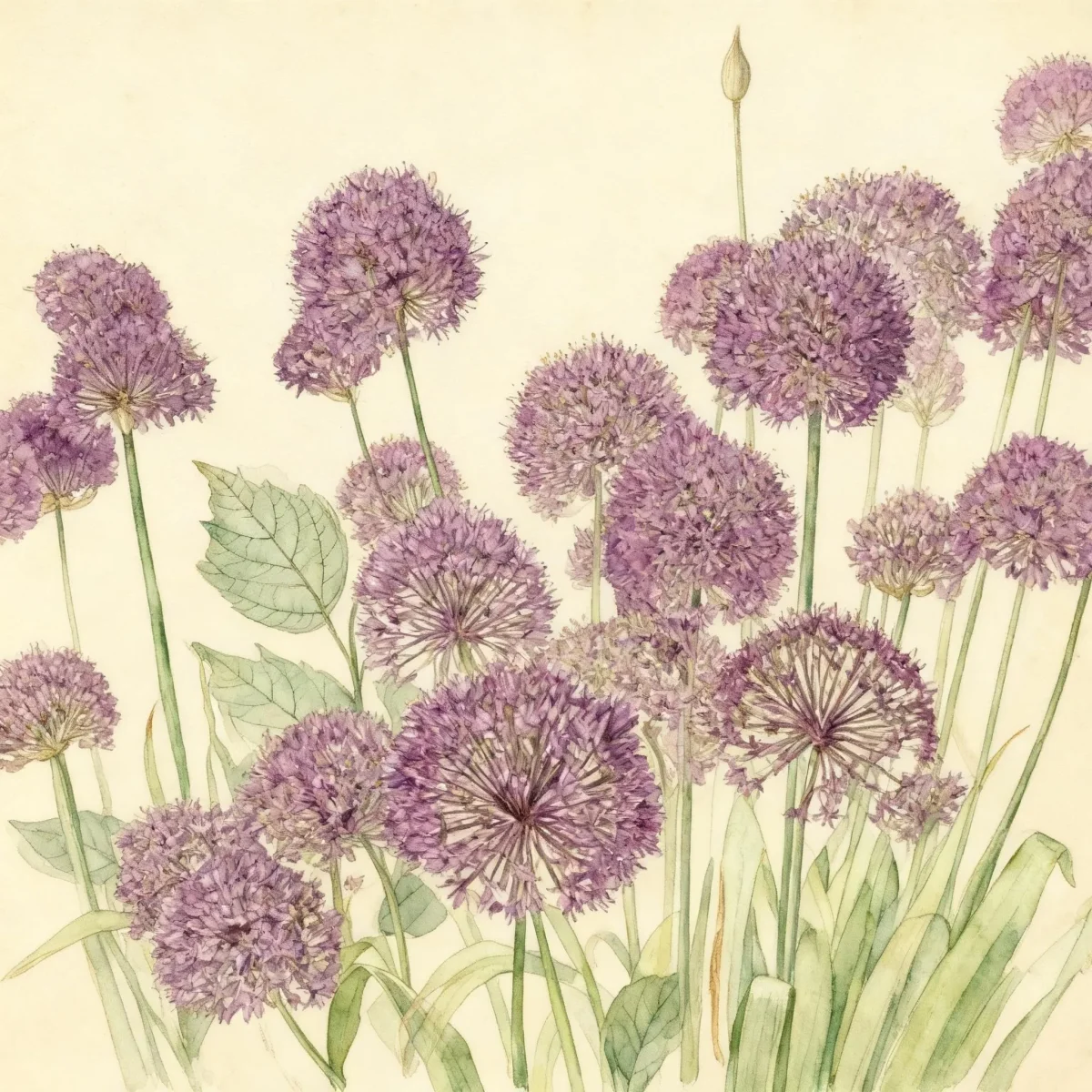
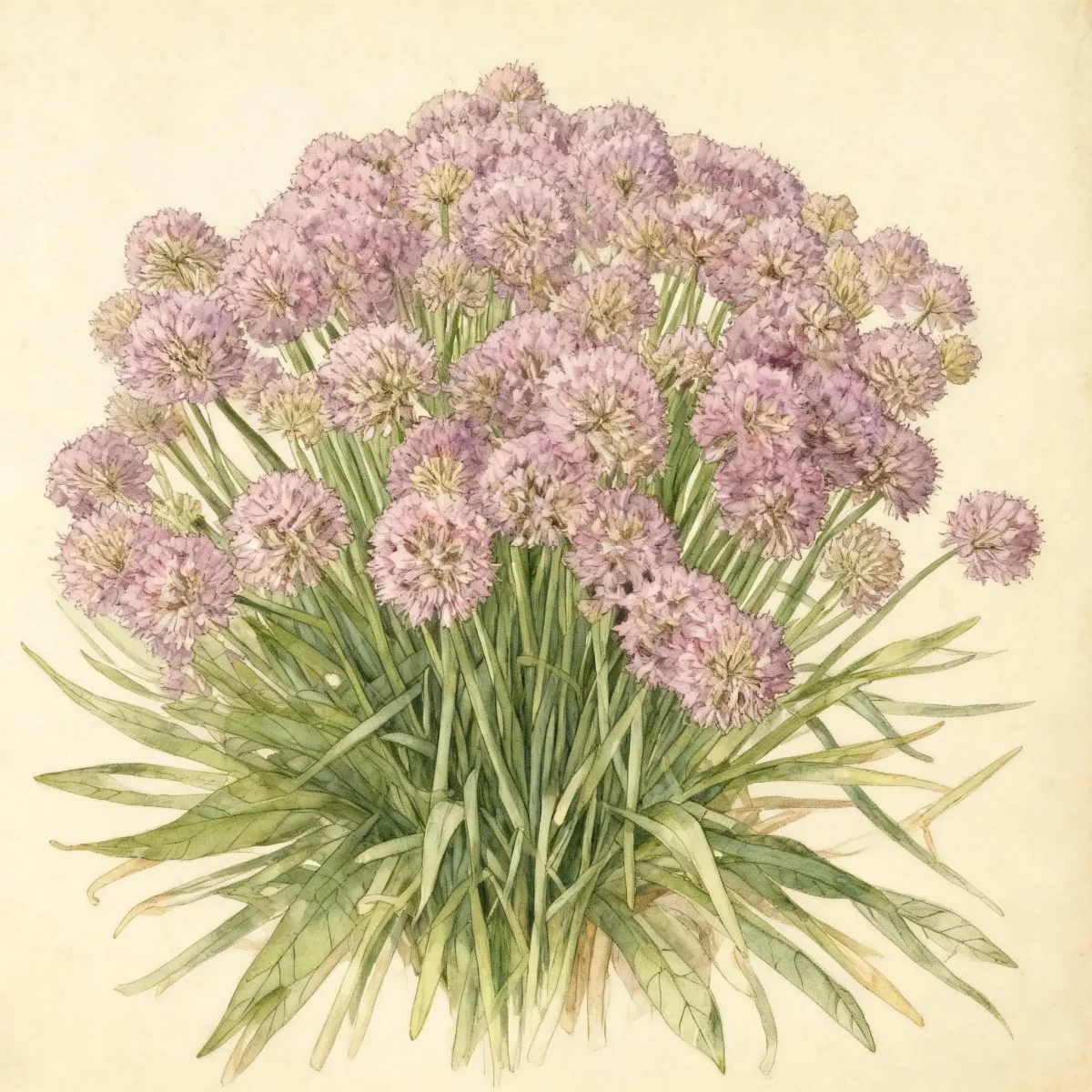
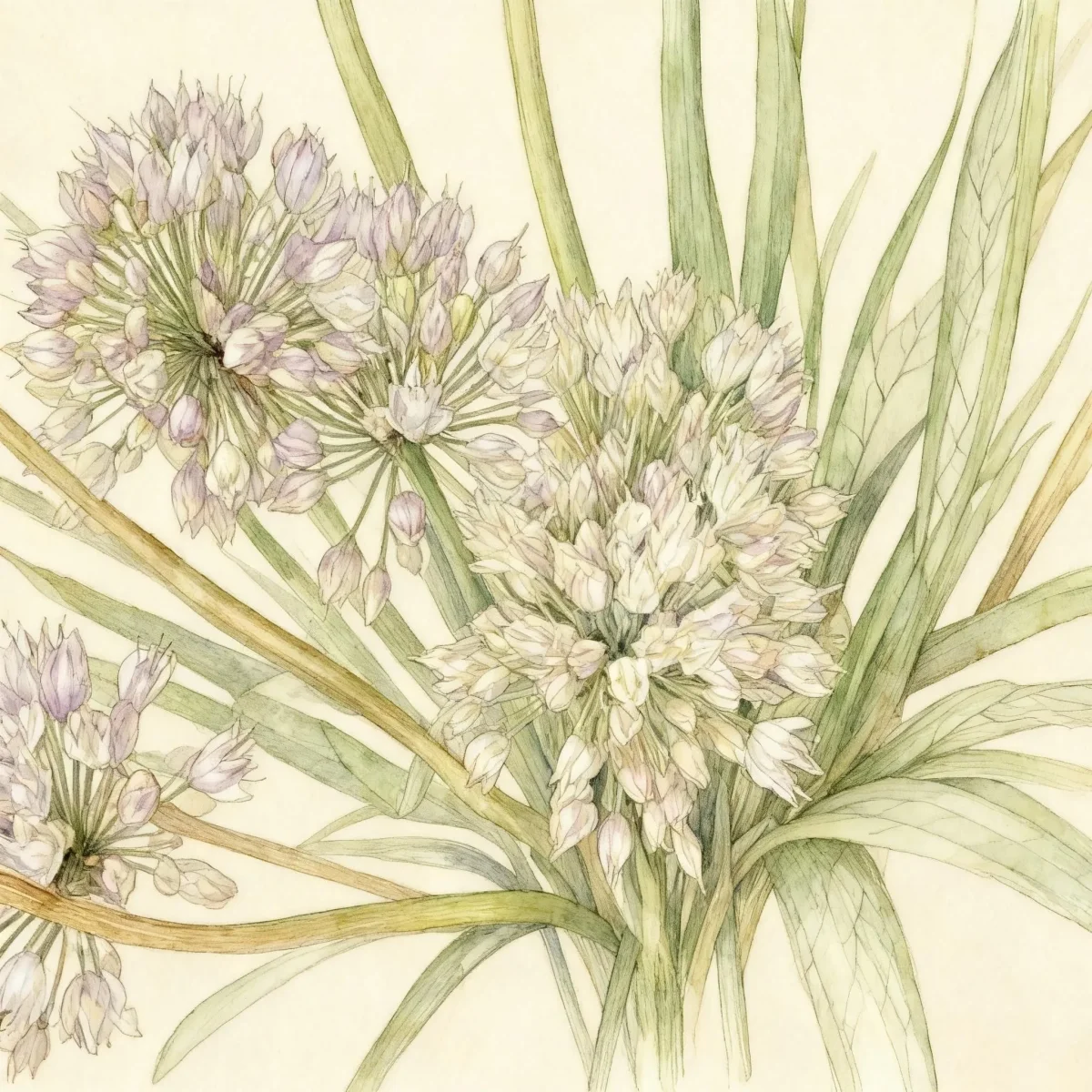
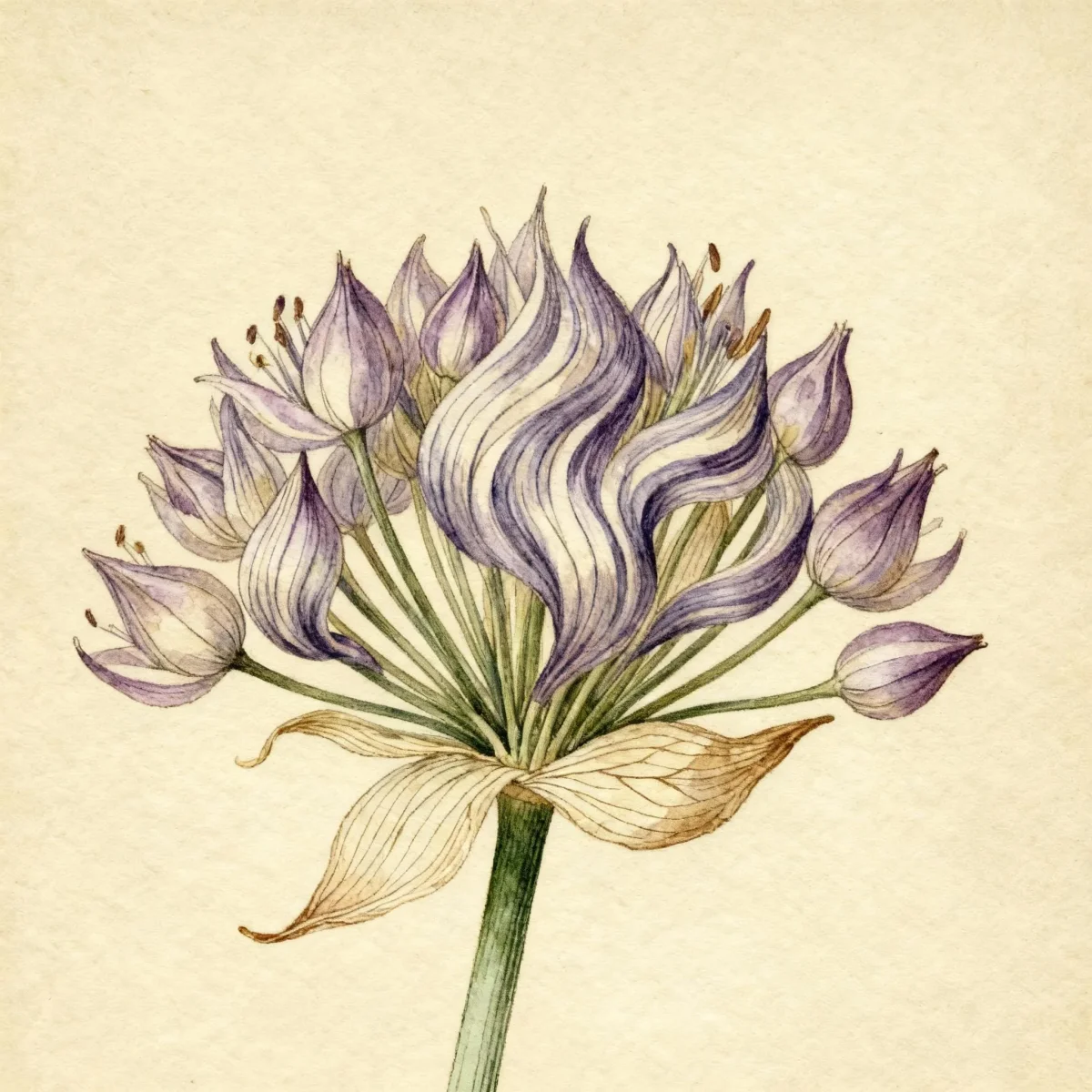
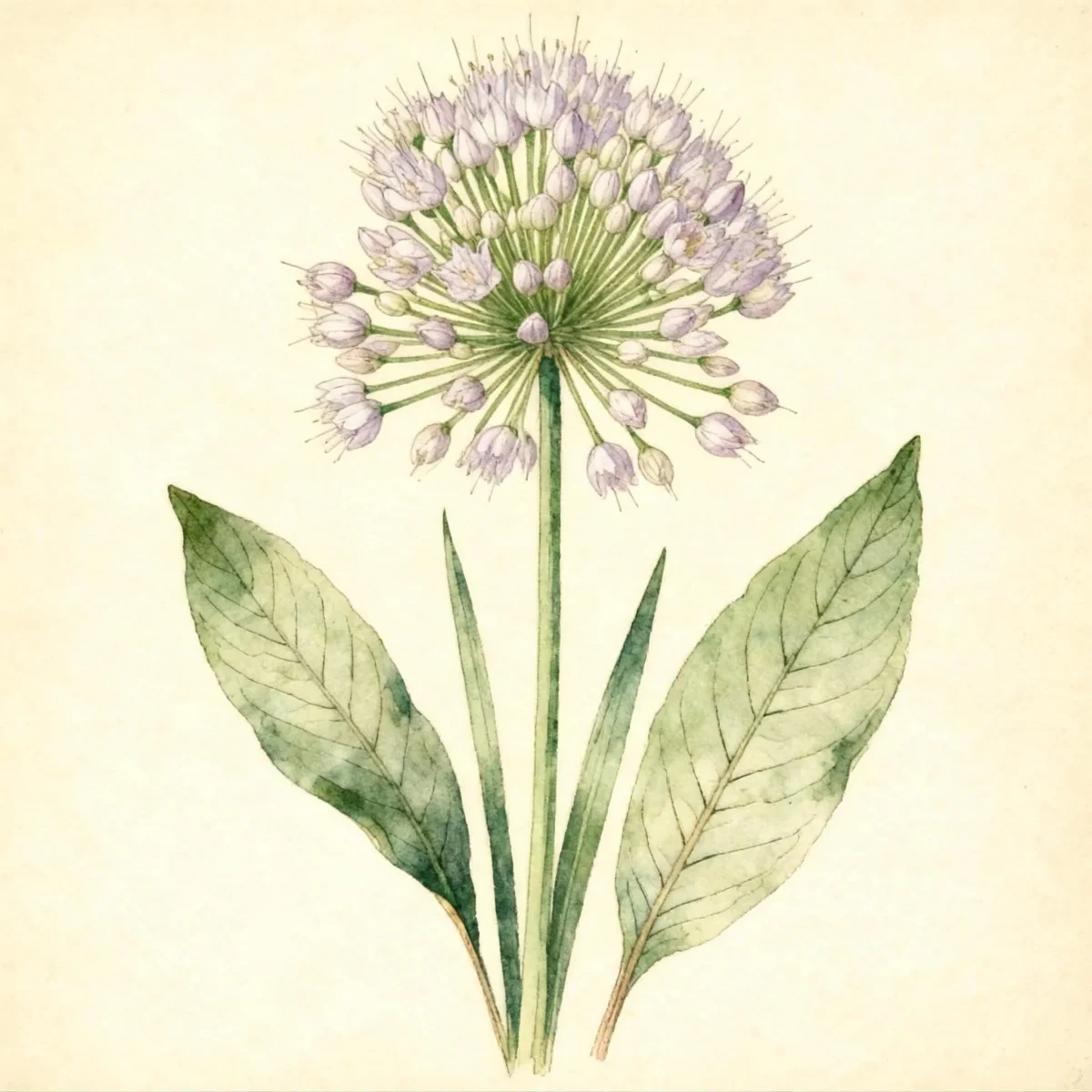
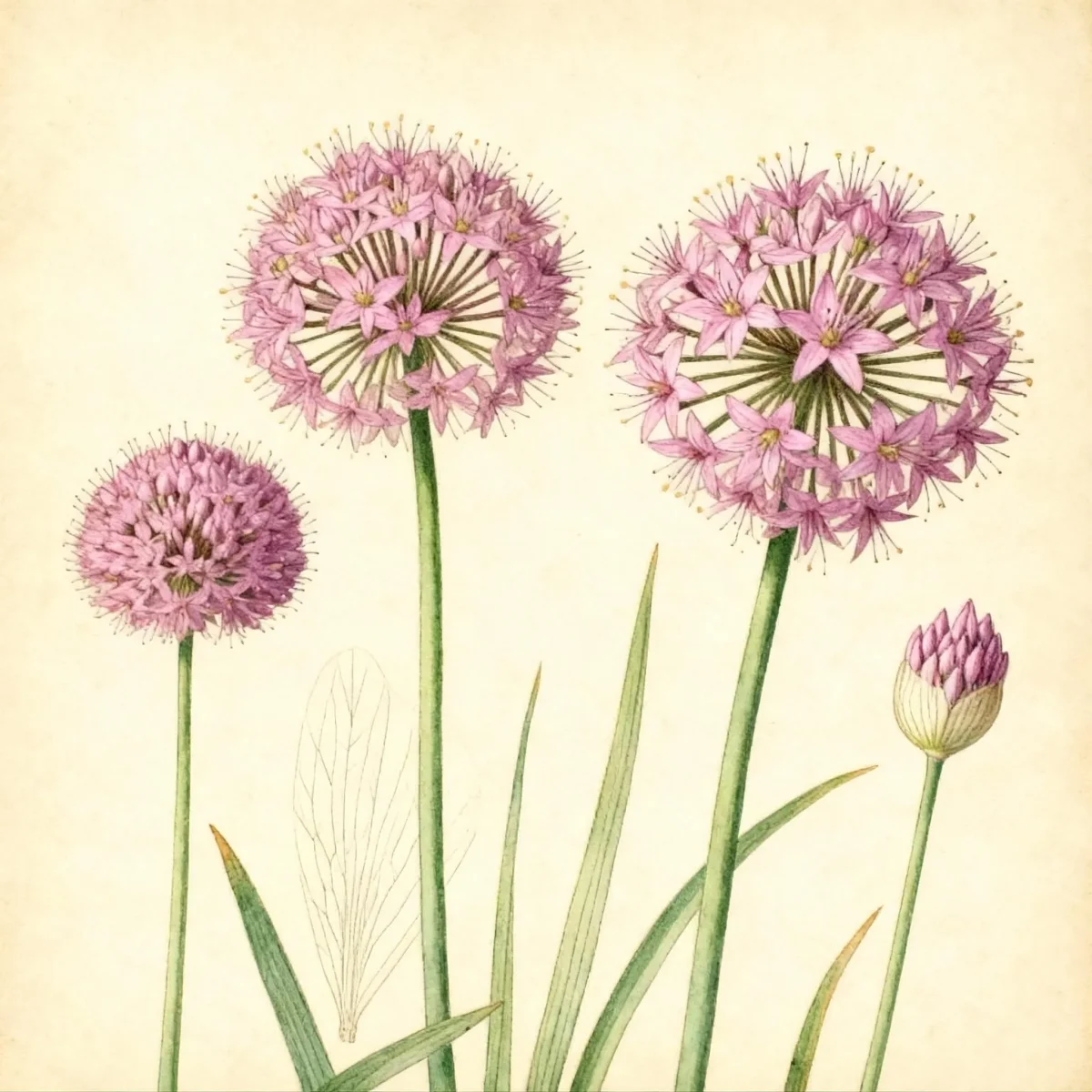
Nodding onion (Allium cernuum)
Discover Nodding onion (Allium cernuum), a low-maintenance bulb thriving in dry soils, featuring nodding pink flowers from June to August.
Scroll down to discover growing tips, care requirements, companion plants, and more
Complete Plant Information
Overview
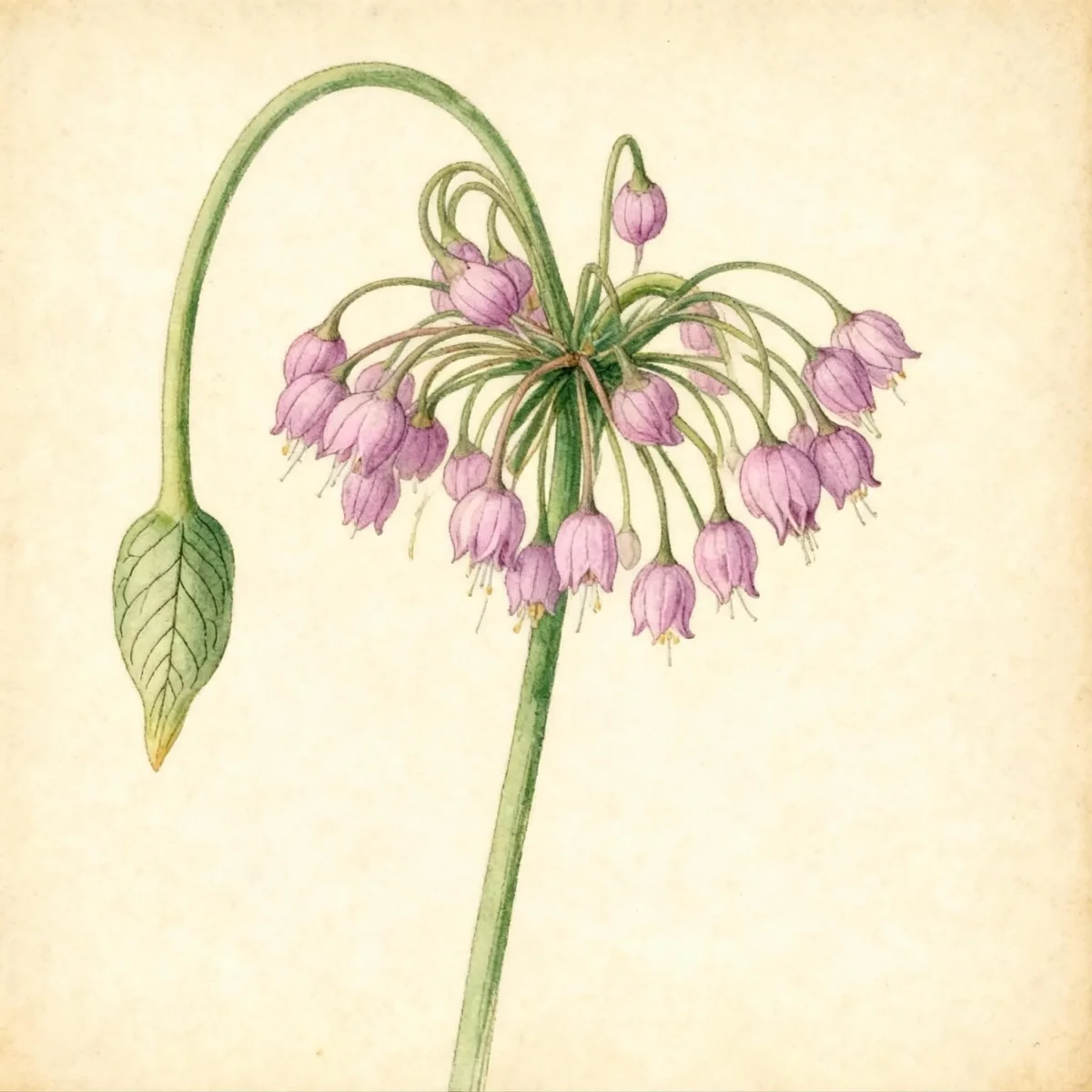
Allium cernuum, commonly known as Nodding onion, offers unique textural appeal combined with the resilience needed for challenging garden spots. Its gracefully drooping flower clusters provide visual interest unlike more upright Allium cousins, making it a standout native addition. Gardeners value this bulb for its low maintenance requirements and adaptability to poorer soil conditions.
This species establishes itself easily and spreads gently via offsets and self-seeding under optimal conditions, offering a naturalized effect quickly. The foliage, reminiscent of fine grass, emerges early and persists well into late summer, lending structure even outside the bloom period of the Nodding onion. Its presence supports local ecology while requiring minimal intervention from the gardener.
For optimal summer displays, ensure this plant receives full sun, though it tolerates light shade, particularly in hotter climates. This distinctive Allium cernuum provides early summer blooms in soft pink hues, perfect for softening rock borders or natural meadow plantings.
Fast Facts
- Plant Family: Amaryllidaceae
- Plant Type: Bulb
- Native Range: Canada to Mexico
- Hardiness Zones: USDA Zones 4-8
- Size at Maturity:
- Height: 1-1.5 ft
- Spread: 0.25-0.5 ft
- Bloom Time: June to August
- Bloom Description: Pink
- Sun Exposure: Full sun to part shade
- Water Needs: Dry to medium
- Maintenance Level: Low
How to Grow
The best time to establish Allium cernuum (Nodding onion) bulbs or offsets is in autumn, allowing them time to acclimate before spring growth. If starting from seed, plant seeds in spring. This species performs best when situated in average, dry to medium, well-drained soil; it shows a strong preference for sandy loams. While it handles full sun, providing slight afternoon shade keeps the foliage looking fresh during intense summer heat.
Maintenance for Allium cernuum is reliably low. Watering should be minimal once established; it tolerates drought well, preferring soil that dries out between waterings. Avoid rich, overly amended soils, which might encourage excessive vegetative growth at the expense of flowers. No regular fertilizing is necessary for this tough native plant.
To manage its naturalizing tendency, deadhead the flowers promptly before they set seed, which helps control unwanted spread. Foliage naturally dies back in late summer after flowering is complete. Be patient, as the leaves will persist until late summer before receding entirely.
Landscape Uses
The suggested use for Nodding onion is primarily to naturalize areas where its delicate, nodding clusters can create a soft, informal look. It is excellent for meadow-style plantings or softening the edges of woodland paths where it mimics its native habitat among bluffs and open woods. The low profile of Allium cernuum makes it perfectly suited for the front of cottage gardens or rock gardens, where its grass-like leaves won’t obscure shorter perennials.
Use it to bridge the gap between formal borders and wilder areas. When planted in drifts, the soft pink blooms of Allium cernuum contrast beautifully with the strong textures of ornamental grasses or the bold foliage of surrounding perennials. Its ability to thrive in well-drained, even shallow, rocky soil means it excels in challenging sunny spots that defeat less adaptable choices.
Standout Features
Flower Qualities
- Showy
Noteworthy Characteristics
Allium cernuum, commonly called nodding wild onion, is a Missouri native plant which occurs primarily in rocky soils on glades, bluff edges, open woods and slopes in the Ozark region of the State. Its most distinguishing feature is the flower scape, which crooks sharply downward just below the umbel, causing the cluster of tiny bell-shaped, pink to lilac pink flowers to nod. All parts of this plant release a distinct oniony smell when bruised or cut, a characteristic shared across the genus Allium.
Tolerances
- Deer
- Drought
- Dry Soil
- Shallow-Rocky Soil
- Black Walnut
Potential Problems
This plant boasts impressively few serious pest or disease issues, contributing significantly to its low-maintenance rating. Gardeners generally do not need to worry about major insect infestations or common fungal problems affecting Allium cernuum. The only noted seasonal concern is the natural die-back of foliage late in the summer, which is a normal part of its life cycle rather than a sign of distress.
Frequently Asked Questions
What hardiness zones is Nodding onion suitable for?
Allium cernuum is reliably hardy across USDA Zones 4 through 8, making it adaptable to a wide range of North American climates.
How large does Allium cernuum grow?
This species typically reaches a height between 1 and 1.5 feet, with a relatively narrow spread of only 0.25 to 0.5 feet per clump.
What sun exposure does Nodding onion need?
The Nodding onion prefers full sun but tolerates part shade, performing best when protected from the harshest afternoon sun in very hot regions.
When does Allium cernuum bloom?
You can expect the distinctive pink, nodding flowers of Allium cernuum to appear between the months of June and August.
Conclusion
The Nodding onion is an exceptional choice for gardeners seeking native beauty combined with remarkable fortitude, particularly thriving in dry, sunny environments. Its unique nodding flower structure sets Allium cernuum apart in the late spring and summer garden. Before planting, ensure your site offers dry to medium drainage capabilities and check your local USDA Hardiness Zone compatibility.
Companion Planting
Since Allium cernuum prefers dry soil and full sun, companion plants should share these low-water requirements to thrive alongside the Nodding onion. Consider pairing it with other drought-tolerant natives like various species of Coneflower (Echinacea), Purple Prairie Clover (Dalea purpurea), or shorter native sedges (Carex spp.) that can handle similar light exposure. These groupings create a balanced, resilient tapestry that requires minimal supplemental irrigation once established.
The fine, upright texture of the onion foliage contrasts nicely with broad-leafed neighbors, offering varied visual interest throughout the season, even when the pink Allium cernuum blooms are finished. Selecting companions that bloom before or after the summer window of the Nodding onion will extend the color interest in your garden bed.
Design Ideas for Naturalizing
To achieve a successful naturalized look with Nodding onion, avoid rigid rows or geometric patterns. Instead, plant bulbs in irregular, sweeping drifts that mimic how they colonize open, rocky slopes in their native habitat. Scatter the bulbs slightly further apart than standard spacing, allowing the clumps room to naturally multiply over the years without becoming overcrowded.
Consider using slopes or edges where runoff is quick, as this species dislikes sitting in moisture. When integrated into a prairie or meadow scheme, the Allium cernuum acts as an excellent vertical element that doesn’t dominate the space, instead offering delicate highlights of pink floating above lower groundcovers. This approach leverages their low maintenance needs perfectly.