Chives (Allium schoenoprasum)
Discover Chives (Allium schoenoprasum), the low-maintenance bulbous herb with mild onion flavor and attractive purple blooms.
Scroll down to discover growing tips, care requirements, companion plants, and more
Complete Plant Information
Overview
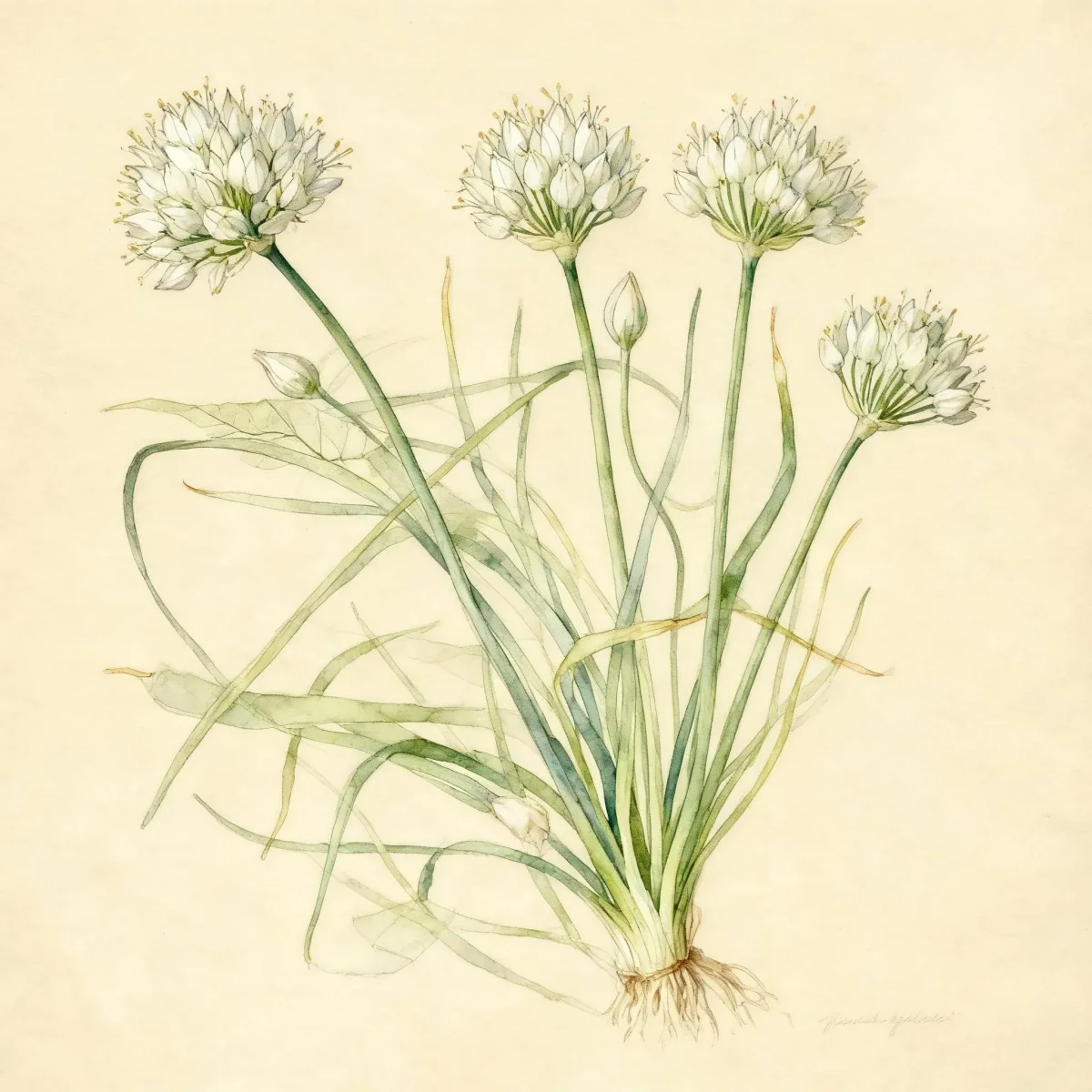
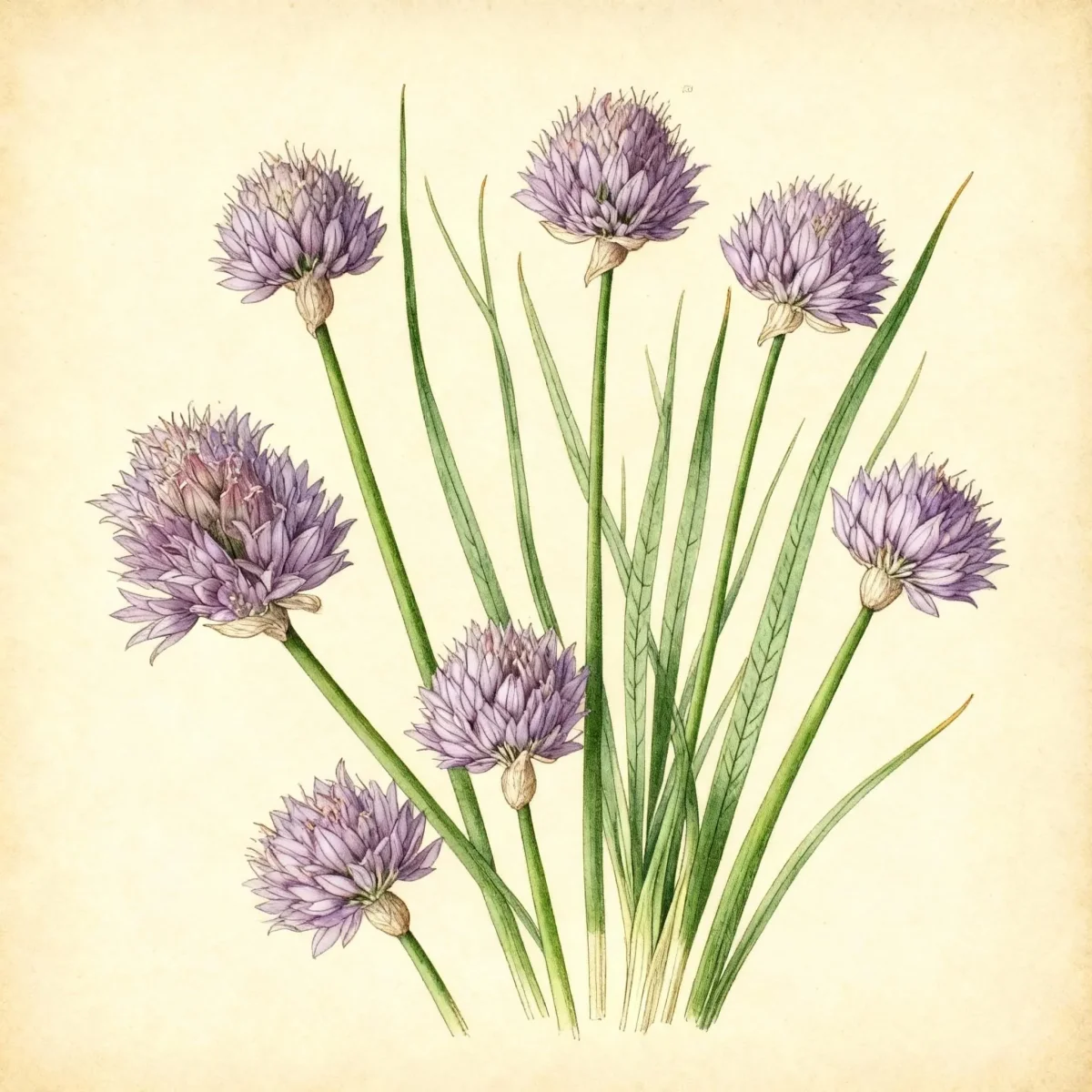
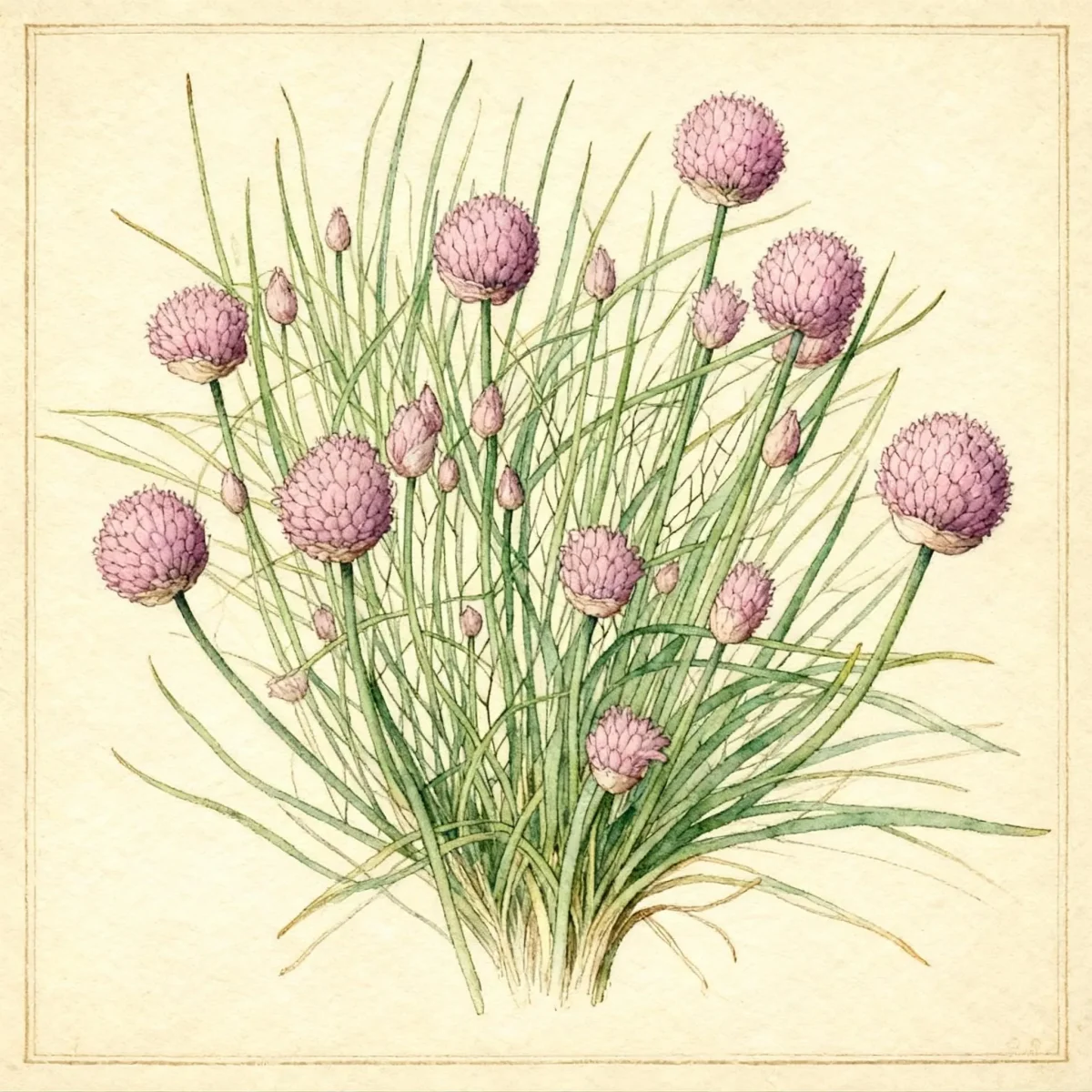
Allium schoenoprasum, widely known as Chives, is a highly valued small, bulbous perennial celebrated for its culinary contributions. Gardeners prize this member of the Amaryllidaceae family for the mild onion flavor provided by its thin, tubular, grass-like leaves. Beyond its use as a kitchen herb, the plant offers significant ornamental appeal, particularly when its attractive, globular clusters of pale purple flowers appear.
This herb is easily incorporated into nearly any garden setting, forming dense clumps that thrive in average, well-drained soils. Although frequently grown for its edible foliage, the spring and summer blooms add light color to borders. Chives establish themselves readily and require minimal attention once situated, making them perfect for both beginner and experienced gardeners seeking reliable flavor and texture.
The plant’s overall structure is neat, typically reaching about 1 to 1.5 feet tall, crowned by delicate lavender blooms that make Allium schoenoprasum a multi-purpose garden star. Its hardiness across several zones ensures its widespread use throughout the temperate northern hemisphere.
Fast Facts
- Plant Family: Amaryllidaceae
- Plant Type: Bulb
- Native Range: Temperate Northern Hemisphere
- Hardiness Zones: USDA Zones 4-8
- Size at Maturity:
- Height: 1-1.5 ft
- Spread: 1-1.5 ft
- Bloom Time: April to May
- Bloom Description: Purple
- Sun Exposure: Full sun to part shade
- Water Needs: Medium
- Maintenance Level: Low
How to Grow
For successful establishment, plant Allium schoenoprasum in the spring, ensuring it receives full sun to light part shade exposure. It performs best in average soils that are medium in moisture content and, crucially, well-drained. Chives form tight clumps; these perennial clumps are easily divided in either spring or fall to propagate new plants or refresh existing ones.
Watering should be consistently medium; avoid overly saturated conditions which can lead to root rot, especially in poorly drained soil environments. Fertilization is seldom necessary if the soil is adequate, aligning with the plant’s overall low maintenance requirements. Harvesting leaves is simple: clip them off at the base of the clump to encourage fresh growth while maintaining the structural attractiveness of the overall plant mass.
To maximize seed production, ignore dead-heading, but if you wish to prevent unwanted self-seeding throughout your garden beds, promptly remove spent flower heads. If growing Chives strictly for culinary use, regular harvesting naturally encourages denser, more tender leaf production. Dividing clumps every few years keeps the plants vigorous.
Landscape Uses
Chives serve beautifully in a variety of landscape applications, far beyond the standard herb plot. Their clumping habit and upright foliage make them excellent for mass planting or using as a neat, low edger along pathways or vegetable garden borders. For a charming effect, use Allium schoenoprasum in rock gardens where its texture contrasts nicely with stone, or place it near the front of perennial borders where the spring purple flowers provide early visual interest.
These herbs integrate seamlessly with other edibles, providing a soft transition between functional food production and ornamental displays. They are also highly effective when grown in containers, providing accessible clippings right on a patio or kitchen sill. When autumn arrives, divisions can be potted up for overwintering indoors, ensuring a continuous supply of fresh Chives.
Standout Features
Flower Qualities
- Showy
Noteworthy Characteristics
Allium schoenoprasum, commonly called chives, is a small bulbous perennial which is commonly used as a culinary herb to impart mild onion flavor to many foods, including salads, soups, vegetables and sauces. Plants also have good ornamental value. Features thin, tubular, grass-like, dark green leaves which typically grow in dense clumps to 12”. Attractive, globular, clover-like clusters of pale purple flowers subtended by papery bracts appear in spring and summer on scapes (stems) often rising above the foliage to 18” tall. Flower heads can be used as a garnish for soups and salads.Genus name comes from the classical Latin name for garlic.Specific epithet comes from the Greek words schoinos meaning rush and prason meaning leek in reference to the rush-like leaves.
Tolerances
- Deer
- Drought
- Black Walnut
Potential Problems
Allium schoenoprasum is generally resilient, presenting virtually no serious insect or disease problems when grown according to its needs. The primary management concern centers around soil conditions. Root rot is the most likely issue to arise, occurring specifically when the plant is situated in wet or poorly-drained soils, which suffocates the bulbous base. To prevent this, ensure amendments (like grit or coarse sand) are mixed into heavy clay soils before planting. Proper siting is the best defense against this common fungal issue.
Frequently Asked Questions
What hardiness zones is Chives suitable for?
Chives (Allium schoenoprasum) are hardy and suitable for USDA Zones 4 through 8.
How large does Chives grow?
At maturity, Chives typically reach a height between 1 and 1.5 feet, with a similar spread of 1 to 1.5 feet.
What sun exposure does Allium schoenoprasum need?
This versatile herb prefers full sun but also tolerates partial shade very well.
When does Chives bloom?
Chives usually bloom from April through May, displaying attractive purple flowers.
Conclusion
The enduring popularity of Chives rests on its dual role as a culinary workhorse and a low-maintenance ornamental. Whether you know it as Allium schoenoprasum or simply Chives, its mild oniony zing adds depth to countless dishes. Check your local Hardiness Zone compatibility, select a spot with good drainage, and start harvesting this wonderfully practical herb today.
Companion Planting
Chives are excellent garden companions due to their cultural compatibility and perceived pest deterrence benefits. Plant them near carrots, tomatoes, and roses; traditional gardening wisdom suggests they help repel aphids and improve the growth and flavor of neighboring vegetables. Because they form dense, manageable clumps, they are also ideal space fillers between row crops without aggressively competing for resources.
Ensure that companion species share the same preference for medium water needs and partial sun to full sun. Since Allium schoenoprasum is a bulb, avoid positioning plants that require frequent, deep digging near established clumps, as this risks damaging the shallow roots during maintenance or division.
Propagation Tips
The easiest method for increasing your stock of Allium schoenoprasum is division. As mentioned, these perennials form dense turf-like clumps. Every three to four years, typically during the spring cleanup or in the early fall before the first hard frost, carefully lift the entire clump using a garden fork. Gently separate the clump into several smaller sections, ensuring each division has a healthy set of roots and several growing points. Replant these divisions immediately into their new locations at the same depth they were previously growing.
While division is simple, Chives can also be readily grown from seed. Sow seeds indoors several weeks before the last frost date, or directly outdoors once the soil has warmed slightly in the spring. Remember that Allium schoenoprasum will easily self-seed if the attractive purple flowers are left to mature fully, providing a free, albeit sometimes unpredictable, source of new plants the following season.