Michigan lily (Lilium michiganense)
The stunning Michigan lily (Lilium michiganense) offers orange, spotted Turk's cap flowers in early summer. Low maintenance and suited for wet areas.
Scroll down to discover growing tips, care requirements, companion plants, and more
Complete Plant Information
Overview
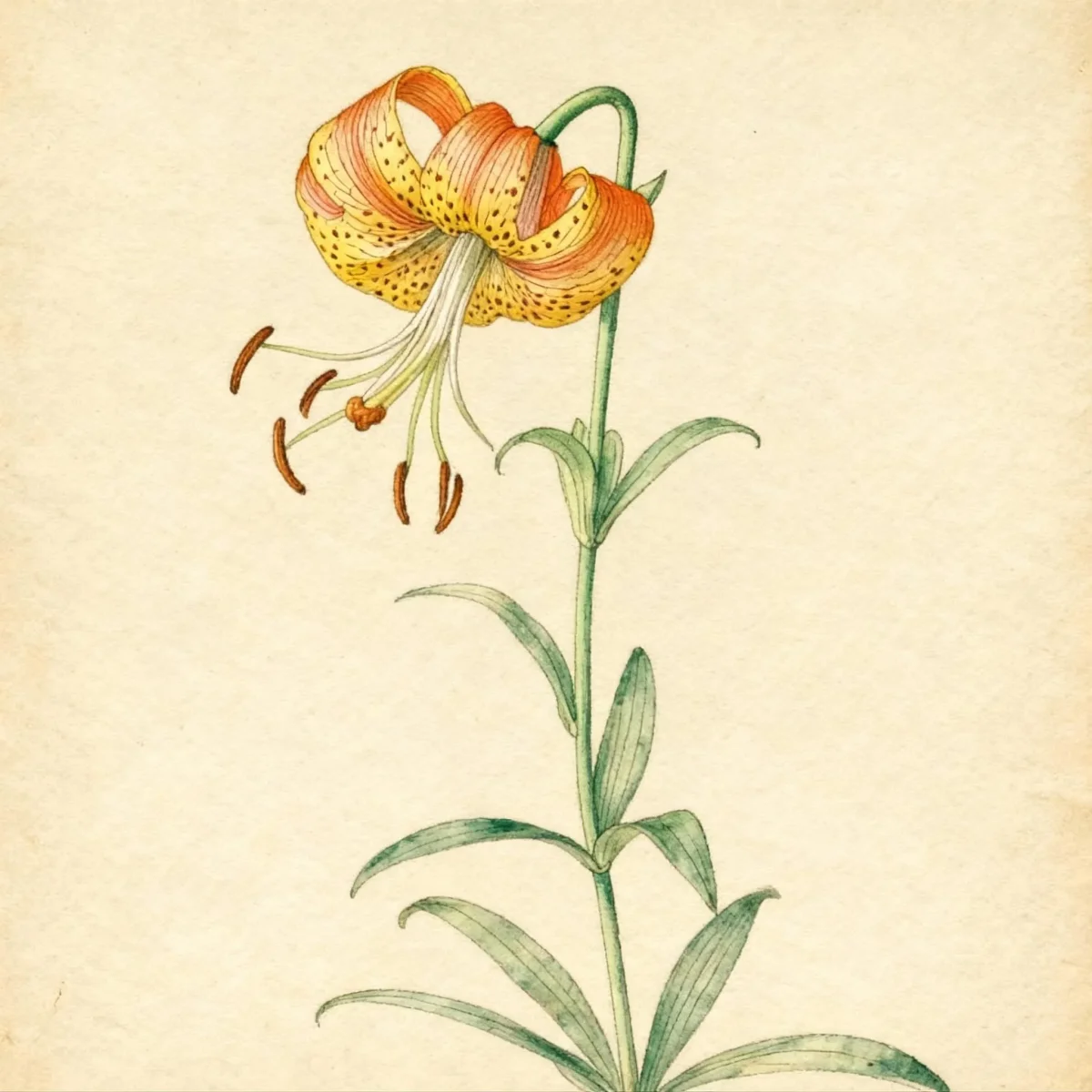
The Michigan lily (Lilium michiganense) is a charismatic perennial native to wet meadows and bottomlands throughout its native range. Gardeners seek out this species for its dramatic, downward-facing, Turk’s cap-type blooms, which feature striking orange coloration densely speckled with dark spots during early summer. This robust bulb is valued not only for its visual impact but also for its adaptivity to moist soil conditions.
Growing reliably between two and five feet tall, the Michigan lily offers strong vertical accents in the garden space. It is a stoloniferous plant, meaning it spreads slowly via runners, allowing it to naturalize gracefully over time in ideal damp locations. Its low maintenance needs further cement its status as an excellent choice for sustainable landscaping efforts.
Whether used in a naturalized meadow setting or placed strategically in cottage gardens, Lilium michiganense brings a truly native wildflower aesthetic. Identifying features include whorled leaves along the upright stems beneath the showy inflorescence, making it a distinctive member of the Lilium genus.
Fast Facts
- Plant Family: Liliaceae
- Plant Type: Bulb
- Native Range: Northern and central North America
- Hardiness Zones: USDA Zones 4-8
- Size at Maturity:
- Height: 2-5 ft
- Spread: 1-2 ft
- Bloom Time: June to July
- Bloom Description: Orange with dark spots
- Sun Exposure: Full sun to part shade
- Water Needs: Medium to wet
- Maintenance Level: Low
How to Grow
Planting Michigan lily bulbs should occur in the fall, burying them approximately 5 to 6 inches deep. While this species tolerates average, well-drained soils, it thrives best when situated in moist, humusy soils where it receives full sun exposure, though light shade is also acceptable. Mulching around the base of the plant is highly recommended to help keep the root zone cool throughout the growing season.
Watering requirements are crucial for this species, as it prefers medium to wet conditions. Ensure consistent moisture, especially during dry spells, mirroring its preference for wet meadows and bottomlands. Avoid allowing the soil to dry out completely, although its tolerance for wet soil helps mitigate drainage issues common to other lilies.
Maintenance for Lilium michiganense is generally low once established. There is no significant pruning required beyond removing spent flower stalks after blooming ceases. If the plant spreads via stolons faster than desired, physical division in the fall offers a simple management technique for controlling its size and location.
Landscape Uses
The natural preference of Lilium michiganense for damp environments makes it an outstanding component for rain gardens and water-retentive areas of the landscape. Grouping or massing these bulbs creates a stunning visual effect when their fiery orange blooms erupt in early summer. This species seamlessly integrates into native plant gardens or informal meadow landscapes, echoing its original habitat.
In more formal settings like borders or foundation plantings, the upright stems and whorled foliage of the Michigan lily provide excellent vertical structure. Pair them with moisture-loving perennials that share similar sun requirements, such as certain irises, marsh marigolds, or astilbes, to create layered interest both before and after the lily blooms.
For cottage gardens, the wildflower appearance of the Michigan lily lends an authentic, slightly untamed feel. Utilizing them in clusters rather than single specimens immediately boosts their impact and highlights the naturalized characteristics of this beautiful native bulb.
Standout Features
Flower Qualities
- Showy
Noteworthy Characteristics
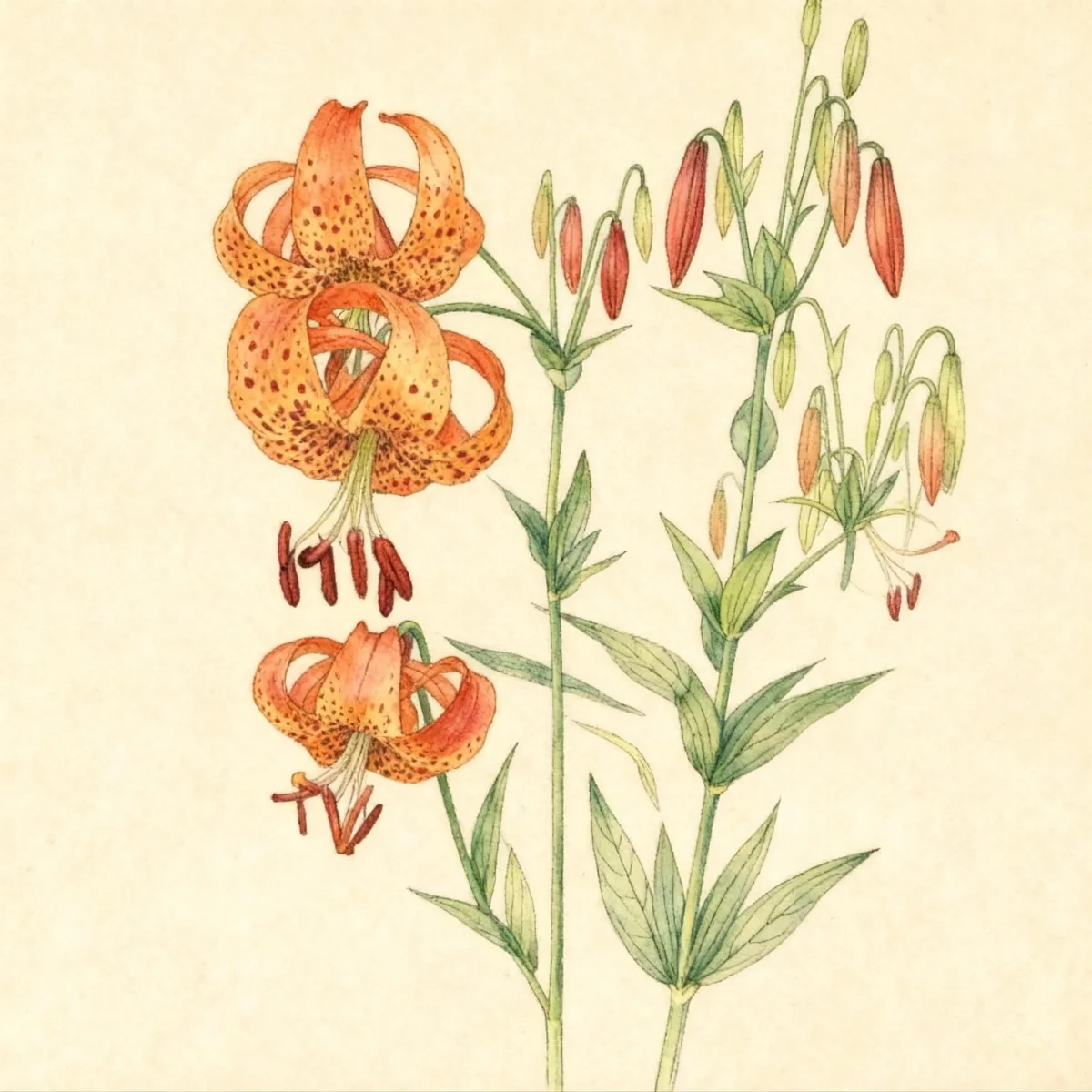
Lilium michiganense, commonly called Michigan lily, is native to portions of the central and southern United States where it grows in wet meadows, bottomlands, moist woodland edges and openings, prairies, roadsides, and railroad right-of-ways. Typically grows up to 5’ tall. Elliptic to lance-shaped, lower leaves (to 4” long) are arranged in whorls around the stems. Downward-facing, orange-red, Turk’s cap-type flowers (to 3” wide) feature densely-spotted, broadly-reflexed sepals and petals. The genus name comes from the Latin name meaning lily, while the specific epithet means of Michigan.
Tolerances
- Wet Soil
Potential Problems
This plant generally experiences no serious insect or disease problems when grown in appropriate conditions. Its natural resistance contributes significantly to its low maintenance profile, making it a reliable choice for gardeners pursuing robust, native species. Avoid overly rich, poorly drained soils, which can occasionally lead to bulb rot, though the species is naturally adapted to wet sites.
If pests like slugs or snails are an issue in the garden, standard preventative measures should suffice in deterring them from chewing on emerging foliage early in the season. Proper spacing and air circulation, even in damp areas, will further minimize general susceptibility to fungal issues.
Frequently Asked Questions
What hardiness zones is Michigan lily suitable for?
The Michigan lily (Lilium michiganense) is reliably hardy in USDA Zones 4 through 8, offering excellent resilience across much of the temperate US.
How large does Lilium michiganense grow?
This species typically reaches a mature height between 2 and 5 feet tall, with a modest spread ranging from 1 to 2 feet wide.
When does Michigan lily bloom?
You can expect the striking blooms of the Michigan lily to appear during the summer months, specifically from June to July, presenting as orange flowers with dark spots.
What sun exposure does Lilium michiganense need?
This plant performs best when given full sun to part shade exposure; ensure it receives adequate light to promote strong flowering performance.
Conclusion
The Michigan lily is a fantastic native addition for gardeners seeking low-effort height and vibrant summer color, particularly where soil moisture retention is high. Leveraging the adaptability of Lilium michiganense in your rain garden or meadow ensures a spectacular display year after year. Before planting, confirm that your climate falls within USDA Zones 4-8 and plan your fall planting for the best establishment success.
Companion Planting
When designing a landscape utilizing the Michigan lily, choose companions that share its love for moist or wet conditions and similar sun requirements. Tall native grasses, like Switchgrass (Panicum virgatum), complement the structure of the lily while thriving in similar habitats. Alternatively, moisture-loving wildflowers such as Blue Flag Iris (Iris versicolor) or Swamp Milkweed (Asclepias incarnata) provide contrasting flower shapes and colors that peak around the same time.
Ensure companion plants do not overcrowd the base of the lily bulbs, especially in early spring, as sufficient sunlight reaching the soil surface helps warm the ground and prevent slug populations. Because Lilium michiganense slowly spreads via stolons, selecting companions that are not overly aggressive will help maintain a balanced ecosystem around your feature planting.
Wildlife Benefits
As a native flowering bulb, the Michigan lily offers significant value to local ecosystems. Its Turk’s cap-style flower structure, facing downward and featuring prominent spots, is specifically adapted to attract long-tongued pollinators, most notably large bees and hummingbirds, which seek the nectar deep within the bloom.
The production of seed capsules following flowering provides a resource for certain birds as the season progresses into fall and winter. Introducing this plant directly supports regional biodiversity by providing food sources and habitat structures consistent with native prairie and wetland environments.