Turkscap lily (Lilium superbum)
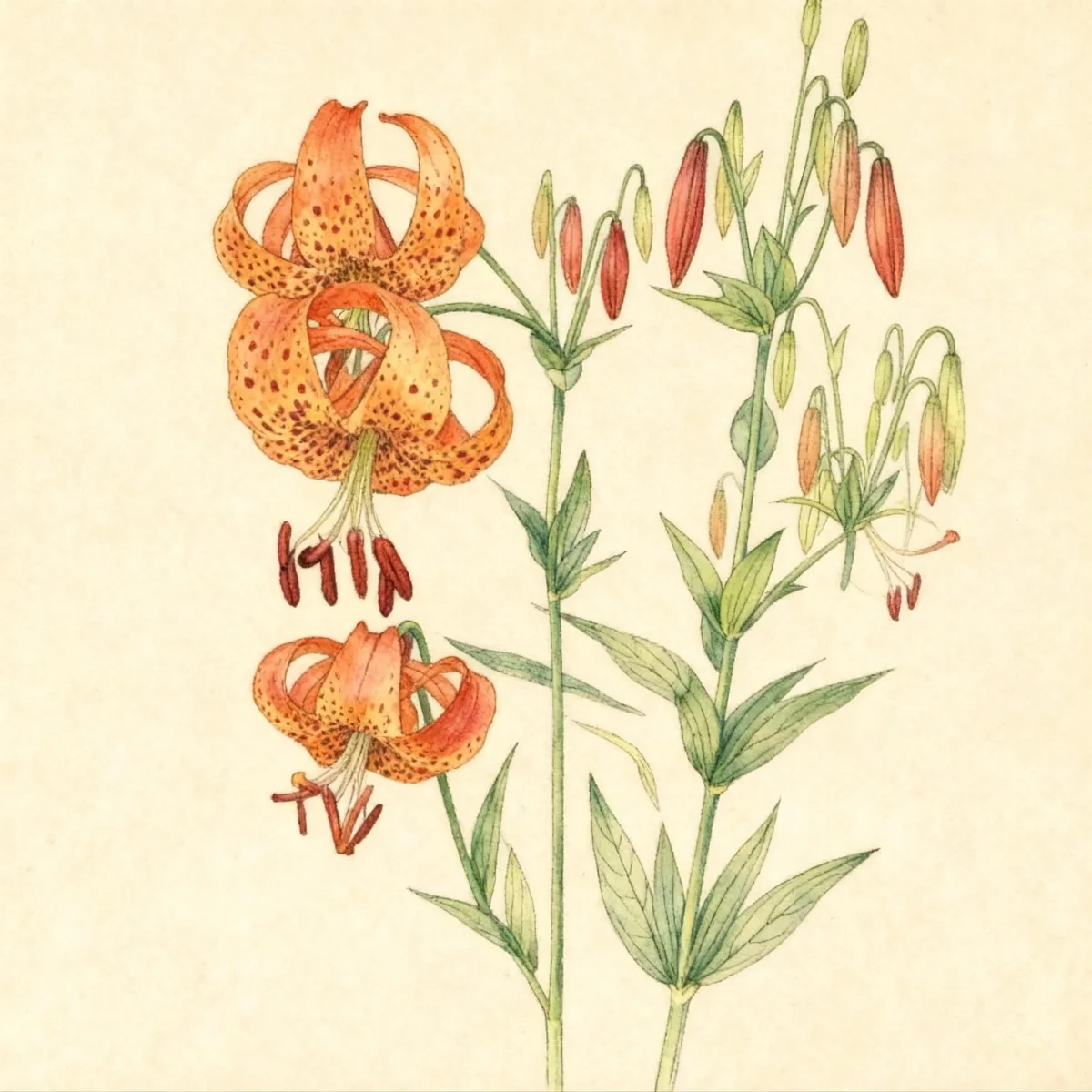
Lilium superbum, the stunning Turkscap lily, commands attention with its reflexed orange, maroon-spotted blooms. Ideal for moist sites.
Scroll down to discover growing tips, care requirements, companion plants, and more
Complete Plant Information
Overview
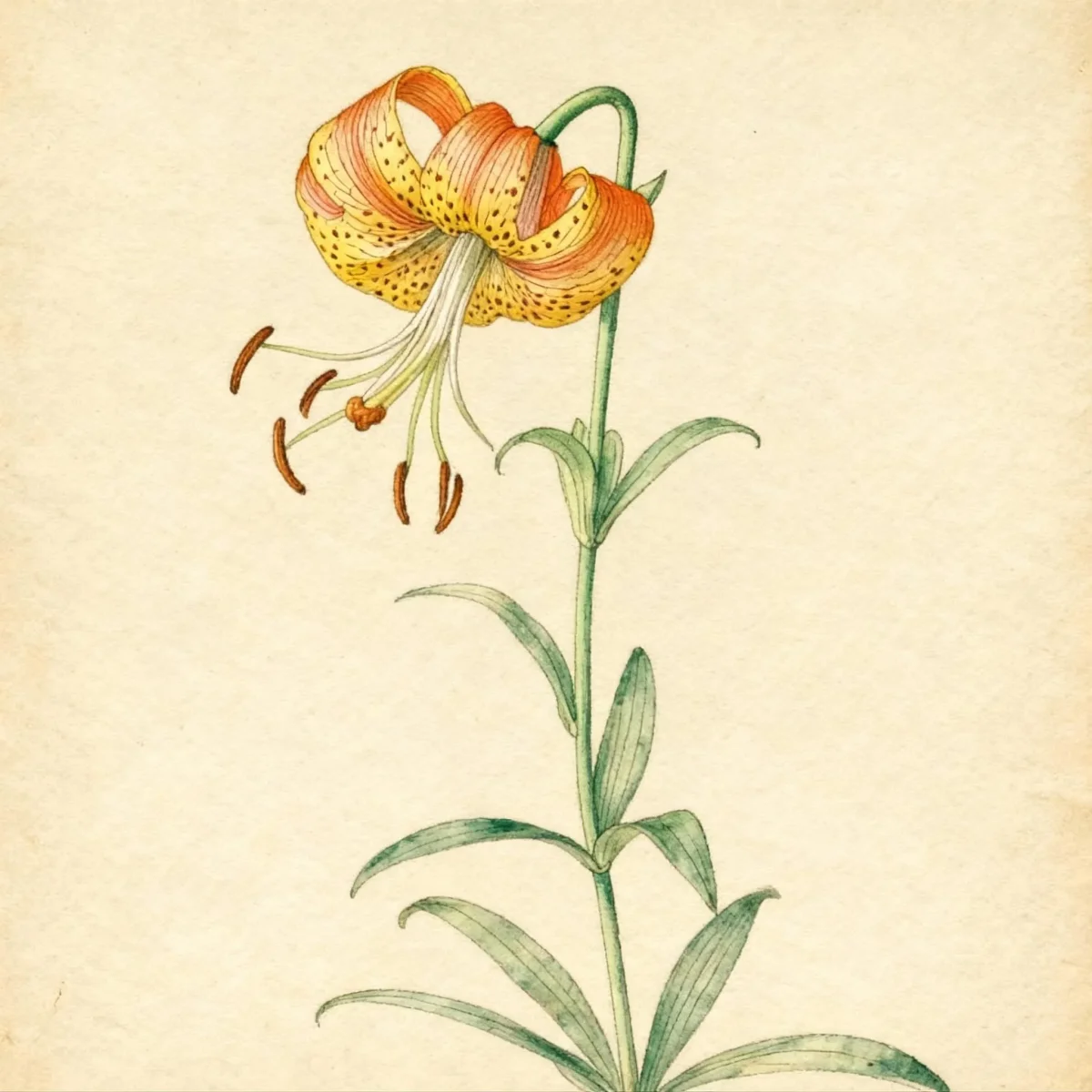
The Lilium superbum, instantly recognizable as the Turkscap lily, is one of the most dramatic native perennials for damp areas of the garden. Its towering stems and downward-facing, heavily recurved orange flowers, densely spotted with maroon, create an unforgettable summer focal point. This magnificent lily is highly valued by gardeners for both its sheer visual impact and its success in wetter soil conditions where many other lilies struggle.
As a robust bulb, Lilium superbum thrives in the rich, humusy soils typical of its native wet meadows and moist woods across the Eastern United States. It reaches impressive heights, easily soaring 4 to 7 feet, making it an architectural feature in the landscape. Proper siting ensures that this superb native lily will establish itself and potentially spread slowly into impressive colonies over time.
For gardeners seeking to replicate a naturalized look or manage moist low spots effectively, the Turkscap lily offers superb vertical interest during midsummer bloom. Its specific moisture requirements mean careful planning is needed, but once sited correctly, it requires only medium maintenance to deliver spectacular results.
Fast Facts
- Plant Family: Liliaceae
- Plant Type: Bulb
- Native Range: Eastern United States
- Hardiness Zones: USDA Zones 5-8
- Size at Maturity:
- Height: 4-7 ft
- Spread: 0.5-0.75 ft
- Bloom Time: July
- Bloom Description: Orange, spotted maroon
- Sun Exposure: Full sun to part shade
- Water Needs: Medium to wet
- Maintenance Level: Medium
How to Grow
Planting the Lilium superbum bulb is best achieved in the fall, setting the bulbs approximately 5 to 6 inches deep. Choose a location that receives full sun or light, filtered shade, ensuring the soil is well-drained yet remains consistently moist to wet. Although Lilium superbum can tolerate average soil, it performs best in humus-rich conditions.
Maintenance centers around moisture management. Unlike conventional lilies, the Turkscap lily requires soils that never fully dry out during the growing season, making it perfect for rain gardens or low spots. Apply a generous layer of mulch to help keep the root zone cool and maintain consistent soil dampness throughout the summer heat.
Fertilizing is usually unnecessary if the soil is rich; focus instead on suppressing weeds that compete for moisture. While the bulb is stoloniferous and will spread naturally, be patient, as establishment and subsequent spreading in cultivation can sometimes be slow, especially if growing conditions are less than ideal. Minimal pruning is required other than cutting back the spent stems after the foliage yellows in the fall.
Landscape Uses
The suggested uses for Lilium superbum strongly lean toward wetter areas of the garden where its moisture needs can be met continuously. This plant is exceptional for naturalizing in meadows or within native plant gardens where it can form impressive, colony-like masses. It is an outstanding vertical element for the back of perennial borders, offering brilliant orange contrast against foliage textures.
Consider grouping or massing the Turkscap lily near pond peripheries or in designated rain gardens, where its love for wet conditions is not just tolerated but encouraged. It pairs beautifully with moisture-loving companions like cardinal flower (Lobelia cardinalis) or Joe Pye Weed (Eutrochium species), creating a lush, water-wise, and highly visual midsummer planting scheme.
Standout Features
Flower Qualities
- Showy
Noteworthy Characteristics
Lilium superbum, commonly called Turk’s cap lily, is native to eastern North America where it occurs in wet meadows and moist woods from New Hampshire south to Georgia and Alabama. This is the tallest of the native American lilies, typically growing 4-6’ (less frequently to 8’) tall. The distinctive, nodding, Turk’s cap-type flowers are orange with greenish throats, densely spotted with maroon, featuring sepals and petals sharply reflexed backward to touch the stem.
Tolerances
- Wet Soil
Potential Problems
There are no serious insect or disease problems consistently associated with growing the Turkscap lily. Good air circulation is important, especially in humid environments, to discourage any potential fungal issues, though resistance is generally high. By ensuring the soil remains moist but not waterlogged (which can cause bulb rot), growers maximize the health of this elegant native lily.
Frequently Asked Questions
What hardiness zones is Turkscap lily suitable for?
The Lilium superbum is reliably hardy in USDA Zones 5 through 8, making it a reliable choice across much of the eastern half of the United States.
How large does Lilium superbum grow?
This plant is quite tall, typically reaching mature heights between 4 and 7 feet, with a slender spread of only 0.5 to 0.75 feet per bulb.
When does Turkscap lily bloom?
The spectacular bloom time for the Turkscap lily is July, featuring its characteristic orange, maroon-spotted flowers.
What sun exposure does Lilium superbum need?
For best performance, Lilium superbum requires full sun to partial shade, but it excels when given reliable moisture throughout the day.
Conclusion
The Turkscap lily offers an unmatched vertical presence and vibrant coloration in the summer garden, particularly for gardeners managing moist or boggy areas. Planting Lilium superbum, or the Turkscap lily, requires attention to consistent moisture, but the reward is one of North America’s most magnificent native lilies. Check your local hardiness zone compatibility now and plan your fall bulb planting for next summer’s spectacular display.
Companion Planting
When selecting companions for Lilium superbum, prioritize plants that share the need for consistently moist or wet conditions and appreciate similar sun exposure. Tall, upright plants that bloom slightly before or after July, like Switchgrass (Panicum virgatum) varieties or dense clumps of blue flag iris (Iris versicolor), create beautiful textural contrast without overly competing with the lily’s root zone.
Avoid placing shallow-rooted or notoriously drought-tolerant perennials immediately adjacent to your Turkscap lily. Remember that mulch is essential to keep the roots cool and conserve moisture; selecting companions whose foliage helps shade the soil surface enhances the overall microclimate for this moisture-loving bulb throughout the growing season.
Wildlife Benefits
While the primary draw of the Turkscap lily is aesthetic, its brilliantly colored, nodding flowers play an important role in supporting local insect populations during midsummer. The nectar-rich, open structure of the flowers is particularly appealing to long-tongued pollinators, often observed including large bees and hummingbirds seeking the energy provided by the orange blooms.
Because Lilium superbum is native, it supports local insect ecology more effectively than many introduced ornamental varieties. Positioning these lilies near other native selections that bloom sequentially will help ensure a continuous nectar and pollen source for local wildlife from spring right through the late summer months, contributing to a healthier backyard ecosystem.