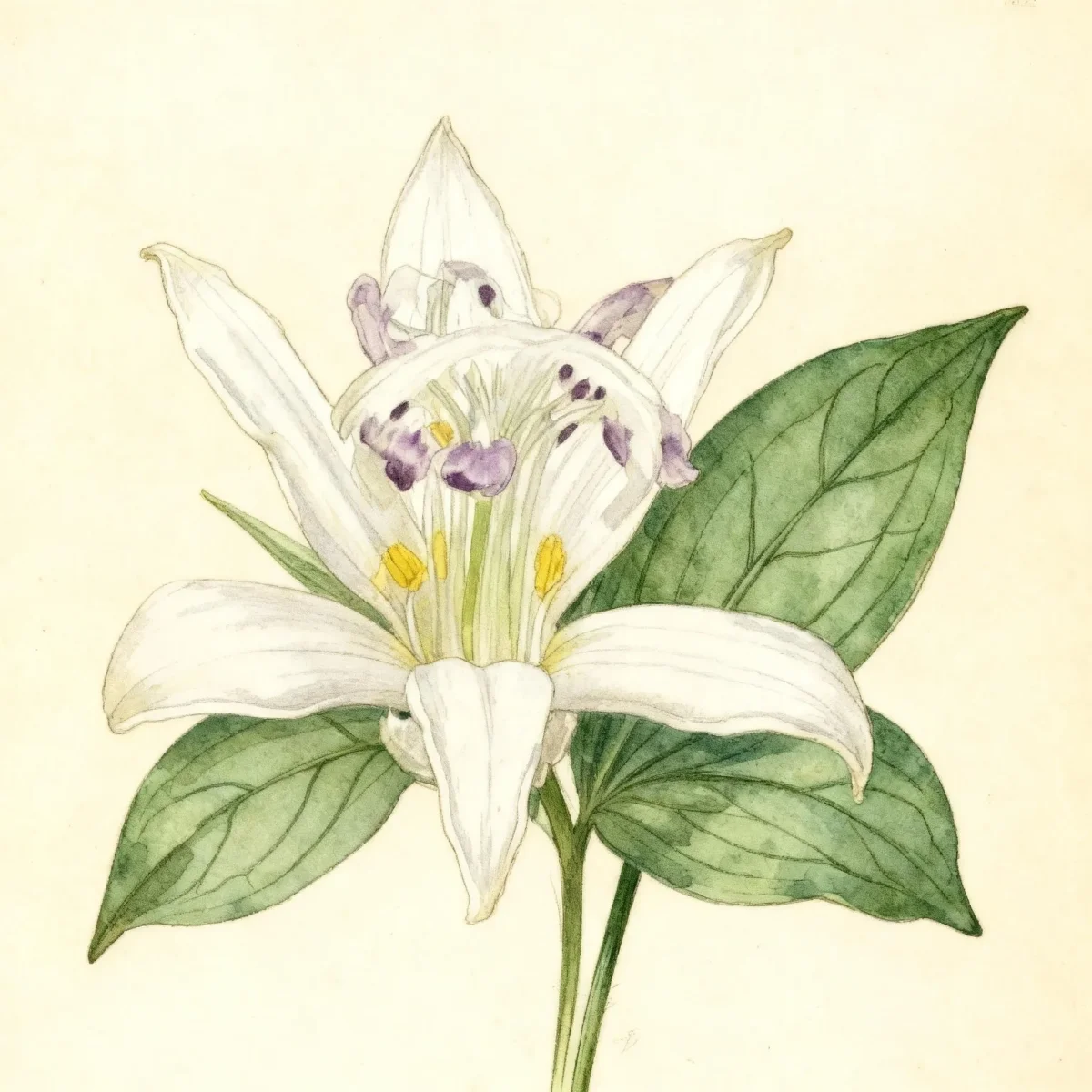
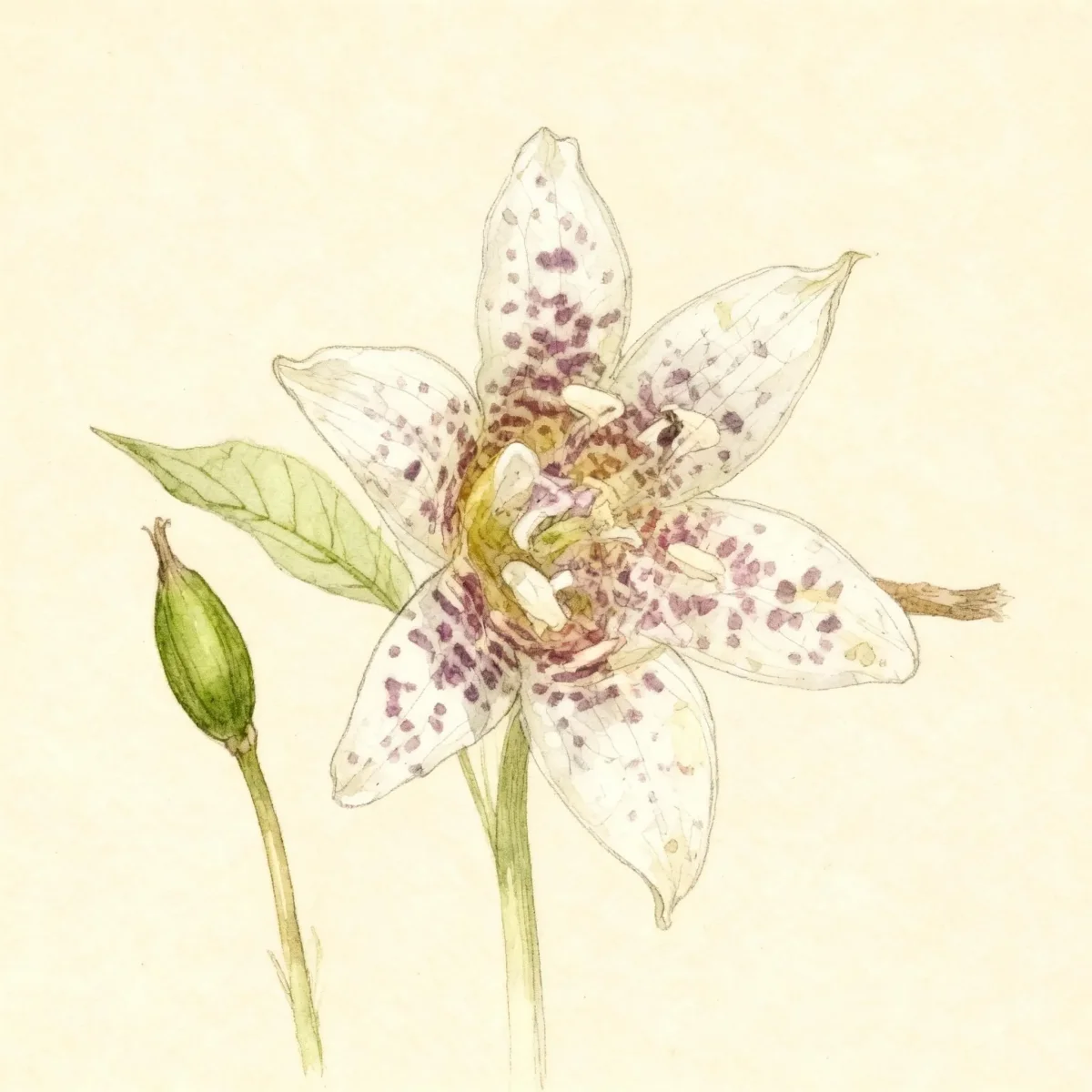
Japanese toad lily (Tricyrtis hirta)
Discover Tricyrtis hirta, the Japanese toad lily, known for unique late-season flowers in shady garden spots. A low-maintenance perennial.
Scroll down to discover growing tips, care requirements, companion plants, and more
Complete Plant Information
Overview
The Japanese toad lily, or Tricyrtis hirta, offers a welcome burst of intricate beauty when many other perennials have finished flowering. This herbaceous perennial is highly valued for its unique, lily-like blossoms that appear late in the season, bridging the gap between summer blooms and autumn color palettes. Its distinctive, spotted flowers provide sophisticated texture perfect for shaded locations.
This species thrives as an easy-to-manage garden resident, making the Tricyrtis hirta an excellent choice for gardeners seeking reliable performance with minimal fuss. It establishes well in average soils, provided they retain consistent moisture, making it suitable for woodland garden settings or moist borders where it can be appreciated up close.
A significant characteristic is its ability to flourish in the presence of shade, often a challenging environment for colorful bloomers. The hairy stems and unique flower structure give the Japanese toad lily its common name, ensuring that this Tricyrtis hirta cultivar remains a focal point during late summer and early fall.
Fast Facts
- Plant Family: Liliaceae
- Plant Type: Herbaceous perennial
- Native Range: Japan
- Hardiness Zones: USDA Zones 4-8
- Size at Maturity:
- Height: 2-3 ft
- Spread: 1.5-2 ft
- Bloom Time: August to September
- Bloom Description: White to pale lilac with heavy purple spotting
- Sun Exposure: Part shade to full shade
- Water Needs: Medium to wet
- Maintenance Level: Low
How to Grow
Planting the Japanese toad lily is best done in spring or early fall, allowing the root system to establish before intense summer heat or winter cold. Choose a location that provides consistently moist, well-drained soil rich in organic matter. Tricyrtis hirta particularly prefers humusy, slightly acidic conditions to mimic its native Japanese woodlands.
Care requirements are generally straightforward due to its low maintenance profile. Ensure the soil never dries out entirely, especially during dry spells, as consistent moisture is critical for good health and flowering. While fertilization is rarely necessary if the soil is rich, a light top-dressing of compost in the spring can boost vigor.
Minimal pruning is required; focus efforts on removing any winter-damaged foliage in early spring. Since this Tricyrtis hirta is non-rhizomatous, division is less common, though it may self-seed gently in ideal, shady, moist patches, allowing it to naturalize beautifully over time.
Landscape Uses
The primary recommendation for the Japanese toad lily is to plant it where its small, detailed flowers can be easily observed, such as along woodland paths, shady borders, or near seating areas. Its upright habit makes it useful for adding vertical interest in mixed perennial borders that receive dappled sunlight throughout the day.
Because this plant naturalizes well, it integrates seamlessly into woodland garden designs alongside ferns, hostas, and shade-loving groundcovers. Consider pairing Tricyrtis hirta with plants that have lighter green foliage to make the heavily purple-spotted white flowers truly pop in the dim light of its preferred habitat.
Standout Features
Flower Qualities
- Showy
Noteworthy Characteristics
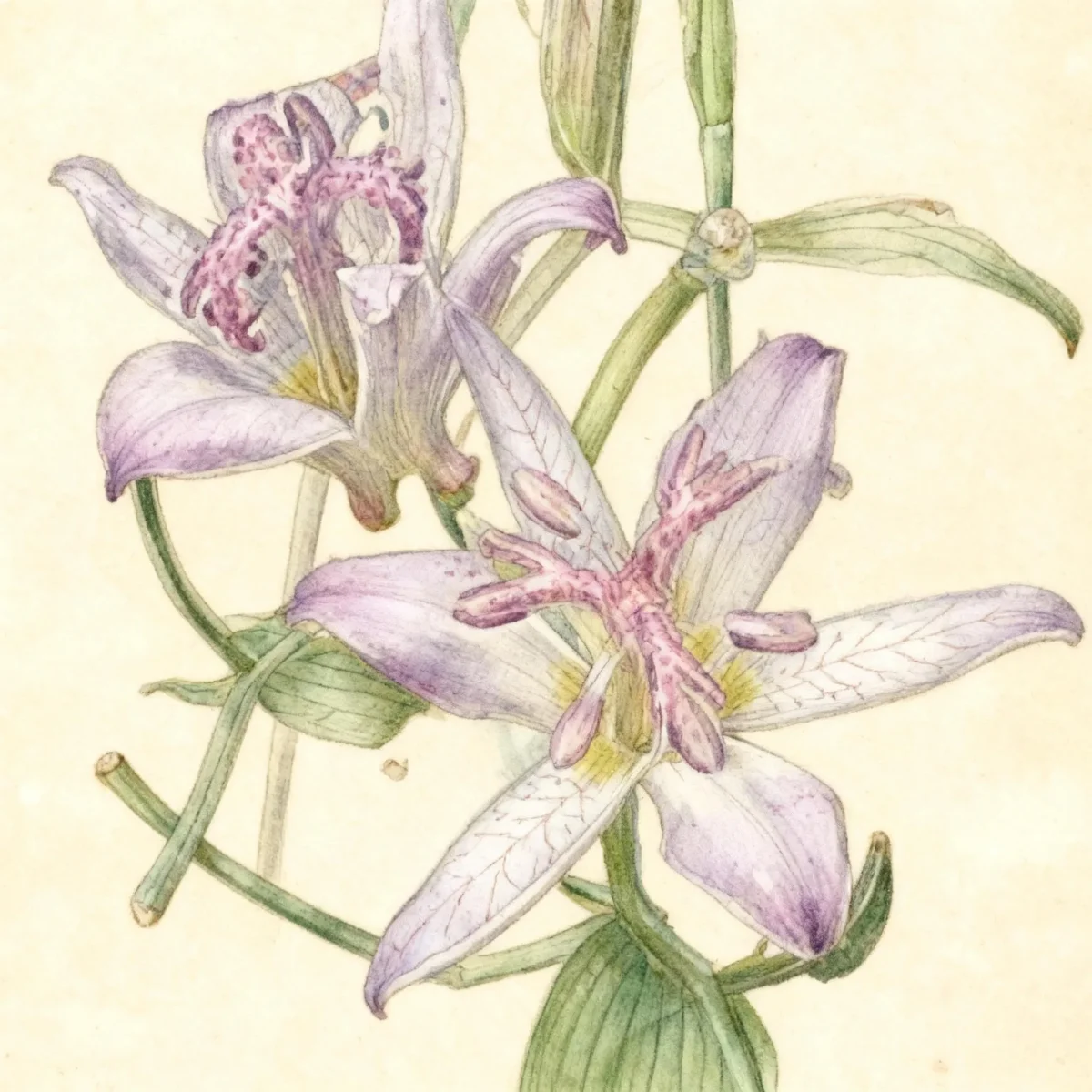
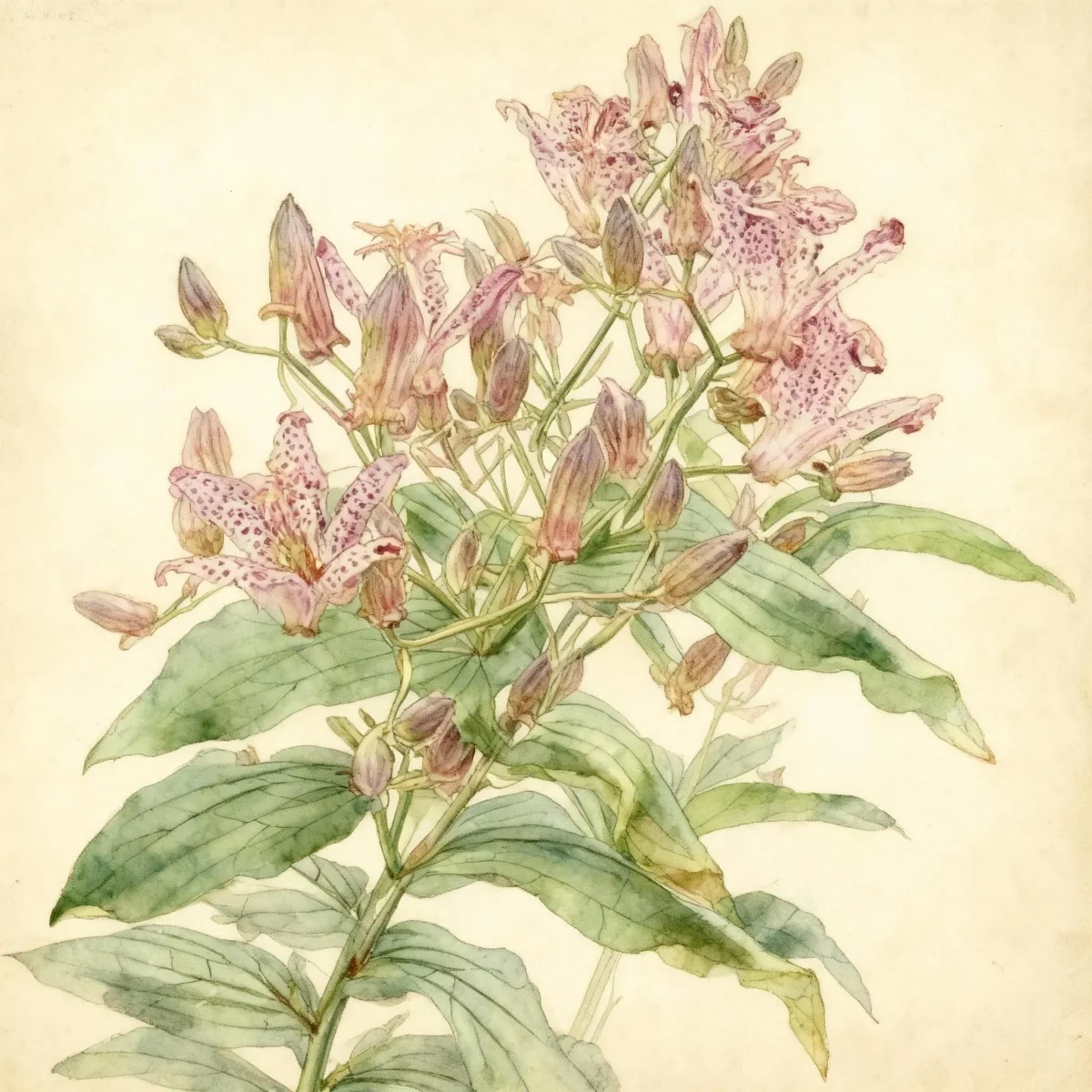
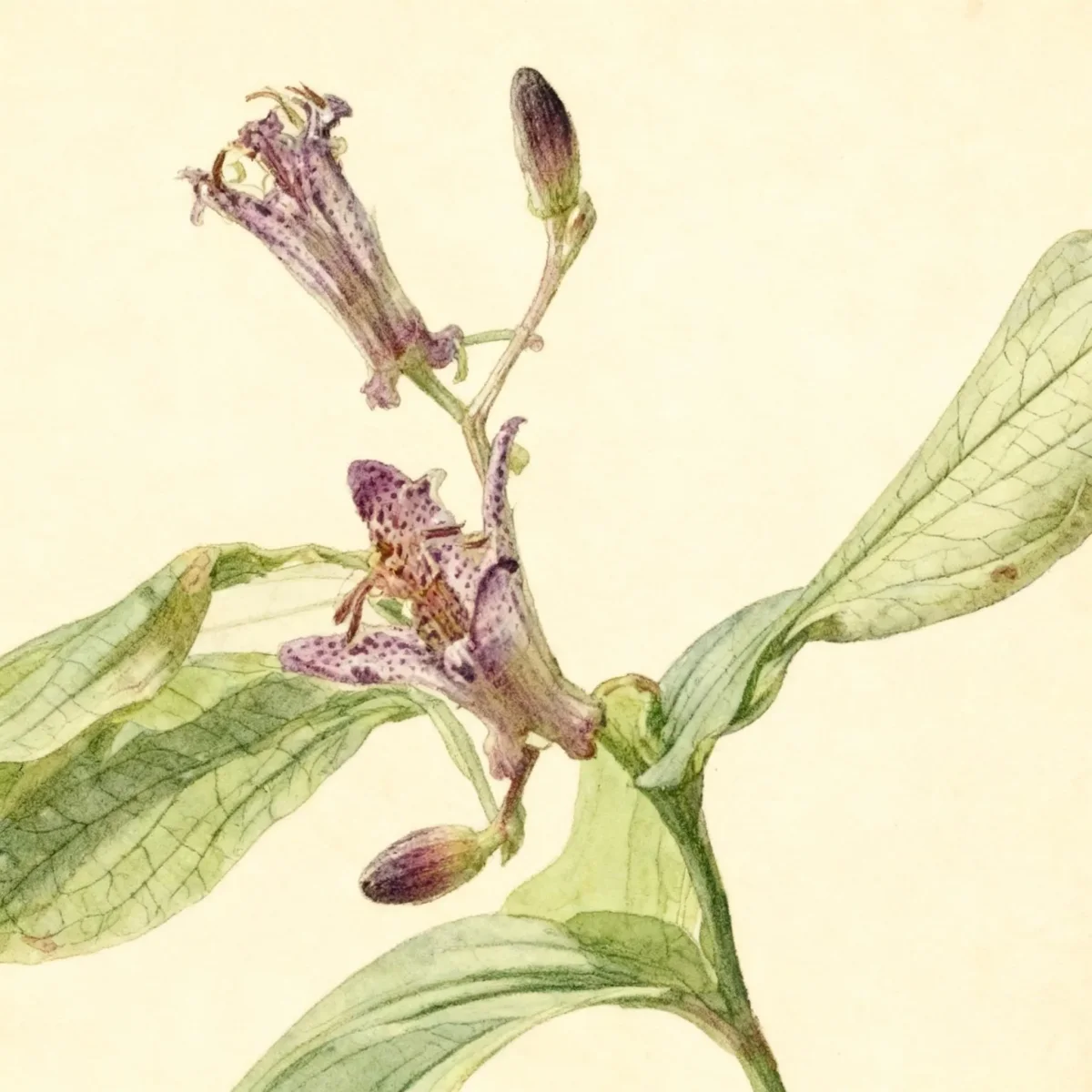
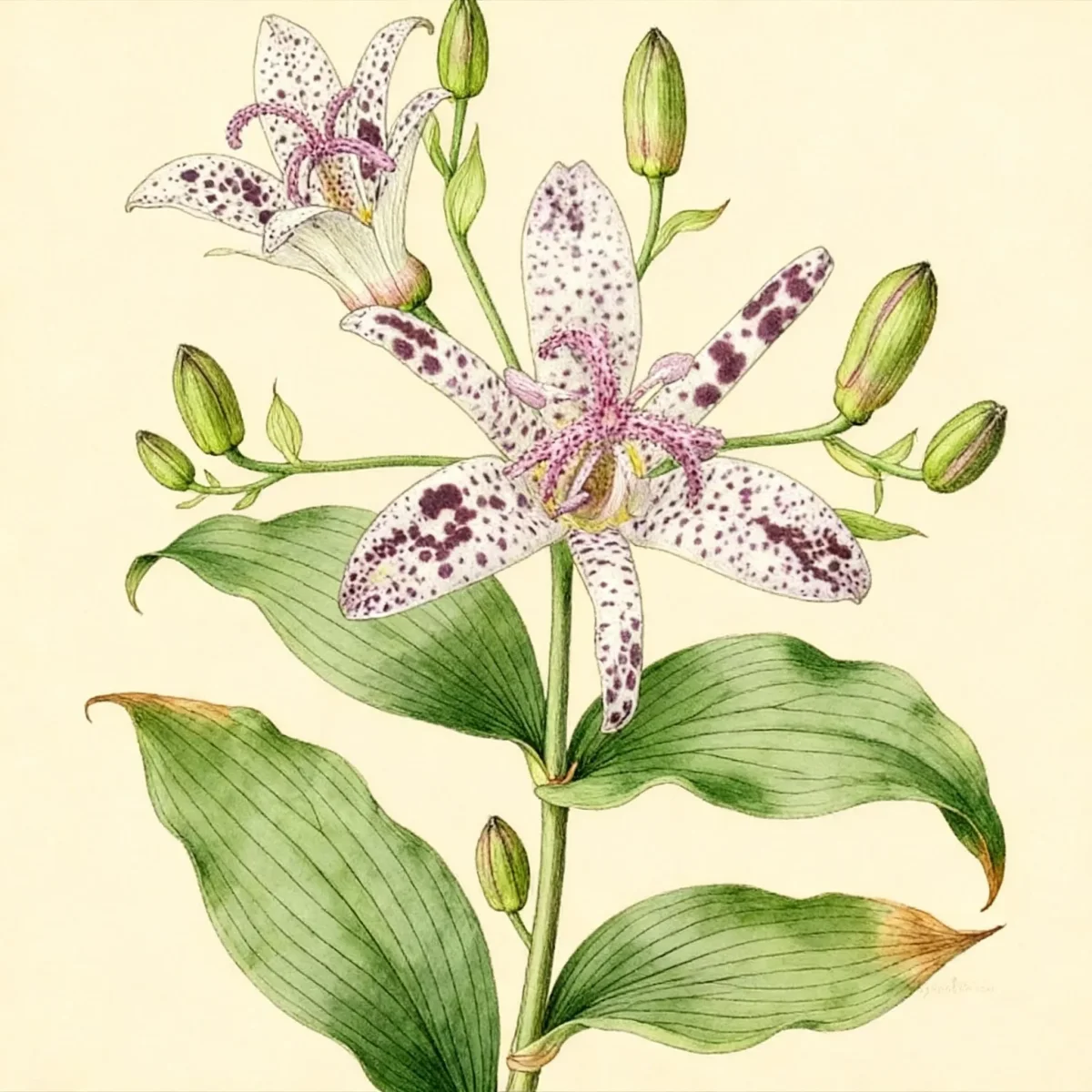
Tricyrtis hirta, commonly called toad lily, is perhaps best known for its unique flowers, ability to bloom in shade and late summer to early fall bloom time. Features small, lily-like flowers (1 inch long) with six showy tepals (similar appearing sepals and petals) that have swollen, sacklike bases. The white to pale lilac flowers are heavily dotted with purple spotting. Arching, unbranched stems grow upright, and the whole plant is often described as hairy, leading to its other common name, hairy toad lily.
Tolerances
- No serious insect or disease problems. Slugs are an occasional pest
Potential Problems
While generally robust, gardeners should be aware that slugs and snails occasionally find the lush foliage of Tricyrtis hirta appealing, especially in damp, shaded locations. Monitor new growth regularly during their active seasons. Promptly managing these pests, perhaps with organic slug bait or protective barriers around young plants, will keep the appearance of your Japanese toad lily pristine. Disease problems are rare, provided the plant is situated in soil with adequate drainage, preventing root rot issues often associated with overly wet conditions.
Frequently Asked Questions
What hardiness zones is Japanese toad lily suitable for?
The species is quite hardy, thriving reliably across USDA Hardiness Zones 4 through 8.
How large does Tricyrtis hirta grow?
When mature, the Japanese toad lily typically reaches a height between 2 and 3 feet and spreads out to about 1.5 to 2 feet wide.
What sun exposure does Tricyrtis hirta need?
This shade-lover performs best in part shade to full shade conditions, requiring protection from intense afternoon sun.
When does Japanese toad lily bloom?
It offers its unique display from August well into September, featuring white to pale lilac flowers heavily marked with purple spotting.
Conclusion
The Japanese toad lily (Tricyrtis hirta) provides exceptional aesthetic value through its late-season, intricately patterned flowers perfect for dark corners of the garden. Its low maintenance and shade tolerance make this perennial a reliable performer. Check your local climate to ensure you fall within USDA Zones 4-8 before planting this unique late bloomer this fall.
Companion Planting
When designing a rich, moist, shaded area, many plants naturally partner well with Tricyrtis hirta. Consider pairing it with plants that offer contrasting foliage texture, such as Astilbe, which shares similar moisture requirements and thrives in part shade. Another excellent choice is the Japanese Painted Fern (Athyrium niponicum), whose silvery-marbled fronds complement the delicate structure of the Tricyrtis hirta flowers. These companions help fill out the mid-to-front layer of a woodland garden while the toad lily provides vertical interest.
Design Ideas for Shaded Borders
Utilize the vertical accent of the Japanese toad lily to break up the horizontal lines inherent in shade gardens. Plant groupings of three or five along a curving border that catches the eye as you walk nearby, maximizing appreciation for the intricate blooms. As the toad lily begins flowering in late summer, the surrounding hostas may start to look tired; position Tricyrtis hirta just beyond the hosta line to offer vibrant new interest as the shade garden transitions into autumn color schemes.