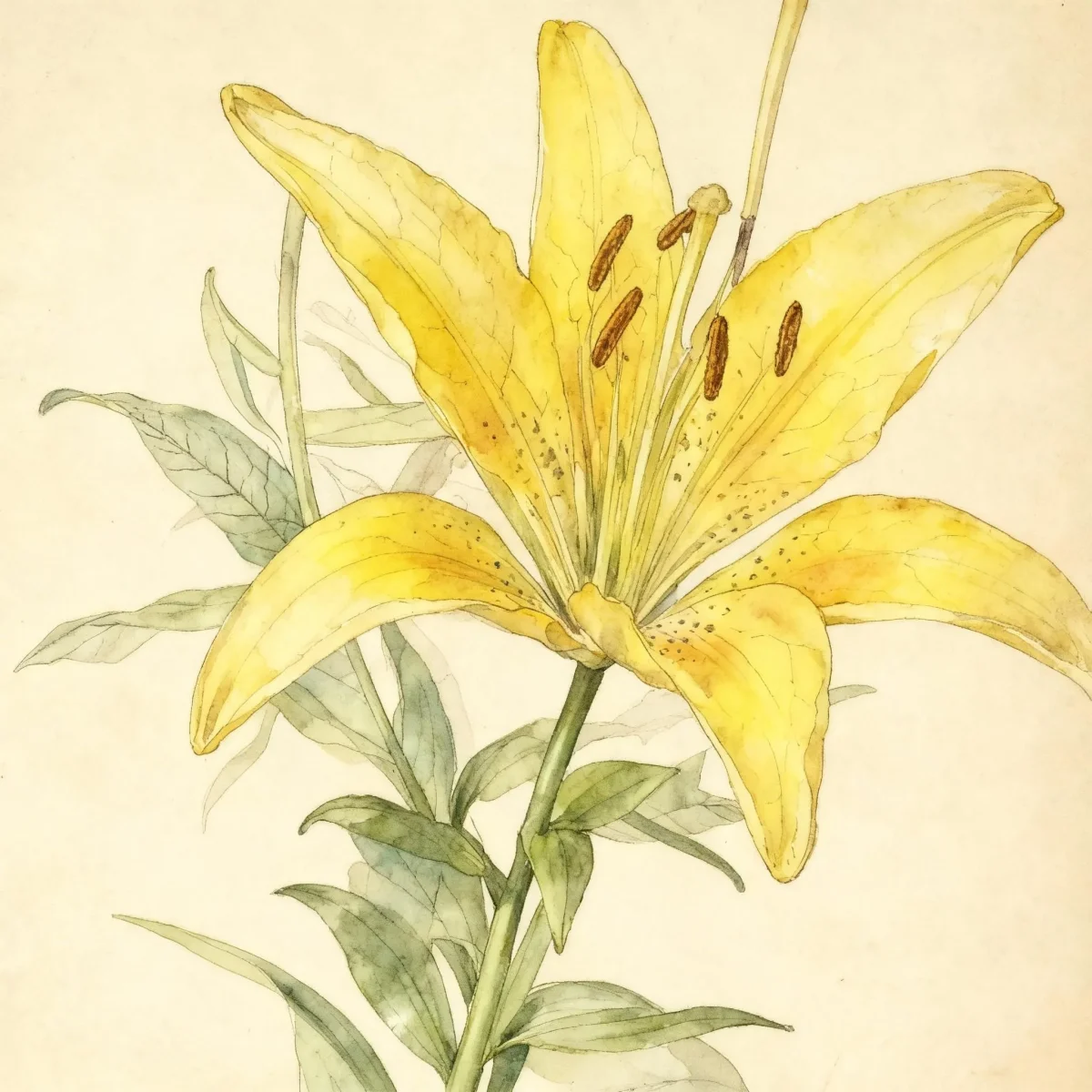
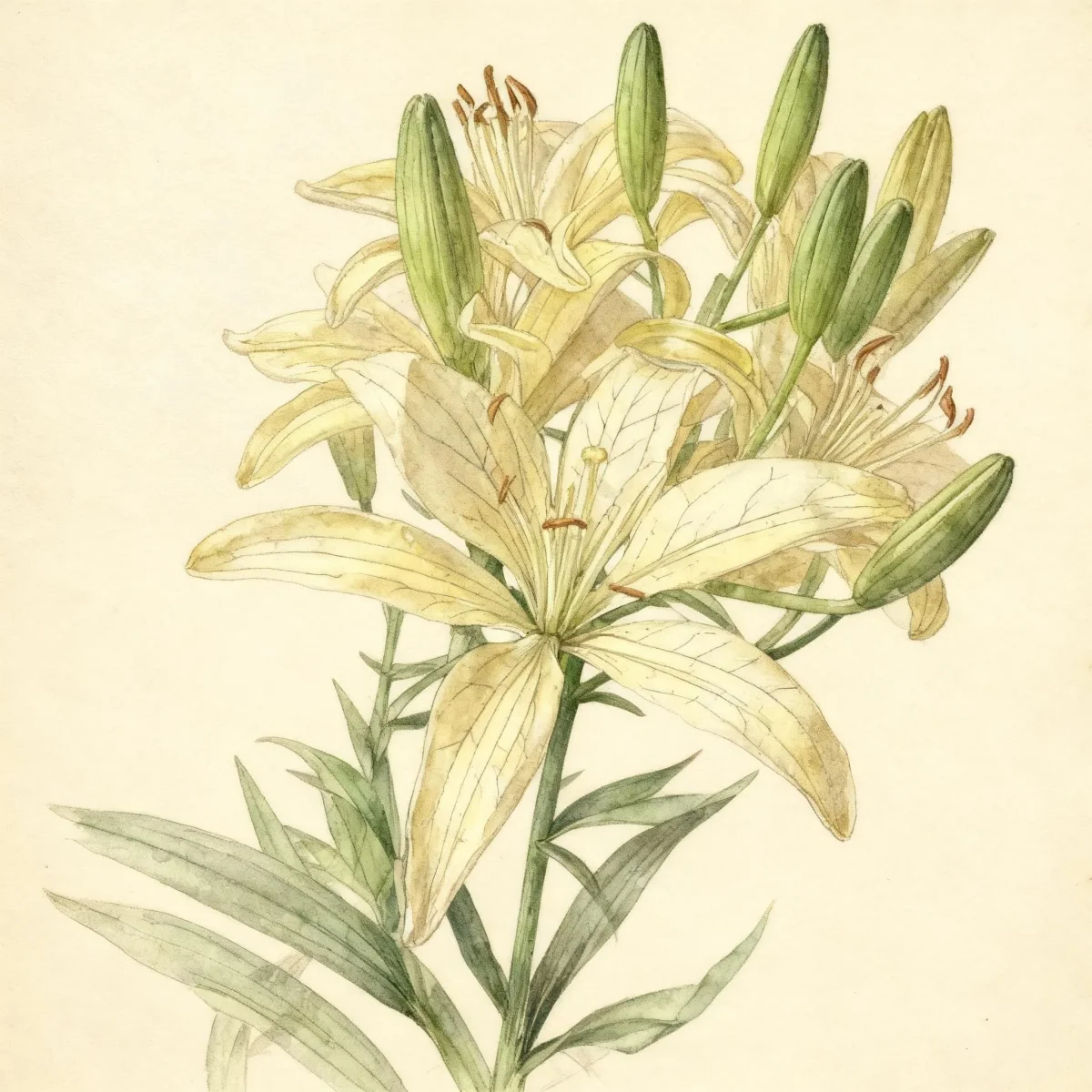
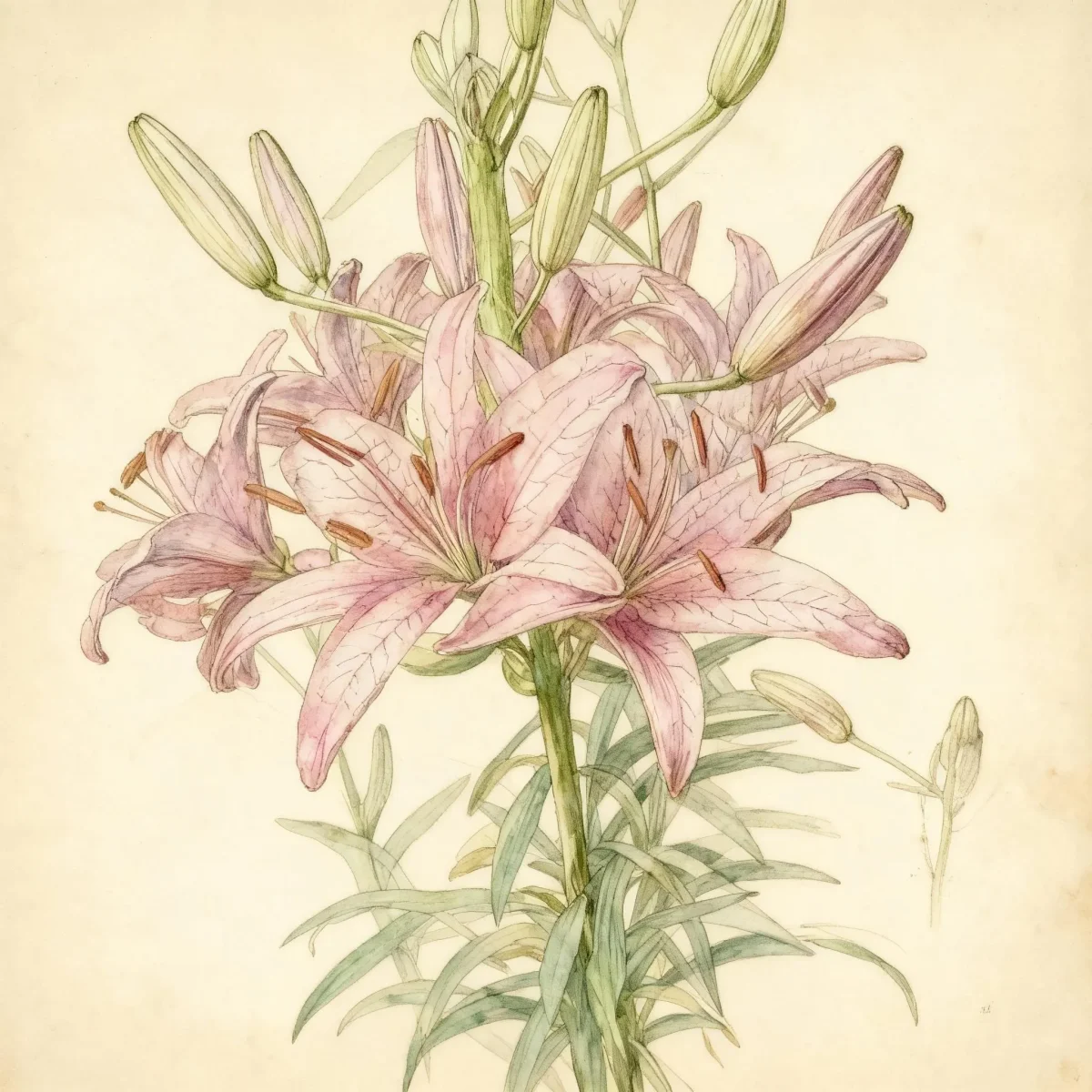
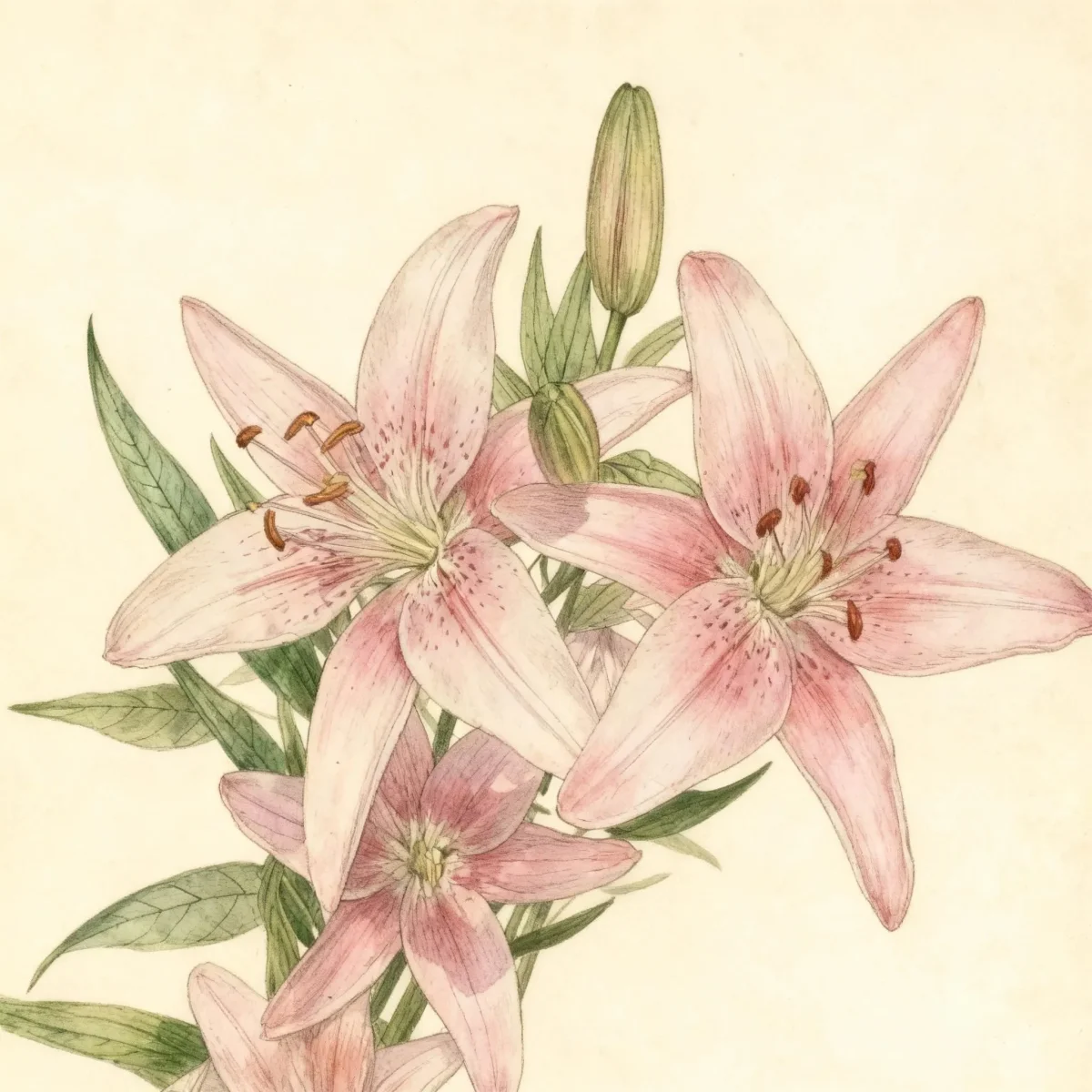
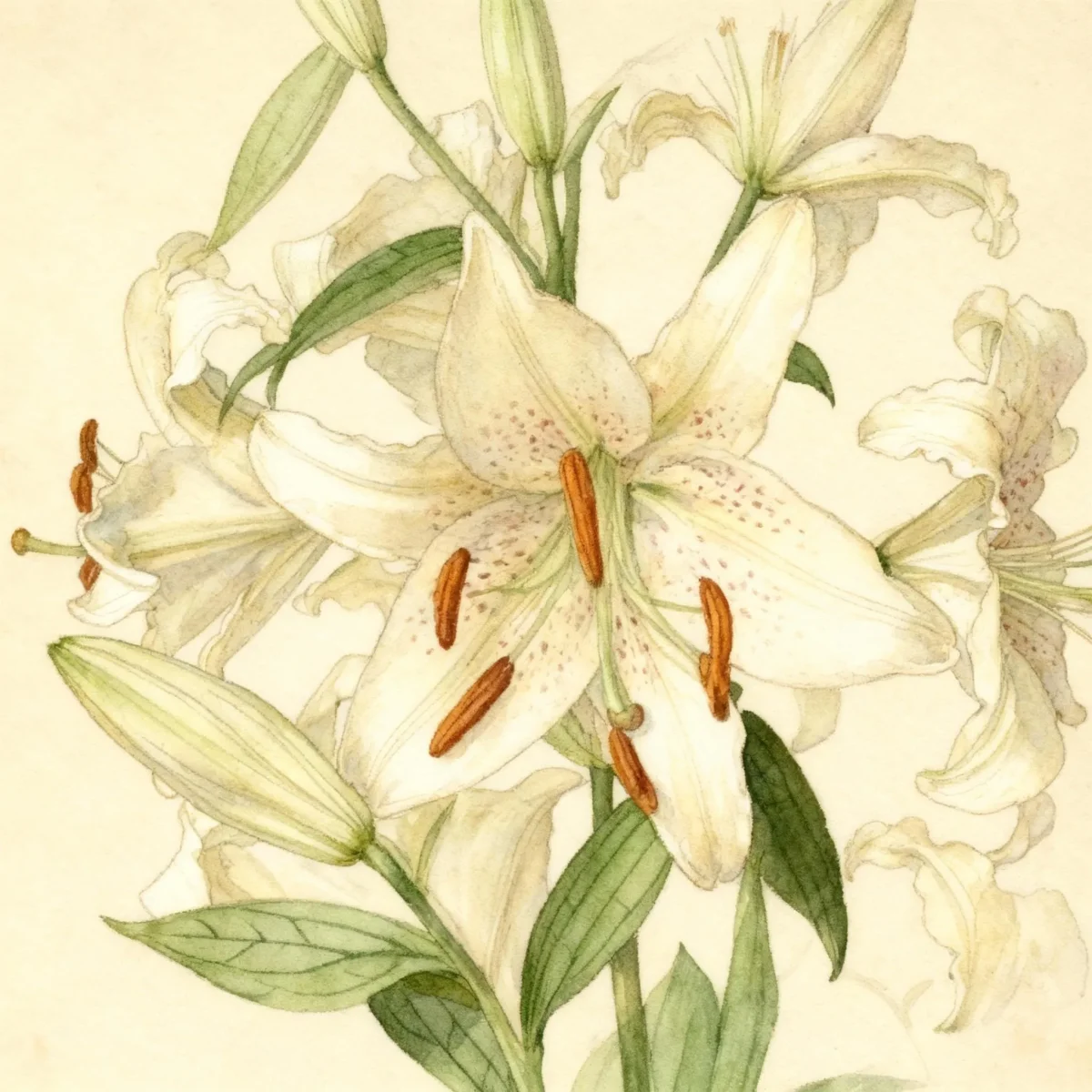
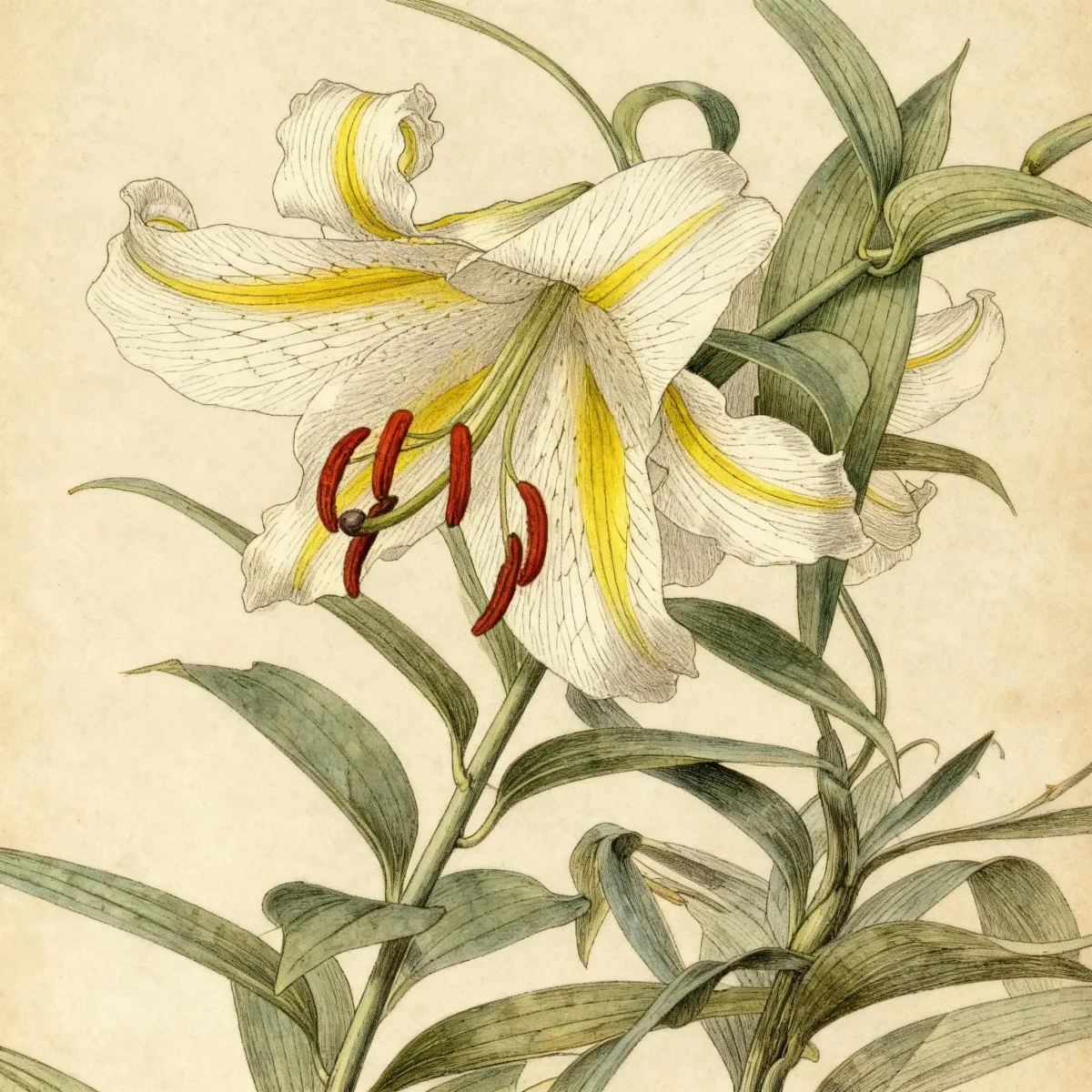
Golden-rayed lily (Lilium auratum)
The magnificent Lilium auratum, or Golden-rayed lily, boasts fragrant white flowers with striking gold stripes. Zones 5-8.
Scroll down to discover growing tips, care requirements, companion plants, and more
Complete Plant Information
Overview
The Lilium auratum, widely known as the Golden-rayed lily, is prized by gardeners for its dramatic presentation and intoxicating fragrance, making it a showpiece in the mid-to-late summer garden. Native to Japan, this magnificent bulb produces large, bowl-shaped flowers that are white, heavily speckled, and feature a distinctive central gold stripe on each recurved tepal. These striking blooms appear atop stiff stems that can reach impressive heights, often holding between 6 to 30 individual flowers per plant.
This Division IX lily thrives when given specific care regarding root zone temperature, although its overall maintenance level is considered low once established. The Golden-rayed lily requires consistent moisture and well-drained soil to ensure the health of its bulb structure throughout the growing season. Its towering stature and intense beauty make Lilium auratum an unparalleled choice for adding vertical accents and powerful fragrance among mixed borders or cottage garden plantings.
Fast Facts
- Plant Family: Liliaceae
- Plant Type: Bulb
- Native Range: Japan
- Hardiness Zones: USDA Zones 5-8
- Size at Maturity:
- Height: 2-5 ft
- Spread: 1-2 ft
- Bloom Time: July to August
- Bloom Description: White with gold striped tepals
- Sun Exposure: Full sun to part shade
- Water Needs: Medium
- Maintenance Level: Low
How to Grow
Plant Lilium auratum bulbs in the fall at a depth of 4 to 6 inches. The primary cultural key for this species is soil composition and moisture management; they perform best in rich, organic loam that is medium in moisture but exceptionally well-drained to prevent bulb rot. While the upper parts of the plant appreciate full sun, it is crucial to shade the root zone effectively.
To maintain cool, moist soil around the roots, mulch heavily around the base of your Golden-rayed lily plants. These bulbs require good moisture year-round, so ensure the soil never dries out completely, especially during the active growing season. Potted specimens can be planted anytime between spring and fall, though fall planting is standard for in-ground bulbs.
After the spectacular flowers fade, immediately remove them to prevent seed set, which diverts energy from the bulb. Do not cut back the foliage in the late season; wait until the leaves and stems have completely turned yellow naturally before cutting them down, which allows the bulb to store energy for next year’s bloom. Taller plants might need staking if they receive too much shade, which weakens the stems.
Landscape Uses
The majestic scale and intense fragrance of the Golden-rayed lily make it an exceptional feature plant. They are highly recommended for creating vertical drama in established borders, providing height amongst lower-growing perennials. Furthermore, the large, fragrant blooms cut beautifully, making Lilium auratum a staple ingredient in cutting gardens destined for summer bouquets.
For a traditional cottage garden aesthetic, plant clusters of these towering lilies where their height can be appreciated without overpowering smaller blooms. If space is limited, they adapt well to pots and containers, although the resulting plants may be slightly smaller than those grown in the ground. Ensure containers are deep enough to accommodate the 4-6 inch planting depth required for healthy bulb development.
Standout Features
Flower Qualities
- Showy
- Fragrant
Noteworthy Characteristics
Lilium auratum, commonly called golden-rayed lily or goldband lily, is a Division IX species lily that is native to Japan. It typically grows from 2 to 5 feet tall and features a mid to late summer bloom of 6-tepaled, sweetly fragrant, bowl-shaped flowers (to 6-10” across) with white recurved tepals that are often speckled. Each tepal has a central gold stripe. The specific epithet means ornamented with gold, referencing this unique central marking.
Tolerances
Potential Problems
For the average gardener, this lily is easy to grow and is generally pest-free, though vigilance is required against specific issues. Potential diseases include lily mosaic virus; prompt control of aphids carrying this virus is vital as there is no cure once infection occurs. Bulb rot is a significant concern, especially in wet, poorly-drained soils, emphasizing the need for excellent drainage. Botrytis is another possible fungal issue. Taller plants may need staking if grown in too much shade or in locations exposed to strong winds.
Frequently Asked Questions
What hardiness zones is Golden-rayed lily suitable for?
The Lilium auratum is reliably cold-hardy in USDA Zones 5 through 8.
How large does Golden-rayed lily grow?
This species typically reaches heights between 2 and 5 feet tall, with a spread of 1 to 2 feet wide.
When does Lilium auratum bloom?
The Golden-rayed lily shows off its spectacular flowers from July through August, displaying white tepals accented with gold stripes.
What sun exposure does Golden-rayed lily need?
It prefers full sun to part shade conditions, but remember that the roots must be kept cool and shaded while the blooms enjoy the light.
Conclusion
The Lilium auratum, or Golden-rayed lily, remains a stellar choice for gardeners seeking fragrance, drama, and structure in the summer garden. Its unique white and gold patterning ensures it captures attention when other spring blooms have faded. Before planting, verify your site matches the USDA Zones 5-8 requirement and prioritize preparing soil that offers both richness and superb drainage.
Companion Planting
When selecting companions for the Golden-rayed lily, the primary goal should be mitigating the heat absorbed by the lily’s roots. Choose lower-growing, cooler-season perennials whose foliage can naturally shade the base of the Lilium auratum while it receives adequate sun higher up. Good options include hostas, lower-growing ferns, or shade-tolerant groundcovers that enjoy rich soil.
Avoid letting the roots of companion plants become overly aggressive, as lilies prefer their space and need consistent medium moisture. Plants that thrive in similar soil moisture regimes but don’t compete heavily for nutrients will provide the best backdrop for these tall, spectacular blooms.
Design Ideas
Utilize the strong vertical element of the Golden-rayed lily by placing it strategically toward the middle or back of a border, grouping bulbs in clusters of odd numbers for the best visual impact. These lilies are perfect for established perennial borders where they can emerge through lower shrubs or robust herbaceous plants. Their mid to late summer bloom time perfectly bridges the gap between early summer perennials and later-season bloomers like asters.
Consider planting Lilium auratum near patios, walkways, or windows where its intense fragrance can be easily enjoyed on warm evenings. Because they can be short-lived if conditions are not ideal, design the area so that gaps can be easily filled by a secondary, easily replaceable perennial if the lily subsequently fails to return.