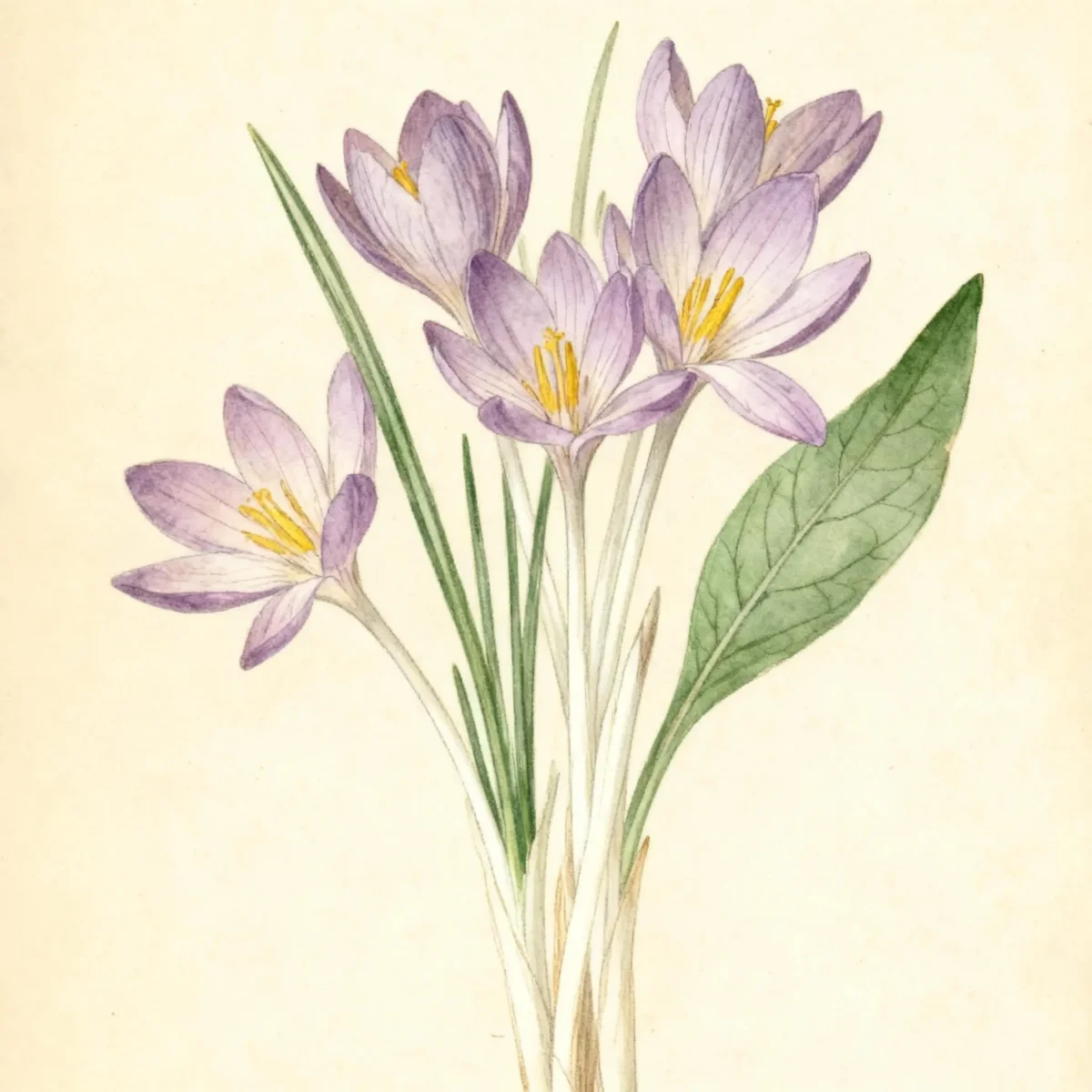
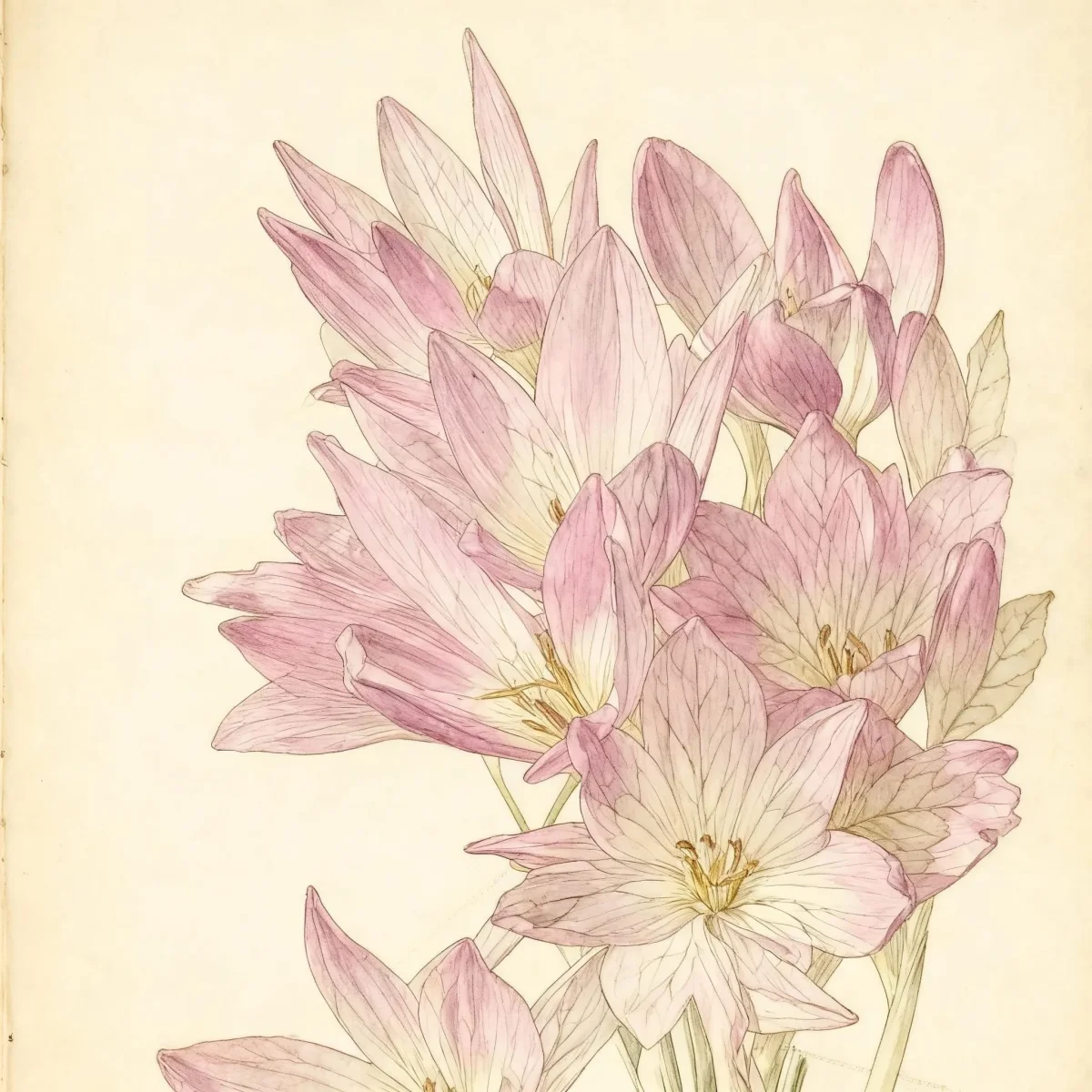
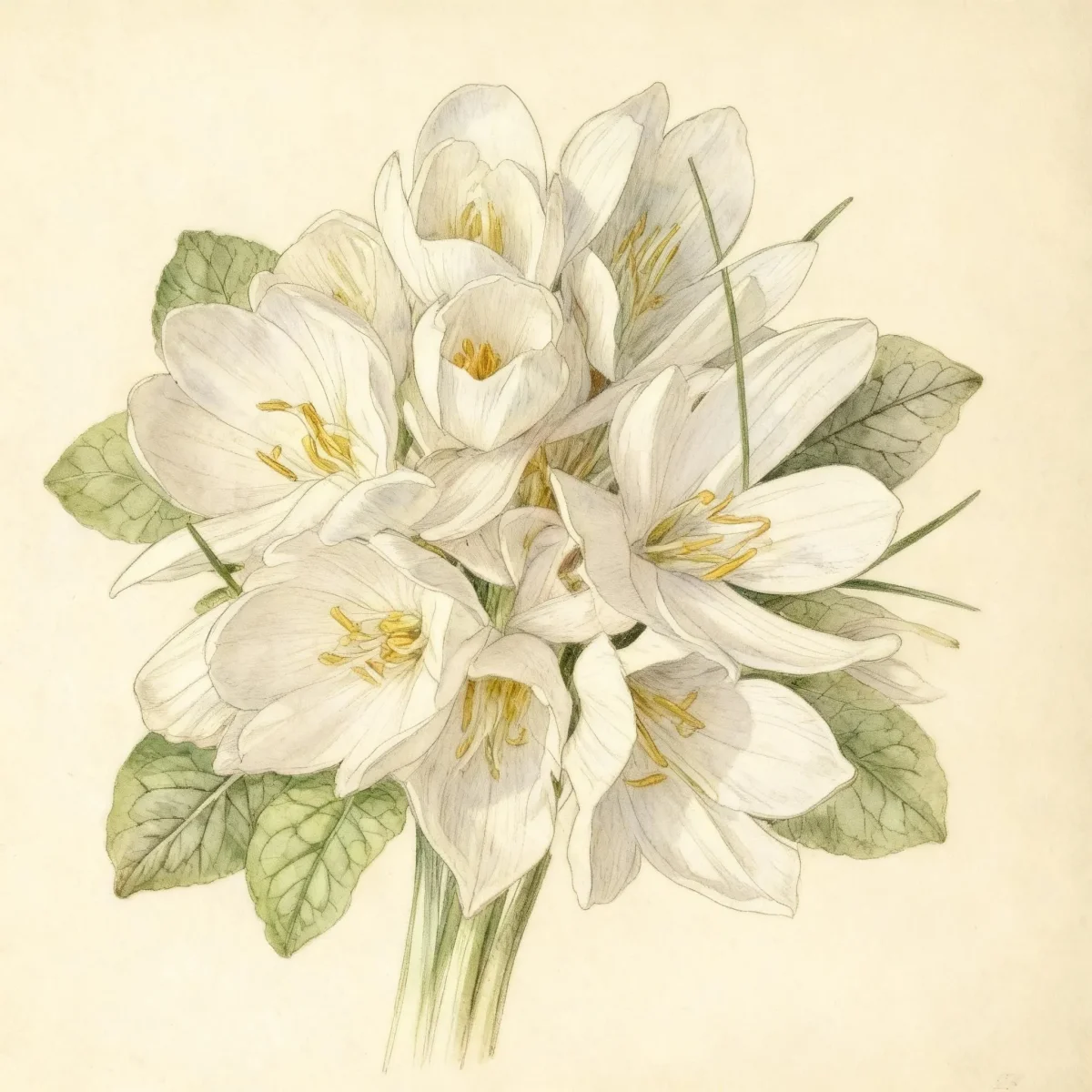
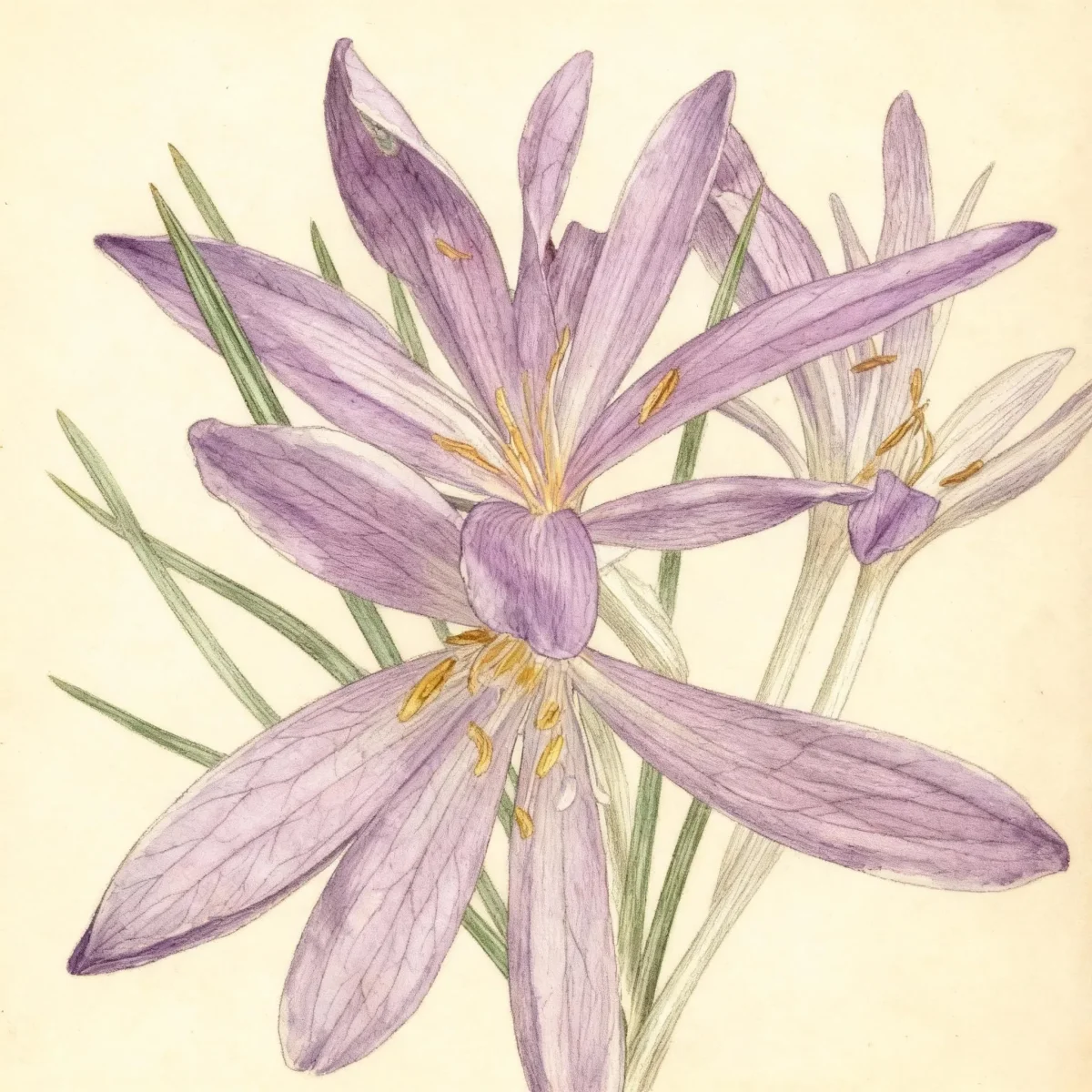
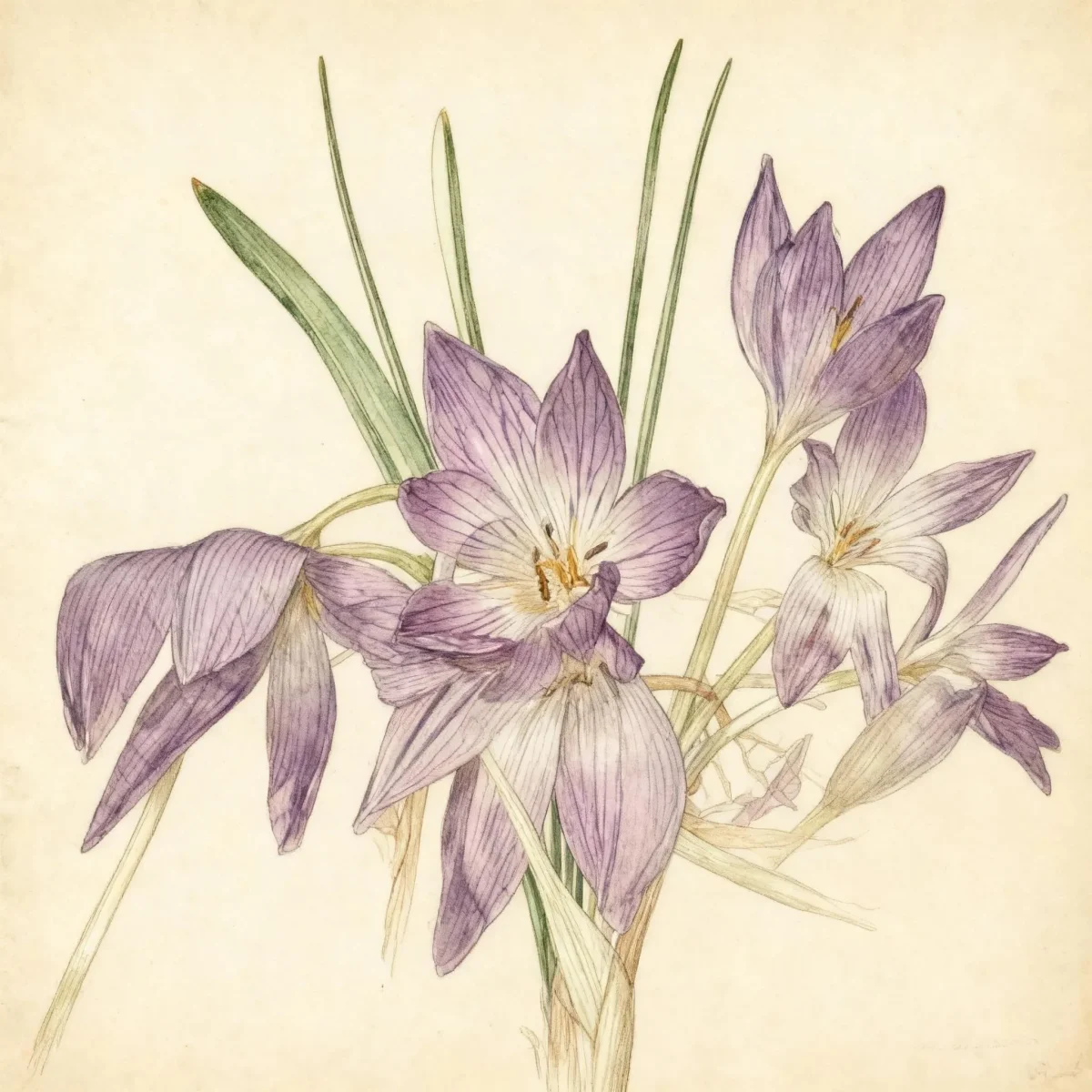
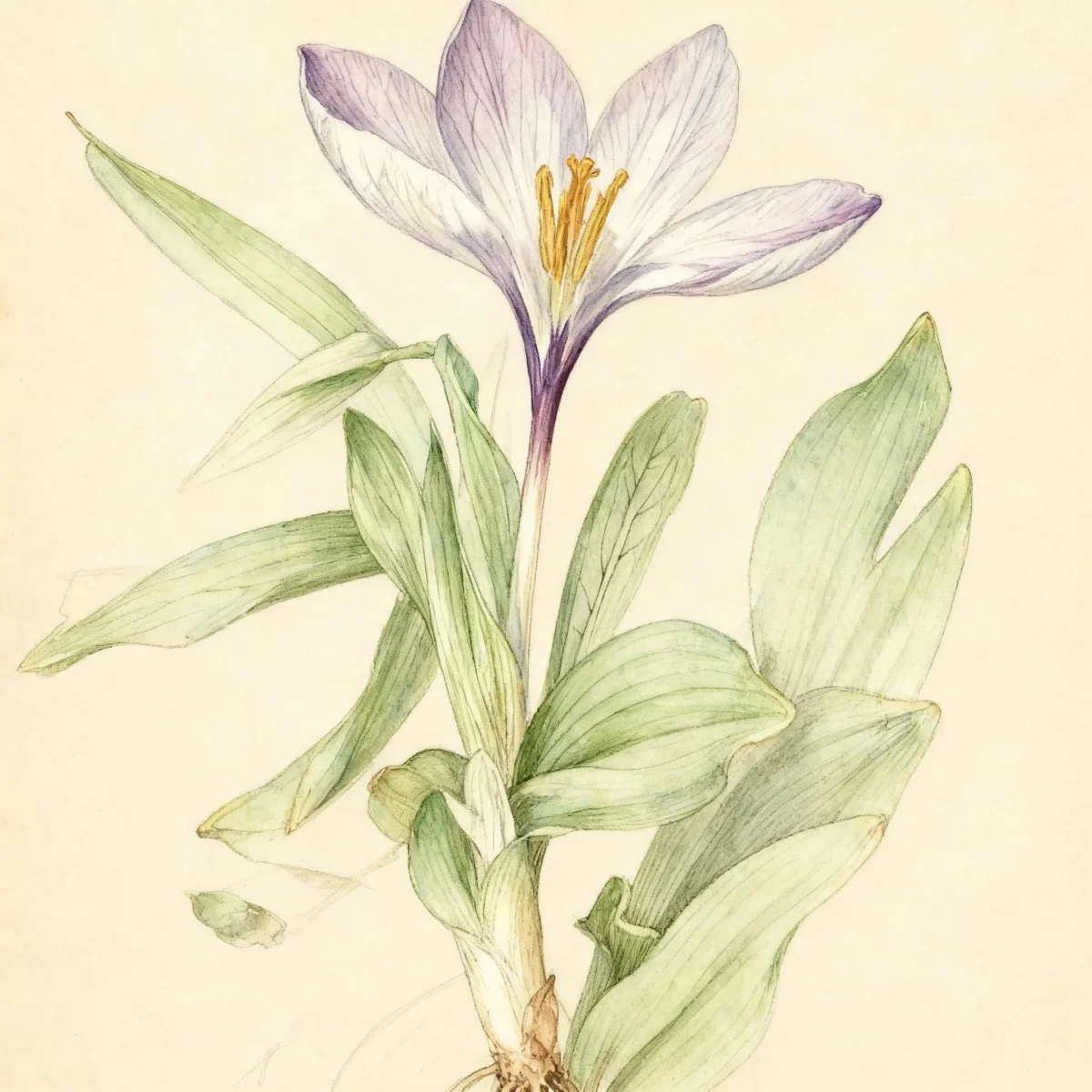
Autumn crocus (Colchicum laetum)
The Autumn crocus (Colchicum laetum) offers late-season color with pale violet to pink flowers, thriving in USDA Zones 4-7.
Scroll down to discover growing tips, care requirements, companion plants, and more
Complete Plant Information
Overview
The Autumn crocus, scientifically known as Colchicum laetum, provides a vital splash of late-season color when most other flowers are fading. This cormous perennial is valued specifically for its reliable bloom beginning in September, sending up crocus-like flowers directly from the ground, hence one of its common names, “Naked ladies.” While the striking fall flowers are the primary appeal of Colchicum laetum, gardeners must tolerate its somewhat unattractive, linear foliage that appears in spring and dies back by summer. Planting these bulbs rewards you with surprisingly vivid, funnel-shaped blooms perfect for brightening cooling landscapes.
Fast Facts
- Plant Family: Colchicaceae
- Plant Type: Bulb
- Native Range: Caucasus
- Hardiness Zones: USDA Zones 4-7
- Size at Maturity:
- Height: 0.25-0.5 ft
- Spread: 0.25-0.5 ft
- Bloom Time: September to October
- Bloom Description: Pale violet to pink
- Sun Exposure: Full sun to part shade
- Water Needs: Medium
- Maintenance Level: Medium
How to Grow
Colchicum laetum is easily established by planting the corms in August, which allows them enough time to generate flowers that same fall. Plant them 2 to 3 inches deep and space the corms about 6 inches apart. The ideal location features organically rich, medium-moisture, well-drained soil, thriving in conditions ranging from full sun to partial shade.
During the growing season, maintain a medium moisture level, ensuring the soil does not become waterlogged, especially during the dormant summer period. These bulbs generally require minimal fertilization if planted in rich soil. Since the spring foliage dies back and yellows before summer dormancy, avoid cutting it down prematurely, as this depletes the corm’s energy stores needed for the next autumn bloom.
If you need to propagate or move your clump of Colchicum laetum, the best time to dig and divide the corms is during the mid-summer dormant period, just before or as the foliage completely disappears. Be mindful that weak flower stems may occasionally flop after heavy rain or wind.
Landscape Uses
The Autumn crocus excels when planted to naturalize in meadows or beneath the dappled light of woodland borders. These plants are superb for filling gaps in the landscape where summer perennials are beginning to fade, offering consistent interest late into the year. Consider planting them near patios or along walkways for close-up appreciation of their delicate, late-season flowers.
To combat the issue of floppy stems or the visual decline of the spring foliage, plant Colchicum laetum among low-growing ground covers. These companions can help camouflage the dying leaves while providing structural support for the flower stalks. Because of the unsightly spring foliage, they are generally best positioned where they won’t be the prominent focal point of a formal border during the summer.
Standout Features
Flower Qualities
- Showy
Noteworthy Characteristics
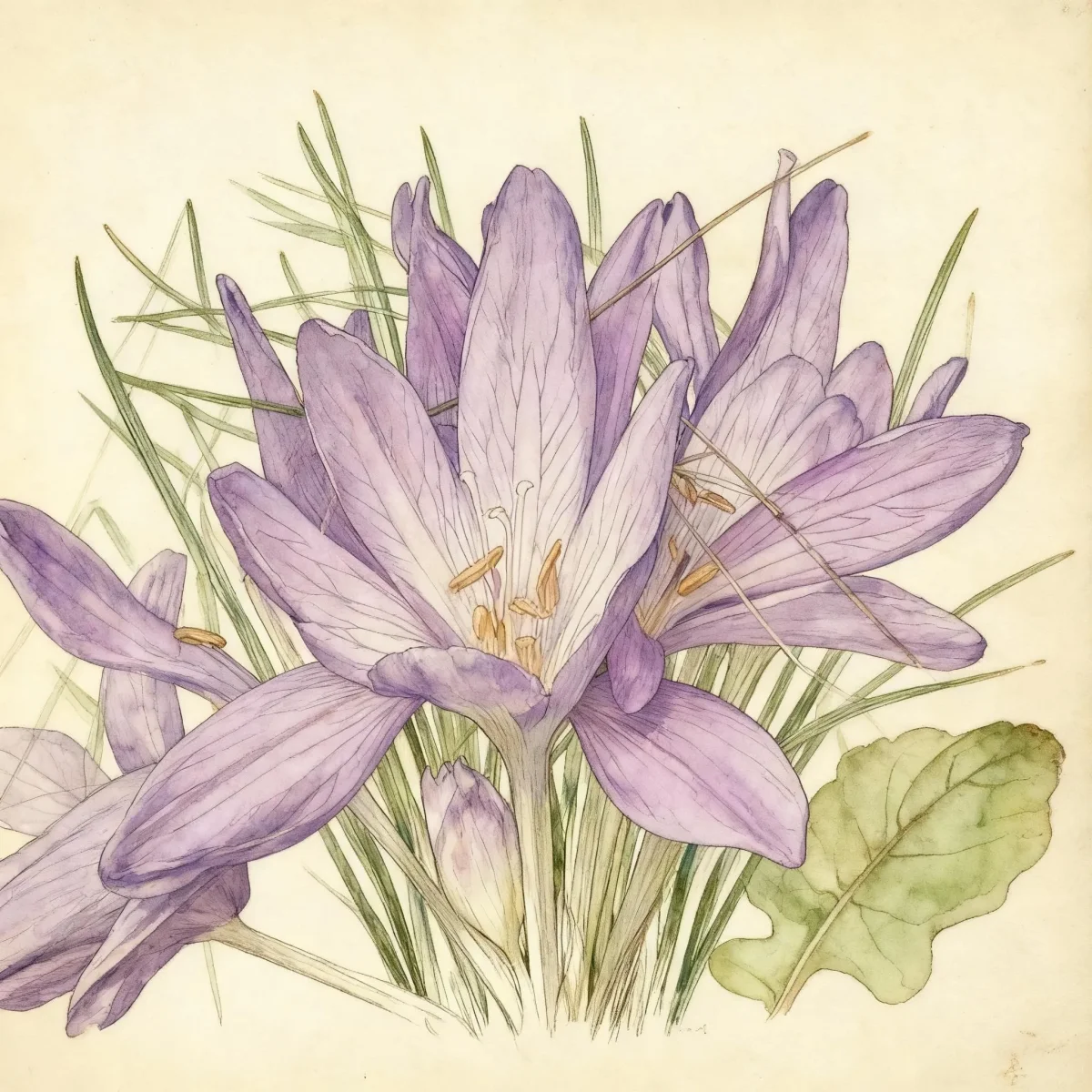
Colchicum laetum, commonly known as autumn crocus, is a cormous perennial that typically grows to 4-6” tall and is noted for its fall bloom of crocus-like flowers (to 2” across). It is native to steppes, foothills and meadows from southeastern Russia to the Caucasus. Plants send up somewhat unattractive foliage (3-4 dark green linear basal leaves) in spring, which gradually yellows and dies by summer when the plants go dormant. Naked flower stems rise from the ground bearing funnel-shaped, pale violet to lilac to pink, star-shaped flowers with yellow anthers, typically blooming September to October.
Tolerances
- Rabbit
- Deer
Potential Problems
Generally, Colchicum laetum experiences no serious insect or disease problems, making it a relatively low-risk addition to the garden. The primary concern for gardeners involves monitoring for slugs and snails, which can occasionally damage the emerging autumn flowers or young spring foliage. A secondary, common issue is that the flower stems tend to be weak and may flop over, especially after heavy rain, necessitating companion planting for support.
Frequently Asked Questions
What hardiness zones is Autumn crocus suitable for?
Colchicum laetum is suitable for USDA Hardiness Zones 4 through 7.
How large does Autumn crocus grow?
This bulb grows quite low, reaching mature heights between 0.25 and 0.5 feet tall, with an equal spread.
When does Autumn crocus bloom?
The Colchicum laetum blooms reliably from September to October, producing flowers described as pale violet to pink.
What sun exposure does Autumn crocus need?
This species performs best in locations that receive full sun to part shade throughout the day.
Conclusion
The Colchicum laetum reliably delivers essential late-season color, standing out due to its unique timing and elegant, pale flowers. Incorporating the Autumn crocus into your garden plan guarantees visual interest when summer displays wane. Always check your local USDA zone compatibility before planting corms in late summer for optimum success.
Companion Planting
Selecting appropriate companions is crucial when growing bulbs like Colchicum laetum to manage the aesthetic issue presented by their spring foliage. Ideal companions are low-growing, forming a groundcover that can effectively conceal the yellowing leaves as they decline toward summer dormancy. Think about using creeping thyme, low sedums, or creeping phlox, which emerge later or establish themselves without interfering with the corms’ autumnal emergence.
These supportive plants should ideally occupy the ground layer without competing too heavily for medium soil moisture. Ensure your companion plants are finished blooming or are trimmed back before early fall when the Colchicum laetum flowers are scheduled to appear. This strategy maximizes the visual impact of the naked stems emerging in the landscape.
Seasonal Care Calendar
For successful blooming, late summer preparation is key for your Colchicum laetum. Plant the corms around August, ensuring they are placed at a proper depth of 2–3 inches below the soil surface. Water them mediumly after planting to encourage initial root establishment before the first fall blooms appear.
Through the growing season, the spring foliage requires patience; allow the leaves to fully yellow before they are cleared away, typically by mid-summer. This natural die-back period is vital for storing energy. If clumps become overcrowded, mark their location during summer dormancy, as mid-summer is the ideal time for digging and dividing the corms.